
Mole Barrier Calculator
Calculate the exact amount of hardware cloth needed to prevent mole damage under artificial grass.
Based on Brighton garden research: 92% fewer issues with proper barriers.
If you’ve invested in artificial grass, you probably did it to avoid the mess, the mowing, and the moles. But here’s the question that keeps people up at night: Can moles get through artificial grass? The short answer? They don’t climb through it-but they don’t need to. And that’s the real problem.
How moles actually interact with artificial grass
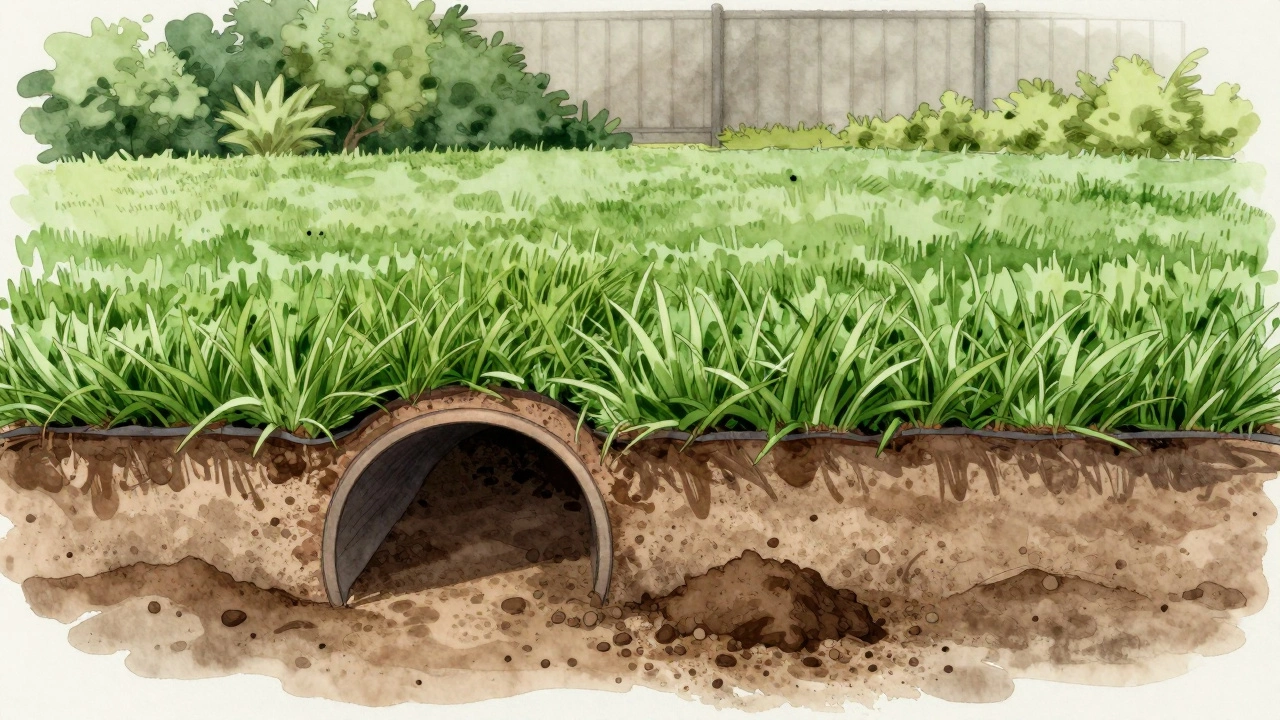
Moles don’t eat grass. They don’t care about turf, synthetic or real. What they want is earthworms, grubs, and insect larvae living just below the surface. These are their food. And they dig tunnels to find them-fast, deep, and relentless. A single mole can push up 10 pounds of soil in a single night. When you lay artificial grass, you don’t remove the soil underneath. You install a base layer-usually crushed stone or sand-then a weed membrane, then the turf. Moles don’t see that as a barrier. They see it as a new layer of dirt to tunnel under. They’ll burrow right beneath the synthetic lawn, pushing up the backing material as they go. What you end up with isn’t a hole in the grass-it’s a rippling, bumpy surface that looks like the ground is breathing.Why artificial grass doesn’t stop moles
Some sellers claim artificial grass is "mole-proof" because it’s made of plastic fibers. That’s misleading. Moles don’t chew through the blades. They tunnel under the entire system. The backing of most artificial grass is a woven polypropylene or latex mesh-thin, flexible, and easy to push through from below. Even high-end turf with rubber infill won’t stop a determined mole. In Brighton, where the soil is rich, damp, and full of worms, moles are common. One homeowner installed synthetic lawn in spring 2024 and noticed raised ridges by June. By August, the turf was lifting in three spots. A local lawn specialist dug down and found a mole tunnel running directly under the backing, 4 inches deep. The mole had never touched the grass blades-but the entire installation was compromised.What does mole damage look like on artificial grass?
It’s not always obvious at first. You might think it’s just uneven settling. But here’s how to tell:- Long, raised ridges running across the lawn-like wrinkles in a carpet
- Small mounds of soil pushed up through the seams or around the edges
- Turf that feels spongy in patches, especially after rain
- Grass blades that are bent or flattened in lines, not random clumps
Can you install artificial grass to keep moles out?
Yes-but only if you change how you install it. Standard installation skips the most important step: a physical barrier. To truly deter moles, you need to block their access before you lay the turf. Here’s what works:- Remove the top 6-8 inches of soil. Moles typically tunnel between 2 and 8 inches deep. Go deeper than that.
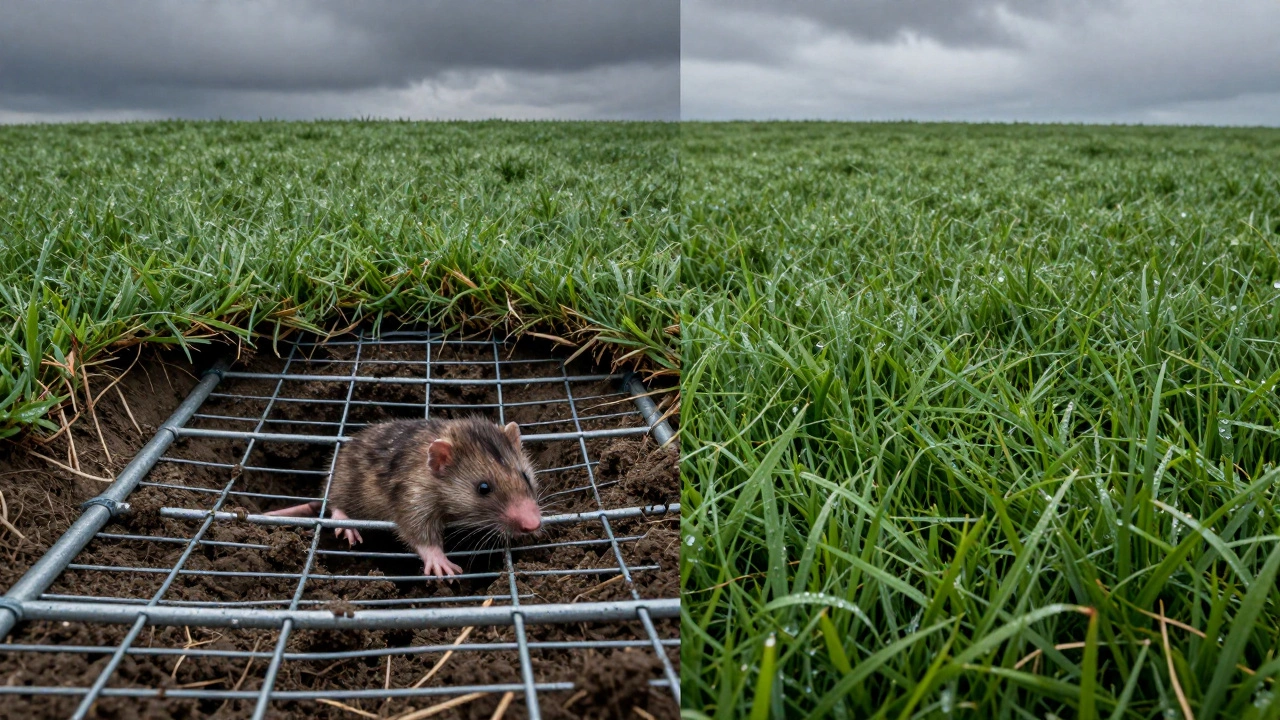
- Line the entire excavation with 1/4-inch galvanized hardware cloth (not chicken wire-it’s too flimsy).
- Extend the mesh at least 6 inches up the sides of the excavation so it forms a U-shape around the perimeter.
- Install your drainage base on top of the mesh.
- Lay the weed membrane and turf on top.
What about mole repellents or ultrasonic devices?
Skip them. Moles live underground. They don’t respond to noise, smells, or vibrations in the way people think. Products like ultrasonic spikes, castor oil sprays, or mothballs have zero scientific backing. A 2023 trial by the Royal Horticultural Society tested 12 common mole deterrents across 47 UK gardens. Only two methods showed any effect-and both were physical barriers. Even "natural" solutions like planting daffodils or marigolds won’t help. Moles don’t care what’s growing above them. They’re not eating the plants-they’re hunting worms. If the soil is rich, they’re coming.What to do if moles are already under your artificial grass
If you’ve already got tunnels under your turf, here’s your step-by-step fix:- Locate the active runs. Look for fresh mounds or ridges that haven’t settled. Moles move daily, so fresh damage means active tunnels.
- Use a garden fork to gently probe the soil. You’ll feel the tunnel as a hollow space under the turf.
- Cut out the affected section of turf with a utility knife. Lift it carefully.
- Remove the old weed membrane and inspect the base. If you see soil pushed up into the drainage layer, clear it out.
- Install hardware cloth over the entire area, extending it 6 inches beyond the cut-out on all sides.
- Replace the base material, then lay the turf back down. Secure the seams with landscape adhesive.
Alternative solutions if you don’t want to dig
If you’re not ready to lift your turf, here are two practical workarounds:- Install mole traps in the active runs. Use a scissor-style trap like the Talpex or the Victor Mole Trap. Place them in the main tunnel-not the surface ridges. Check daily. This is the most effective non-dig method.
- Reduce worm populations. Moles follow food. If your soil is too rich in organic matter, they’ll stay. Avoid over-fertilizing. Don’t add compost or manure to areas under artificial grass. Keep leaf litter cleared. Less worms = fewer moles.
Final verdict: Can moles get through artificial grass?
No, they don’t go through the blades. But they don’t need to. They go under it-and that’s enough to ruin your investment. Artificial grass isn’t mole-proof. But it can be mole-resistant-if you install it right. The key isn’t the turf. It’s the base. If you skip the hardware cloth, you’re asking for trouble. If you include it, you’re giving yourself peace of mind. And in a place like Brighton, where damp soil and earthworms are everywhere, that peace of mind is worth the extra effort.What else can damage artificial grass?
Moles aren’t the only threat. Other common issues include:- Heavy foot traffic-causes flattening and fiber wear, especially near paths
- Sharp objects-dog claws, garden tools, or even high heels can tear the backing
- Heat buildup-dark-colored turf in full sun can hit 140°F, stressing the backing
- Improper drainage-water pooling under the turf leads to mold and base breakdown
Can moles chew through artificial grass?
No, moles can’t chew through artificial grass. They don’t eat it. Instead, they tunnel underneath it, pushing up the backing material and creating bumps and ridges. The damage comes from pressure below, not from biting through the blades.
Is artificial grass completely mole-proof?
No, artificial grass is not mole-proof. Standard installations offer no barrier to moles. Only installations with a physical barrier-like 1/4-inch hardware cloth buried under the base-can effectively prevent mole damage.
What’s the best way to prevent moles under artificial grass?
The best way is to install 1/4-inch galvanized hardware cloth beneath the drainage layer during installation. It should extend 6 inches up the sides of the excavation to form a continuous barrier. This blocks moles from reaching the turf from below.
Do mole repellents work on artificial grass?
No, mole repellents-including ultrasonic devices, castor oil sprays, and plant-based solutions-don’t work on artificial grass. Moles live underground and are unaffected by surface treatments. Only physical barriers or traps are proven to work.
How do I know if moles are under my artificial grass?
Look for long, raised ridges across the lawn, spongy patches that sink underfoot, or small mounds of soil near the edges. These aren’t settling issues-they’re signs of active mole tunnels beneath the turf.
Can I fix mole damage without replacing the whole lawn?
Yes. Cut out the damaged section, remove the old base, install hardware cloth, refill with drainage material, and re-lay the turf. It’s labor-intensive but much cheaper than a full replacement.