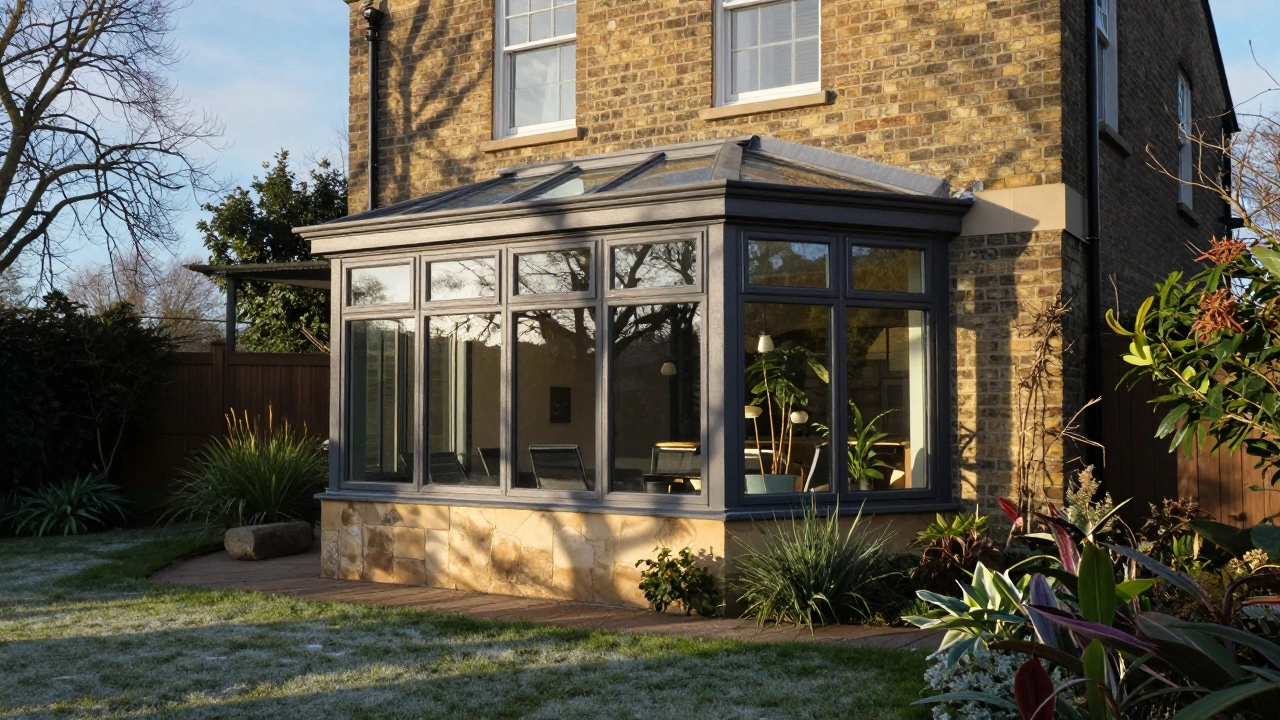
If you’re thinking about adding an orangery to your home in Brighton, you’re not alone. More people are turning to orangeries for that sun-drenched living space that feels like part of the garden but stays warm in winter. But here’s the question everyone asks: Do you need permission for an orangery? The answer isn’t simple. It depends on size, location, and how it’s built. Skip the guesswork-here’s exactly what you need to know in 2026.
What’s an orangery, really?
An orangery isn’t just a fancy conservatory. It’s a brick or stone structure with large windows and a flat or slightly pitched roof, often with a central skylight. Unlike glass-heavy conservatories, orangeries have solid walls (usually over 50% brick or stone), making them feel more like a room extension than a greenhouse. They’re designed for year-round use-think cozy mornings with coffee, winter reading nooks, or summer dinner parties under natural light.
In the UK, orangeries became popular in the 18th century for growing citrus trees. Today, they’re prized for their blend of architecture and natural light. But because they’re permanent structures that change your home’s footprint, they fall under planning rules.
Permitted development rights: when you don’t need permission
You might not need formal planning permission if your orangery meets the rules for permitted development. These are national guidelines that let you extend your home without applying to the council-so long as you stick to the limits.
For an orangery to qualify:
- It must not extend beyond the rear wall of the original house by more than 4 metres (for detached homes) or 3 metres (for semi-detached or terraced houses).
- The height of the orangery must not exceed 4 metres (or 3 metres if within 2 metres of a boundary).
- It cannot cover more than half the land around the original house.
- The roof must not be higher than the highest part of the existing house.
- It cannot be built forward of the principal elevation (the front of the house).
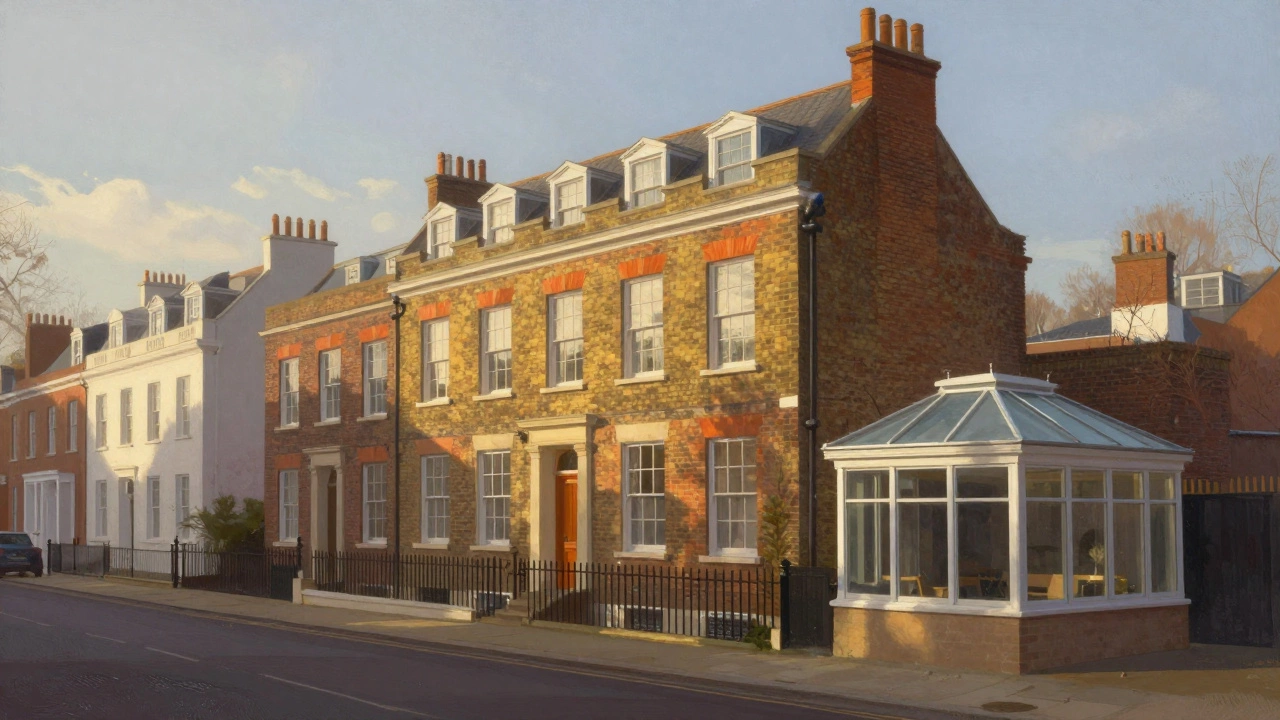
- If you live in a conservation area, Area of Outstanding Natural Beauty (AONB), or National Park, different rules apply-usually stricter.
Also, if your home is a listed building, you’ll always need listed building consent. No exceptions.
Here’s the catch: original house means the house as it was first built, or as it stood on 1 July 1948 if built before then. So if your home was extended in the 90s, that extension is now part of the “original” structure for planning purposes.
When you definitely need planning permission
You’ll need to apply for planning permission if your orangery breaks any of the permitted development rules above. Common scenarios include:
- Building an orangery that extends more than 4 metres from the rear wall (even if you’re detached).
- Adding a second storey orangery.
- Building on land that’s been designated as protected (like a conservation area or near a listed building).
- Placing the orangery where it would block a neighbour’s light or overlook their property too closely.
- Living in a flat or apartment-permitted development rights don’t apply to flats.
Some councils in Brighton and Hove have introduced Article 4 Directions in certain neighbourhoods. These remove permitted development rights entirely, meaning even small orangeries need approval. Check your local council’s website or call their planning department-don’t assume you’re covered.
Building regulations: always apply
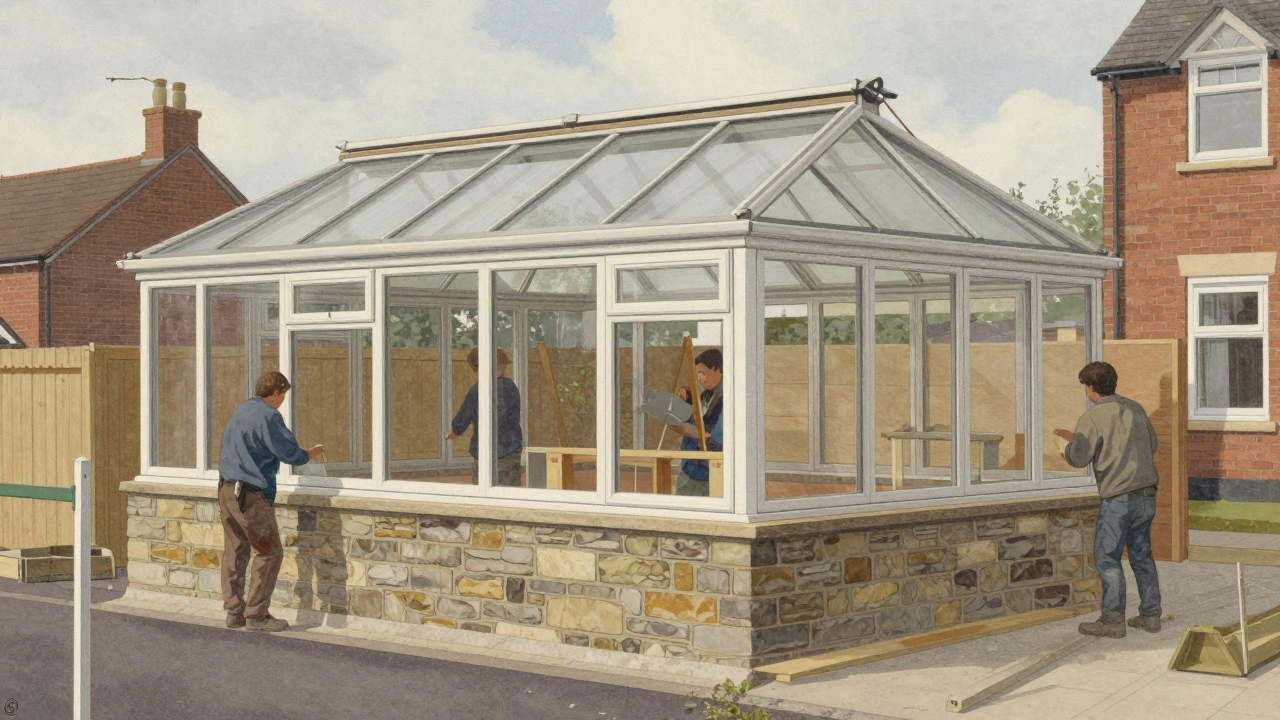
Even if you don’t need planning permission, you still need to follow building regulations. These are about safety, energy efficiency, and structural soundness. They’re not optional.
For an orangery, building regulations cover:
- Thermal performance: windows and roof must meet minimum U-values (currently 1.6 W/m²K for roofs, 1.8 W/m²K for windows).
- Structural integrity: foundations, beams, and glazing must handle wind and snow loads.
- Electrical safety: any new sockets, lighting, or heating must be installed by a qualified electrician and certified.
- Fire safety: escape routes and fire-resistant materials if the orangery connects to the main house.
- Drainage: if you’re adding a new floor or changing ground levels, you may need to manage surface water runoff.
You can self-certify some parts through a registered installer (like a FENSA-approved window company), but others require building control inspection. Always confirm with your local authority’s building control team before you start digging.
Orangery vs conservatory: what’s the difference in rules?
People often mix up orangeries and conservatories. The rules treat them differently because of how they’re built.
A conservatory is mostly glass-over 75% of the roof and 50% of the walls. It’s treated as a temporary extension and often falls under permitted development more easily.
An orangery has more solid structure. If it’s over 50% brick or stone, it’s considered a permanent extension. That means:
- It’s more likely to trigger planning rules if it’s large or near boundaries.
- It must meet higher thermal standards because it’s designed to be lived in year-round.
- It may need more robust foundations since it’s heavier.
So if you’re trying to avoid planning permission, a conservatory might be easier. But if you want a space that feels like part of your home-not a greenhouse-an orangery is worth the extra steps.
What happens if you build without permission?
Some people assume they can build first and ask later. That’s risky.
If your council finds out you built without permission, they can issue an enforcement notice. This means you’ll have to:
- Stop all work immediately.
- Apply for retrospective planning permission (which isn’t guaranteed).
- Modify or remove the orangery if it doesn’t meet rules.
- Pay fines-up to £20,000 in extreme cases.
It also affects your ability to sell the house. Buyers’ solicitors will check planning history. If they find an unapproved orangery, they might delay or pull out of the sale. Insurance companies may also refuse to cover damage if the structure was built illegally.
It’s not worth the gamble. Get it right from the start.
How to check your local rules
Brighton and Hove City Council has a free online tool called Planning Portal where you can enter your postcode and see if your area has special restrictions.
Here’s what to do:
- Go to the Brighton and Hove Planning Portal.
- Use the interactive map to find your property.
- Check if your area is in a conservation area, AONB, or has an Article 4 Direction.
- Download the “Permitted Development Rights for Householders” guide.
- If unsure, book a free pre-application advice session. A planner will review your plans and tell you if you need permission.
Many local builders and architects in Brighton offer this service too. It’s usually £50-£100, but it can save you thousands in mistakes.
Pro tips for a smooth process
- Get a surveyor to mark your boundary lines before you start. Disputes with neighbours over boundary extensions are the #1 reason applications get delayed.
- Use low-iron glass for your windows. It lets in more natural light and looks cleaner-especially important if you’re near the sea and want to avoid that green tint.
- Don’t forget about drainage. Orangeries often sit on raised foundations. Make sure water flows away from your house, not toward it.
- Consider solar shading. A south-facing orangery in Brighton can get hot in summer. External blinds or integrated louvres are better than interior curtains.
- Choose a reputable installer with a 10-year guarantee. Look for FENSA or CERTASS certification.
What’s next?
If you’ve checked the rules and your orangery fits within permitted development, you’re ready to start designing. Talk to a local architect or orangery specialist. Bring your floor plan, photos of your house, and a list of what you want to use the space for.
If you’re unsure, get that free pre-application advice. It’s quick, free, and saves you from costly mistakes. Don’t risk your home’s value-or your peace of mind-on guesswork.
An orangery is a big investment. Done right, it adds character, comfort, and value. Done wrong, it becomes a legal headache. Know the rules. Plan ahead. Build with confidence.
Do I need planning permission for a small orangery?
It depends. Even a small orangery needs permission if it’s built forward of the front of your house, exceeds height limits, or is in a protected area like a conservation zone. Always check permitted development rules first. If it’s under 4m from the rear and under 3m high, you might be okay-but confirm with your local council.
Can I build an orangery on the side of my house?
Yes, but only if it doesn’t extend beyond half the width of the original house and stays under 4m in height. Side extensions are more likely to trigger neighbour objections, especially if they overlook windows. Always check Article 4 Directions in your area-some parts of Brighton ban side extensions entirely.
Is an orangery cheaper than a full extension?
Often, yes. Orangeries typically cost between £25,000 and £50,000, depending on size and materials. A full brick extension can cost £40,000 to £80,000. Orangeries use less structural work and can be quicker to build. But if you need planning permission, the process adds time and potential costs.
Do I need building regulations approval for an orangery?
Always. Even if you don’t need planning permission, building regulations cover insulation, structural safety, electrics, and drainage. You can’t skip this. Use a FENSA or CERTASS-certified installer to handle certification automatically.
What’s the difference between an orangery and a conservatory in terms of rules?
Conservatories are mostly glass and often qualify for permitted development more easily. Orangeries have more solid structure-over 50% brick or stone-and are treated like permanent extensions. That means stricter limits on size, height, and location. They also require better insulation and are more likely to trigger planning rules if large.
Can I build an orangery in a conservation area?
It’s possible, but harder. Conservation areas have strict design controls. Your orangery must match the style, materials, and proportions of the original house. Many councils require detailed design statements and may refuse if it looks modern or out of place. Always apply for pre-application advice before spending on designs.
How long does planning permission take for an orangery?
Standard applications take 8 weeks in England. If your project is complex or in a protected area, it can take up to 13 weeks. Submit complete plans with clear drawings, elevations, and a design statement. Delays often happen because people submit incomplete paperwork.
Will an orangery increase my property value?
Yes, if done well. A high-quality orangery can add 5-10% to your home’s value, especially in areas like Brighton where outdoor living space is in demand. But it must look like a natural extension of the house-not a cheap add-on. Poorly designed or unpermitted orangeries can hurt resale value.