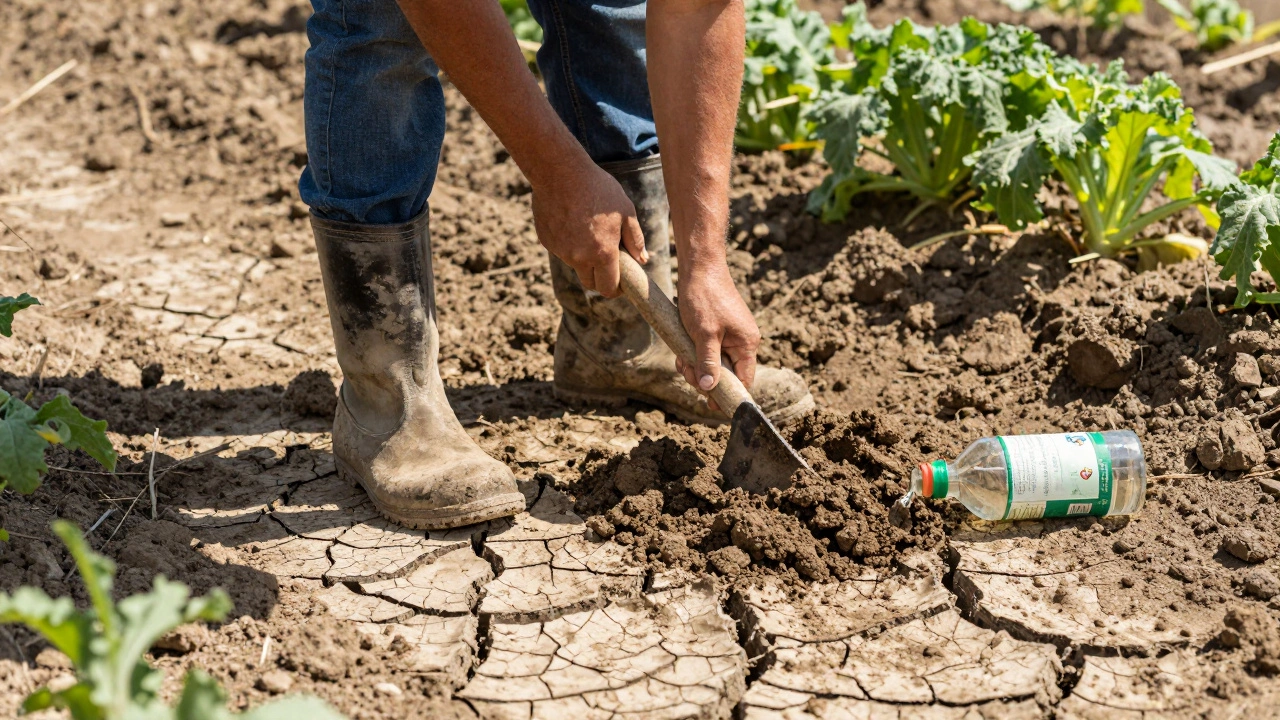
Clay Soil Compost Calculator
Calculate how much compost you need to improve clay soil. The article explains that vinegar doesn't work for clay soil, but compost does. This tool helps you determine the right amount based on your garden size and desired depth.
Enter your garden dimensions to see how much compost you need
Important: This tool calculates compost quantity only. The article explains that vinegar does NOT improve clay soil. Compost is the effective solution for clay soil improvement.
Clay soil is one of the most frustrating types of soil for gardeners. It sticks to your boots, hardens like concrete in summer, and turns into a swamp after rain. Many home gardeners hear stories about using vinegar to break up clay soil - quick, cheap, and natural. But does it actually work? Or is it just another gardening myth?
What Makes Clay Soil So Tough?
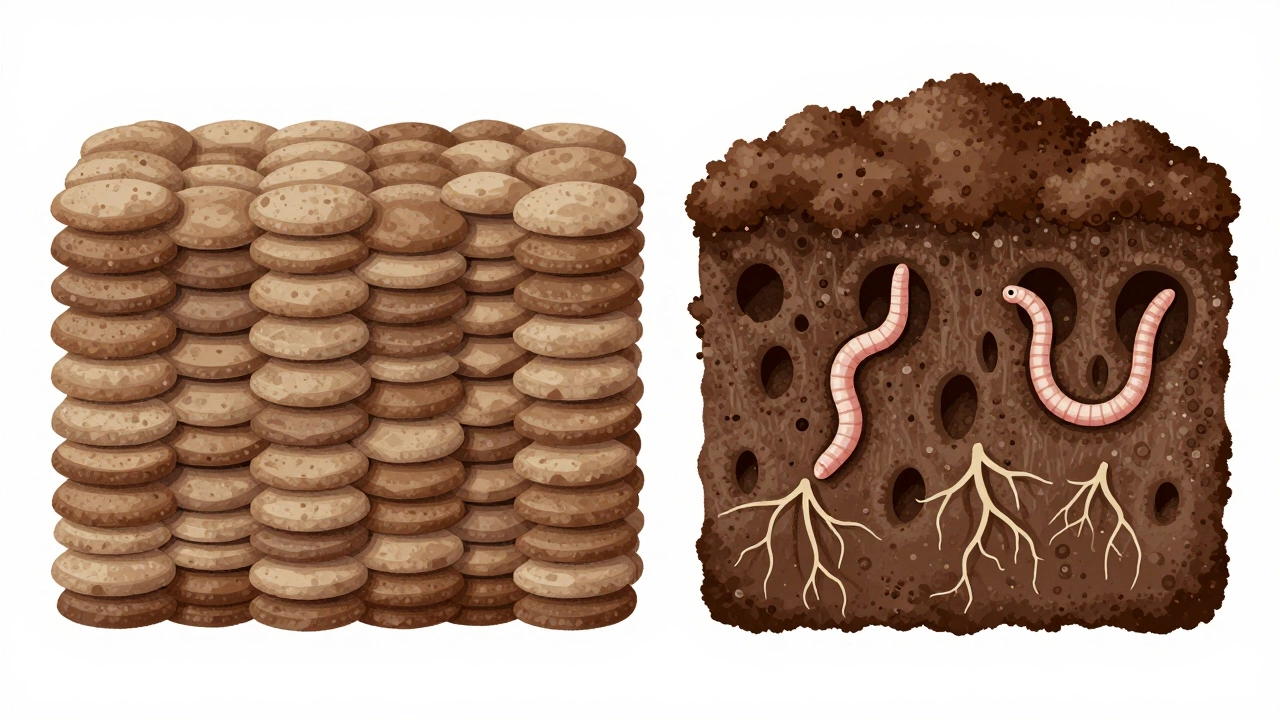
Clay soil isn’t bad soil - it’s actually rich in nutrients. The problem is its structure. Clay particles are tiny, flat, and stick together tightly. This creates almost no space for air or water to move through. Roots struggle to grow. Water pools on the surface instead of soaking in. And when it dries? It cracks into chunks that are nearly impossible to dig.
Unlike sandy soil, which drains too fast, or loamy soil, which is just right, clay soil holds onto water and nutrients but won’t let roots reach them. That’s why so many plants fail in clay, even if they’re supposed to thrive there.
How Vinegar Works (And Why It Doesn’t Work for Clay)
Vinegar is acetic acid. When you pour it on soil, it lowers the pH - making the soil more acidic. That’s useful if you’re growing blueberries or rhododendrons, which love acidic conditions. But clay soil doesn’t need more acidity. It needs physical structure.
Clay doesn’t stick together because it’s too alkaline. It sticks together because of how the particles are shaped and how they attract water molecules. Vinegar won’t break those bonds. It won’t create air pockets. It won’t improve drainage.
Some people claim vinegar dissolves clay particles. That’s not how chemistry works. Clay minerals like kaolinite and montmorillonite are stable in weak acids. Household vinegar is only 5% acetic acid. It’s not strong enough to dissolve anything in soil. Even industrial-strength vinegar (20%) won’t break down clay structure.
What Actually Fixes Clay Soil?
If vinegar doesn’t work, what does? The answer is simple: organic matter and physical aeration.
- Compost - Add 2 to 4 inches of well-rotted compost and mix it into the top 6 to 8 inches of soil. Compost adds structure, improves drainage, and feeds microbes that help break up clay over time.
- Leaf mold - Made from decomposed leaves, it’s lighter than compost and excellent for loosening clay. It also holds moisture without turning soggy.
- Coarse sand or grit - Only use sharp, coarse sand (like builder’s sand), not fine play sand. Mix it with compost, not alone. One cubic yard per 100 square feet can help, but don’t overdo it - too much sand can turn clay into concrete.
- Gypsum - This mineral (calcium sulfate) doesn’t change pH but helps bind clay particles into larger clumps. These clumps create space for air and water. Apply 10-20 pounds per 100 square feet, water it in, and wait months for results.
These methods take time. You won’t fix clay soil in one weekend. But in 6 to 12 months, you’ll see a difference. Roots will spread. Water will soak in. Worms will come back.
Why People Think Vinegar Works
There’s a reason this myth persists. Some gardeners report better results after using vinegar - usually because they mixed it with something else. Maybe they added compost at the same time. Or maybe they were already working on drainage with raised beds or French drains.
Also, vinegar can kill surface weeds. If you spray vinegar on weeds growing in clay soil, you might see cleaner soil and assume the vinegar improved the soil itself. But it didn’t. It just killed surface plants.
Another myth: vinegar helps with soil compaction. It doesn’t. Compaction happens because heavy foot traffic or machinery presses soil particles together. The only way to fix that is to aerate - with a garden fork or core aerator - then add organic matter.
When Vinegar Might Be Useful (But Not for Clay)
Vinegar has a place in gardening - just not for fixing clay. Here’s where it helps:
- Weed control - A 10% vinegar solution (horticultural vinegar) can kill young weeds on driveways or between pavers. Use it carefully - it kills everything, including grass and flowers.
- Pest deterrent - A spray of 1 part vinegar to 3 parts water can discourage aphids and ants on plants. Test on a leaf first - some plants get burned.
- Soil pH adjustment - If you’re growing acid-loving plants like azaleas or blueberries in alkaline soil, a light vinegar rinse can help lower pH slightly. But don’t rely on it alone. Use sulfur or peat moss for lasting results.
For clay soil? Vinegar does nothing. Don’t waste your time.
What to Do Instead: A Simple 3-Step Plan
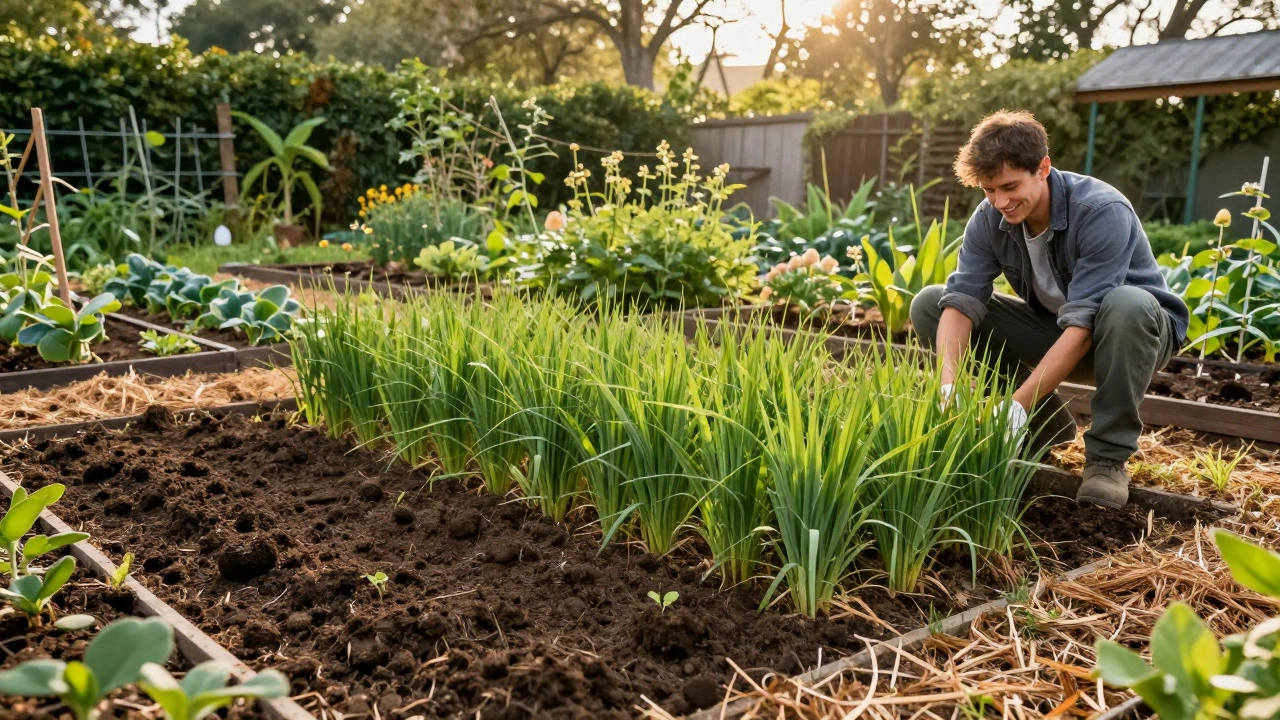
If you’re tired of fighting clay soil, here’s a clear plan:
- Stop tilling deeply - Digging too deep brings up more clay from below. Instead, work on the top 6-8 inches. Add compost and gently mix it in with a garden fork.
- Plant cover crops - In fall, sow winter rye or crimson clover. Their roots break up clay naturally. When they die back, they leave behind channels for water and air.
- Mulch every year - Apply 2-3 inches of wood chips, leaf mulch, or straw. It protects the soil, keeps it moist, and slowly feeds it as it breaks down.
Do this for two seasons, and your clay soil will transform. You’ll notice fewer puddles, easier digging, and healthier plants.
Common Mistakes to Avoid
- Adding sand alone - This turns clay into cement. Always mix sand with compost or organic matter.
- Overwatering - Clay holds water. Watering too often leads to root rot. Let the top 2 inches dry out before watering again.
- Using chemical soil conditioners - Many store-bought products promise quick fixes. They rarely work and can harm soil microbes.
- Expecting overnight results - Soil improvement takes time. Be patient. Year one is messy. Year two is better. Year three? You’ll have great soil.
Final Verdict
No, vinegar does not help clay soil. It’s not a miracle solution. It’s not even a useful one. It’s a distraction from the real work: adding organic matter, reducing compaction, and giving the soil time to heal.
If you want to grow healthy plants in clay soil, skip the vinegar. Start with compost. Start with mulch. Start with patience. Your garden will thank you.