UK Lawn Fertilization Calculator
Calculate Your Fertilization Schedule
Get a personalized fertilization schedule based on your lawn conditions and UK climate. This tool helps avoid over-fertilization and grass burn.
Over-fertilizing your lawn can burn it, while under-fertilizing leaves it thin and weak. But how often should you feed it in the UK? Let's cut through the confusion.
What Affects How Often You Should Fertilize Your Lawn?
Not all lawns need the same feeding schedule. Several factors play a role. First, the type of grass you have. In the UK, most lawns are a mix of perennial ryegrass a common cool-season grass in UK lawns known for its fast growth and fescue grass. Perennial ryegrass grows quickly and needs more frequent feeding, while fescue is slower-growing and requires less fertilizer.
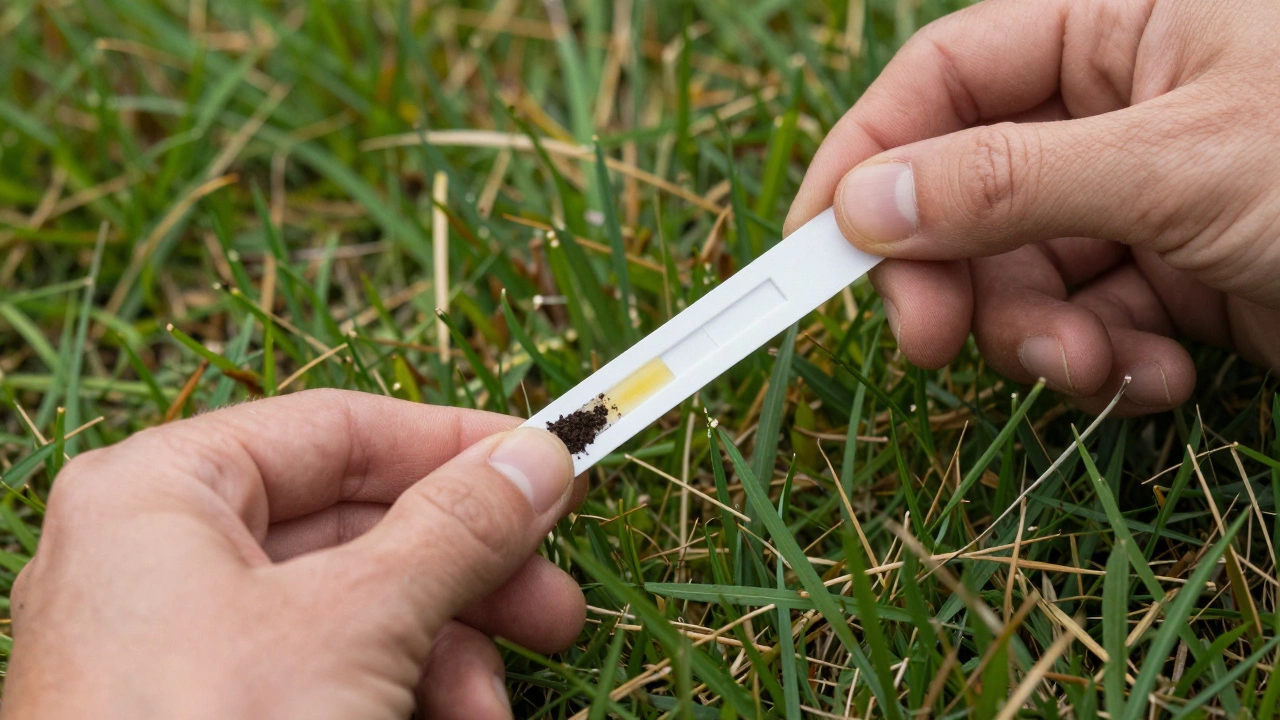
Soil health is another key factor. UK soil tends to be acidic, with a pH between 5.5 and 7.0. If your soil pH is too low, nutrients like nitrogen and potassium won't be absorbed properly. Testing your soil before fertilizing ensures you apply the right amount. You can buy a simple pH test kit from garden centres or send a sample to a lab. The Royal Horticultural Society (RHS) recommends testing soil pH every 2-3 years for optimal lawn health.
Climate matters too. The UK's cool, wet climate means lawns grow best in spring and autumn. During summer, heat and dry spells can stress grass. Fertilizing during hot weather increases the risk of burning. So, avoid applying fertilizer when temperatures exceed 25°C or during drought conditions.
Seasonal Fertilization Schedule for UK Lawns
For most UK lawns, a 3-4 time per year schedule works best. Here's what to do each season:
- Early spring (March): After winter dormancy, your lawn needs nutrients to start growing. Apply a balanced fertilizer with equal parts nitrogen, phosphorus, and potassium (NPK 10-10-10). This kickstarts root development and early growth.
- Late spring (May): As grass growth accelerates, switch to a high-nitrogen fertilizer (e.g., NPK 20-5-10). Nitrogen promotes lush, green blades. This application helps your lawn handle foot traffic and recover from winter damage.
- Early autumn (September): Focus on root health. Use a fertilizer high in potassium (e.g., NPK 5-10-15). Potassium strengthens roots and improves winter hardiness. This is crucial for surviving cold UK winters.
- Late autumn (November): Optional. If your lawn is thin or stressed, a slow-release organic fertilizer can provide gentle nourishment without encouraging new growth that might freeze. Avoid fertilizing too late in the season-once soil temperatures drop below 10°C, grass stops absorbing nutrients.
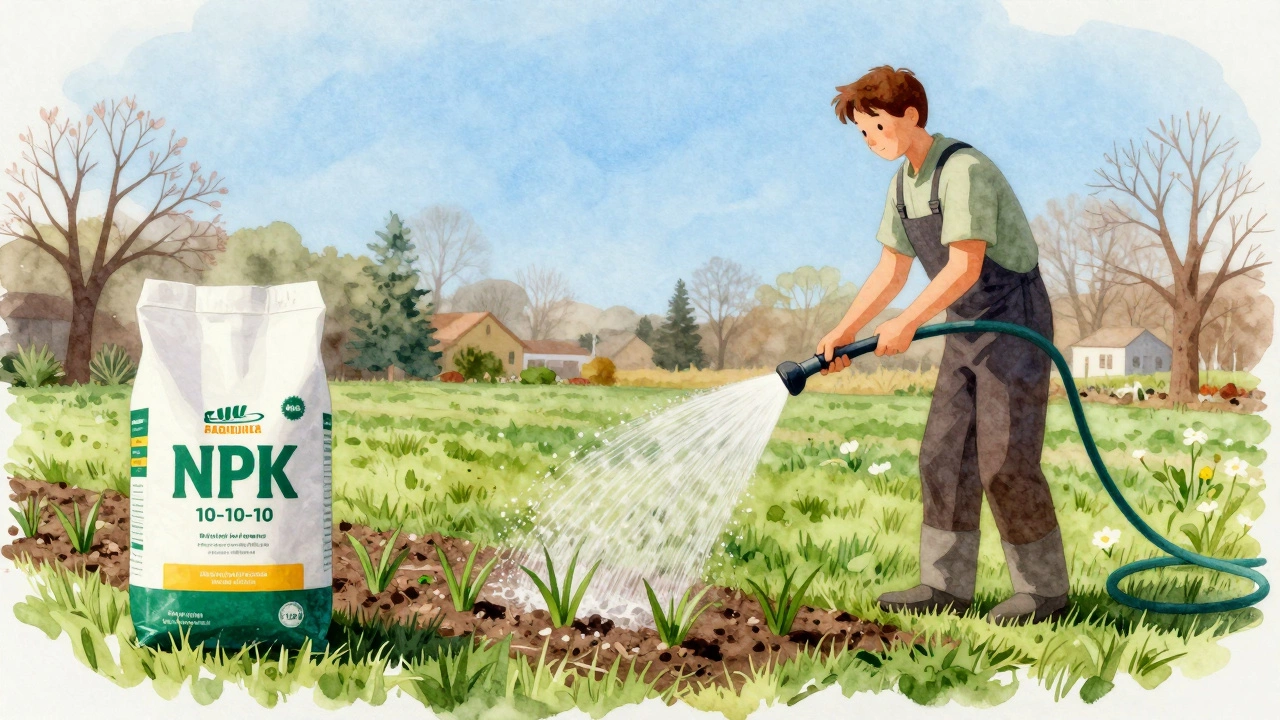
Remember: Always water your lawn thoroughly before and after applying fertilizer. This prevents burning and helps nutrients soak into the soil. If you're using a granular fertilizer, water it in within 24 hours. Liquid fertilizers can be applied directly to moist soil.
Organic vs Synthetic Fertilizers: Frequency Differences
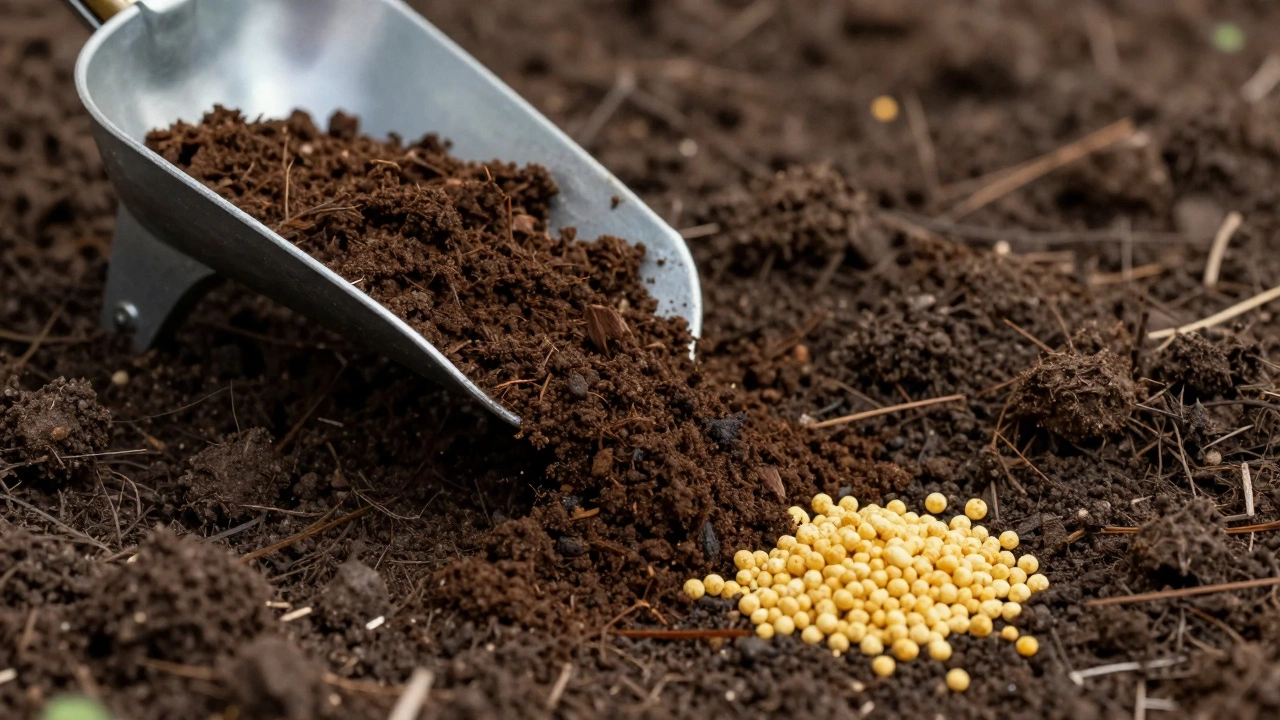
The type of fertilizer you choose affects how often you need to apply it. Organic fertilizers like compost or manure release nutrients slowly as they break down. This means you can apply them more frequently-every 6-8 weeks-without risking burn. They also improve soil structure over time.
Synthetic fertilizers, on the other hand, deliver nutrients quickly. But they're more concentrated, so over-application can burn grass. For synthetic fertilizers, stick to the manufacturer's instructions. Typically, this means every 6-8 weeks during the growing season. However, in the UK's cooler climate, you might reduce synthetic applications to 3-4 times a year to avoid excessive growth.
Here's a quick comparison:
| Feature | Organic | Synthetic |
|---|---|---|
| Nutrient release | Slow (3-6 months) | Fast (2-4 weeks) |
| Application frequency | Every 6-8 weeks | Every 6-8 weeks (but monitor closely) |
| Risk of burning | Low | High if over-applied |
| Soil health impact | Improves over time | Neutral or negative long-term |
Top Mistakes to Avoid When Fertilizing
Even with the right schedule, mistakes can ruin your lawn. Here are the most common errors:
- Fertilizing dry grass: Applying fertilizer when the soil is dry increases the risk of burning. Always water your lawn deeply 24 hours before fertilizing.
- Over-applying: More isn't better. Excess nitrogen can cause rapid growth, making your lawn vulnerable to disease. Stick to recommended amounts on the product label.
- Skipping soil tests: Without knowing your soil pH, you might apply unnecessary nutrients. For example, if your soil is already rich in phosphorus, adding more won't help and could harm the environment.
- Fertilizing during heatwaves: UK summers can get hot. Fertilizing when temperatures exceed 25°C stresses grass. Wait for cooler weather.
- Not watering after application: Granular fertilizers need water to activate. If you skip this step, nutrients sit on the surface and can burn grass blades.
Your UK Lawn Fertilization Checklist
Here's a simple guide to keep your lawn healthy:
- Test soil pH every 2 years. Aim for 6.0-7.0.
- Fertilize in early spring (March) with balanced NPK.
- Apply high-nitrogen feed in late spring (May).
- Switch to high-potassium fertilizer in early autumn (September).
- Avoid fertilizing during summer heat or drought.
- Water thoroughly before and after each application.
- Use organic fertilizers for long-term soil health.
Frequently Asked Questions
Can I fertilize my lawn every month?
No, fertilizing monthly is usually too frequent for UK lawns. Most lawns need fertilization 3-4 times a year. Over-fertilizing can lead to nutrient runoff, grass burn, and environmental damage. Stick to the seasonal schedule for best results.
What's the best fertilizer for UK lawns?
The best fertilizer depends on the season and grass type. In spring, use a balanced NPK fertilizer. For late spring, choose high-nitrogen formulas. In autumn, opt for high-potassium options. Organic fertilizers like compost or manure are excellent for long-term soil health. Always check the product label for UK-specific recommendations.
Should I fertilize before or after mowing?
Fertilize after mowing. This ensures the fertilizer reaches the soil without being blocked by grass clippings. Wait 24-48 hours after mowing to let the lawn recover. Then apply fertilizer and water thoroughly. Avoid fertilizing right before mowing-clippings can trap fertilizer and cause uneven application.
How do I know if my lawn needs fertilizer?
Signs your lawn needs fertilizer include slow growth, yellowing grass, or thin patches. However, the best way to know is through a soil test. This reveals nutrient deficiencies and pH issues. Relying on visual cues alone can lead to over- or under-fertilizing. Test your soil every 2 years for accurate guidance.
Is it okay to fertilize in winter?
No, avoid fertilizing your lawn in winter. UK soil temperatures drop below 10°C during winter months, which means grass stops absorbing nutrients. Fertilizing at this time is wasteful and can leach into groundwater. Focus on winter care like aerating and overseeding instead.