Garden Layering & Layout Simulator
Design Principle: A flat garden looks two-dimensional. To make it feel lush and immersive, you need layers. Select a layer below to see how plants stack vertically.
Select Plant Layers
Canopy / Back
1.5m - 3m+Middle / Shrub
0.5m - 1.5mFront / Groundcover
Under 0.5mThe Art of Arranging Plants: Beyond Random Placement
Have you ever walked past a garden that just feels... right? It’s not about having the most expensive flowers or the rarest shrubs. It’s about how they sit together. Garden plant arrangement is the strategic placement of vegetation to create visual harmony, functional space, and ecological balance. Many beginners treat their garden like a supermarket shelf-lining things up in neat rows. But nature doesn’t work in straight lines. When you arrange plants with intention, you transform a patch of dirt into a living landscape that changes with the seasons.
I’ve spent years testing layouts in my own Brighton garden, dealing with salt air and unpredictable winds. The biggest mistake I see isn’t poor soil; it’s poor planning. If you want a garden that looks good from your kitchen window and thrives without constant fuss, you need a system. This guide breaks down that system into steps you can use today, whether you have a sprawling lawn or a tiny balcony.
Start with the Skeleton: Structure Before Color
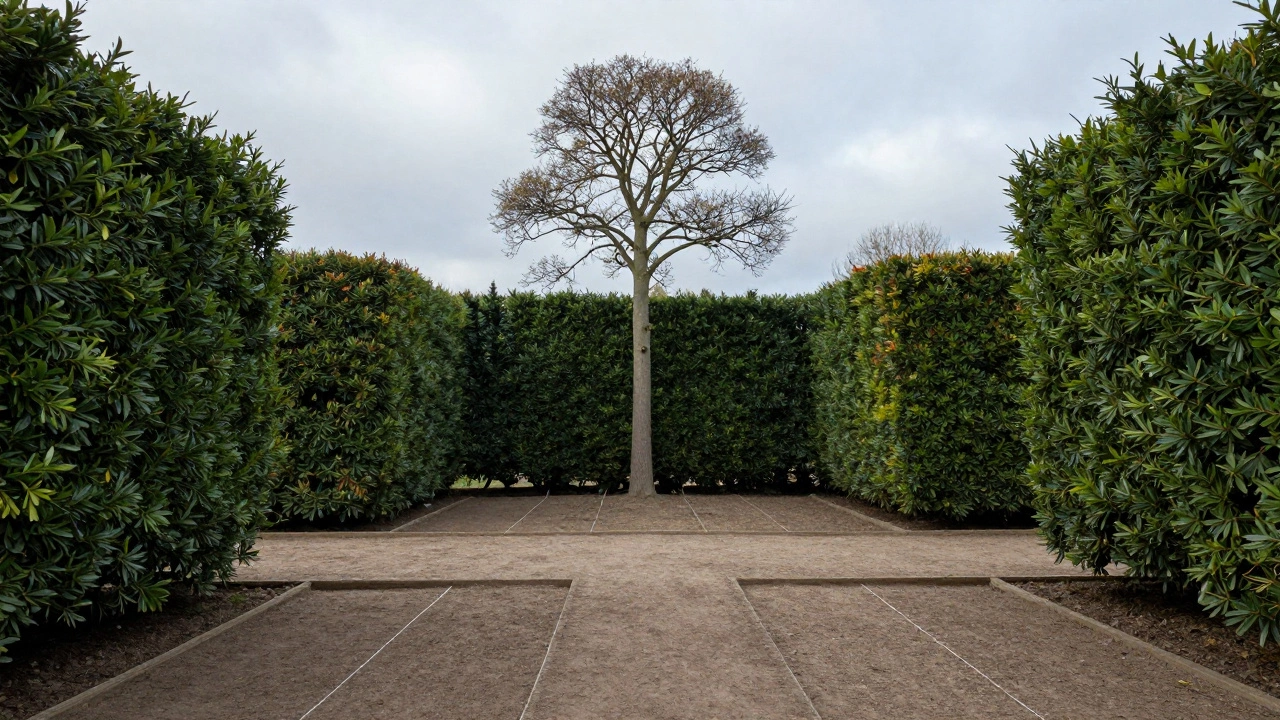
Before you buy a single packet of seeds, look at your space as an empty canvas. Most people rush to fill gaps with colorful annuals, but color fades. Structure lasts. Your garden needs a "skeleton" made of evergreen shrubs, small trees, or ornamental grasses that hold their shape year-round.
- Define boundaries: Use taller hedges like Boxwood or Holly to frame your view. This creates a sense of enclosure and privacy.
- Create focal points: Every room needs a fireplace; every garden needs a feature. This could be a specimen tree, a statue, or a large pot. Place these off-center for a more natural look.
- Establish rhythm: Repeat specific shapes or colors throughout the space. If you use a spherical bush in one corner, echo it three or four times elsewhere. This guides the eye through the garden.
Without this structural base, your garden will feel chaotic once the summer blooms die back. Think of structure as the architecture of your outdoor space.
Layering: The Secret to Depth
A flat garden looks two-dimensional. To make it feel lush and immersive, you need layers. Imagine your garden as a stage with front, middle, and back rows. In a border along a fence, the tallest plants go at the back, medium ones in the middle, and low growers at the front. But what if you’re looking down from a patio?
In that case, flip the script. Plant tall grasses or spires of Verbena bonariensis at the edge so they peek over your head, while keeping lower mounds of Sedum or Thyme closer to your feet. This technique, called "planting for all angles," ensures the garden looks good whether you’re standing in it or sitting on it.
| Layer | Height Range | Role in Design | Example Plants |
|---|---|---|---|
| Canopy/Back | 1.5m - 3m+ | Privacy, vertical interest, windbreak | Birch trees, Hollyhocks, Bamboo |
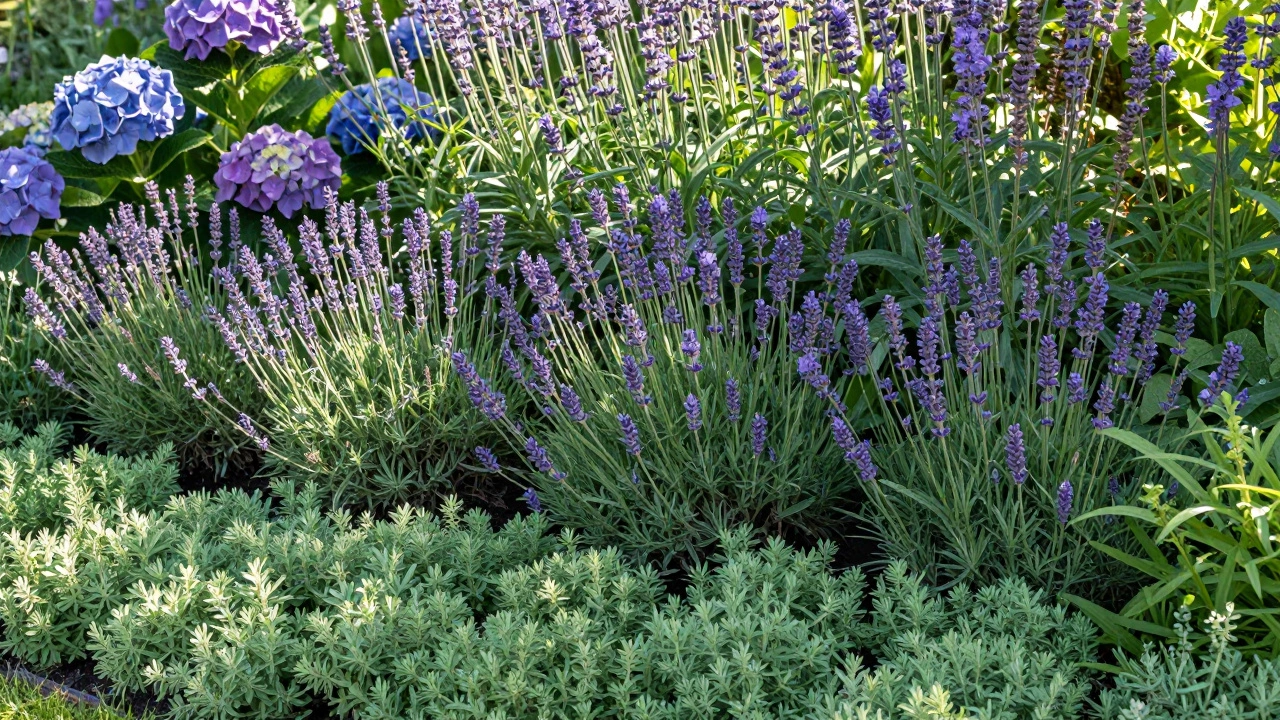
| Middle/Shrub | 0.5m - 1.5m | Bulk, texture, seasonal color | Roses, Hydrangeas, Lavender |
| Front/Groundcover | Under 0.5m | Weed suppression, edging, detail | Alyssum, Creeping Jenny, Hostas |
Mixing heights isn’t just about aesthetics; it’s practical. Taller plants provide shade for moisture-loving understory plants, mimicking a forest floor. This reduces water evaporation and keeps roots cool during hot spells.
Color Theory Without the Headache
You don’t need an art degree to get color right, but ignoring basic principles will leave you with a muddy mess. The easiest way to start is by choosing a palette. Do you want calm and cohesive, or bold and energetic?
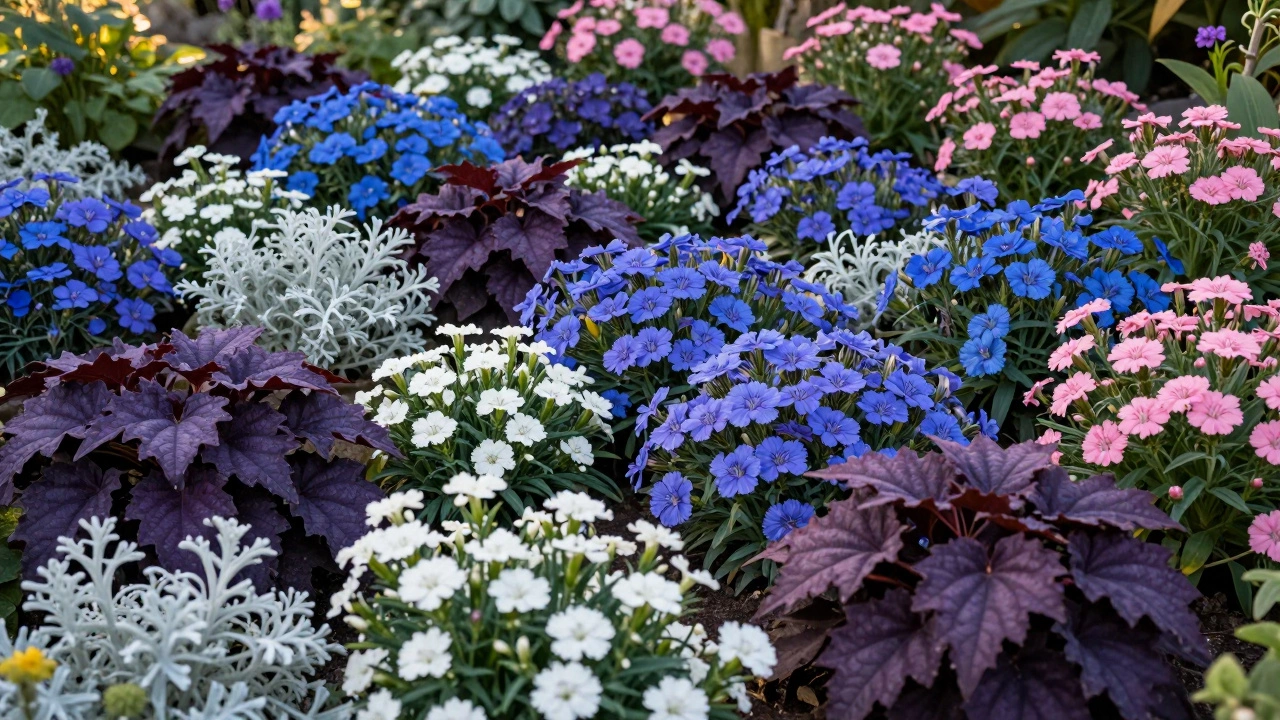
For a serene feel, stick to analogous colors-those next to each other on the color wheel. Think blues, purples, and pinks. These blend softly and are less likely to clash. If you want drama, use complementary colors, like yellow and purple or red and green. Just be careful: too much contrast can become visually noisy.
Here’s a pro tip from my experience in coastal gardens: white flowers act as neutralizers. They break up intense blocks of color and reflect light, making dark corners brighter. Scatter white Dianthus or Camellia throughout your scheme to tie everything together. Also, consider foliage color. Deep purple leaves from Heuchera or silver foliage from Artemisia add depth that flower petals alone can’t achieve.
Grouping: The Rule of Odds
This is the single most impactful rule in garden design. Never plant just one specimen unless it’s a massive tree meant to stand alone. Instead, group plants in odd numbers: three, five, or seven.
Why odd numbers? Because our eyes find them more natural and balanced. An even number of plants looks like a pair of shoes-static and formal. An odd number creates movement. If you’re planting a bed of Perennials, cluster five heads together rather than spacing out ten individual plants. This creates a mass of color that reads as a single unit from a distance, giving your garden a professional, landscaped look.
When grouping, vary the textures within the cluster. Mix broad-leafed plants with fine, feathery ones. For example, place a few robust Hosta leaves alongside delicate Ferns. The contrast makes both plants pop, whereas similar textures might blend into a boring blur.
Flow and Movement: Guiding the Eye
A well-arranged garden tells a story. You control where people look by using lines and curves. Straight paths feel formal and direct; curved paths feel inviting and exploratory. Use your plant arrangements to reinforce these paths.
Place taller plants behind shorter ones to create a backdrop, but also use "interrupters." A sudden splash of bright red in a sea of green draws the eye immediately. You can use this to hide unsightly areas (like a utility box) by placing a vibrant shrub there, or to highlight a beautiful feature like a bench.
Consider the viewer’s perspective. If your main seating area faces north, prioritize shade-tolerant plants with interesting foliage since flowers may struggle in low light. If you have a south-facing patio, heat-loving herbs like Rosemary and Basil will thrive and smell amazing when brushed against.
Companion Planting: Beauty Meets Biology
Arrangement isn’t just visual; it’s ecological. Some plants help each other grow, while others fight for resources. This is known as Companion planting. By arranging plants strategically, you can reduce pests and improve yields without chemicals.
- Alliums and Roses: Garlic and onions repel aphids, which love roses. Planting them nearby protects your prized blooms.
- Nasturtiums and Beans: Nasturtiums attract aphids away from vegetables, acting as a trap crop. They also fix nitrogen in the soil, helping beans grow.
- Marigolds and Tomatoes: The scent of marigolds confuses tomato hornworms and nematodes, protecting your harvest.
Avoid planting incompatible pairs. For instance, never put Fennel next to anything else-it inhibits the growth of neighboring plants. Similarly, Black Walnut trees release juglone, a substance toxic to many common garden plants like tomatoes and potatoes.
Maintenance and Seasonal Changes
Your arrangement must account for growth. A plant that fits perfectly today might choke its neighbors in two years. Check mature sizes before buying. It’s better to underplant now and fill in later than to overcrowd and stress your specimens.
Think about succession. What does the garden look like in late autumn? If all your perennials die back to stubby stems, you’ll have a bare patch. Include plants with winter interest, such as Winter Jasmine for yellow flowers, Mahonia for scented blooms, or ornamental grasses that retain their golden seed heads. This ensures your arrangement remains structured and interesting even in the bleakest months.
How far apart should I plant flowers?
Spacing depends entirely on the mature size of the plant. As a general rule, allow enough room for air circulation to prevent fungal diseases. For small annuals, 6-8 inches is often sufficient. For larger perennials and shrubs, follow the label instructions but err on the side of wider spacing. Overcrowding leads to competition for nutrients and weaker plants.
Can I mix sun and shade lovers in the same bed?
Not directly. You cannot force a sun-lover to thrive in deep shade. However, you can create microclimates. Plant taller, sun-loving plants at the back to cast partial shade on smaller, shade-tolerant plants in front. This mimics natural woodland edges. Ensure the shade-loving plants receive the dappled light they need, not total darkness.
What is the best way to arrange plants in containers?
Use the "thriller, filler, spiller" method. The thriller is a tall, dramatic plant in the center (like a Canna Lily). Fillers are mid-height plants that surround the thriller (like Geraniums). Spillers are trailing plants that hang over the edge (like Ivy or Lobelia). This creates a balanced, overflowing look that works well on patios.
How do I keep my garden looking tidy without it looking sterile?
Regular maintenance is key. Deadhead faded flowers to encourage new blooms and remove weeds promptly. Use mulch to suppress weeds and retain moisture. Stick to a limited color palette and repeat plant varieties to create cohesion. A tidy garden isn't about perfection; it's about controlled abundance.
Should I follow a symmetrical or asymmetrical layout?
Symmetry suits formal gardens with geometric shapes and clear axes, often found near entrances. Asymmetry is more natural and relaxing, suitable for cottage gardens or informal borders. For most home gardens, asymmetrical designs feel more organic and require less rigid maintenance. Choose based on the architectural style of your home and the mood you want to create.