Plant Coffee Safety Calculator
Is Coffee Safe for Your Plant?
This calculator helps you determine if coffee is safe for your specific houseplant based on plant type, soil preferences, and usage frequency.
People often pour leftover coffee on their houseplants, convinced it’s a natural boost. Some swear their fiddle leaf figs thrive on it. Others have watched their peace lilies turn brown after a coffee spill. So, is coffee actually good for plants-or just a myth wrapped in a warm mug?
What’s in coffee that might help plants?
Coffee grounds contain nitrogen, phosphorus, potassium, magnesium, and copper-all nutrients plants need. Used coffee grounds are about 2% nitrogen by weight, which sounds promising. Nitrogen fuels leaf growth, so it makes sense to think coffee could act like a slow-release fertilizer. But here’s the catch: those nutrients aren’t instantly available. They need to break down first, and that process depends on soil microbes, moisture, and temperature.
Acidity is the big concern. Fresh coffee is acidic, with a pH around 5.0 to 5.5. Many houseplants-like African violets, orchids, and ferns-do prefer slightly acidic soil. But others, like succulents, snake plants, or cacti, thrive in neutral to slightly alkaline conditions. Pouring coffee directly onto the soil can drop the pH too low for those plants, locking up essential nutrients like iron and manganese. That’s when yellowing leaves and stunted growth show up.
Used coffee grounds vs. brewed coffee: big difference
There’s a huge gap between using brewed coffee and using dried coffee grounds. Brewed coffee is mostly water with a small amount of dissolved acids and minerals. One cup won’t harm a large plant, but pouring a whole pot every week? That’s asking for trouble. The water dilutes the coffee, but the acid builds up over time. In a pot with poor drainage, it can linger and create a hostile environment for roots.
Used coffee grounds, on the other hand, are mostly fiber and organic matter. After brewing, most of the acid has been washed out. The pH of dried grounds hovers around 6.5 to 6.8-nearly neutral. That’s much safer. But even then, you can’t just dump a cup of grounds on top of the soil and call it a day.
How to use coffee grounds safely (if at all)
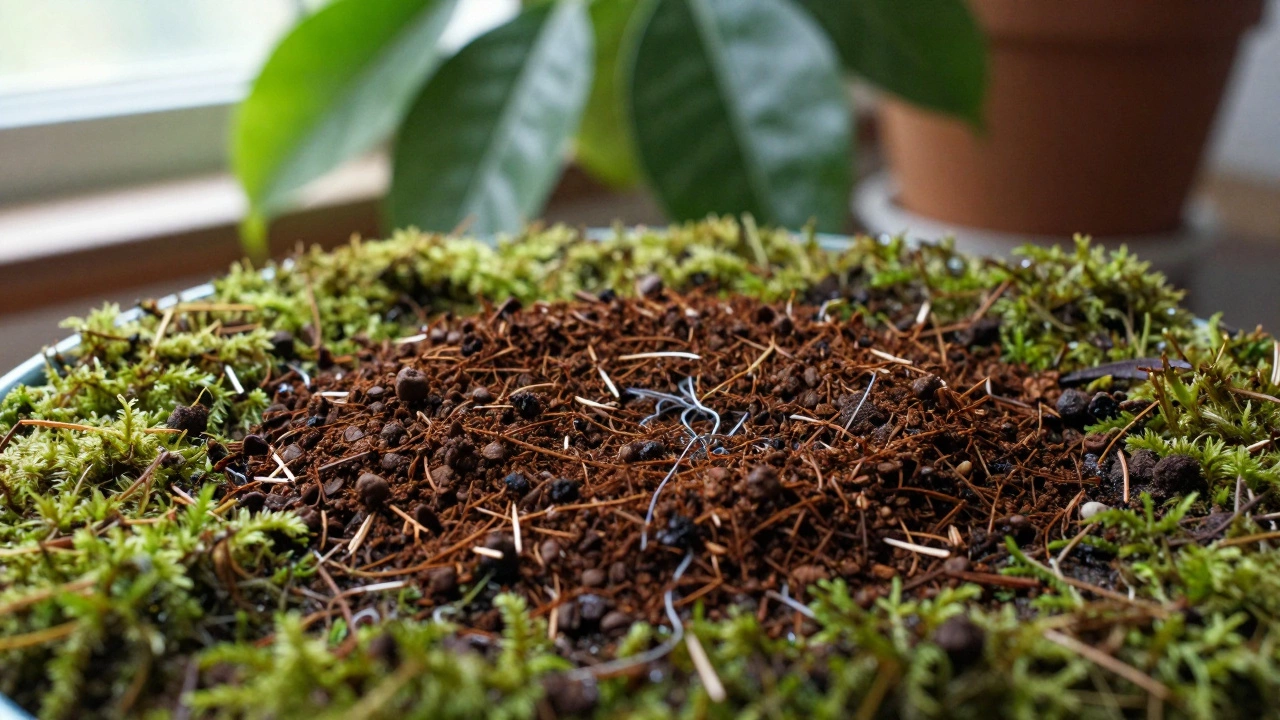
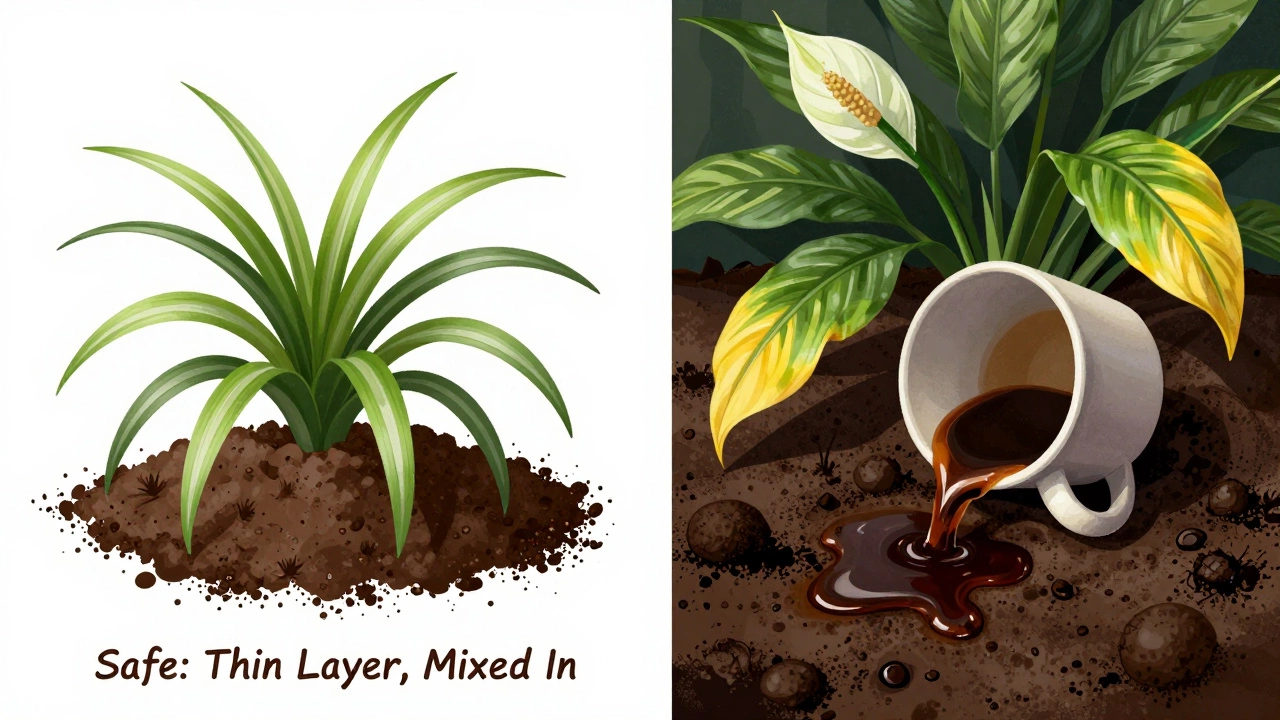
If you want to try coffee grounds, treat them like compost-not fertilizer. Mix a thin layer (no more than half an inch) into the topsoil, then cover it with a layer of mulch or potting mix. This prevents mold, keeps bugs away, and lets microbes slowly break down the material. Don’t let it sit in a thick, wet layer. That’s how you get fungus gnats and root rot.
Some gardeners mix coffee grounds into homemade compost bins. That’s fine. But indoor pots don’t have the same microbial diversity as outdoor compost. In a small container, coffee grounds can clump, retain too much moisture, and block air from reaching roots. A better option? Add them to your outdoor compost pile, then use the finished compost as a top dressing for your indoor plants.
What plants might tolerate coffee grounds?
Some plants respond well to slightly acidic conditions. Blueberries, rhododendrons, and azaleas love coffee grounds outdoors. Indoors, you might see positive results with:
- Roses (if kept in a bright window)
- Spider plants (they’re forgiving)
- Philodendrons (they like organic matter)
- Snake plants (if used very sparingly)
But even for these, moderation matters. One teaspoon of dried grounds every few months is enough. Too much, too often, and you’re risking harm.
What about coffee water? Should you water plants with leftover coffee?
Don’t do it regularly. Even diluted, coffee adds unpredictable acidity and salts to the soil. Over time, those salts build up and damage root cells. A 2023 study from the University of Florida tested watering peace lilies with 25% coffee solution twice a week for six months. The plants showed 30% less root growth compared to those watered with plain water. Their leaves also turned yellow faster.
One cup of black coffee, once a month, on a plant that likes acidity? Maybe okay. But if you’re doing it weekly because you think it’s a “free fertilizer,” you’re better off using a balanced liquid houseplant feed. It’s controlled, predictable, and safe.
What about caffeine?
Caffeine is a natural pesticide. It’s toxic to insects and fungi-which sounds great, right? But it’s also toxic to plant roots. Studies show caffeine inhibits seed germination and slows root development. A 2021 experiment at the University of California found that soil treated with caffeine concentrations found in used coffee grounds reduced root growth in tomato seedlings by 40%. Houseplants aren’t immune.
So if you’re using coffee grounds hoping to repel ants or gnats, you’re not helping your plant. You’re just adding a slow-acting toxin to its environment.
What are better alternatives?
Instead of coffee, try these proven methods:
- Compost tea - Steep finished compost in water for 24 hours, strain, and use as a gentle liquid feed.
- Worm castings - Rich in nutrients and microbes. Mix a tablespoon into the topsoil every two months.
- Organic liquid fertilizer - Look for one with an NPK ratio like 4-3-3. Apply every 4-6 weeks during growing season.
- Crushed eggshells - Add calcium without changing pH. Rinse, dry, crush, and sprinkle lightly on soil.
These options give you control. You know exactly what you’re adding. No guesswork. No hidden acids. No caffeine.
Final verdict: is coffee good for plants?
Used coffee grounds, in tiny amounts and properly mixed, can add a bit of organic matter to indoor plant soil. But they’re not a fertilizer. They’re not a miracle cure. And brewed coffee? Avoid it.
Most houseplants do best with consistent, balanced care: bright light, proper watering, and a reliable feed. Coffee won’t replace those basics. If you’re tempted to pour your morning brew on your monstera, stop. Your plant doesn’t need it. And it might not survive the side effects.
Save the coffee for yourself. Let your plants thrive on what they actually need.
Can I water my plants with cold coffee?
It’s not recommended. Cold coffee still contains acids and salts that can build up in the soil over time, harming roots and altering pH. Even if it’s cold, the chemical composition hasn’t changed. Stick to plain water or a proper plant feed.
Do coffee grounds attract pests?
Damp coffee grounds can attract fungus gnats and mold. If you spread them on top of the soil without mixing, they create a moist, dark layer that pests love. Always mix them into the topsoil or compost them first to avoid this.
Will coffee grounds make my soil acidic?
Used coffee grounds are close to neutral (pH 6.5-6.8), so they won’t dramatically acidify soil. But fresh coffee is acidic and can lower pH if used often. If your plant prefers alkaline soil (like a cactus or succulent), avoid coffee entirely.
Can I use coffee grounds as mulch?
Not directly. Coffee grounds compact easily and form a crust that blocks water and air from reaching roots. If you want to use them as mulch, mix them with leaf litter, bark, or coconut coir first. Never use them alone.
How often can I add coffee grounds to my plants?
Once every 2-3 months, and only in very small amounts-about a tablespoon mixed into the top inch of soil. More than that risks root damage, mold, and nutrient imbalance. Less is always better.