Raised Bed Soil Calculator
How tall should your raised bed be? It’s not just about looks - it’s about your back, your plants, and how easy it is to grow food or flowers without constant strain. Too low, and you’re bending over all day. Too high, and you’re wasting soil, money, and time. The right height makes gardening feel like a pleasure, not a chore.
Why Height Matters More Than You Think
Most people assume raised beds are just elevated planters. But the height affects drainage, root space, accessibility, and even how warm the soil gets. A 6-inch bed might work for lettuce, but not for carrots or potatoes. A 30-inch bed is great for someone in a wheelchair, but overkill if you’re just growing herbs on a balcony.
The soil in a raised bed warms up faster than ground soil in spring. That’s a big plus in the UK, where cold, wet springs can delay planting. But if the bed is too shallow, roots hit hardpan or clay and stop growing. Too deep, and you’re filling it with expensive compost you don’t need.
Standard Heights for Different Needs
There’s no single answer, but most gardeners fall into one of four common height ranges:
- 6 to 8 inches - Best for shallow-rooted plants like lettuce, spinach, radishes, and herbs. This is the minimum you should go if you’re putting the bed on top of decent soil. It gives roots a little extra room and better drainage than flat ground.
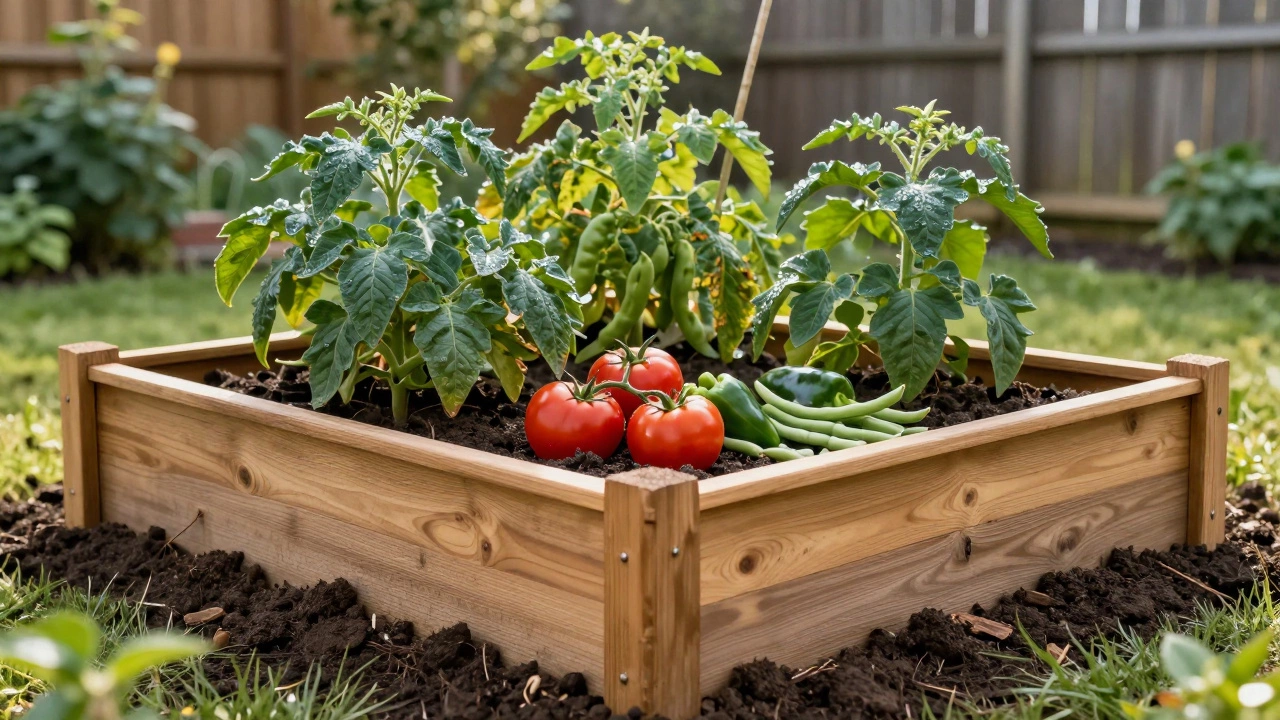
- 10 to 12 inches - The sweet spot for most vegetables. Tomatoes, peppers, beans, cucumbers, and carrots all thrive here. This depth lets roots grow freely without needing a huge amount of soil. Most pre-built kits are this height because it’s practical and affordable.
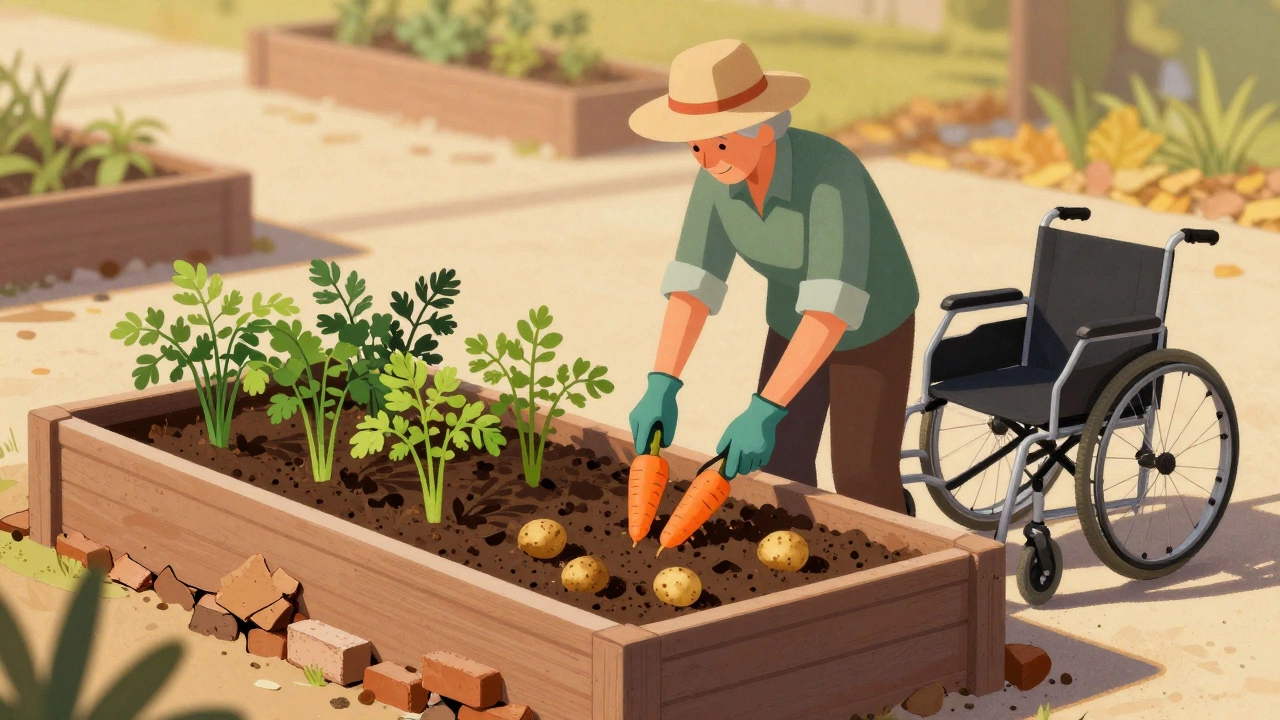
- 18 to 24 inches - Ideal for deeper-rooted crops like potatoes, parsnips, and squash. Also perfect if you have trouble bending or kneeling. Many people choose this height to avoid back pain. At 24 inches, you can often garden while standing upright.
- 30 inches or higher - Usually for wheelchair access or serious back issues. These are more like garden tables. You’ll need a lot of soil - up to 2 cubic yards for a 4x8 foot bed - and it costs more. But if mobility is the issue, it’s worth every penny.
What’s the Best Height for Vegetables?
If you’re growing food, you want roots to reach deep enough without wasting resources. Here’s a quick guide:
- Shallow roots (6-12 inches): Lettuce, kale, spinach, arugula, onions, garlic, basil, parsley, chives.
- Medium roots (12-18 inches): Beans, peas, broccoli, cauliflower, cabbage, Brussels sprouts, zucchini, cucumbers.
- Deep roots (18+ inches): Carrots, parsnips, potatoes, sweet potatoes, tomatoes, pumpkins, asparagus.
Tomatoes, for example, can send roots down 3 feet in the ground. But in a raised bed, they’ll do fine in 18 inches if the soil is loose and rich. You don’t need to fill it to the top with soil - just enough to let roots spread without hitting a hard barrier.
Soil Depth vs. Bed Height: What’s the Difference?
Don’t confuse bed height with soil depth. If your bed is 12 inches tall but sits on concrete, your soil depth is 12 inches. If it’s on compacted clay, you might only have 6 inches of usable soil unless you dig down first.
For best results, place raised beds on grass or soil you’ve loosened. Even a few inches of digging underneath helps roots penetrate. If you’re putting the bed on pavement or a patio, then the full height becomes your growing depth - so go at least 12 inches for veggies, 18 for root crops.
Height and Drainage: Don’t Let Water Pool
Waterlogged soil kills plants faster than drought. Raised beds drain better than flat ground, but only if they’re tall enough. A 4-inch bed on clay soil will still turn into a swamp after heavy rain.
In the UK, where rain is frequent, aim for at least 10 inches of height. If you’re on a slope or near a downspout, go higher. Adding a layer of gravel or landscape fabric at the bottom helps too - but don’t use plastic. It traps water and suffocates soil life.
Accessibility: Gardening Without Pain
If you’re over 50, have arthritis, or use a wheelchair, height isn’t a luxury - it’s a necessity. A 24-inch bed lets you tend plants without bending. A 30-inch bed lets you work from a seated position.
Many UK gardeners with mobility issues switch to raised beds after back surgery or a hip replacement. One study from the University of Reading found that gardeners using 20-inch beds reported 68% less lower back pain after 3 months compared to those using ground-level plots.
Don’t just guess your ideal height. Try kneeling on a stool in your yard. How high is your waist? That’s a good starting point. Most people find 20 to 24 inches works best for standing gardening.
Cost and Soil: Don’t Overdo It
Soil isn’t cheap. A cubic yard of good compost-based mix costs £80-£120 in the UK. A 4x8 foot bed at 12 inches tall holds about 1 cubic yard. At 24 inches, it holds nearly 2. That’s double the cost.
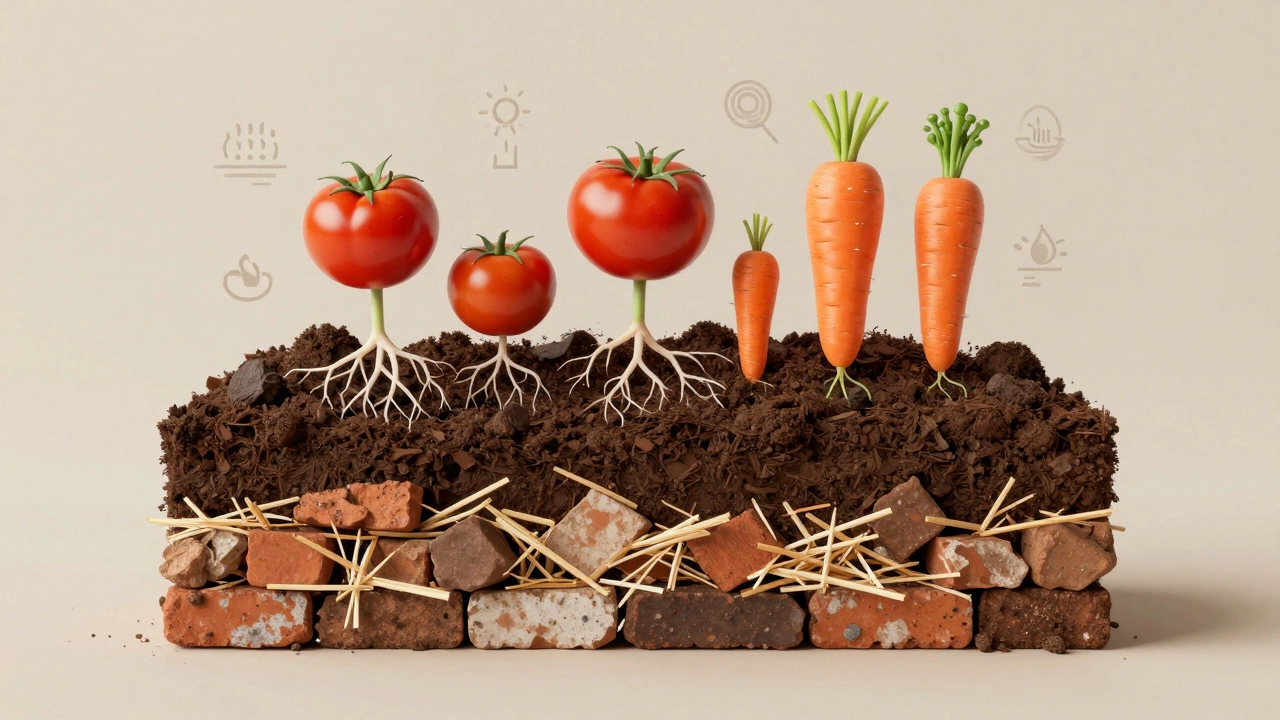
Here’s a smart trick: fill the bottom 6-8 inches with broken bricks, old pots, or cardboard covered with straw. Then top it with 6-10 inches of quality soil. You save money and still give roots enough room.
For a 12-inch bed on soil: 1 cubic yard of soil. For a 24-inch bed on concrete: 2 cubic yards - but only 1 needs to be premium mix. The rest can be recycled material.
What About Width and Length?
Height isn’t the only thing that matters. Width should be no more than 4 feet so you can reach the center from both sides. Length can be as long as you like - 8 feet is common. Too wide, and you’re stretching or stepping into the bed, compacting the soil.
Most people build 4x8 foot beds. They fit well in small gardens, are easy to manage, and hold enough for a family. Stick to that unless you have space and strength for larger ones.
Final Rule of Thumb
Here’s what most experienced UK gardeners do:
- Start with 12 inches if you’re new to raised beds and growing most vegetables.
- Go to 18 inches if you’re growing carrots, potatoes, or have a bad back.
- Use 24 inches or more only if you can’t bend or kneel.
- Never go below 6 inches - it’s just a glorified border.
And remember: you can always add soil later. Start lower if you’re unsure. You can’t easily take soil out once it’s in.
Common Mistakes to Avoid
- Using treated wood that leaches chemicals - go for cedar, redwood, or food-safe composite.
- Filling with topsoil only - it compacts. Mix in compost or leaf mold.
- Building on asphalt without drainage - roots can’t breathe.
- Assuming taller = better - more soil isn’t always better if you don’t need it.
Many gardeners regret building beds too high. They spend £300 on soil, only to find they could’ve grown the same crops in half the height. Start simple. Grow a season. Then adjust next year.
What is the minimum height for a raised bed?
The minimum height for a raised bed is 6 inches. This works only if you’re placing it on loose, well-draining soil and growing shallow-rooted plants like lettuce, herbs, or radishes. Anything less than 6 inches doesn’t offer real advantages over a flat garden bed and may still suffer from poor drainage.
Is a 12-inch raised bed deep enough for tomatoes?
Yes, a 12-inch raised bed is deep enough for tomatoes if the soil is loose, rich, and well-draining. While tomato roots can grow deeper in open ground, they adapt well to 12 inches of good soil. Just make sure the bed isn’t sitting on compacted clay or concrete without drainage - and provide support like stakes or cages.
Do raised beds need to be off the ground?
No, raised beds don’t need to be fully off the ground. Many are built directly on soil or grass. The key is to loosen the ground underneath before building. This lets roots penetrate deeper and improves drainage. If you’re placing the bed on concrete or asphalt, then yes - the full height becomes your growing depth, so aim for at least 12 inches.
Can I use bricks or wood for raised bed walls?
Yes, both bricks and wood work well. Untreated cedar, redwood, or composite lumber are ideal for wood because they last longer and don’t leach chemicals. Bricks and concrete blocks are durable and don’t rot, but they can heat up in summer and dry out soil faster. Avoid pressure-treated wood unless it’s labeled safe for food gardens.
How much soil do I need for a 4x8 foot raised bed?
For a 4x8 foot bed, you need about 1 cubic yard of soil for a 12-inch height. For 18 inches, you’ll need 1.5 cubic yards. For 24 inches, you’ll need 2 cubic yards. To save money, fill the bottom half with broken bricks, old pots, or cardboard covered with straw, then top with quality soil mix.
Should I line my raised bed with plastic?
No, lining a raised bed with plastic is not recommended. Plastic traps water, prevents air flow, and kills beneficial soil organisms. Instead, use landscape fabric if you’re worried about weeds coming up from below. Or simply lay down cardboard before adding soil - it breaks down over time and lets roots pass through.
Next Steps: Planning Your Bed
Before you buy wood or soil, measure your space. Sketch out where the sun hits during the day. Most veggies need 6-8 hours of sun. Choose a height based on what you want to grow and how you’ll use it. Start with 12 inches if you’re unsure. You can always add more soil next spring.
Test your soil underneath if possible. A simple pH test from a garden center costs £5 and tells you if you need lime or sulfur. Don’t skip this - it saves you from failed crops later.
And remember: a raised bed doesn’t have to be perfect. It just has to work for you. The best height is the one that lets you enjoy gardening without pain, waste, or frustration.