There’s no such thing as one universal best lawn care program-not in the UK, not anywhere. What works in Brighton’s damp, clay-rich soil won’t help in Surrey’s sandy patches, and what keeps your neighbour’s lawn green in spring might turn yours brown by July. The real question isn’t which program is best-it’s which one fits your lawn’s actual needs, your time, and your climate.
Why Most Lawn Care Programs Fail
Too many people buy into pre-packaged lawn care kits from garden centres that promise a perfect lawn in four easy steps. They follow the calendar on the box: feed in March, weed in May, moss killer in September. But lawns aren’t robots. They don’t respond to generic dates. They respond to weather, soil type, foot traffic, and how long they’ve been neglected.
A 2024 study by the Royal Horticultural Society found that 68% of UK homeowners who followed commercial lawn care schedules saw no improvement in grass density or colour after one season. Why? Because those programs assume your lawn is healthy to begin with. If your soil is compacted, your grass is thin, or your drainage is poor, feeding it more fertiliser just feeds the weeds.
What Your Lawn Actually Needs
Think of lawn care like feeding a pet. You wouldn’t give a dog the same food as a cat. Your lawn has its own diet. The core needs are simple:
- Soil health-not just nutrients, but structure. Compacted soil suffocates roots.
- Correct mowing height-cutting too short stresses grass and invites weeds.
- Proper watering-deep and infrequent, not daily sprinkles.
- Seasonal timing-what you do in April isn’t the same as what you do in October.
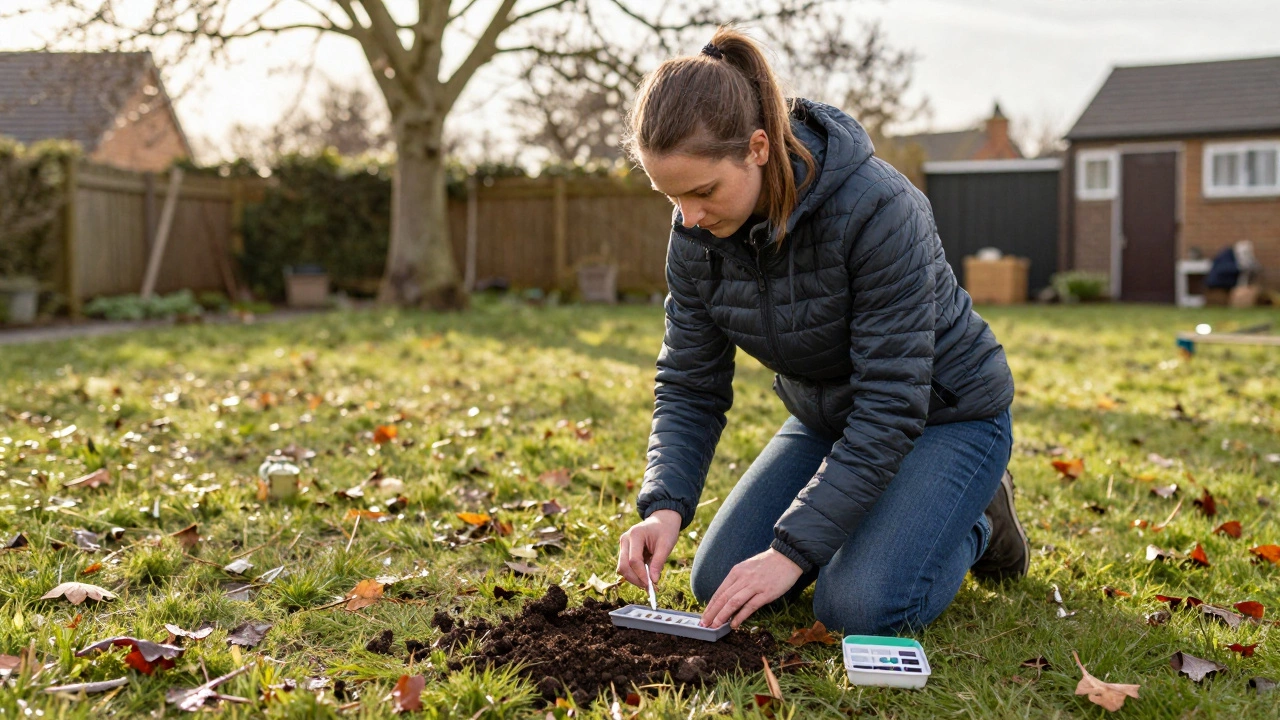
The best program doesn’t start with a fertiliser. It starts with a soil test. You can get a basic one from your local garden centre for under £15. It tells you pH, nitrogen, phosphorus, and potassium levels. Most UK lawns are too acidic-pH below 6.0. Lime corrects that. No fertiliser will work until it’s fixed.
The Real Seasonal Lawn Care Program for the UK
Forget the four-step kits. Here’s what actually works across the UK, based on local conditions and soil science:
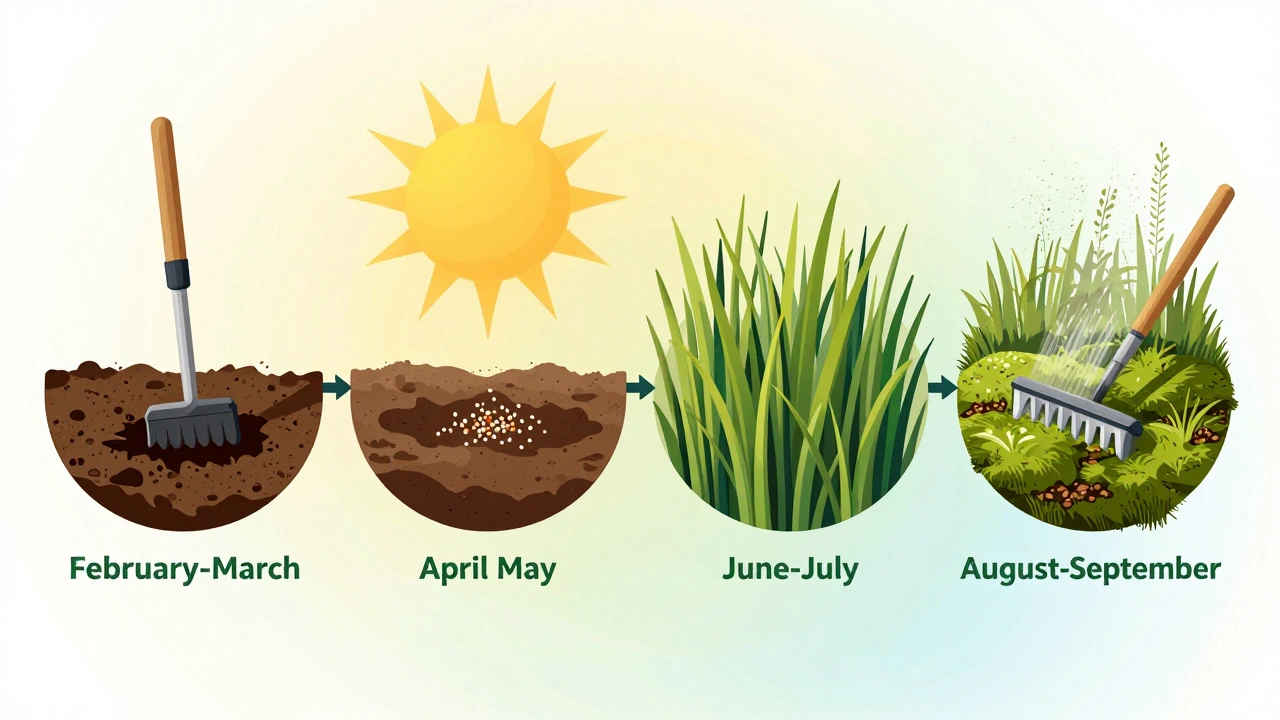
February-March: Aerate and Scarify
After winter, your lawn is likely compacted. Thatch builds up from dead grass and moss. Use a manual or powered aerator to punch small holes-about 10-15cm apart-through the soil. Then scarify: run a rake or mechanical scarifier to pull out thatch. This lets air, water, and nutrients reach the roots. Do this before you feed. Feeding on compacted soil is like pouring coffee into a blocked drain.
April-May: Feed with Slow-Release Nitrogen
Wait until soil temperature hits 10°C (usually mid-April). Use a slow-release organic fertiliser-like composted chicken manure or seaweed-based feed. Avoid quick-release granules with high N-P-K ratios. They burn grass, encourage rapid top growth (which means more mowing), and leach into groundwater. Apply at 35g per square metre. Water lightly after.
June-July: Mow High, Water Deep
Set your mower to 5-6cm. Taller grass shades the soil, reduces evaporation, and crowds out weeds like dandelions and plantain. Never cut more than a third of the blade at once. If it’s dry, water deeply once a week-15-20mm per session. That’s about 1.5 hours with a sprinkler on a slow setting. Morning watering is best. Evening watering invites fungal diseases.
August-September: Treat Moss and Re-seed
Moss thrives in damp, shady, acidic spots. If it’s taking over, apply iron sulphate (ferrous sulphate) at 5g per square metre. It kills moss without harming grass. Wait 7-10 days, then rake it out. Now’s the time to re-seed bare patches. Use a mix of perennial ryegrass and fine fescue-both UK-friendly. Lightly rake seed into soil, cover with a thin layer of compost, and keep moist until it sprouts.
October-November: Feed with Potassium, Reduce Mowing
Grass needs to harden off for winter. Apply a low-nitrogen, high-potassium feed-like potassium sulphate-at 20g per square metre. This strengthens cell walls and helps resist frost damage. Keep mowing, but raise the blade to 6cm. Don’t cut when the grass is frozen or waterlogged.
December-January: Let It Rest
No feeding. No watering. No raking. Just walk on it as little as possible. Snow and frost naturally aerate the soil. Your lawn is dormant. Trying to do something now does more harm than good.
What to Avoid
Here are the top three mistakes that ruin even the best-intentioned programs:
- Overfeeding-More fertiliser doesn’t mean greener grass. It means algae blooms in nearby ponds and dead patches from chemical burn.
- Watering daily-Shallow roots. Weak grass. More disease.
- Using chemical weedkillers as a first resort-Hand-pull dandelions. They’re not evil. They’re telling you your soil’s low in calcium. Fix the soil, and they’ll fade.
Organic vs. Synthetic: What Works Best?
Organic programs take longer to show results-usually 6-12 months-but they build lasting soil health. Synthetic feeds give quick green-ups but leave your lawn dependent on them. If you stop, it collapses.
Organic options:
- Compost tea (brewed at home for £5 in materials)
- Seaweed extract (boosts root growth and stress resistance)
- Crushed eggshells (for calcium)
- Grass clippings left on the lawn (free nitrogen, reduces need for feed by 25%)
Synthetic options:
- Scotts Lawn Builder (fast-acting, high nitrogen)
- Westland Lawn Feed, Weed & Moss Killer (convenient but harsh)
- Spike-a-Lawn (for compaction, not feeding)
If you’re starting from scratch, go organic. If your lawn is already decent and you want fast results, use synthetic sparingly-once a year, max.

When to Call a Professional
You don’t need a pro for routine care. But if you’ve tried the steps above for two seasons and still have:
- Thick moss covering more than 30% of the lawn
- Widespread patchy death (not just from dog urine)
- Water pooling after rain
Then it’s time for a soil analysis from a turf specialist. They’ll test for nematodes, compaction depth, and drainage issues. A £70 assessment can save you £300 in wasted products and failed re-seeding.
Final Thought: Patience Wins
A perfect lawn isn’t a product you buy. It’s a habit you build. The best program is the one you stick to-year after year. It’s the mower you sharpen every spring. The clippings you leave. The weeds you pull by hand. The soil you test. It’s not about having the shiniest green carpet. It’s about having a lawn that survives the rain, the frost, the dog, and the kids playing football on it.
Start small. Test your soil. Aerate. Mow high. Stop feeding in August. And don’t rush it. Your lawn will thank you in three years-not three weeks.
What is the best time of year to start a lawn care program in the UK?
The best time to start is late February to early March. That’s when soil begins to warm up, and you can aerate and scarify before the growing season kicks in. Starting then gives your lawn the best chance to recover and thrive through spring and summer.
Can I use the same lawn care program for a new lawn and an old one?
No. New lawns (under 12 months old) need gentle care: light watering, no fertiliser for the first 6 weeks, and mowing only once the grass reaches 7cm. Old lawns need more aggressive treatment-like aeration and scarifying-to fix years of compaction and thatch. Treat them as different plants.
Do I need to water my lawn if it rains every week?
Not if the rain is deep and consistent. But UK rainfall is often light and frequent-just enough to wet the surface. Your roots need 15-20mm per session to grow deep. If your lawn stays soggy but never gets soaked, you still need to water deeply once a week during dry spells.
Is it worth buying a lawn care subscription service?
Only if you’re short on time and trust the company’s methods. Most services use generic schedules and synthetic chemicals. You can do better yourself for less. A soil test, a rake, and a bag of organic feed cost less than one subscription box. Plus, you learn what your lawn really needs.
Why does my lawn turn yellow after I feed it?
You likely used a fast-release synthetic fertiliser on dry, compacted soil. The salts in the feed burn the grass roots. Always water before and after feeding. And never feed when the soil is below 8°C or when the grass is stressed from drought. Less is more.
How do I know if my lawn needs aeration?
Try the screwdriver test. Push a regular screwdriver into the soil. If it goes in easily, your soil is fine. If it takes force or won’t go past 5cm, you need aeration. Also, if water pools after rain or your lawn feels springy underfoot, that’s compacted soil. Aerate in spring or autumn.