Soil Amendment Advisor
Select your soil type to get tailored recommendations for natural soil amendments. Based on the article "What Is the Best Thing to Amend Soil With?"
Recommended Amendments
Compost
Improves structure and water retention. Apply 2-3 inches in spring or autumn. Breaks up clay texture and supports microbial life.
Leaf Mold
Creates air pockets for roots. Mix into planting holes to prevent waterlogging. Forms naturally from decomposed leaves.
Biochar
Retains moisture and nutrients. Use at 10% volume. Especially beneficial in heavy clay soils.
Compost
Increases water retention significantly. Apply 2-3 inches annually. Provides slow-release nutrients.
Leaf Mold
Acts like a water sponge. Mix into sandy soil to improve moisture retention without compaction.
Biochar
Helps retain nutrients that would otherwise wash away. Use at 5-10% volume.
Compost
Maintain soil health with annual applications (2-3 inches). Replenishes organic matter naturally.
Worm Castings
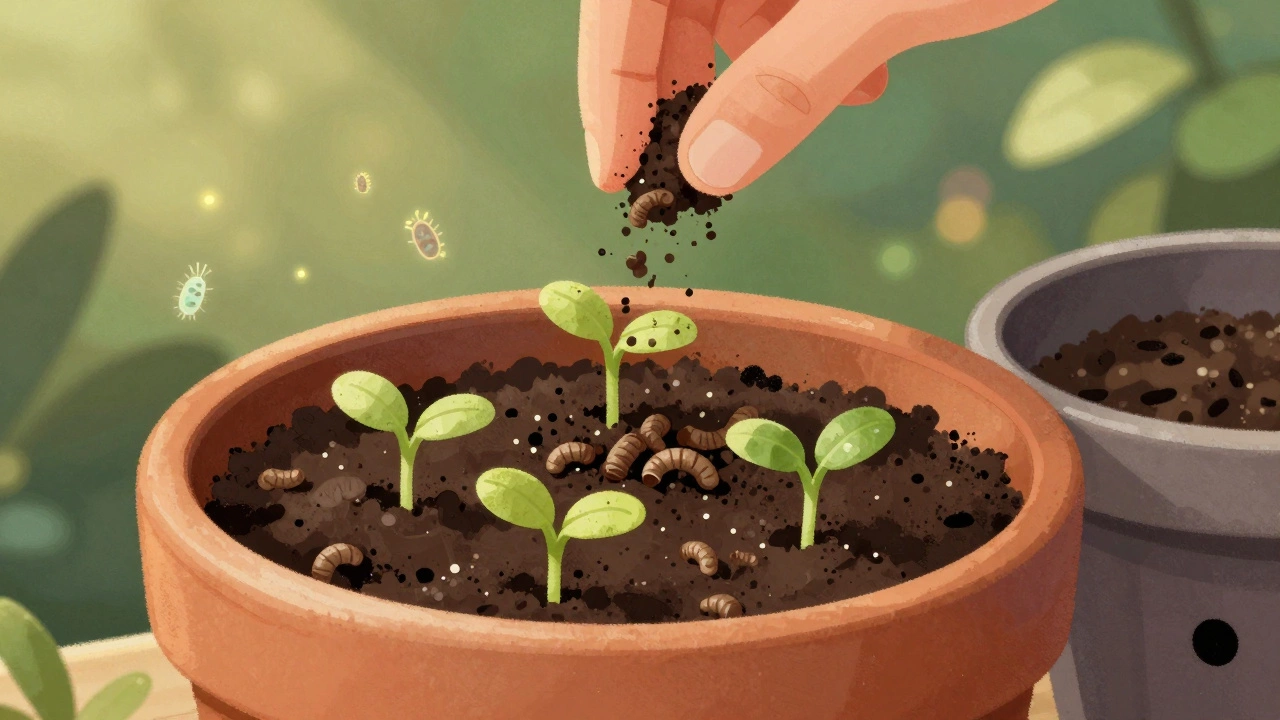
Boosts plant immunity and nutrient uptake. Sprinkle around seedlings or mix into potting soil.
Soil is the foundation of every great garden. But if your soil is compacted, sandy, clay-heavy, or just lifeless, no amount of fertilizer will fix it. The real secret? Amending your soil with the right organic materials. Not all soil amendments are created equal. Some give a quick boost. Others build long-term health. And some? They do both.
Compost: The Gold Standard
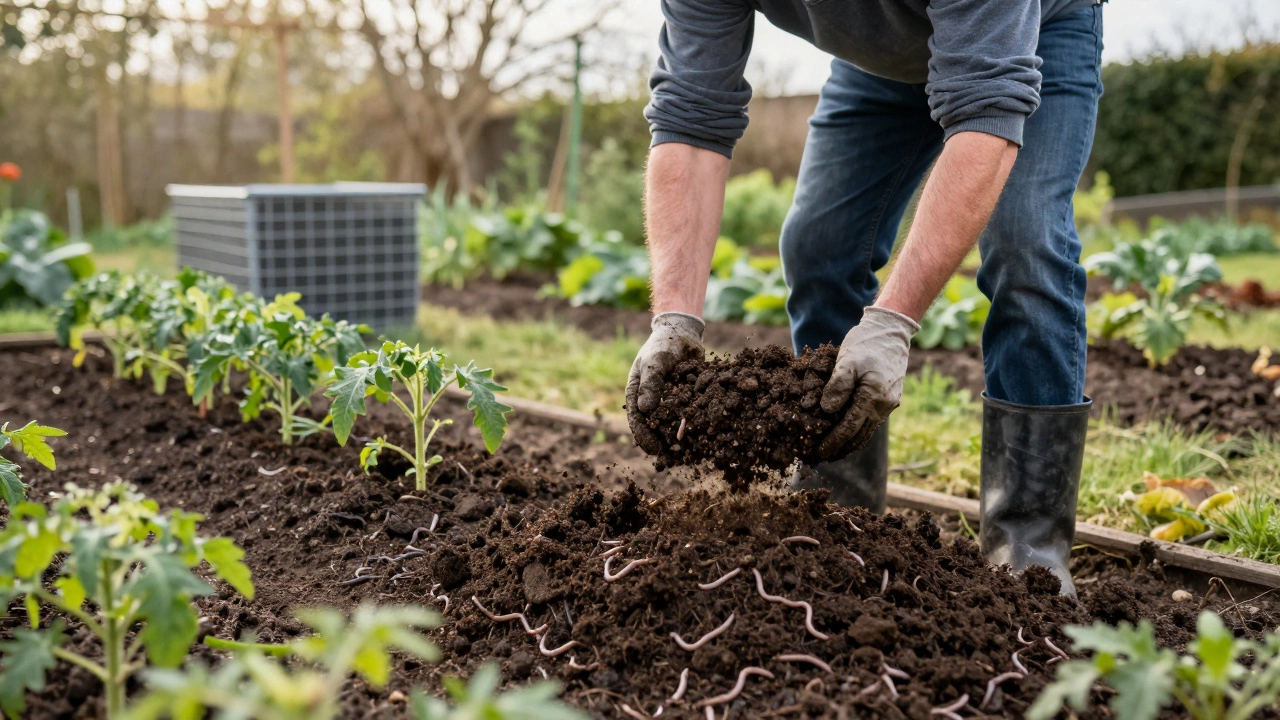
If you only do one thing to improve your soil, make it compost. It’s not just dirt with organic stuff mixed in-it’s a living ecosystem. Good compost is dark, crumbly, and smells like wet earth after rain. It’s packed with beneficial microbes, fungi, and nutrients that plants actually use.
In the UK, many gardeners make their own compost from kitchen scraps, grass clippings, and prunings. A well-managed pile breaks down in 6-9 months. You don’t need fancy bins-just a corner of the garden with some wire mesh. Spread a 2-3 inch layer over your beds each spring. Dig it in lightly, or let worms do the work. Over time, your soil structure improves, water retention increases, and roots spread easier.
Studies from the University of Reading show that gardens amended with home-made compost see up to 40% higher yields in vegetables like tomatoes and carrots. And it’s free-if you’re willing to wait.
Worm Castings: Nature’s Fertilizer
Worm castings are the poop of earthworms. Sounds gross? It’s not. They’re one of the most concentrated, gentle, and effective soil amendments you can buy or make. Rich in nitrogen, phosphorus, potassium, and trace minerals, castings release nutrients slowly. That means no burning roots, no runoff, no waste.
Many UK gardeners use worm farms (vermicomposting) to turn food scraps into black gold. A pound of worms can process half a pound of scraps daily. The result? A nutrient-dense, microbe-rich amendment that boosts plant immunity too. Sprinkle a handful around seedlings or mix into potting soil. Even in clay-heavy soils, worm castings help loosen texture without adding bulk.
Unlike synthetic fertilizers, castings don’t leach. They stay in the root zone. And they’re safe for kids, pets, and pollinators. If you want a quick, clean boost without chemicals, this is it.
Leaf Mold: The Silent Soil Hero
Leaf mold isn’t compost. It’s something quieter, slower, and just as powerful. Made entirely from decomposed leaves, it’s like nature’s peat moss-except it’s free and sustainable. In autumn, rake up fallen leaves from your lawn or street. Pile them in a wire bin or black plastic bag with holes punched in it. Let them sit for 1-2 years. They’ll turn into a dark, spongy material that holds water like a sponge.
Leaf mold doesn’t add many nutrients, but it transforms soil texture. It breaks up clay, helps sandy soil hold moisture, and creates air pockets for roots. In Brighton, where winter rains can turn soil to mud, leaf mold is a lifesaver. Mix it into planting holes for perennials or use it as a top dressing for vegetable beds. It’s especially great for woodland plants like ferns and hostas.
And unlike peat moss-which destroys fragile wetlands-leaf mold is 100% renewable. You’re recycling what already falls in your garden.
Well-Rotted Manure: Don’t Use Fresh
Manure sounds like a no-brainer. But fresh manure? It can burn plants, attract flies, and carry harmful bacteria. The key is aging. Cow, horse, chicken, or rabbit manure must be composted for at least 6 months, preferably a year. You’ll know it’s ready when it looks like dark soil and smells earthy-not sour or ammonia-heavy.
Chicken manure is the strongest-use sparingly. Horse manure is great for heavy feeders like cabbages and pumpkins. Cow manure is milder and better for general use. In organic gardening circles, aged manure is still the go-to for building fertility in raised beds and fruit gardens.
Spread it in late autumn or early spring. Work it into the top 6 inches. Avoid using it on root crops like carrots-too much nitrogen can cause forked roots. But for tomatoes, beans, and squash? It’s magic.
Biochar: The New Kid on the Block
Biochar is charcoal made from plant material burned in low-oxygen conditions. It’s been used for centuries in the Amazon (where it created rich, long-lasting soil called terra preta). Today, it’s making a comeback as a climate-smart soil amendment.
Biochar doesn’t add nutrients. Instead, it acts like a sponge for them. It holds onto water, nitrogen, and minerals so they don’t wash away. It also gives microbes a place to live-like a hotel for beneficial soil life. A 2023 trial by the Soil Association found that plots treated with biochar retained 30% more moisture during dry spells and had 25% higher microbial activity after one season.
It’s not cheap, and it’s not magic. But if you’re gardening in sandy soil or want to reduce fertilizer use, biochar can be worth it. Mix it into the soil at a rate of 10% by volume. Don’t sprinkle it on top-dig it in. Pair it with compost for best results.
What Not to Use
Not everything that sounds natural helps. Avoid:
- Peat moss-it’s harvested from fragile bogs, and its extraction releases carbon. There are better alternatives like leaf mold.
- Uncomposted wood chips-they rob nitrogen as they break down. Use only as mulch, not soil mix.
- Sawdust-same problem. Unless it’s aged for over a year, it’ll stunt plants.
- Chemical fertilizers-they feed the plant, not the soil. They create dependency, not health.
How to Choose Based on Your Soil Type
Your soil type tells you what it needs most:
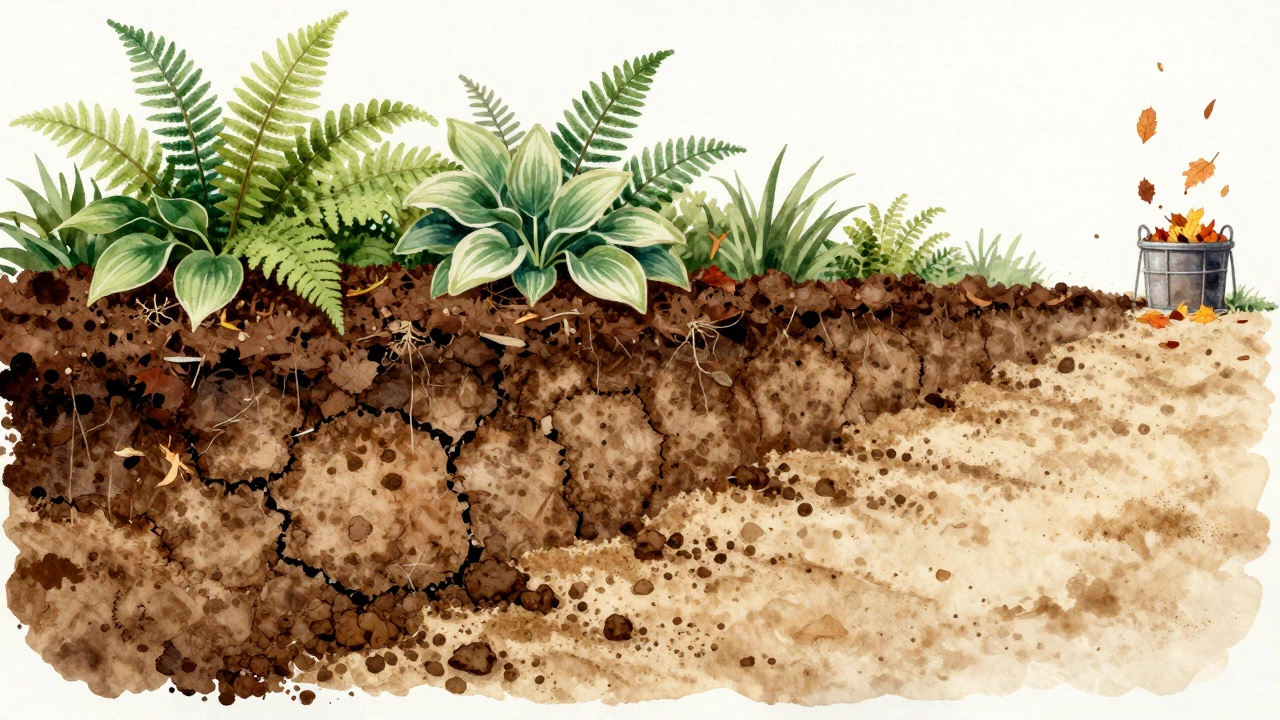
- Clay soil (sticky, slow-draining): Add compost, leaf mold, and biochar. These open up the structure. Avoid manure-it can make clay worse if not fully rotted.
- Sandy soil (drains too fast): Go heavy on compost and leaf mold. They hold water. Biochar helps too.
- Loamy soil (ideal): Keep adding compost annually. You’re already winning. Worm castings can give it a boost.
Do a quick test: Squeeze a handful of damp soil. If it forms a ball that crumbles when you poke it, you’ve got loam. If it sticks like putty? You’ve got clay. If it falls apart? You’ve got sand. Adjust your amendment strategy accordingly.
When to Amend
Timing matters. Amend in late autumn or early spring-when the soil is workable but not wet. Autumn lets amendments break down over winter. Spring gives plants an instant boost as they wake up. Never amend during a heatwave or heavy rain. You’ll compact the soil or wash away nutrients.
For annual beds, add compost each year. For perennials, top-dress every 2-3 years. Raised beds? Refresh with a 2-inch layer of compost every spring. You’ll notice the difference in plant vigor, disease resistance, and yield.
Final Thought: Build Soil, Not Just Plants
The best soil amendment isn’t a product. It’s a practice. Regularly adding organic matter keeps your soil alive. It’s not about fixing a problem-it’s about nurturing a system. The more you feed the soil, the less you’ll need to feed the plants.
Start small. Try one amendment this season. Maybe compost from your own bin. Or a bag of worm castings from the garden center. Watch what happens. Your plants will thank you. And so will the earth beneath them.
What is the fastest way to improve soil?
The fastest way is to add well-rotted compost or worm castings. These add nutrients and improve structure within weeks. You’ll see greener plants and better root growth in 30-60 days. But remember-fast results don’t mean long-term health. Combine quick fixes with ongoing organic matter additions.
Can I use grocery store compost?
Yes, but check the label. Many bagged composts are just processed green waste and lack diversity. Look for ones that list multiple ingredients-like manure, leaves, and food scraps. Avoid anything labeled "topsoil" or "garden soil"-those are often just dirt with a little compost mixed in. The best store-bought option is certified organic compost with a dark, crumbly texture.
Is manure better than compost?
Not necessarily. Manure is high in nitrogen and good for heavy feeders like corn or squash. But compost is more balanced, contains more microbes, and improves soil structure better. Most experts recommend compost as the base, then add manure only if you need extra nitrogen. Never use fresh manure.
How often should I amend my soil?
Annual beds: Add compost every spring. Raised beds: Refresh with 2 inches of compost each year. Perennial beds: Top-dress every 2-3 years. Lawns: Apply a thin layer of compost once a year in fall. The key is consistency-not one big dose every five years. Soil health is built over time.
Do I need to test my soil before amending?
Not for most home gardeners. If you’re using organic amendments like compost, leaf mold, or worm castings, you can’t overdo it. They’re gentle and build soil slowly. Soil tests are useful if you’re dealing with extreme pH issues (like very acidic or alkaline soil) or suspect heavy metal contamination. Otherwise, focus on adding organic matter regularly-it’s the safest bet.