Backyard Budget Planner
How would you prioritize your $1,000 backyard budget? Select your main focus below to see realistic, DIY-friendly solutions.
Ground & Soil
Fix compacted soil, weeds, and drainage issues with basic materials.
Patio/Deck
Create a dry, stable surface for seating and activities.
Plants & Greenery
Create instant impact with key specimen plants and low-maintenance greenery.
Lighting & Ambiance
Extend your backyard use into evenings with practical solar lighting.
Comfort & Seating
Invest in durable outdoor furniture for daily enjoyment.
Storage & Details
Hide clutter and add personal touches with smart storage solutions.
Your $1,000 Backyard Plan
Think $1000 won’t make a difference in your backyard? Think again. That’s not enough for a full patio rebuild or a fancy outdoor kitchen, but it’s more than enough to turn a dull, unused space into a place you actually want to spend time in. In Brighton, where rain clouds roll in faster than you can say "tea time," a well-planned backyard isn’t a luxury-it’s a necessity. And with smart choices, $1000 can stretch further than you think.
Start with the Ground
Your soil is the foundation of everything. If it’s compacted, weedy, or just plain dead, no amount of plants or furniture will fix that. Start by testing your soil. You can get a basic kit from any garden centre for under £15. Most UK gardens have clay-heavy or acidic soil-common in Brighton. If your pH is below 6, add garden lime (around £20 for 20kg) to balance it. If it’s too sandy, mix in compost. Buy bulk compost from a local supplier instead of bags; you’ll get 500kg for under £60, not £2 each for 25kg bags.
Then, lay down a 5cm layer of weed-suppressing membrane over the worst patches. It’s not glamorous, but it stops couch grass and bindweed from taking over. Top it with 10cm of mulch-bark chips cost about £40 for a cubic metre. Done right, this one-two punch cuts weeding time by 70% and keeps moisture in during dry spells. That’s hours saved every month, and healthier plants for less money.
Build a Simple Patio or Deck
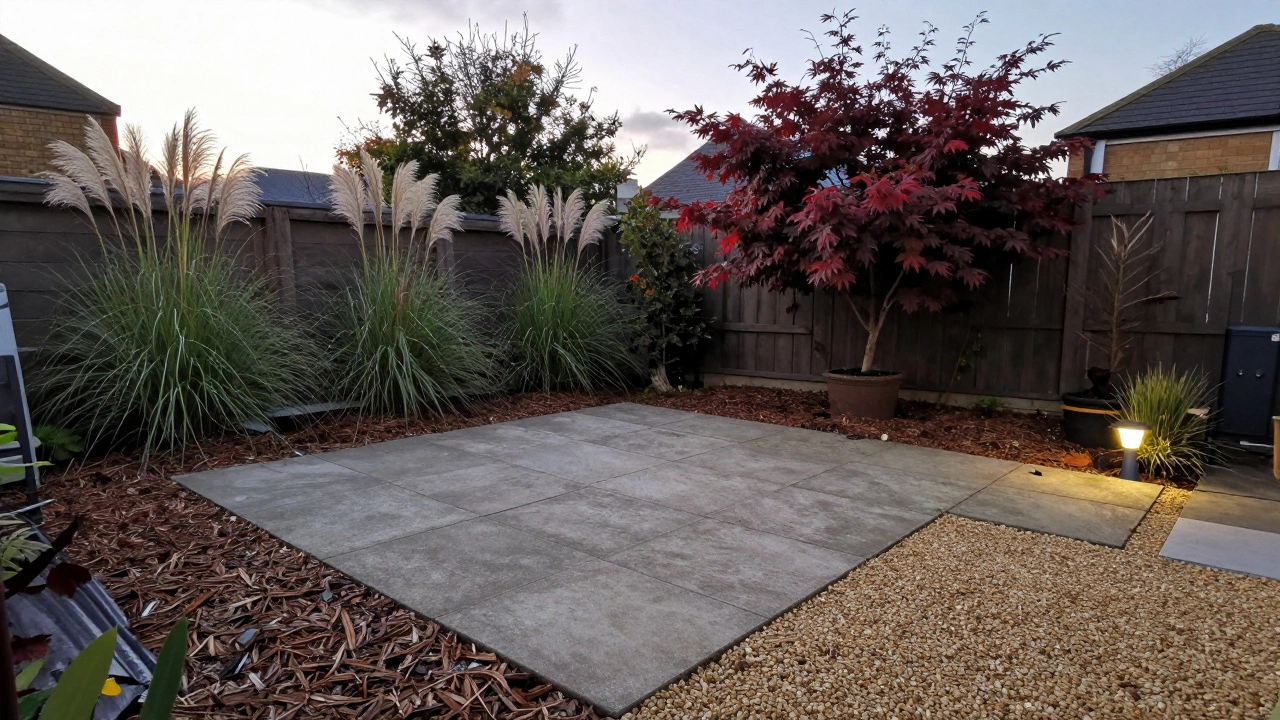
A flat, dry surface is the first thing people want in a UK backyard. You don’t need expensive stone or decking. Opt for concrete pavers. They’re durable, easy to lay, and come in classic grey or warm red. Buy reclaimed ones from a local salvage yard-many in Brighton have them for £2-£3 each. You can lay a 3m x 3m patio (9m²) with 40-50 pavers for under £150. Use sharp sand and gravel for the base. No professional needed. YouTube tutorials walk you through it in 30 minutes.
Or go with pressure-treated timber. A 6m x 2m raised deck (12m²) using 18mm boards costs around £300. You’ll need 8 posts, screws, and joists. Add a few steps and a small railing for safety. The whole thing takes a weekend. You get a dry, stable surface for chairs, a BBQ, or even a small table for morning coffee. And it lasts 15+ years with basic oiling every couple of years.
Plant for Impact, Not Quantity
Don’t waste money on 20 small plants that look lost. Buy three or four large specimen plants. A mature Japanese maple (Acer palmatum) in a 60cm pot costs £80-£120. It gives instant height, colour, and structure. Pair it with a clump of ornamental grasses like Miscanthus sinensis-they’re hardy, low-maintenance, and sway beautifully in the wind. One big clump costs £35. Add a few evergreen shrubs like Euonymus fortunei or Skimmia japonica for year-round green. You’ll spend £200-£250 total.
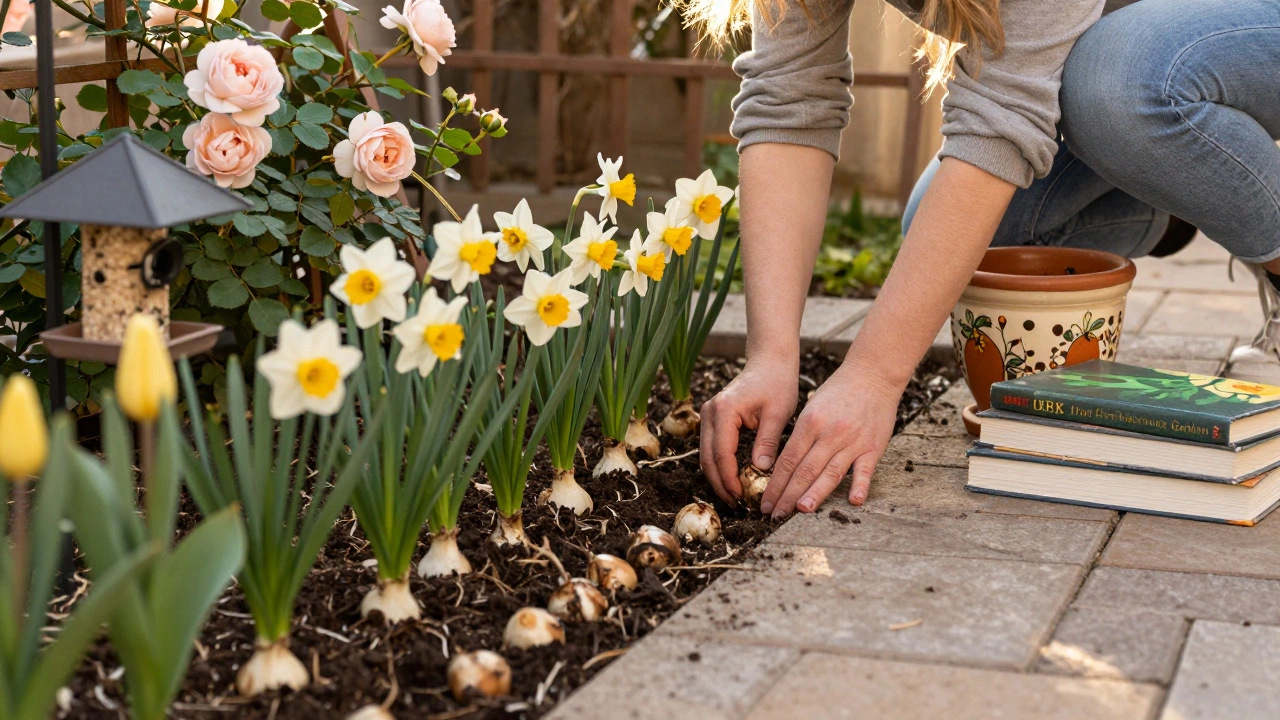
For colour, plant bulbs in autumn for spring blooms. Daffodils, tulips, and crocuses are cheap in bulk. Buy 100 bulbs for £25. Plant them in drifts under your new patio edge or along a fence. They come up every year without replanting. Add a single climbing rose like ‘The Generous Gardener’ on a trellis. It blooms all summer, smells amazing, and costs £30. One plant. One scent. One focal point.
Lighting That Actually Matters
Dark evenings in the UK mean your backyard is useless after 5pm. Solar lights are the answer. Forget the flimsy plastic ones from the supermarket. Buy IP65-rated LED solar path lights with motion sensors. They’re weatherproof, bright enough to see by, and charge all day. A set of 10 costs £60. Place them along your new path, around seating, and under shrubs. They turn on automatically at dusk.
For a touch of magic, add one or two string lights. Look for warm white, fairy-style LEDs on a 5m strand. They cost £25. Drape them over a pergola, between trees, or across a fence. At night, it feels like a café terrace. No wiring. No electrician. Just plug in the solar panel and forget it.
One Big Comfort Item
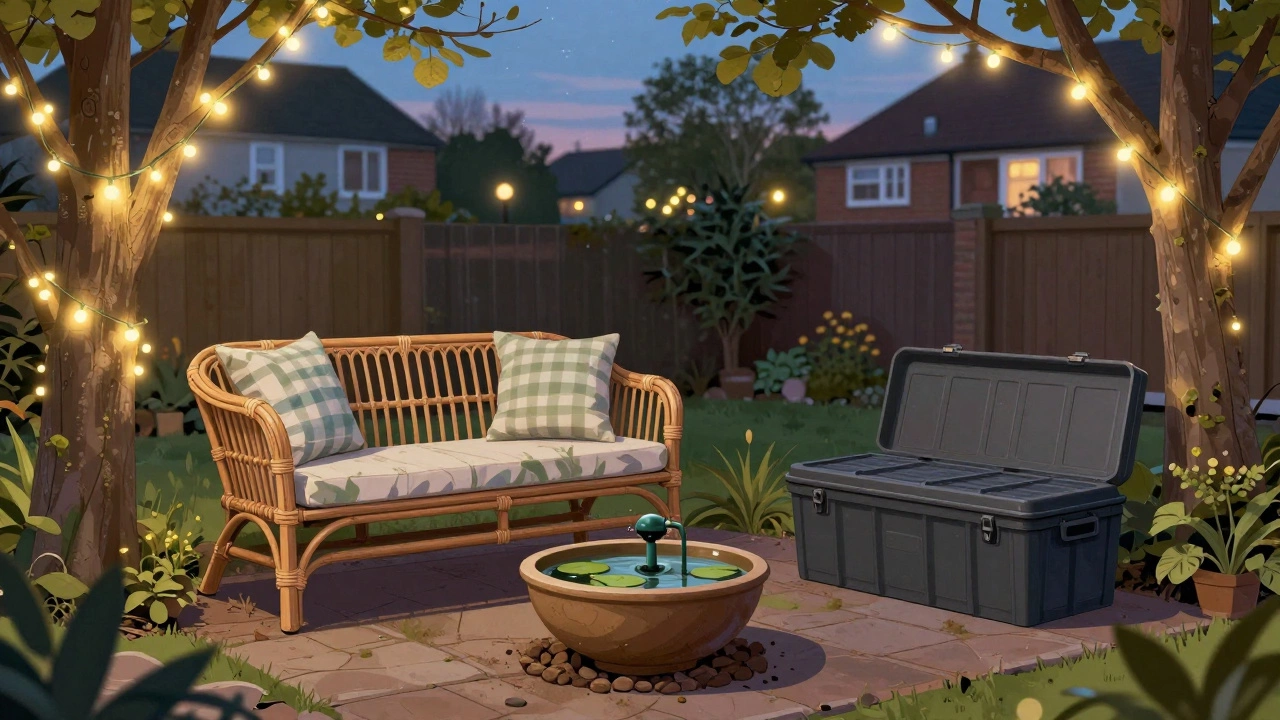
What’s the point of a beautiful backyard if you’re sitting on a plastic chair that breaks after one rainstorm? Spend £200-£250 on one solid piece of outdoor furniture. A teak bench from a UK maker like John Lewis or Wayfair lasts decades. Or get a weather-resistant rattan set with cushions. The key is quality over quantity. One good seat beats five cheap ones.
Don’t forget cushions. Buy outdoor-grade ones with quick-dry foam and Sunbrella fabric. Two cushions cost £80. They’ll last three years, even in Brighton’s damp climate. Add a small side table for tea, a book, or your phone. It’s the difference between "I’ll sit out for five minutes" and "I’m staying here all evening."
Water Features That Don’t Cost a Fortune
A fountain? Too expensive. A pond? Too much work. But a small recirculating water feature? Perfect. You can buy a self-contained solar-powered fountain with a basin for £70. Place it on your patio or tuck it into a corner beside a shrub. The sound of trickling water masks traffic noise and calms the mind. It’s the closest thing to a spa you’ll get in a suburban backyard.
Or go even simpler: a ceramic bowl filled with water and a small submersible pump (£40). Add a few floating plants like water hyacinth (£15). It’s low maintenance, looks natural, and attracts birds. You’ll hear them splash in the morning. That’s worth more than a hundred plastic garden gnomes.
Storage That Doubles as Design
Every backyard has clutter. Tools, hoses, kids’ toys, gardening pots. Hide it. Buy a large, lockable garden storage box made from recycled plastic. It looks like a bench, not a shed. One that holds 400 litres costs £180. Put it against a fence. Paint it a dark green or charcoal to blend in. Now your tools are out of sight, your garden looks tidy, and you’ve added extra seating.
Final Touches: The Little Things That Make It Yours
With £200 left, spend it on personal touches. A hand-painted ceramic planter from a local artist (£40). A wind chime made of recycled metal (£25). A small bird feeder with a camera so you can watch sparrows from your kitchen window (£60). A solar-powered lantern shaped like a mushroom (£30). A few books on gardening stacked on your bench.
These aren’t necessities. But they’re the things that turn a functional space into a home. You don’t need a million pounds to make your backyard special. You just need to know where to put the money.
What $1000 Won’t Do
It won’t turn your yard into a tropical paradise. It won’t install underfloor heating. It won’t build a hot tub. But it will fix the things that actually matter: comfort, usability, and beauty. It will give you a place to sit in the sun after work. A spot to drink tea without stepping on moss. A corner where your dog can nap without digging up the lawn.
And that’s more than most people get with five times the budget.
Can I do all this myself, or do I need a landscaper?
You can do 90% of this yourself. Laying pavers, planting, hanging lights, and assembling furniture are all DIY-friendly with basic tools. The only part you might want help with is moving heavy items like a large planter or timber for the deck. Ask a friend with a pickup truck. Most of the work takes a weekend. No professional skills needed.
Is it worth spending money on plants instead of more furniture?
Yes. Plants create atmosphere. Furniture creates function. You can sit on a bench anywhere. But a garden that feels alive? That’s rare. A well-placed tree or shrub adds privacy, blocks wind, and softens hard edges. It also increases property value over time. One good plant lasts 10-20 years. A cheap chair lasts two. Invest in green.
What if I live in a small or narrow backyard?
Small spaces benefit even more from smart spending. Go vertical. Use wall-mounted planters, trellises with climbers, and hanging lights. Choose slim furniture like a foldable bistro set. A single large plant in a tall pot creates instant depth. Mirrors on fences make the space feel bigger. Even a 3m x 4m patch can feel like a retreat if you focus on layers and texture.
How long will these improvements last?
Good materials last. Concrete pavers and teak furniture last 15-20 years. Quality solar lights last 5-7 years. Evergreen shrubs and perennials come back every year. Even cushions last 3-5 years if you store them indoors in winter. This isn’t a one-season fix. It’s an investment that grows in value over time.
Where’s the best place to buy materials in the UK?
For soil, compost, and bulk mulch, go to local landscape suppliers-not garden centres. They sell by the tonne and charge half the price. For pavers and reclaimed materials, check local salvage yards or Facebook Marketplace. For plants, independent nurseries often have better stock than big chains. For lighting and furniture, Wayfair, John Lewis, and B&Q have reliable options with good warranties. Avoid Amazon for anything that needs to last outdoors.
Next Steps
Start tomorrow. Take a walk around your backyard. What’s the one thing that stops you from using it? Is it the mud? The weeds? The lack of shade? Pick one problem and fix it with your first £100. Then move to the next. Don’t wait for the perfect plan. Just start. By the end of spring, you’ll have a backyard that feels like yours-not just a patch of grass you ignore.