Low Maintenance Shrub Finder
Recommended Plants:
There is nothing worse than staring at a patch of dead brown stems in your front garden while the neighbors’ yards look pristine. You want that instant impact-the kind that makes people slow down as they drive past-but you also want to enjoy your weekends instead of spending them pruning and watering. The secret isn’t hiring a landscaper; it’s picking the right low maintenance shrubs from day one.
In the UK climate, especially with our unpredictable mix of wet winters and dry summers, choosing hardy, self-sufficient plants is not just a luxury; it’s a necessity. We are going to look at specific shrubs that thrive with minimal fuss, offering structure, color, or texture without demanding constant attention. Whether you have full sun, deep shade, or sandy soil, there is a champion here for your plot.
The Backbone: Evergreens That Work Year-Round
If you want a house that looks good in January as well as July, you need evergreens. These are the workhorses of the garden. They provide privacy, screen ugly fences, and give your property a sense of permanence. But not all evergreens are created equal. Some require sharp shears twice a year to keep their shape; others grow naturally into perfect forms.
Buxus sempervirens (Boxwood) has been the classic choice for centuries. It creates tight, formal hedges that frame doorways beautifully. However, be aware of Box Blight, a fungal disease that has devastated many gardens recently. If you choose Box, buy resistant varieties like 'Suffolk' or 'Herrenhausen'. For a more relaxed look, consider Buxus microphylla, which stays smaller and needs less clipping.
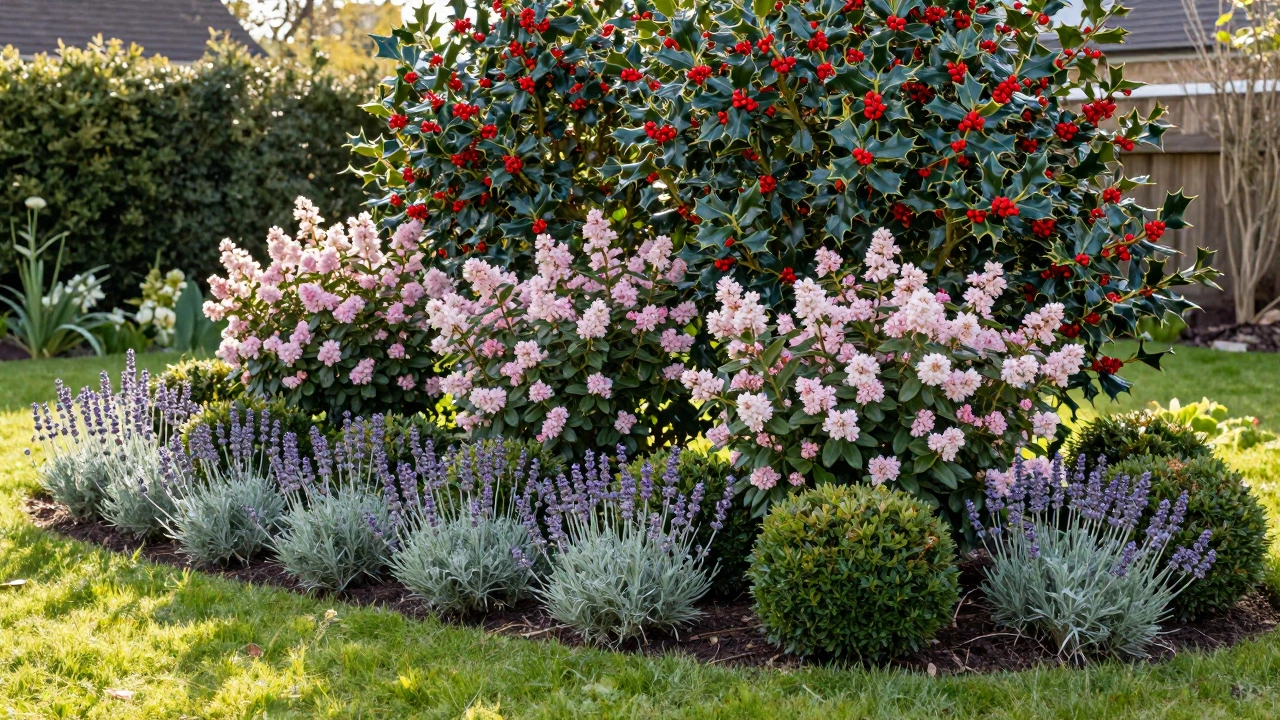
Another fantastic option is Ilex aquifolium (Holly). Native to the UK, it is tough as nails. It tolerates coastal winds and poor soil. Plus, if you plant male and female bushes together, you get those iconic red berries in winter, which adds a splash of color when everything else is grey. Just watch out for the spikes if you have small children running around barefoot.
For a softer, less formal aesthetic, try Taxus baccata (Yew). Yew is incredibly forgiving. You can cut it back hard, even to old wood, and it will still regrow. This makes it perfect for beginners who might accidentally over-prune. It thrives in both sun and heavy shade, making it versatile for tricky spots near north-facing walls.
Seasonal Color Without the Hassle
Evergreens provide structure, but deciduous shrubs bring life and movement. The key here is to pick species that offer multiple seasons of interest-flowers in spring, foliage in summer, and perhaps berries or bark in autumn. This way, you aren’t relying on a single feature to carry the whole garden.
Viburnum tinus is a superstar for this reason. It flowers from late winter through early spring, covering itself in clusters of pinkish-white blooms that attract early bees. After flowering, it produces dark purple-black berries that birds love. It grows well in most soils and doesn’t mind being clipped into a hedge or left to grow naturally. It is virtually indestructible once established.
If you prefer bold colors, look at Ceanothus (California Lilac). Don’t let the name fool you; it loves the UK climate, particularly in warmer, sheltered spots. In May and June, it explodes with intense blue flowers that seem almost neon against its glossy green leaves. It is drought-tolerant once rooted, meaning you won’t need to water it during summer heatwaves. Just avoid planting it in cold, wet hollows where frost can linger.
For autumn interest, Euonymus fortunei is excellent. Varieties like 'Emerald 'n Gold' offer bright variegated leaves that turn fiery orange and red in the fall. It is a vigorous grower, so it is great for covering large areas quickly or training up a wall. It handles neglect better than almost any other shrub.
Shade Tolerant Champions
Not every part of your front yard gets sunlight. North-facing sides of houses, areas under trees, or narrow side passages often suffer from low light. Many plants fail here, turning yellow and leggy. But some shrubs actually thrive in the shade.
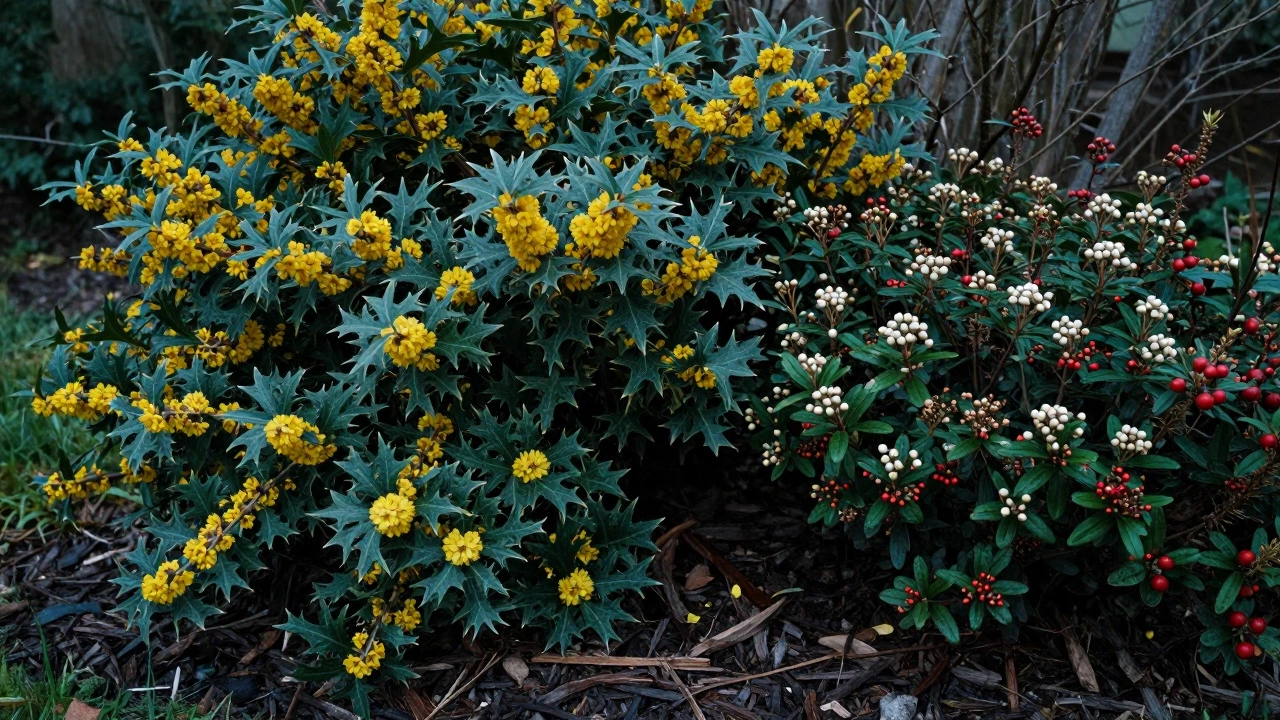
Mahonia is the king of shade. With spiky, holly-like leaves and sprays of fragrant yellow flowers in winter, it fills a gap that few other plants do. 'Charity' is a popular variety that flowers later, in spring. It requires zero pruning unless you want to thin out old stems after flowering. It is also deer-resistant, which is a bonus if you live in an area with wild browsing animals.
Another underrated shade lover is Skimmia japonica. It is compact, neat, and produces scented white flowers followed by bright red berries (on female plants, again requiring a male pollinator nearby). It stays relatively small, making it perfect for containers or tight borders where space is limited. It prefers acidic soil, so if you have chalky ground, you may need to amend it with ericaceous compost.
Drought Tolerance and Dry Soil Solutions
With summers getting hotter and drier, water conservation is becoming a major concern. If your front yard has sandy soil or sits on a slope where water runs off quickly, you need shrubs that can handle thirst.
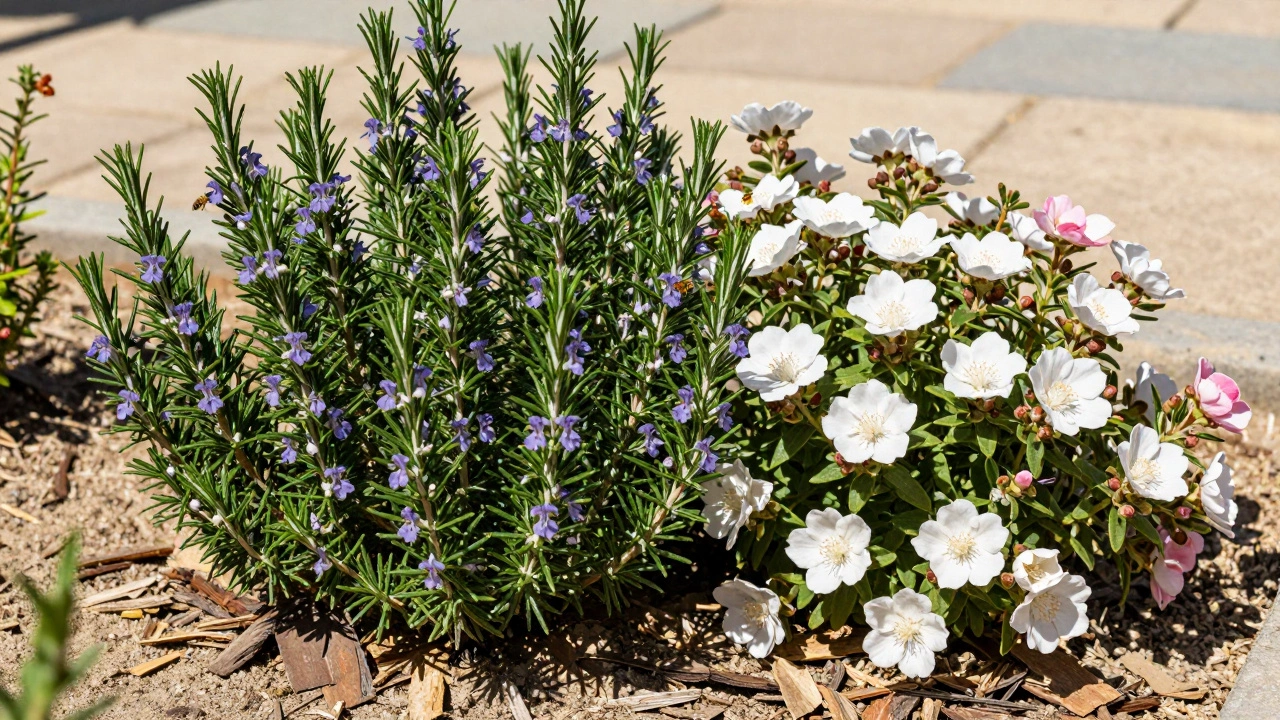
Lavandula angustifolia (English Lavender) is obvious but essential. It loves sun, hates wet feet, and smells amazing. Cut it back lightly after flowering to keep it woody and tidy. It attracts pollinators and adds a silvery-grey texture that contrasts well with green foliage.
Rosmarinus officinalis (Rosemary) is another Mediterranean native that fits perfectly. Use upright varieties like 'Tuscan Blue' for height, or trailing types for edges. It is edible, aromatic, and practically immune to pests. Just ensure it has good drainage; soggy roots are its only real enemy.
Don’t overlook Cistus (Rock Rose). It produces papery flowers in shades of white, pink, and purple throughout the summer. The leaves are hairy and grey-green, helping it retain moisture. It is short-lived compared to some shrubs, but it provides years of brilliant color with almost no care.
Planning Your Planting Scheme
Picking the right shrubs is only half the battle. How you place them determines whether your garden looks designed or accidental. Here is a simple framework to follow:
- Layering: Place taller shrubs like Holly or Mahonia at the back of the border, mid-height ones like Viburnum in the middle, and low growers like Lavender or Box at the front. This ensures every plant gets light and visibility.
- Repetition: Repeat the same shrub three or more times across the scheme. A single isolated bush looks lost; a group of three creates rhythm and cohesion.
- Texture Contrast: Mix broad-leaved plants like Euonymus with fine-textured ones like Lavender or Yew. This visual variety keeps the eye moving.
- Spacing: Buy plants at a reasonable size (e.g., 1-2 liter pots) and space them according to their mature width. Crowding leads to disease and poor growth. Give them room to breathe.
Also, consider the view from inside your house. What looks good from the street might block your living room window. Trim lower branches to maintain sightlines if needed.
Maintenance Myths Debunked
Many people think "low maintenance" means "no maintenance." That is a dangerous assumption. Even the toughest shrubs need some basic care to stay healthy and attractive.
First, mulching. Apply a layer of organic mulch (like bark chips or compost) around the base of your shrubs in spring and autumn. This suppresses weeds, retains moisture, and feeds the soil as it breaks down. It takes twenty minutes a year per shrub but saves hours of weeding later.
Second, deadheading. Removing spent flowers encourages more blooms and prevents seed setting, which can make some plants look messy. For shrubs like Lavender and Ceanothus, a light trim after flowering keeps them compact.
Third, watering new plants. While mature shrubs should be drought-tolerant, newly planted ones need regular watering for the first two growing seasons to establish their root systems. Neglecting this step is the number one reason young plants die.
Comparison of Top Low Maintenance Shrubs
| Shrub Name | Best For | Sun/Shade | Mature Height | Key Benefit |
|---|---|---|---|---|
| Buxus sempervirens | Hedges, Formal Edges | Sun to Partial Shade | 1-3m | Clean, structured look |
| Viburnum tinus | All-year interest | Sun to Shade | 1.5-3m | Winter/spring flowers |
| Mahonia | Deep Shade | Shade | 1-2m | Fragrant winter blooms |
| Lavandula | Dry, Sunny Spots | Full Sun | 0.5-1m | Aromatic, pest-free |
| Ilex aquifolium | Privacy, Wildlife | Sun to Shade | 3-6m+ | Red berries, tough |
Common Mistakes to Avoid
One big error is buying plants too big. Large specimens are expensive and often have shallow root balls, making them prone to windthrow and transplant shock. Start small and let them grow into their position. It is cheaper and healthier for the plant.
Another mistake is ignoring soil type. If you have heavy clay, avoid plants that hate wet feet like Lavender unless you improve drainage significantly. Conversely, don’t put acid-loving plants like Skimmia in alkaline chalk soil without amendment. Check your pH before you dig.
Finally, don’t overcrowd. It is tempting to fill every gap immediately, but this leads to competition for light and nutrients. Plan for maturity, not just today’s look.
Which shrub grows fastest for privacy?
Leylandii is the fastest, but it is high maintenance due to constant trimming. For a lower maintenance option, consider Photinia x fraseri 'Red Robin', which grows rapidly and offers colorful new growth, though it does require annual pruning to keep it tidy. For a slower but truly low-maintenance hedge, Buxus or Ilex are better long-term choices.
Can I plant these shrubs in containers?
Yes, many of these work well in pots. Dwarf varieties of Box, Lavender, and Rosemary are ideal. Ensure the pot has drainage holes and use a high-quality multi-purpose compost. Remember that container plants dry out faster than ground-planted ones, so they will need more frequent watering.
How do I protect shrubs from frost?
Most of the shrubs listed here are hardy to typical UK winters. However, newly planted shrubs in their first year are vulnerable. Mulch heavily around the base to insulate the roots. For tender varieties like Ceanothus or Lavender in exposed coastal areas, consider using fleece covers during severe frosts.
Are these shrubs safe for pets?
Some shrubs are toxic if ingested. Holly berries, Yew needles, and parts of the Rhododendron family (not listed here but common) are poisonous to dogs and cats. If you have curious pets, research each plant specifically or stick to safer options like Lavender and Rosemary, which are generally non-toxic.
When is the best time to plant shrubs?
The best times are autumn (September-November) and spring (March-May). Autumn planting allows roots to establish before summer heat, giving a head start. Spring planting avoids the risk of winter frost damage to new roots. Avoid planting in the middle of summer droughts or frozen ground in winter.