Self-Watering Plant Selector
Recommended Plants
Watering frequency:
Pro Tip
Self-watering pots aren’t magic-they just make plant care easier
If you’ve ever come home to a drooping plant because you forgot to water it, you know the struggle. Self-watering pots solve that by holding a reservoir of water at the bottom and letting the plant drink as needed. But not all plants like them. Some drown. Others sit there bored, not pulling up enough moisture. The trick isn’t just buying a pot with a reservoir-it’s picking the right plant for it.
Self-watering pots work best with plants that like consistent moisture but hate soggy roots. That’s a sweet spot most people miss. You don’t need a green thumb. You just need to match the plant to the pot’s design. Here are the top plants that actually thrive in self-watering containers-no guesswork, no guilt trips.
Pothos: The ultimate beginner plant for self-watering pots
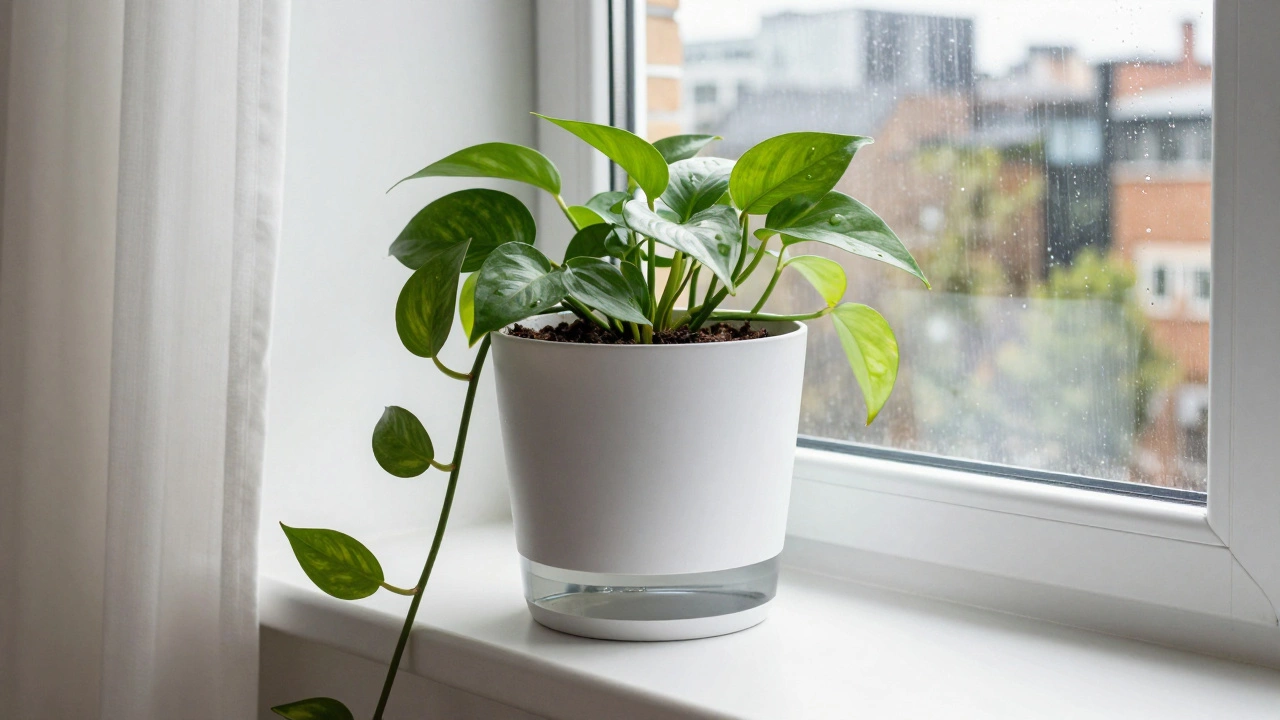
Pothos (Epipremnum aureum) is the plant that survives when you forget it for two weeks. It’s why it’s everywhere: offices, dorm rooms, apartment windowsills. In a self-watering pot, it’s even happier. Its roots pull up water slowly, avoiding the rot that kills other plants in standing water.
Pothos doesn’t care about light. Low light? Fine. Bright indirect? Better. It grows fast, trails beautifully, and even recovers from neglect. The soil dries out just enough between drinks, which is exactly what self-watering pots are built for. Use a standard potting mix, fill the reservoir every 10-14 days in winter, and every 5-7 days in summer. No fertilizer needed unless it looks pale.
Spider Plant: Tough, tidy, and totally forgiving
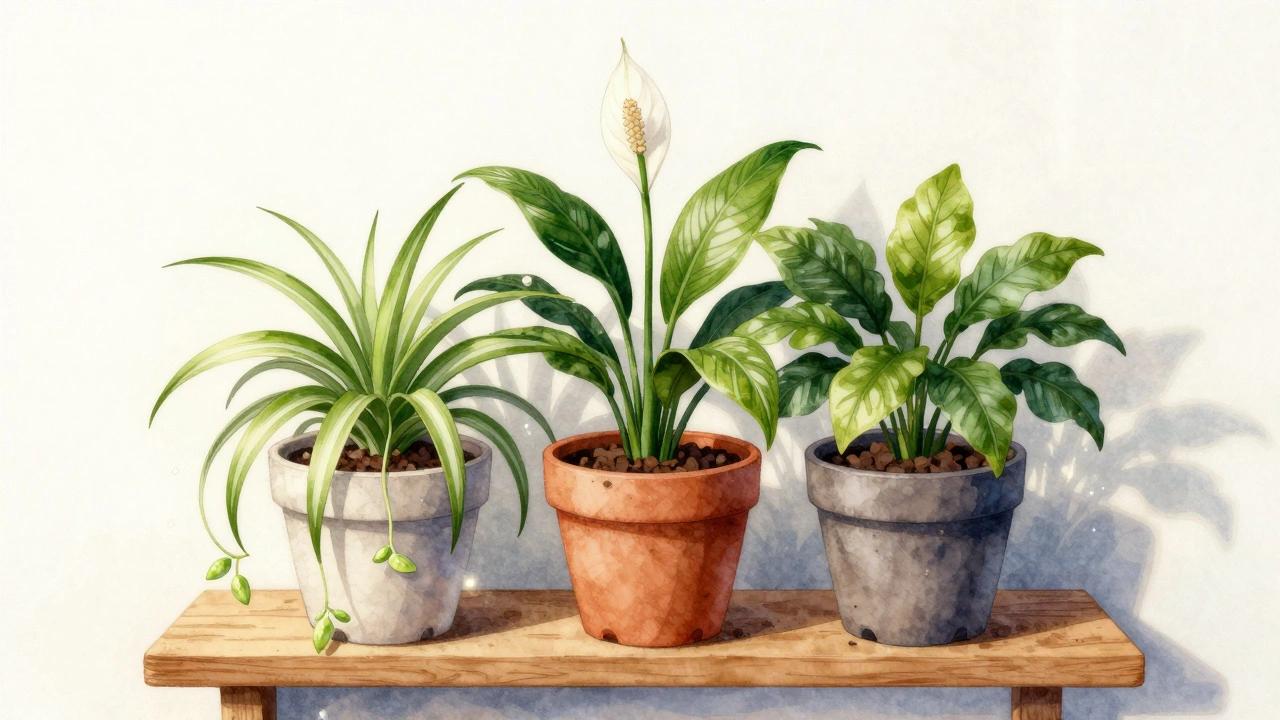
Spider plants (Chlorophytum comosum) are the workhorses of indoor gardening. They handle overwatering better than most, and they love the steady moisture from self-watering pots. Their arching leaves and baby plantlets make them look lively even when you’re not paying attention.
They do best in bright, indirect light but will survive in lower light too. The key is letting the top inch of soil dry between refills. That’s easy with a self-watering pot-you just refill the reservoir every 7-10 days. They’re also great air purifiers. NASA tested them. They clean benzene and formaldehyde from the air. If you’ve got new furniture or paint fumes, this plant is your quiet helper.
Peace Lily: For people who want flowers without the fuss
Peace lilies (Spathiphyllum) are one of the few flowering plants that do well in self-watering pots. They’re sensitive to dry soil, so they’re actually perfect for this setup. When they get thirsty, their leaves droop dramatically. That’s their way of yelling, “Water me!” In a self-watering pot, that never happens.
They like low to medium light and hate direct sun. Keep the reservoir full every 10-12 days. They’ll reward you with white blooms that last for months. And yes, they’re toxic to pets, so keep them out of reach if you’ve got cats or dogs. But if you don’t, they’re one of the most beautiful, low-effort plants you can own.
Snake Plant: The plant that laughs at neglect
Snake plants (Sansevieria) are often listed as low-maintenance, but they’re not ideal for self-watering pots. Wait-hold on. That’s what everyone says. But here’s the truth: they can work, if you do it right.
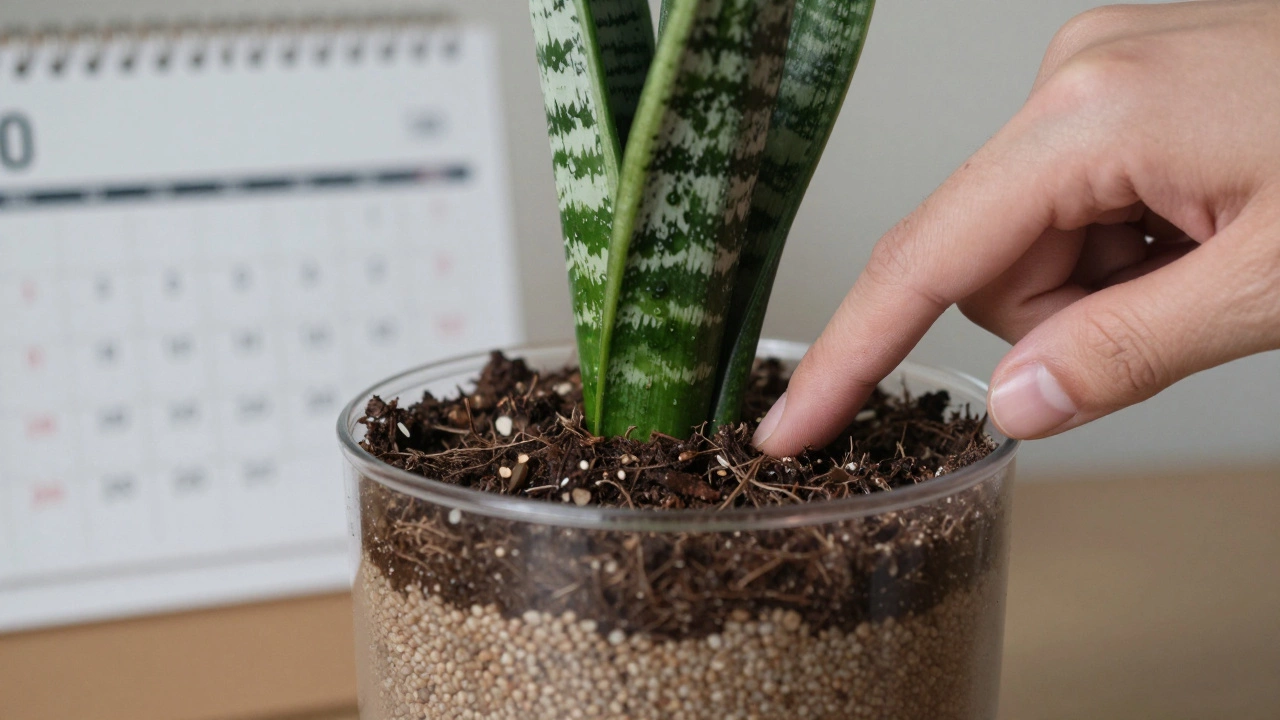
Snake plants store water in their thick leaves. They’re desert survivors. Left in a constantly wet pot, they’ll rot. But if you use a self-watering pot with a drainage layer-like a 1-inch layer of perlite or gravel at the bottom-and only refill the reservoir every 3-4 weeks, they thrive. They don’t need much light. They grow slowly. They clean the air. And they’re almost impossible to kill.
Use a cactus or succulent mix. Don’t let the reservoir sit full for months. Check it monthly. If the soil feels damp, skip refilling. That’s the secret: treat it like a timer, not a faucet.
ZZ Plant: The silent survivor
The ZZ plant (Zamioculcas zamiifolia) is the plant you buy on sale because it looks cool, then forget about for a year. It comes back greener. It’s native to East Africa and evolved to survive long dry spells. That means it doesn’t need frequent water.
But here’s the twist: in a self-watering pot, it gets just enough moisture to stay happy without drowning. Use a well-draining mix. Refill the reservoir every 2-3 weeks. In winter, you might only need to refill once a month. It grows slowly, so you won’t need to repot often. It tolerates low light, air conditioning, and even fluorescent office bulbs. It’s the plant version of a cat that doesn’t need walking.
Chinese Evergreen: Colorful, calm, and perfect for beginners
Chinese evergreens (Aglaonema) come in shades of green, silver, pink, and red. They’re not flashy, but they’re steady. They like humidity and consistent moisture-exactly what a self-watering pot delivers. They don’t like to dry out completely, but they also hate wet feet.
Place them in low to medium indirect light. Avoid direct sun, which burns their leaves. Refill the reservoir every 7-10 days. They’re slow growers, so you won’t be repotting for years. And they’re one of the few plants that actually improve air quality in poorly ventilated rooms. If you work from home in a windowless room, this is your plant.
What plants should you avoid in self-watering pots?
Not all plants are cut out for this setup. Succulents like aloe vera and echeveria need to dry out completely between waterings. In a self-watering pot, they’ll rot. Cacti? Same deal. They’re desert dwellers-they don’t want constant moisture.
Herbs like basil and rosemary need drier soil and lots of sun. They’ll get leggy and moldy in a self-watering pot. Orchids? They need air around their roots. A closed reservoir will suffocate them.
And don’t assume bigger pots mean less work. A large self-watering pot with a thirsty plant can still need refilling every 3-4 days. Match the plant’s thirst to the pot’s size.
How to set up your self-watering pot right
Buying the pot is half the battle. Setting it up right matters more.
- Use a well-draining potting mix. Avoid garden soil. It compacts and blocks the wicking action.
- Add a 1-inch layer of perlite or gravel at the bottom if your plant likes drier conditions (like snake plant or ZZ plant).
- Fill the reservoir to the max line-never overfill. Let the plant draw up what it needs.
- Wait 24 hours after planting before refilling. Let the soil settle and absorb moisture naturally.
- Check the reservoir every week. If it’s empty, refill. If it’s half full, wait. If it’s full and the soil’s damp, leave it.
Some pots have a visible water level window. Use it. If yours doesn’t, stick your finger in the soil up to the second knuckle. If it’s dry, refill. If it’s damp, wait.
Real-world results: What works in a Brighton flat
I’ve tested these plants in my own apartment in Brighton. Rainy winters, dry summers, no balcony. My pothos has been growing for three years. My peace lily bloomed last Christmas. My ZZ plant sits in a corner with no natural light and hasn’t missed a beat.
People ask me how I do it. I don’t do anything. I just chose the right plants and filled the reservoir when it ran dry. That’s it.
Final tip: Start small, then scale
Don’t buy five self-watering pots on day one. Start with one pothos or spider plant. See how it responds. Learn the rhythm. Then add another. You’ll get better at reading the signs-wilted leaves, yellow edges, slow growth-before they become problems.
Self-watering pots aren’t about doing less. They’re about doing it smarter. Pick the right plant, set it up right, and you’ll have greenery that lasts-without the stress.
Can I use self-watering pots for outdoor plants?
Yes, but only if the plant likes consistent moisture and you protect the pot from freezing. Pothos, spider plants, and Chinese evergreens can go outside in summer if you bring them in before frost. Avoid using them for plants like succulents or herbs outdoors-they’ll get too much rain or dry out too fast.
How often should I refill the reservoir?
It depends on the plant and season. Pothos and spider plants need refilling every 5-10 days in summer, every 10-14 days in winter. Snake plants and ZZ plants only need it every 2-4 weeks. Always check the soil first-if it’s damp, wait. Don’t refill just because the reservoir is empty.
Do self-watering pots attract pests?
Not directly. But if the soil stays too wet for too long, fungus gnats can show up. They’re harmless to plants but annoying. Prevent them by letting the top layer of soil dry between refills and by using sticky traps. Avoid overfilling the reservoir.
Can I use tap water in self-watering pots?
Yes, but if your tap water is hard (lots of minerals), it can leave white deposits on the pot or soil. Letting water sit out overnight helps chlorine evaporate. For sensitive plants like peace lilies, filtered or rainwater is better-but not required.
What if my plant’s leaves turn yellow?
Yellow leaves usually mean too much water. Check the reservoir-is it full when the soil is still wet? Drain excess water and let the soil dry out before refilling. If the problem continues, repot into a mix with more perlite or sand for better drainage.