July Carrot Sowing Planner
Step 1: Choose Your Variety
Select a fast-maturing variety suitable for late summer sowing
It is mid-July. The heatwave might have just broken, or perhaps you are sitting through another sticky week where the air feels thick enough to chew. You look at your empty patch of soil-maybe it was cleared after an early crop of spinach, or maybe you just missed the spring planting window entirely. You want those sweet, crunchy orange roots. But can you actually plant carrots in July?
The short answer is yes. Absolutely. In fact, for many gardeners in the UK, July is one of the best months to sow carrots if you know which varieties to pick and how to handle the specific challenges of late-summer weather.
However, it isn't as simple as throwing seeds on the ground and walking away. The rules change when you move from spring to summer sowing. You are fighting against shorter days, potential heat stress, and a different set of pests. If you treat a July sowing like a March sowing, you will likely end up with nothing but weeds and disappointment. Let’s break down exactly how to get a successful autumn harvest starting right now.
Why July Works for Carrots (And Why It’s Different)
Carrots are cool-season crops. They love crisp air and steady moisture. Spring planting takes advantage of warming soil to germinate quickly, then the plants mature before the intense summer heat sets in. July planting flips this script. You are sowing into warm soil, which helps germination speed, but the young plants must survive the tail end of summer before they bulk up in the cooling autumn.
The main advantage of July sowing is timing. By planting now, your carrots will establish their root systems while there is still plenty of daylight. As September and October arrive, the temperatures drop, and the carrots respond by storing more sugars in their roots. This is why autumn-harvested carrots often taste sweeter than their spring counterparts. The cold doesn’t kill them; it improves their flavor profile.
However, you lose time. You don’t have the luxury of a long growing season. A standard carrot variety that takes 120 days to mature won’t make it. You need fast-maturing varieties. You are looking for types that go from seed to harvest in 70 to 90 days maximum. Anything slower, and you risk the roots being too small to eat before the first hard frosts of November halt growth completely.
Picking the Right Varieties for Late Summer
This is the most critical decision you will make. If you grab a packet of 'Nantes' or 'Chantenay' without checking the days-to-maturity, you might be waiting until December for a harvest that never fully develops. You need varieties bred for speed and resilience.
| Variety Name | Type | Days to Maturity | Best For |
|---|---|---|---|
| Berlicum II | French Heirloom | 70-80 days | Heavy clay soils; very fast maturity |
| Paris Market | Round/Ball | 60-70 days | Pots, containers, and heavy soil |
| Albino | White Nantes | 75-85 days | Autumn storage; high sugar content |
| Touchon | Short Cylindrical | 70-80 days | Shallow beds and raised boxes |
| Early Nantes | Standard Orange | 75-85 days | General purpose; reliable performance |
Berlicum II is a standout choice for July. It is an old French variety that grows incredibly fast and handles heavier soils better than most. Paris Market is perfect if you are gardening in pots on a balcony in Brighton or London; its round shape means it doesn’t need deep soil to form properly. Albino is a white carrot that looks unusual but tastes fantastic, especially after a light frost. It stores well over winter, making it a great candidate for a July sowing if you want food in January.
Preparing the Soil: The Foundation of Success
You cannot rush soil preparation. Carrots hate two things: stones and fresh manure. Stones cause forked roots, and fresh manure causes hairy, split roots. Since you are planting in July, the soil might already be used. If you grew potatoes or brassicas there earlier in the year, dig it over thoroughly. Remove every weed. Carrot seedlings are weak competitors; if you leave even small weed seeds in the ground, they will outgrow your carrots within weeks.
Rake the surface until it is fine and crumbly. We call this a "fine tilth." If the soil is clumpy, break those clods up with your hands. The goal is to create a smooth path for the taproot to descend straight down. If the root hits a rock or a clod of earth, it will divert sideways, resulting in a gnarly, unusable carrot.
Avoid adding compost directly into the sowing row. Instead, mix well-rotted compost into the bed a few weeks ago, or add a thin layer on top and rake it in lightly. Do not use blood, fish, and bone fertilizer right now. It is too rich and will cause the roots to fork. Stick to a balanced, low-nitrogen approach.
Sowing Techniques for July Heat
July in the UK can be unpredictable. One day it is 30°C, the next it is raining. Your sowing technique needs to account for rapid drying. Carrot seeds are tiny and need constant moisture to germinate. If the top inch of soil dries out, the seeds will die.
- Make shallow drills: Use a stick or the back of a rake to create lines about 1cm deep. Space them 20-25cm apart. This allows room for the roots to expand later.
- Mix seeds with sand: Carrot seeds are dust-like. To avoid clumping, mix them with dry sand in a 1:1 ratio. This makes distribution much easier and ensures even spacing.
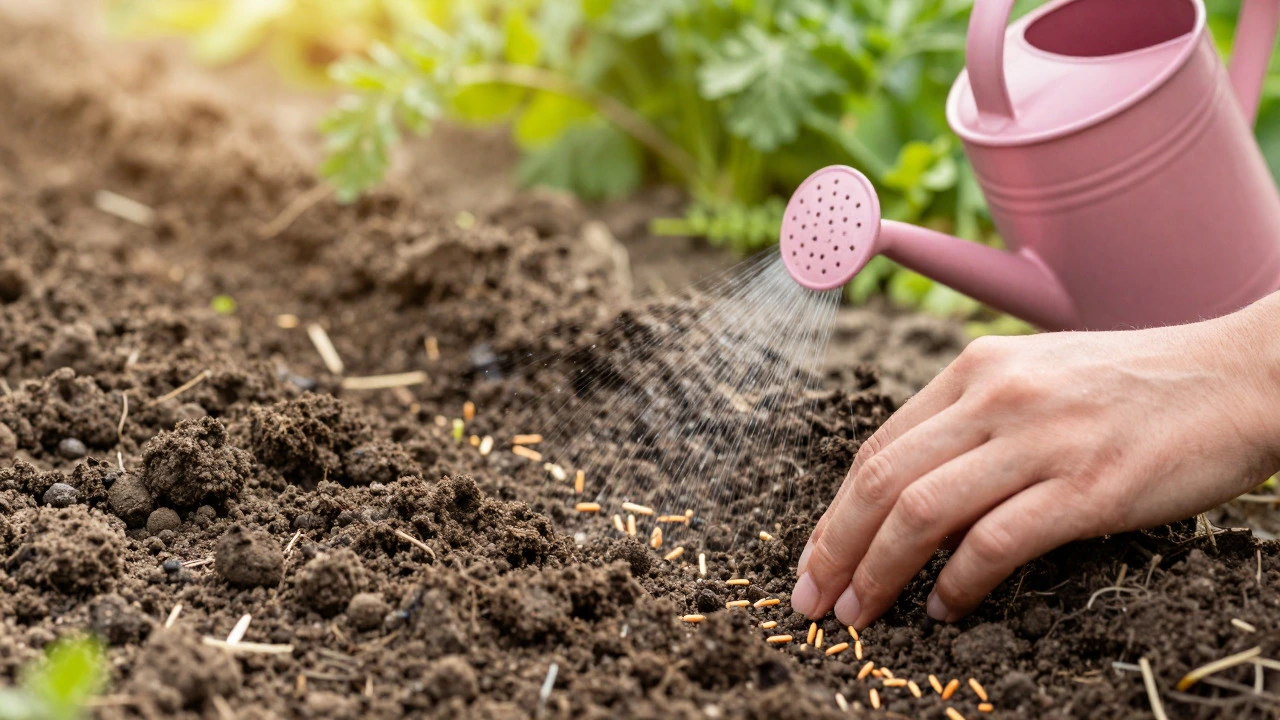
- Sow thinly: Sprinkle the sand-seed mixture along the drill. Cover lightly with fine soil or vermiculite. Press down gently with your hand or a board to ensure good seed-to-soil contact.
- Water immediately: Use a watering can with a fine rose attachment. Gentle water prevents washing the seeds away. Keep the soil moist but not waterlogged.
If you are worried about birds or slugs eating the seeds, cover the rows with horticultural fleece or netting. Secure the edges with bricks or soil. This also helps retain moisture, which is crucial during hot spells.
Managing Pests and Diseases in Late Summer
The biggest threat to your July carrots is not the weather-it is the carrot fly. Carrot fly activity peaks in late spring and again in late summer. The female lays eggs in the soil near the base of the plant. The larvae hatch and tunnel into the roots, ruining them.
Prevention is your only real defense. Physical barriers are the most effective method. Use insect mesh or fine netting that reaches all the way to the ground. Ensure there are no gaps where flies can slip under. Alternatively, grow your carrots in tall containers (at least 30cm high) and place a collar around each seedling. Carrot flies struggle to jump, so if the barrier is high enough, they can’t reach the leaves to lay eggs.
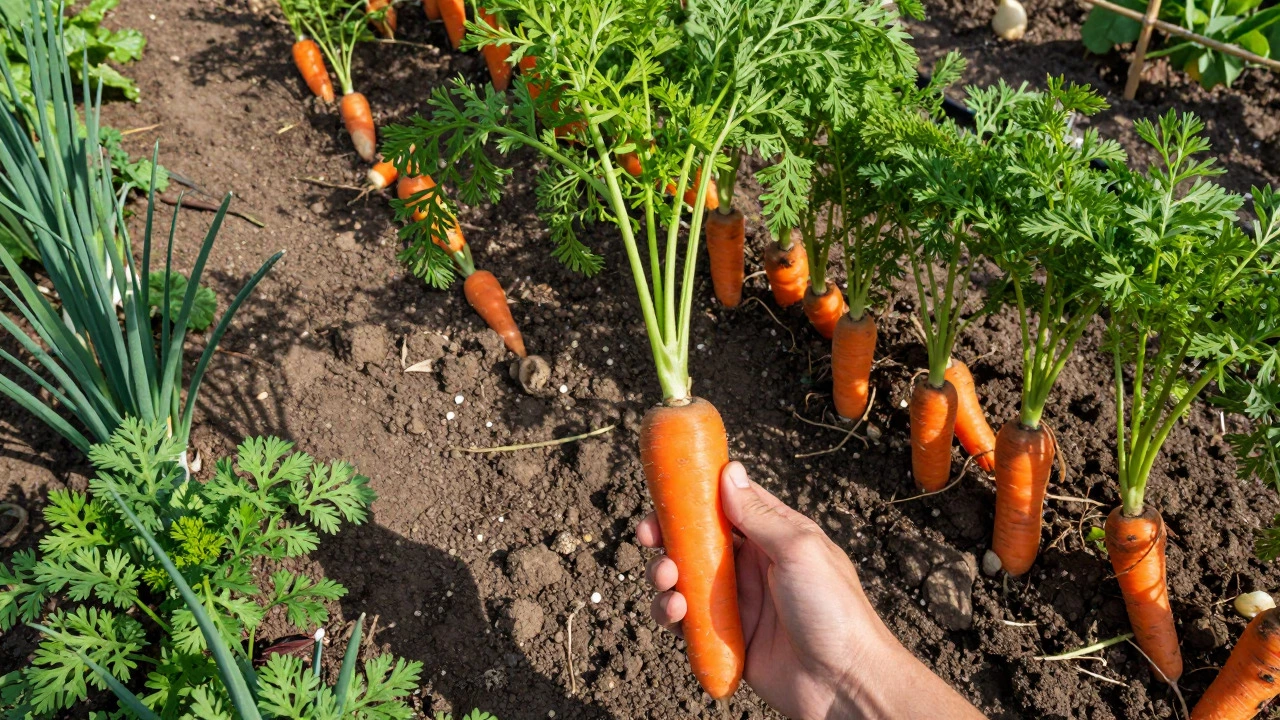
Another tip: interplant your carrots with strong-smelling herbs like onions, leeks, or chives. The scent confuses the carrot fly, making it harder for them to locate your crop. This companion planting strategy is simple and highly effective.
Disease-wise, watch out for black rot or leaf blight if humidity is high. Ensure good air circulation by thinning your seedlings. Don’t wait too long to thin; crowded plants are prone to fungal issues and produce smaller roots.
Caring for Your Crop: Watering and Thinning
Thinning is painful but necessary. Once your seedlings are big enough to handle (about 2-3cm tall), pull out the weaker ones. Leave the strongest plants spaced 5-8cm apart. Do this in the evening to minimize the smell that attracts carrot flies, and dispose of the thinnings far away from the bed.
Watering is critical in July and August. If the soil dries out, the carrots will become woody and bitter. Aim for consistent moisture. If it hasn’t rained for three days, give them a thorough soak. Mulching with straw or grass clippings (once the plants are established) helps retain moisture and keeps the soil temperature stable.
As autumn approaches, reduce watering slightly if the weather turns wet. Overwatering in damp conditions can lead to rot. Monitor the tops; if they start to yellow significantly, check the roots. Sometimes, what looks like disease is just natural aging as the plant prepares for dormancy.
Harvesting and Storing Your Autumn Carrots
You can start harvesting as early as September if the roots are reaching pencil thickness. However, the true benefit of July-sown carrots comes in October and November. Wait until after the first light frost. The cold converts starches to sugars, enhancing sweetness.
To harvest, loosen the soil with a fork inserted a few inches from the stem. Pull gently. Avoid dragging the carrots across the soil, which can bruise them. Brush off excess dirt, but do not wash them if you plan to store them.
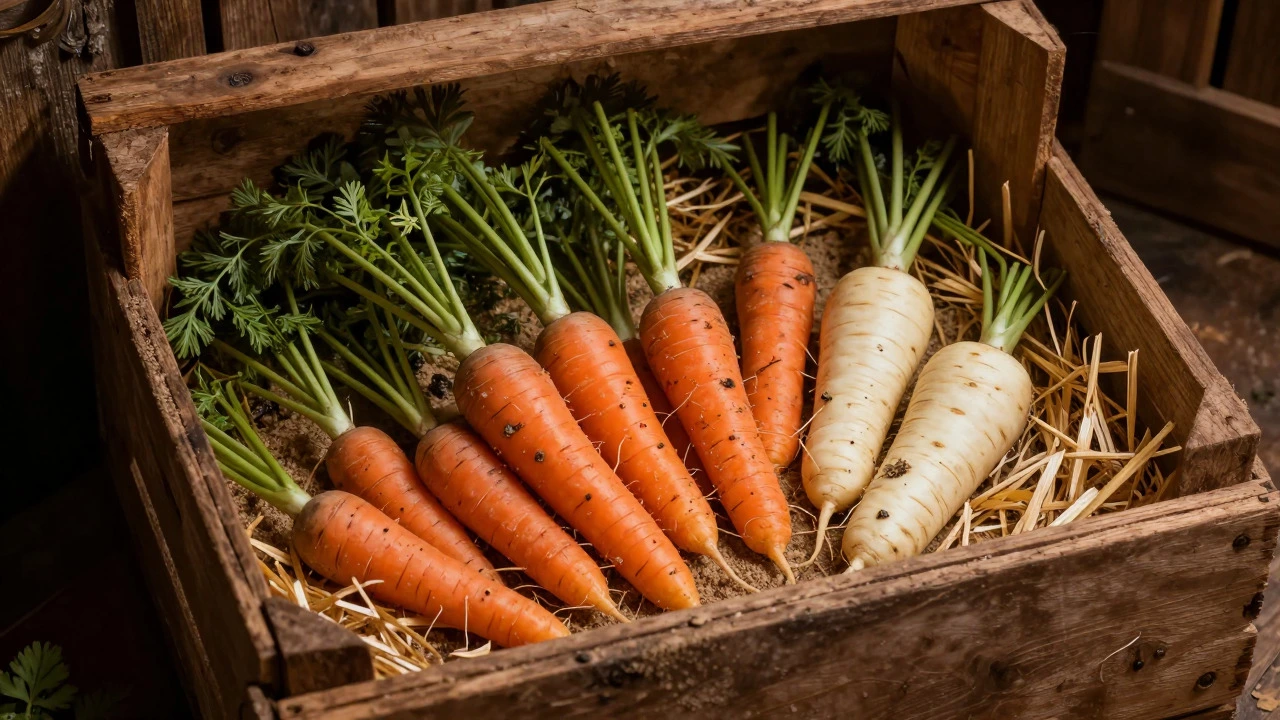
For storage, cut the foliage close to the crown, leaving about 1cm. Store the carrots in a cool, dark place. Sand boxes, potato crates, or root cellars work well. Check them monthly for any signs of rot and remove affected carrots immediately to protect the rest.
Troubleshooting Common July Sowing Issues
Seeds aren’t germinating: The soil surface may have dried out and formed a crust. Break the crust gently with a rake and re-water. Or, try soaking seeds in water for 24 hours before sowing to speed up germination.
Roots are forked: Likely due to stones or compacted soil. Next time, prepare the bed more thoroughly. For current crops, harvest early and use in soups or stews where shape matters less.
Leaves are yellowing: Could be nitrogen deficiency or carrot fly damage. If it’s fly damage, inspect the roots. If it’s nutrient-related, apply a liquid seaweed feed, but avoid high-nitrogen fertilizers.
Plants bolt (flower): Rare in July sowings, but if it happens, the carrots are stressed. Harvest immediately. Bolting makes the roots tough and bitter.
Final Thoughts on July Carrot Sowing
Planting carrots in July is not just possible; it is strategic. It extends your harvest season into the heart of winter, providing fresh, home-grown food when supermarket options are expensive and bland. By choosing fast-maturing varieties, protecting against carrot fly, and maintaining consistent moisture, you can enjoy a bountiful autumn crop. Don’t let the late date deter you. The soil is warm, the tools are ready, and the reward is worth the effort.
What is the latest month I can plant carrots in the UK?
In most parts of the UK, July is the last safe month for outdoor sowing. In milder coastal areas like Cornwall or Brighton, you might succeed with very early varieties sown in early August, but success becomes unlikely further north or inland due to shorter days and cooler temperatures slowing growth.
Do carrots need full sun in July?
Yes, carrots need at least 6-8 hours of direct sunlight daily. However, in extreme heatwaves, partial afternoon shade can prevent bolting and keep the soil from drying out too quickly. Aim for a balance between light and protection from scorching midday sun.
Can I grow carrots in pots in July?
Absolutely. Potatoes and Paris Market varieties are ideal for containers. Use deep pots (at least 30cm for Nantes types, 15-20cm for round varieties) filled with stone-free compost. Pots dry out faster, so water daily during hot spells.
How do I stop carrot flies without netting?
Interplant with onions, garlic, or chives to mask the scent of carrots. You can also use collars made from cardboard or plastic cups around individual seedlings. Ensuring the soil is free of debris and keeping the area tidy also reduces fly attraction.
Will my July carrots survive the winter?
Yes, many varieties can be left in the ground over winter, protected by a thick layer of mulch or fleece. This allows you to harvest fresh carrots throughout January and February. Just ensure the ground does not freeze solid, which can heave the roots out of the soil.