Solid Conservatory Roof Permission Checker
What type of property do you live in?
This determines your baseline rights under Permitted Development.
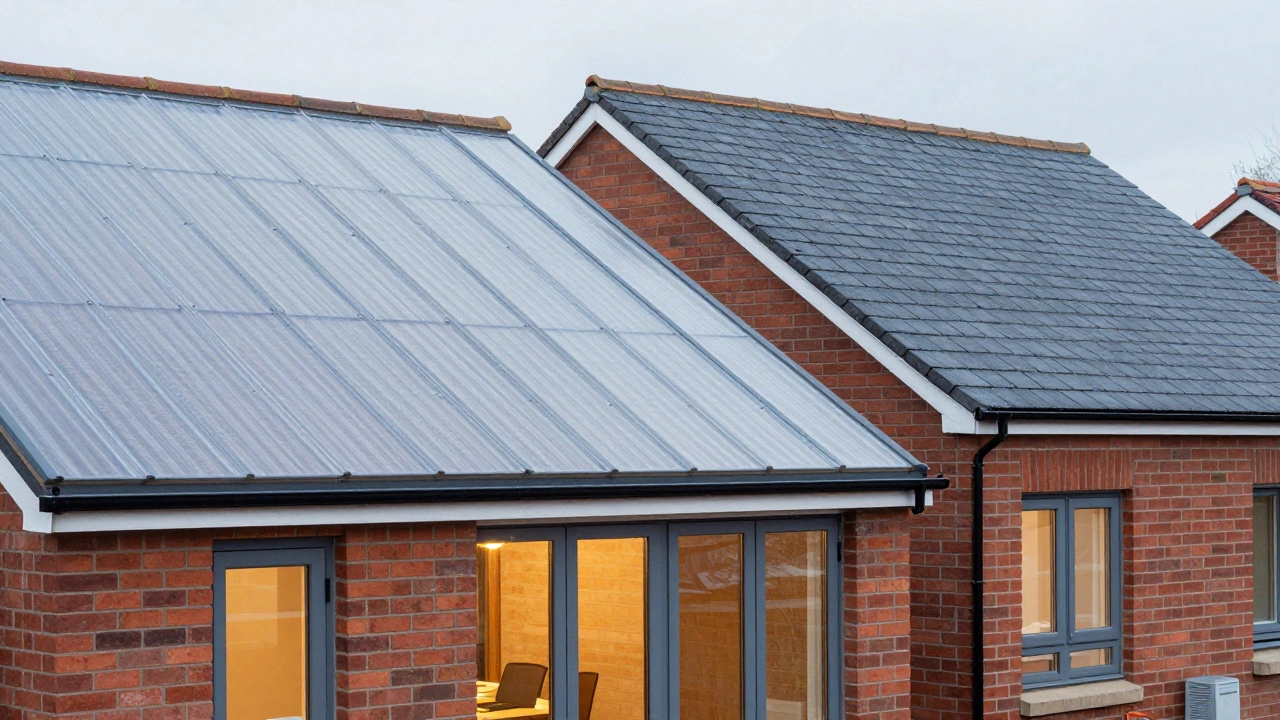
Replacing that flimsy glass or polycarbonate roof with a solid, insulated structure sounds like the ultimate upgrade. You get better insulation, less noise from rain, and a space you can actually use in winter. But before you call the builders, there is a massive legal hurdle to clear. The short answer is: it depends on whether your local council views your project as a simple repair or a new extension.
In the United Kingdom, changing a conservatory roof often triggers Planning Permission, which is a formal approval required by local authorities for certain types of construction work. This is because many councils consider a solid roof to be a material change in the appearance of the property, potentially affecting neighbors' light and privacy. If you get this wrong, you could face enforcement notices, fines, or even being forced to tear the roof down. Let’s break down exactly when you need permission and how to navigate the rules without losing your mind.
The Core Issue: Is It Still a Conservatory?
To understand the rules, you first need to understand what defines a conservatory in the eyes of the law. Under Permitted Development Rights, which are legal allowances that allow homeowners to carry out certain building works without applying for planning permission, a conservatory has specific criteria. It must be attached to the house, have separate controls for heating, and crucially, at least 75% of its roof area must be translucent (glass or polycarbonate).
If you replace the entire roof with solid materials like slate, tiles, or metal, you are no longer technically building a conservatory. You are building an Orangery, which is a type of home extension characterized by solid walls and a solid roof, often featuring a central lantern or clerestory windows. Orangeries do not automatically benefit from the same Permitted Development Rights as conservatories. They are treated more like traditional extensions. This distinction is the single most important factor in determining your next steps.
When You Likely Need Planning Permission
You will almost certainly need to apply for planning permission if any of the following apply to your situation:
- Your Home is Listed: If you live in a Grade I, II*, or II listed building, you need Listed Building Consent, which is special permission required to alter or extend a building of special architectural or historic interest. A solid roof is a significant alteration and rarely approved without extensive justification.
- You Live in a Conservation Area: In these designated zones, local councils have stricter controls to protect the character of the neighborhood. Even minor changes to roofs may require permission.
- The Extension Exceeds Size Limits: If your conservatory/orangery extends beyond 4 meters from the rear wall of a detached house (or 3 meters for others), or covers more than 50% of the total land around your house, you lose Permitted Development Rights.
- It Faces a Highway: Any side-facing extension that includes a porch, balcony, or veranda needs permission. While a roof itself might not trigger this, the overall structure often does if it alters the front elevation significantly.
- National Parks or Areas of Outstanding Natural Beauty: Similar to conservation areas, these protected landscapes have tighter restrictions on external alterations.
If none of these red flags apply, you might still fall under the radar, but you need to be careful about the "incidental" nature of the work.
The Grey Area: Repairs vs. Replacements
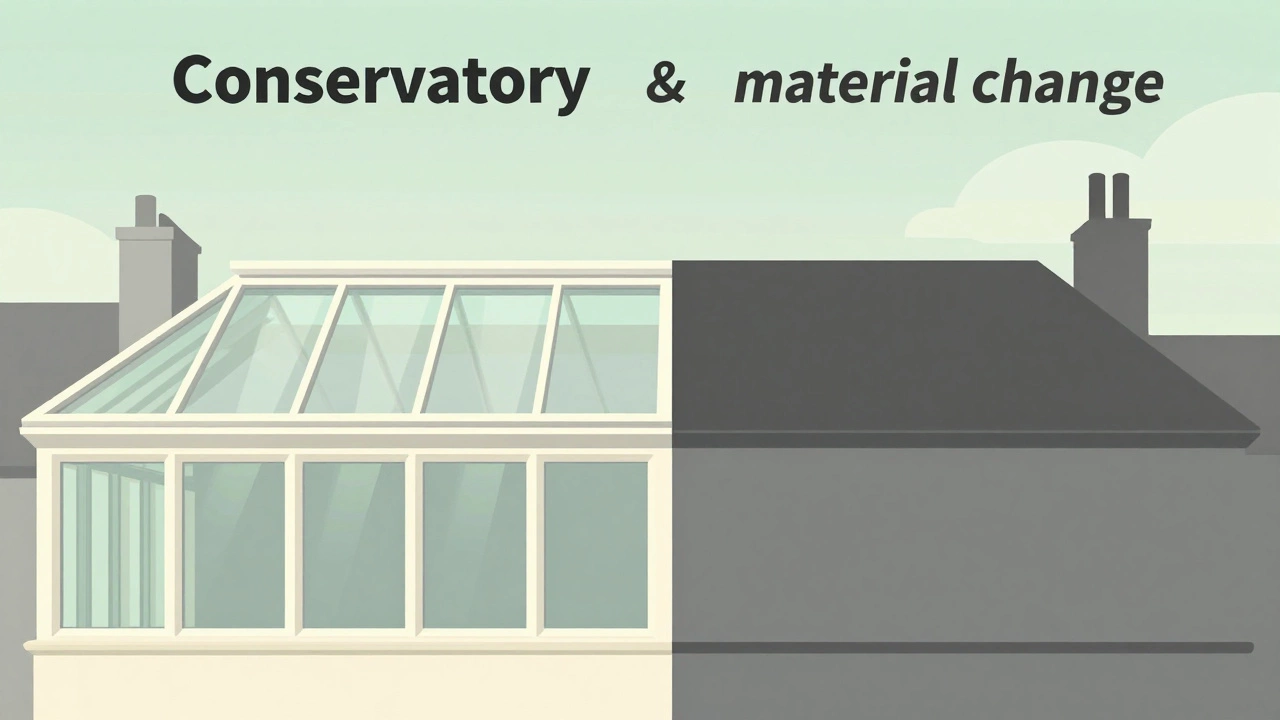
Here is where things get tricky. Some homeowners argue that replacing a leaking polycarbonate roof with a solid one is just "maintenance." Local planning authorities usually disagree. Maintenance implies keeping the existing structure functional. Changing the material from translucent to opaque is a "material change" in appearance.
However, if you keep a significant portion of the roof translucent-say, 75% or more-and only solidify a small section (like a flat roof overhang or a lantern feature), you might stay within the definition of a conservatory. This is often called a "hybrid" roof. But even then, you must ensure the solid part doesn’t dominate the visual profile. If your council officer looks at your plans and sees a brick-and-mortar box sticking out of your garden, they will likely classify it as an extension requiring full planning permission.
Building Regulations: The Hidden Hurdle
Even if you don’t need planning permission, you almost certainly need to comply with Building Regulations, which are standards that set minimum requirements for design, construction, and alterations to buildings to ensure safety and energy efficiency. These are different from planning permission. Planning permission is about aesthetics and impact on the neighborhood; Building Regulations are about safety, structure, and insulation.
When you add a solid roof, you are creating a habitable space. This triggers several key regulations:
- Structural Integrity: Your existing walls must be strong enough to support the weight of a solid roof. Glass roofs are light; slate or concrete tiles are heavy. You may need steel beams or reinforced foundations.
- Thermal Insulation: Part L of the Building Regulations requires new extensions to meet specific U-values (heat loss standards). A solid roof must be properly insulated to prevent heat loss and condensation.
- Ventilation: Enclosed spaces need adequate air flow to prevent mold and stale air. You’ll likely need trickle vents or mechanical extraction.
- Fire Safety: The materials used must be fire-resistant, especially if the roof is close to neighboring properties.
You can submit a Building Notice to your local authority or hire an approved inspector to handle this. Ignoring this step is dangerous and can invalidate your home insurance.
How to Check Your Status Without Guessing
Don’t rely on advice from friends or generic online forums. Every property is unique. Here is a practical checklist to determine your path:
- Check for Restrictions: Contact your local planning authority (LPA) to ask if your property has Article 4 Directions (which remove Permitted Development Rights) or if it’s in a conservation area.
- Measure Your Footprint: Calculate the percentage of your garden already covered by outbuildings. If adding the new structure pushes you over 50%, you need permission.
- Consult a Professional: An architect or surveyor can draw up preliminary sketches. Many LPAs offer a Lawful Development Certificate (LDC), which is a legal document confirming that proposed work does not require planning permission. Applying for an LDC costs money (£262 in England as of 2024, check current fees), but it provides legal proof that you are safe to proceed.
- Consider the Neighbors: Even if you don’t legally need permission, informing neighbors can prevent complaints later. A complaint can trigger a retrospective investigation.
Alternatives If Permission Is Denied
If your council says no to a full solid roof, don’t give up. There are creative compromises that often fly under the radar or fit within permitted development:
- Laminated Glass: Upgrade to high-performance laminated glass. It offers better sound insulation and security than standard polycarbonate while remaining translucent.
- Tinted Glazing: Use dark tinted glass to reduce glare and heat gain, making the space more comfortable without changing the roof type.
- Internal Liners: Install a suspended ceiling inside the conservatory. This creates a warm air gap, improves acoustics, and hides unsightly rafters, giving the feel of a solid room without altering the external roof.
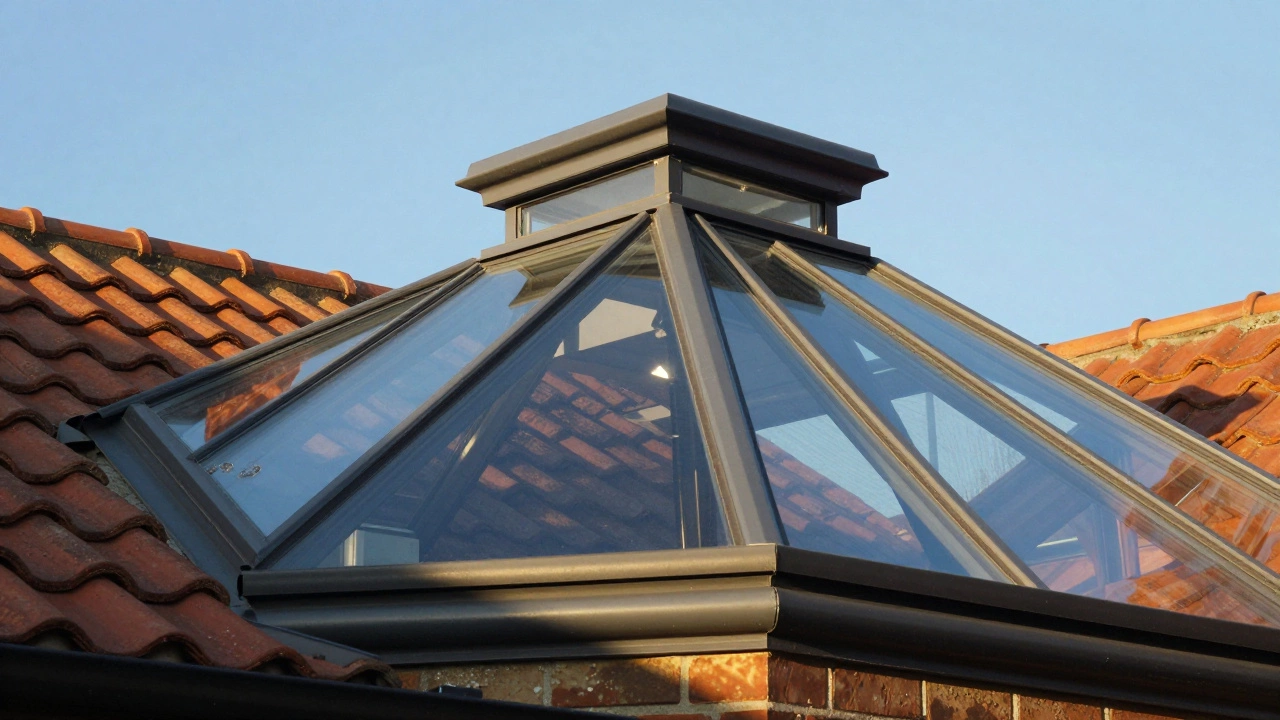
- Hybrid Lanterns: Add a small, solid lantern feature to the center of the roof, keeping the majority of the surface area glass. This adds architectural interest and some solidity while maintaining the 75% translucent rule.
Summary of Key Takeaways
| Scenario | Planning Permission Needed? | Building Regulations Needed? |
|---|---|---|
| Replacing glass with glass (same size) | No (usually) | No (unless structural) |
| Replacing polycarbonate with solid roof | Yes (likely) | Yes |
| Adding a hybrid roof (75%+ glass) | Maybe (check LPA) | Yes |
| Listed Property | Yes (Listed Building Consent) | Yes |
| Conservation Area | Yes (likely) | Yes |
Frequently Asked Questions
Can I install a solid roof on my conservatory without planning permission?
In most cases, no. Replacing a translucent roof with a solid one changes the character of the building and typically falls outside Permitted Development Rights. It is treated as a new extension, requiring planning permission unless you have a Lawful Development Certificate proving otherwise.
What is the difference between planning permission and building regulations for a conservatory roof?
Planning permission focuses on the external appearance and impact on the neighborhood. Building regulations focus on safety, structural integrity, insulation, and ventilation. You might not need planning permission for a minor repair, but you will always need to comply with building regulations if you create a habitable, enclosed space.
Do I need permission if I live in a flat or apartment?
Permitted Development Rights generally apply to houses, not flats or maisonettes. If you live in a block of flats, you will almost certainly need planning permission for any external alterations, including roof changes. You also need consent from your freeholder or management company.
How much does it cost to get a Lawful Development Certificate?
As of recent years, the fee for a prior approval application or LDC in England is £262. Fees vary slightly in Scotland, Wales, and Northern Ireland. It is worth paying this fee to avoid future legal issues when selling your home, as buyers will ask for proof that the work was legal.
What happens if I build a solid roof without permission?
If your local council discovers unauthorized work, they can issue an enforcement notice requiring you to restore the property to its original state. This can be costly and stressful. Additionally, lacking proper documentation can cause delays or failures during property sales, as solicitors will flag the unapproved extension.
Is a solid roof better than glass for insulation?
Yes, significantly. Solid roofs with proper insulation have much lower U-values than standard glass or polycarbonate. They retain heat in winter and prevent overheating in summer, making the space usable year-round and reducing energy bills.
Can I convert my conservatory into a bedroom with a solid roof?
Converting a conservatory into a bedroom involves strict building regulations regarding fire escape routes, ventilation, and insulation. While a solid roof helps with insulation, you must ensure the room meets all safety standards for sleeping accommodation. Planning permission may also be required if the use of the space changes materially.