Raised Bed Soil Calculator
Calculate how much soil you need for your raised bed and learn the ideal soil mix for healthy plants.
Soil Requirements
Your raised bed will need cubic feet of soil.
This is equivalent to cubic yards.
Recommended Soil Mix
For healthy plants, use this ratio:
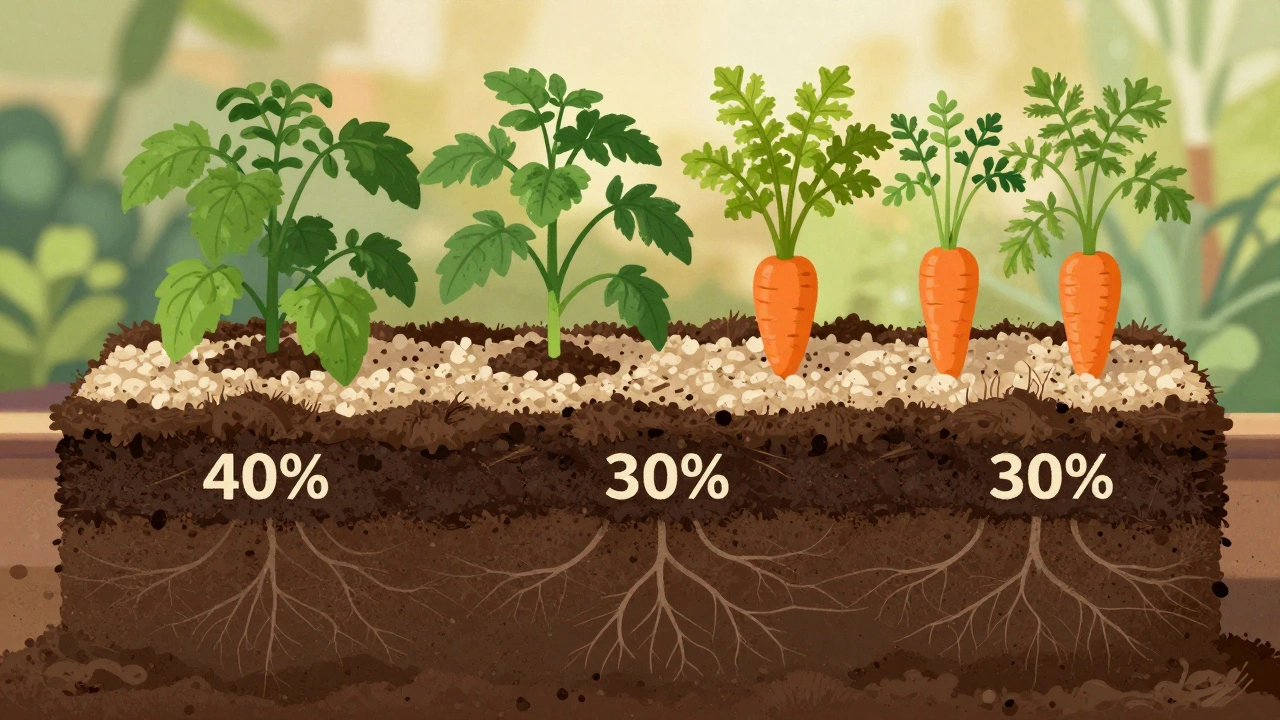
- 40% topsoil
- 30% compost
- 30% perlite or coconut coir
You bought a raised bed. You’re excited to grow tomatoes, lettuce, or maybe even strawberries. Then you walk into the garden center and see a big bag of Miracle-Gro Garden Soil. It promises to be "ready to plant" and "packed with nutrients." It looks perfect. But is it really the right choice for your raised bed?
The short answer? You can use it-but you shouldn’t use it alone. And here’s why.
What’s in Miracle-Gro Garden Soil?
Miracle-Gro Garden Soil isn’t just dirt. It’s a mix designed for in-ground planting. The formula typically includes compost, peat moss, and other organic matter. It also contains synthetic fertilizers like ammonium nitrate and potassium chloride. These give plants a quick boost-perfect for gardens where soil is poor or compacted.
But raised beds aren’t in-ground gardens. They’re elevated containers with limited space. The soil you put in them has to do more work. It needs to drain well, hold nutrients without getting soggy, and stay loose so roots can spread. Miracle-Gro Garden Soil? It’s too dense for that.
Why Raised Beds Need Different Soil
When you fill a raised bed, you’re creating a controlled environment. Unlike regular soil, which can naturally aerate and drain over time, raised bed soil is stuck in a box. If it compacts, your plants suffocate. If it holds too much water, roots rot. If it runs out of nutrients fast, your veggies turn pale and stunted.
Professional growers and experienced gardeners use what’s called a "raised bed mix." That usually means:
- 40% topsoil (or a high-quality garden soil)
- 30% compost (well-aged, not fresh manure)
- 30% coarse material like perlite, vermiculite, or coconut coir
This mix drains fast, holds moisture without turning to mud, and feeds plants steadily. Miracle-Gro Garden Soil doesn’t include enough of those coarse materials. It’s heavy. It compacts. And the synthetic nutrients? They’re gone in 4 to 6 weeks.
What Happens If You Use It Straight From the Bag?
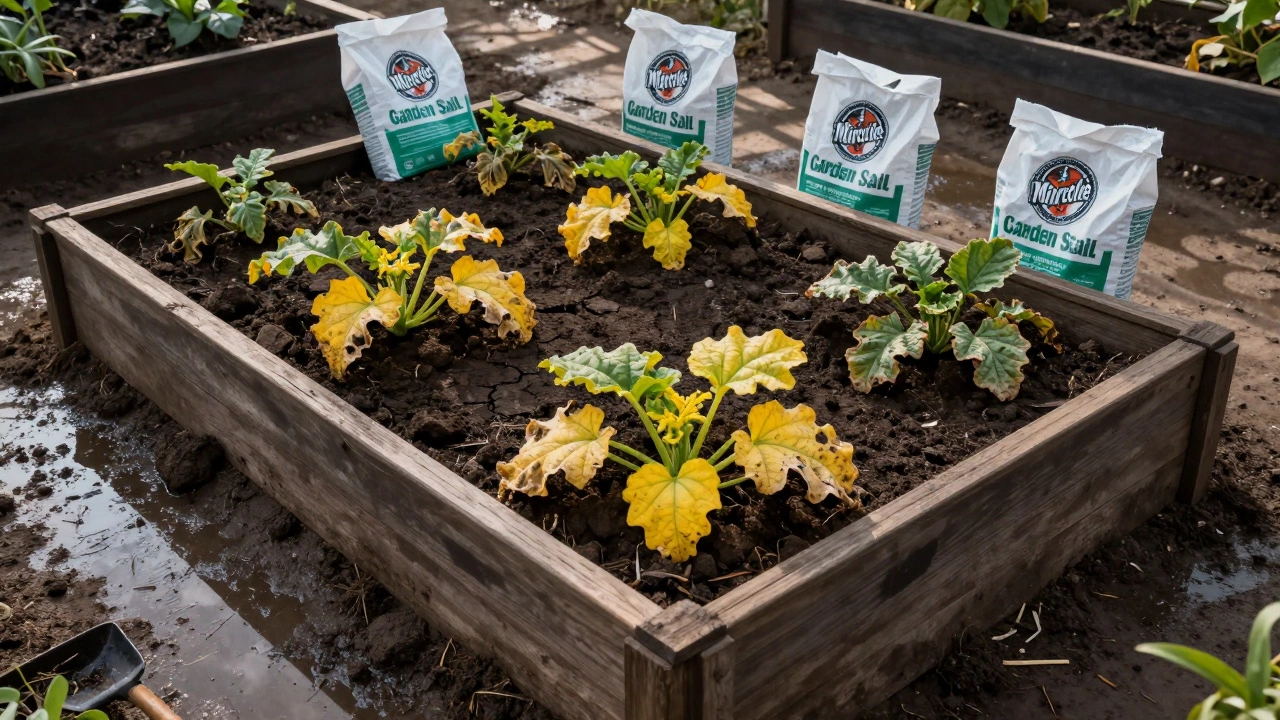
Let’s say you fill your 4x8-foot raised bed with three bags of Miracle-Gro Garden Soil. You plant your seedlings. They grow fast at first-those added fertilizers give them a rush. But by week five, the leaves start yellowing. Your cucumbers stop producing. Your carrots grow crooked and stunted.
That’s because:
- The soil has settled and turned into a dense, muddy layer
- The synthetic nutrients have washed out or burned roots
- There’s no structure for roots to breathe
One gardener in Brighton, Sarah L., filled her raised bed with Miracle-Gro Soil last spring. She got two good harvests of lettuce and radishes. Then her zucchini plants died. "They looked fine until they just collapsed," she said. "I didn’t realize the soil had turned to cement."
Can You Mix It With Other Soils?
Yes. But only if you’re smart about it.
If you already have Miracle-Gro Garden Soil and want to use it, mix it 50/50 with a high-quality topsoil and add a wheelbarrow full of compost. Then toss in a bag of perlite or coconut coir. That gives you:
- Structure from the topsoil
- Slow-release nutrients from compost
- Drainage from perlite or coir
This isn’t ideal-but it’s better than using it alone. And if you’re on a budget, this hack can stretch your supply.
Just remember: Miracle-Gro Garden Soil isn’t a soil amendment. It’s a fertilizer-heavy base. Treat it like salt-you need it, but too much ruins everything.
What Should You Use Instead?
There are better options made specifically for raised beds. Look for products labeled "raised bed soil" or "container mix." Brands like:
- Pro-Mix Organic Raised Bed Mix
- FoxFarm Ocean Forest Potting Soil
- Espoma Organic Planting Mix
These mixes are designed to stay light, drain well, and feed plants for months. They don’t rely on synthetic fertilizers. Instead, they use slow-release organic nutrients-like feather meal, bone meal, and kelp extract-that feed plants steadily without burning roots.
And here’s the kicker: you can make your own for less than buying pre-mixed bags. Fill your raised bed with:
- 40% topsoil (buy in bulk from a local supplier)
- 30% compost (home-made or from a garden center)
- 30% coconut coir or perlite
That’s it. No chemicals. No surprises. Just soil that works with your plants, not against them.
How Often Should You Refresh Raised Bed Soil?
Even the best soil breaks down over time. Roots, rain, and weather compact it. Nutrients get used up. After two growing seasons, your raised bed soil will start to sink. That’s normal.
Every spring, top off your bed with 1 to 2 inches of compost. That’s all you need. You don’t have to replace the whole thing. Just feed it. Think of it like giving your soil a multivitamin.
Some gardeners add worm castings or biochar for extra structure and microbial life. That’s great if you’re into advanced techniques. But compost alone will keep your plants thriving for years.
Common Myths About Raised Bed Soil
There’s a lot of misinformation out there. Let’s clear up a few:
- Myth: "You need to replace all the soil every year."
False. You only need to add compost. Replacing soil is expensive and wasteful. - Myth: "Miracle-Gro makes plants grow faster."
Partly true-but it burns out fast. Organic soil feeds plants over months. Synthetic fertilizers give a spike, then crash. - Myth: "Any dirt will do in a raised bed."
Nope. Cheap topsoil from a hardware store can be full of weeds, clay, or chemicals. Always check the source.
Final Verdict: Use Miracle-Gro Garden Soil in Raised Beds?
Technically? Yes, you can. But you’ll regret it if you use it alone. It’s not designed for raised beds. It compacts. It drains poorly. And the synthetic nutrients don’t last.
If you’ve already bought it? Mix it with topsoil, compost, and perlite. Use it as a base, not the whole recipe.
If you’re starting fresh? Skip it. Buy a raised bed-specific mix or make your own. It costs a little more upfront-but your plants will thank you. And you won’t have to wonder why your tomatoes died in July.
Your raised bed is your garden’s foundation. Don’t build it on a quick fix. Build it on something that lasts.
Can I use Miracle-Gro potting soil instead of garden soil in raised beds?
Yes, Miracle-Gro Potting Soil is a better choice than their Garden Soil for raised beds. Potting soil is designed for containers and includes perlite or coconut coir for drainage. It’s lighter and less likely to compact. But even potting soil can run out of nutrients after a few months, so top up with compost every spring.
Is Miracle-Gro Garden Soil organic?
No. Miracle-Gro Garden Soil contains synthetic fertilizers like ammonium nitrate and urea. These are not allowed in certified organic gardening. If you want organic soil, look for products labeled "OMRI Listed" or check the ingredients for only natural sources like compost, bone meal, and kelp.
How much soil do I need for a 4x8 raised bed?
A standard 4x8-foot raised bed that’s 12 inches deep holds about 32 cubic feet of soil. That’s roughly 12 bags of 3-cubic-foot soil. If you’re mixing your own, buy topsoil in bulk-it’s cheaper. Most garden centers sell it by the cubic yard (27 cubic feet per yard).
Why is my raised bed soil sinking?
Soil sinks because organic matter like compost breaks down over time. This is normal. To fix it, just add 1 to 2 inches of fresh compost on top each spring. It will settle into the bed and replenish nutrients. Don’t try to add more soil on top-just feed it.
Can I use garden soil from my yard in a raised bed?
Only if it’s high-quality, loamy soil without weeds, clay, or chemicals. Most yard soil is too dense, too acidic, or full of pests. It’s safer to buy topsoil from a reputable supplier or stick with a pre-made raised bed mix. If you do use yard soil, screen it first and mix it with compost and perlite.