Soil Transition Timeline Simulator
Drag the slider to simulate years of consistent organic management and see how your soil ecosystem evolves.
Management Settings
Soil Ecosystem Status
Health Score: 10%Phase: Conventional Soil
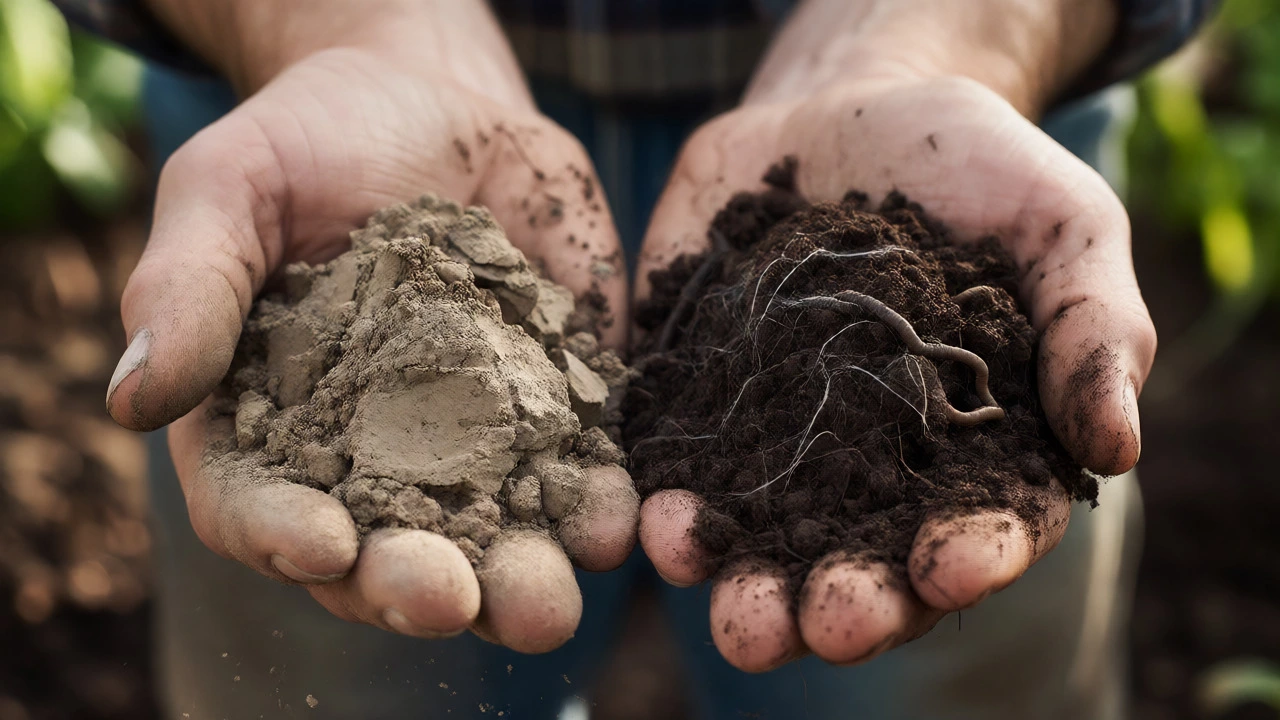
Your soil is likely compacted, low in microbial diversity, and dependent on external inputs. Water drainage may be poor or too fast depending on texture.
Key Indicators to Watch:
- Worm Count: < 5 per spade
- Smell: Dusty or Chemical
- Structure: Hardpan or Loose Sand
You’ve probably heard the claim that you can turn your dirt into rich, living organic soil in a single season. While it’s true you can make massive improvements in three months, calling that soil "fully organic" is a bit of a stretch. The honest answer? If you’re starting with depleted clay or sandy subsoil, expect a 3 to 5 year journey to reach true stability. But here’s the good news: you don’t need to wait five years to see results. You’ll notice tangible changes in water retention and plant vigor within just two growing seasons.
The Myth of Instant Transformation
Gardening magazines love a before-and-after photo taken over one summer. They show a patchy lawn turning lush and vegetable beds bursting with produce. What they don’t show is the invisible underground work happening simultaneously. Soil biology doesn’t operate on human timelines. It operates on microbial reproduction cycles, fungal network expansion rates, and chemical equilibrium shifts. When you dump a truckload of compost onto your garden, you haven’t created organic soil; you’ve added an amendment. True organic status isn’t just about what you put in-it’s about what stays in and how the ecosystem processes it.
Think of it like building muscle. You can lift weights for a week and feel stronger, but you haven’t changed your physiology. Similarly, adding fertilizer gives plants a quick energy boost, but it doesn’t rebuild the soil structure. That requires patience. The transition from conventional, chemically dependent ground to self-sustaining organic earth involves shifting the balance from bacterial dominance (fast decay) to fungal dominance (slow, stable storage). This shift alone typically takes three full years of consistent management.
Year One: The Shock Phase
The first year is messy. If you’ve been using synthetic fertilizers, your soil likely lacks the complex food web needed to break down organic matter efficiently. When you start adding compost, manure, or leaf mold, the existing microbes are overwhelmed. They might actually lock up nitrogen temporarily as they multiply to process the new carbon sources. This is why your tomatoes might look yellowish in June despite all your hard work.
- Immediate Impact: You will see improved water infiltration within weeks. Organic matter acts like a sponge.
- Visual Changes: Earthworms may appear if they weren’t there before, usually by late summer.
- Plant Response: Expect inconsistent growth. Some plants thrive, others struggle as the soil chemistry adjusts.
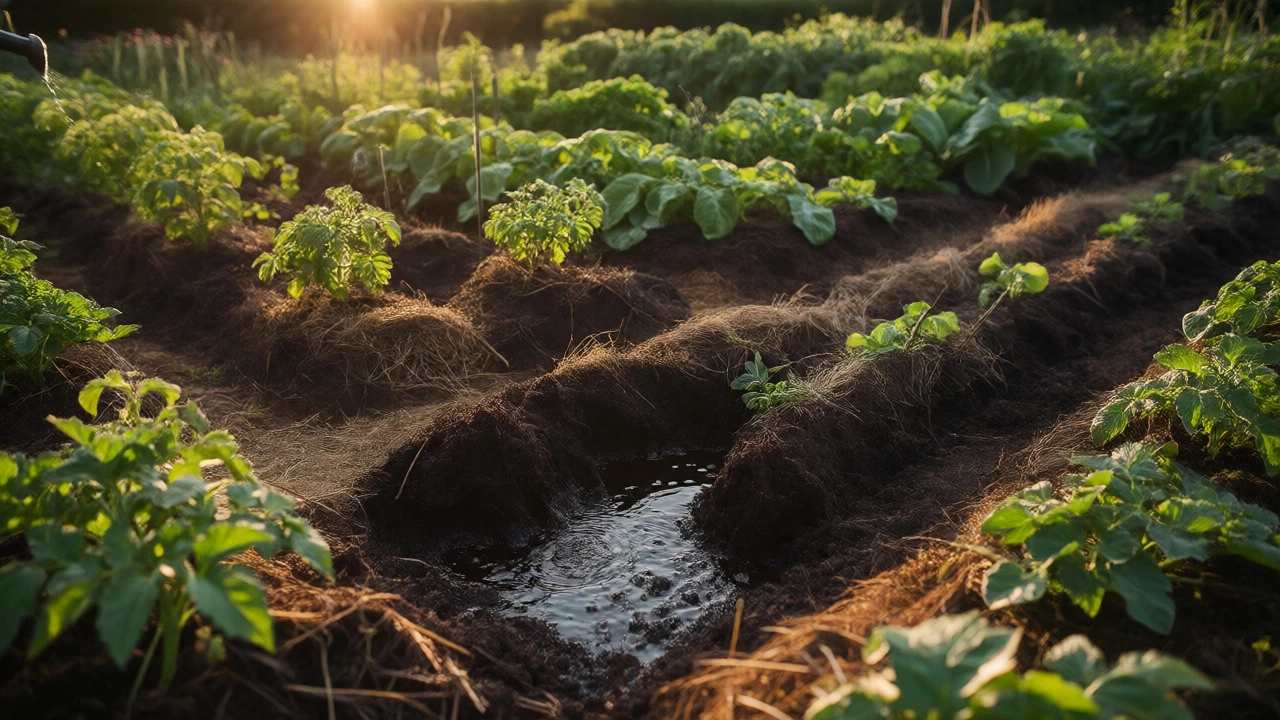
Don’t panic if things look worse before they get better. This is the "detox" phase. Your goal in Year One isn’t perfection; it’s consistency. Keep adding organic material. Stop tilling deeply, which destroys the fragile fungal networks you’re trying to build. Mulch heavily. The surface needs protection while the underground revolution begins.
Years Two and Three: Building Structure
By the second year, the chaos settles. The microbial population has adapted to your input levels. You’ll notice the soil holds moisture longer after rain. In Brighton’s damp climate, this means fewer waterlogged roots in winter and less drought stress during those rare hot spells in July. The soil starts to clump together nicely when squeezed-a sign of aggregation caused by glomalin, a sticky protein produced by mycorrhizal fungi.
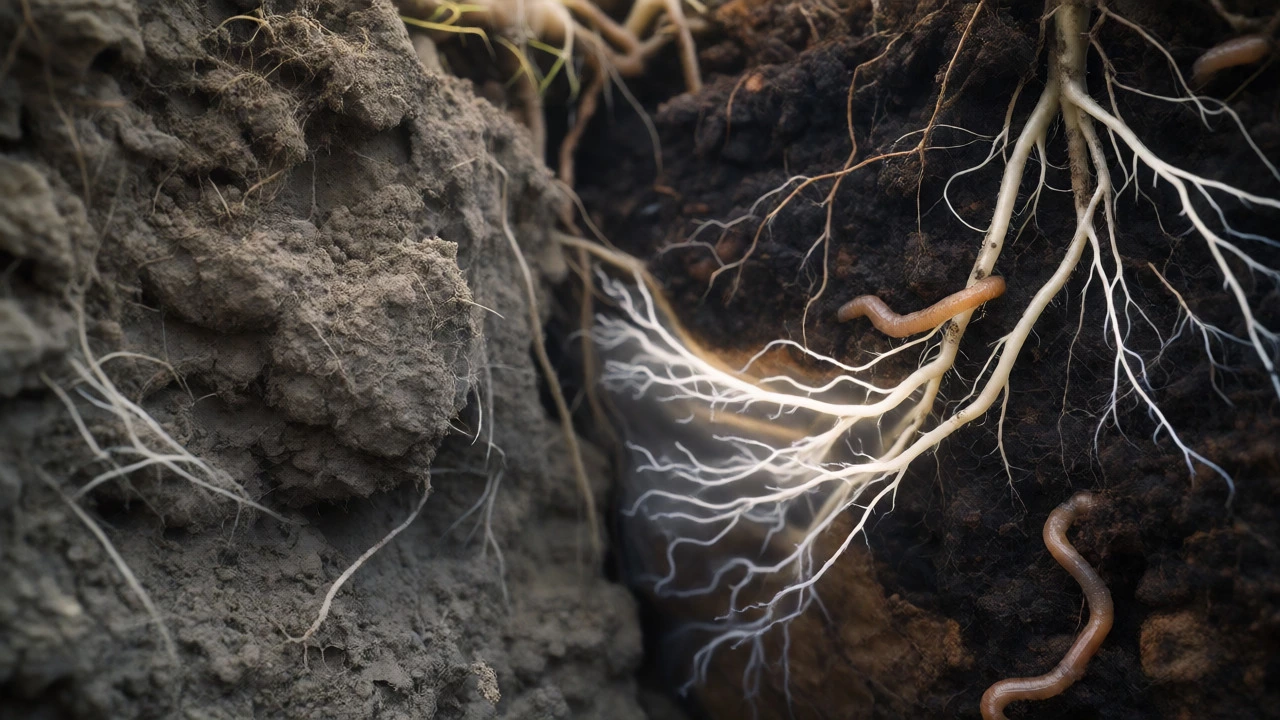
This is where the real magic happens. Mycorrhizal fungi form symbiotic relationships with plant roots, extending their reach by hundreds of times. They trade nutrients for sugars. But these networks take time to establish. A young fungal web is fragile. By Year Three, however, the connections become dense and resilient. You’ll find that plants require less watering and fewer amendments because the soil itself is feeding them more efficiently.
| Timeframe | Biological Activity | Physical Structure | Garden Outcome |
|---|---|---|---|
| Months 1-6 | Bacterial bloom; high decomposition rate | Loose, potentially unstable | Rapid initial growth; possible nutrient lock-up |
| Year 1 | Microbial diversity increases; worms arrive | Improved porosity; better drainage | Inconsistent yields; visible weed reduction |
| Year 2 | Fungal networks begin to spread | Aggregation forms; soil darkens | Steadier growth; reduced watering needs |
| Year 3+ | Mature food web; stable humus formation | Crumbly, friable texture; high water holding capacity | Resilient plants; minimal intervention required |
What Actually Counts as "Organic"?
We often use the word "organic" loosely. In farming certification, it refers to a set of practices-no synthetic pesticides, no GMOs, specific inputs allowed. But in your backyard, "organic soil" really means soil with high humus content. Humus is the stable end-product of decomposition. Unlike fresh compost, which breaks down quickly, humus locks carbon and nutrients into the soil for decades.
Building humus is slow. For every ton of organic matter you add, only a fraction converts to stable humus. The rest decomposes into CO2 or feeds the microbes. To increase your soil’s organic matter percentage by just 1% in a standard garden bed, you might need to add several inches of compost annually for several years. This is why the timeline stretches out. You aren’t just topping up the tank; you’re rebuilding the engine.
Factors That Speed Up (or Slow Down) the Clock
Not all gardens transform at the same speed. Climate plays a huge role. In warmer regions with long growing seasons, biological activity runs faster. Here in the UK, our cooler temperatures mean microbes work slower. You have a shorter window each year for decomposition compared to someone gardening in Spain or Australia.
Soil type matters too. Sandy soils drain fast but hold little life. They convert quickly to organic status if you keep adding bulk, but they lose it just as fast. Clay soils are stubborn. They resist change initially because they are compacted and lack air. However, once clay gets organic matter mixed in, it becomes incredibly fertile and holds onto that richness for much longer. Silty soils sit somewhere in the middle.
Your management style also dictates the pace. If you till every spring, you burn off organic matter faster than you can replace it. Tilling exposes protected carbon to oxygen, causing rapid oxidation. No-till or minimal-till methods preserve the structure you’re working so hard to build. Gardeners who adopt no-dig principles often report seeing significant structural improvements in half the time compared to traditional diggers.
Signs You’re Getting There
How do you know if you’re making progress without sending samples to a lab? Look for these indicators:
- Color Change: Healthy organic soil is darker. It looks rich and moist, not pale or dusty.
- Smell: It should smell earthy and sweet, like a forest floor. If it smells rotten or sulfurous, something is anaerobic or imbalanced.
- Life: Count the worms. More than 10 per spade-full is a great sign. Look for beetles, spiders, and white fungal threads (mycelium).
- Water Behavior: Pour a bucket of water on the surface. If it pools and drains slowly, you still have compaction issues. If it disappears evenly within minutes, your structure is improving.
Don’t rely solely on plant height. Plants can look tall but weak if they’re relying on soluble salts rather than deep root health. Check the roots. Are they white and spreading, or brown and circling? White, fibrous roots indicate healthy soil interaction.
Practical Steps to Accelerate the Process
If you want to shorten that 3-5 year timeline, focus on quality inputs and minimizing disturbance. Here’s what works best based on years of trial and error in similar climates:
- Diverse Compost: Don’t just use grass clippings. Mix in woody materials, leaves, and kitchen scraps. Diversity feeds different types of microbes.
- Cover Crops: Never leave soil bare. Plant clover, rye, or mustard in winter. Their roots break up compaction and feed the soil from below.
- Stop Walking on Beds: Compaction kills pore space. Design your garden so you never step inside the planting area. Use paths.
- Add Biochar: This charcoal-like substance provides permanent housing for microbes. It doesn’t rot away, so it builds structure instantly and retains nutrients for centuries.
Remember, nature doesn’t rush. Forest floors didn’t become fertile overnight. They accumulated layers of fallen leaves and dead wood over millennia. You’re compressing that timeline through active management, but you can’t bypass biology entirely. Give it time, stay consistent, and your soil will reward you with resilience that synthetic inputs simply can’t match.
Can I buy organic soil instead of waiting?
You can buy topsoil labeled as organic, but it often loses its vitality quickly once exposed to air and sun. Bagged compost is sterile until it interacts with local microbes. Buying pre-made organic soil is a shortcut for container gardening, but for in-ground beds, it’s usually cheaper and more effective to build your own over time using local waste streams like leaves and grass.
Does adding manure immediately make soil organic?
No. Fresh manure is high in nitrogen and salts. If applied directly, it can burn plants and cause rapid leaching. It must be composted first to stabilize the nutrients and introduce beneficial bacteria. Even then, it’s an amendment, not a complete soil system. It contributes to the organic status but doesn't define it alone.
How often should I test my soil during the transition?
Test once at the start to establish a baseline. Then, re-test after three years. Frequent testing during the early stages can be misleading because nutrient levels fluctuate wildly as the microbial community stabilizes. Focus on visual and physical cues (smell, texture, worm count) in the interim.
Is no-dig gardening faster for creating organic soil?
Yes, generally. No-dig methods protect the fungal networks and prevent the rapid oxidation of organic matter. By layering mulch on top rather than mixing it in, you create a gradual integration zone that mimics natural forest floor processes. Most no-dig gardeners report significant structural improvements within 2 years compared to 4+ years with traditional digging.
What if my soil is very poor clay?
Clay takes longer to transform but ends up richer. Avoid adding sand to clay, which creates concrete-like conditions. Instead, add large amounts of bulky organic matter like straw, leaves, or coarse compost. Plant deep-rooted cover crops like daikon radish to break up compaction naturally. Be patient; clay responds slowly but holds the benefits longer.