Raised Bed Base Layer Advisor
Not sure what goes at the bottom of your raised bed? Answer three quick questions below to get a customized recommendation that balances drainage needs with weed control.
Recommended Strategy
Difficulty: LowWhy this works
Layer Order (Bottom to Top)
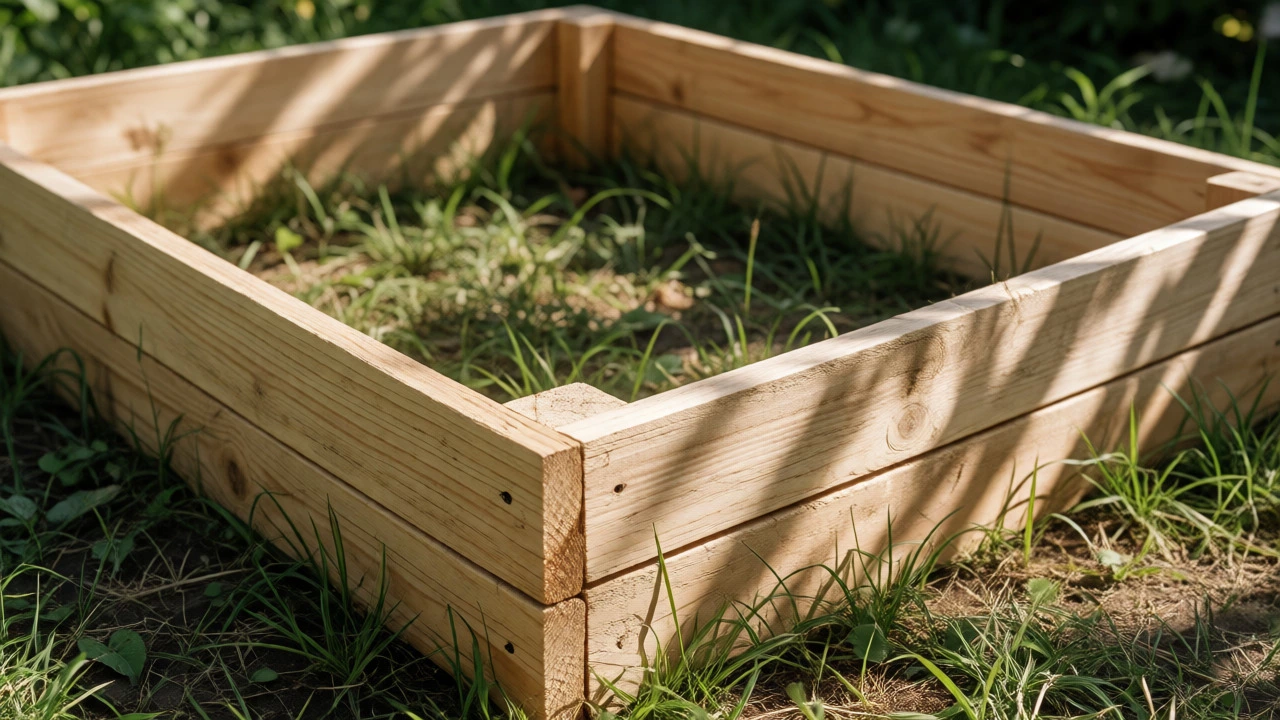
You’ve bought the timber, you’ve drilled the screws, and you’re standing over that empty wooden box wondering: what goes on the floor? It’s the question that stops more new gardeners than any pest or frost. The short answer is no, you don’t need to put anything there if your ground drains well. But here’s the catch-most of us don’t have perfect sandy loam under our patios. If you skip the base layer when you should have used one, you’ll spend the next three years pulling weeds through the slats or watching your carrots rot in waterlogged clay.
The confusion stems from conflicting advice online. Some say "bare earth is best," others swear by cardboard, and some even recommend plastic sheeting (which, frankly, is usually a mistake). Let’s cut through the noise with practical rules based on what’s actually happening underground.
The Core Rule: Drainage vs. Weeds
Your raised bed needs two things from its base: free drainage so roots don’t drown, and a barrier so perennial weeds like couch grass don’t invade your premium soil. These goals often conflict. A solid plastic liner stops weeds but traps water like a bathtub. Bare soil drains beautifully but lets every rootlet creep up from below. The right choice depends entirely on what’s currently under your bed.
Scenario 1: Good Drainage & Low Weed Pressure
If you’re placing your bed on open lawn where water disappears within an hour after rain, and you haven’t seen bindweed or Japanese knotweed nearby, leave it bare. Seriously. Dig out just the top 2-3 inches of existing turf to prevent it from matting down and blocking airflow, then fill directly with your soil mix. This allows earthworms and beneficial microbes to migrate upward naturally, building living soil faster than any bagged compost can do alone.
- Best for: Sandy soils, established lawns, annual vegetable beds.
- Pro Tip: Loosen the exposed subsoil with a garden fork before filling. This prevents compaction from creating a perched water table above the native clay layer.
Scenario 2: Poor Drainage or Heavy Clay Soil
Here’s where most beginners get into trouble. If your garden sits on heavy clay-which is common across much of the UK-the native ground acts like a sealed pot. Water pools at the bottom of your raised bed, suffocating roots and inviting fungal diseases like clubroot in brassicas. In this case, you need intervention, but not necessarily a full liner.
Start by breaking up the compacted subsoil with a deep digging fork. Then add a 4-inch layer of coarse organic matter: old leaves, wood chips, or shredded cardboard. This isn’t filler-it’s a sponge that holds moisture without becoming anaerobic. Over time, it decomposes into humus, improving structure from the bottom up.
| Material | Drainage Impact | Weed Suppression | Decomposition Rate |
|---|---|---|---|
| Bare Soil (Loosened) | Excellent | None | N/A |
| Cardboard (Wet) | Good (temporary) | High (6-12 months) | Fast |
| Wood Chips | Moderate | Low | Slow |
| Landscape Fabric | Poor (if cheap) | Medium | None |
| Plastic Sheet | Terrible | Total | None |
Why Cardboard Is the MVP
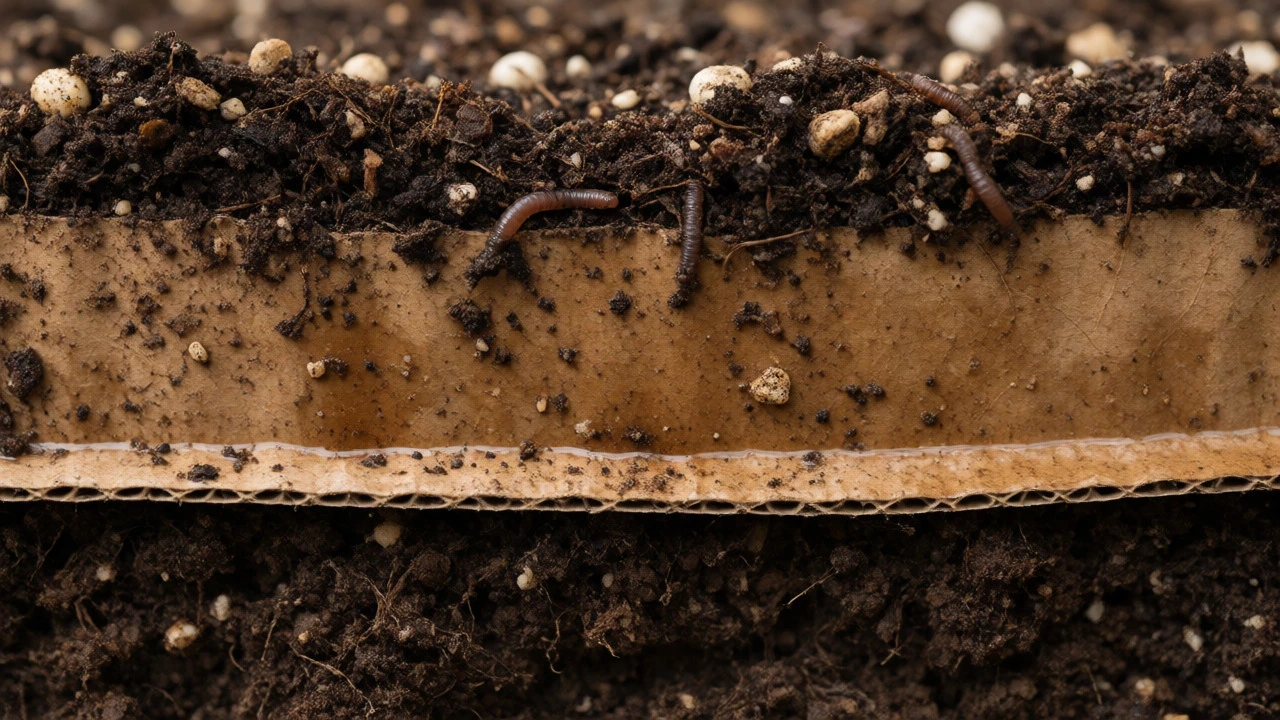
Corrugated cardboard is the most versatile tool in your shed for this job. It’s biodegradable, free (ask your local supermarket), and effective against nearly all surface weeds. Lay it wet, overlapping edges by six inches, and cover immediately with 6+ inches of soil. Within a season, worms will tunnel through it, and it breaks down into carbon-rich material.
But avoid glossy or wax-coated boxes-they repel water and take decades to degrade. Stick to plain brown shipping boxes. Remove tape and staples first; they don’t hurt, but they clutter your future harvest.
The Plastic Mistake
Never line a raised bed with non-perforated plastic unless you’re growing something specific like mint that wants containment. Plastic creates a false bottom. Rainwater passes through your rich compost, hits the plastic, and sits there until evaporation removes it. Roots sitting in saturated airless zones die back, reducing yield dramatically. Worse, pests like slugs and wireworms get trapped underneath, unable to escape downward, turning your bed into their personal buffet.
If you absolutely must block weeds completely-for example, if you’re building atop concrete or patio pavers-use perforated landscape fabric instead. Even better: drill holes in the bottom of your bed frame itself so excess water escapes sideways rather than pooling beneath.
What About Gophers and Moles?
In rural areas or gardens bordering wild fields, burrowing animals can devastate root crops. Here, you do need a physical barrier. Chicken wire laid flat across the bottom, secured to the inner walls with staples, stops moles and voles while still allowing drainage. Avoid hardware cloth if possible-it’s expensive and harder to work with. Regular chicken mesh works fine for most small mammals.
Note: Wire mesh does nothing for weeds. If you face both problems, combine methods: wire mesh first, then wet cardboard on top, then soil. Yes, this adds cost and labor, but saving your first year’s potato crop makes it worthwhile.
Layering Strategy for Maximum Yield
Don’t just dump everything in randomly. Think vertically. From bottom to top:
- Native Soil: Loosened, not removed.
- Carbon Layer: Cardboard or thin branches (optional, for poor soils).
- Compost Mix: 50% topsoil, 30% aged manure, 20% perlite or grit for structure.
- Mulch: Straw or bark on surface to retain moisture.
This stack mimics natural forest floor dynamics. Each layer feeds the next. Earthworms move freely between them, distributing nutrients where plants need them most.
When to Skip the Base Entirely
There are cases where adding anything hurts more than helps. If your raised bed is less than 12 inches tall, adding thick base layers reduces usable root depth. For shallow-rooted greens like lettuce or radishes, stick to bare soil. Also, if you’re using self-watering raised beds with built-in reservoirs, follow manufacturer instructions precisely-adding extra layers may disrupt wicking action.
Finally, remember that raised beds aren’t permanent installations. They settle, decompose, and shift. What works in Year One might need adjustment by Year Three. Check annually: lift a corner board, peek underneath. If you see standing water or dense root mats pressing against hardpan, it’s time to intervene-even mid-season.
Can I use newspaper instead of cardboard?
Yes, but use multiple sheets (at least four layers) because newsprint dissolves quickly. Black-and-white print is safe; avoid colored comics sections which may contain heavier metals. Wet thoroughly before covering with soil to prevent wind displacement.
Should I remove the grass before building?
Ideally yes. Grass left under a raised bed dies slowly, creating anaerobic conditions and attracting grubs. Cut it as low as possible, then smother with cardboard. Don’t dig it out unless you have perennial weeds-removing turf strips away valuable topsoil organisms.
Does gravel help drainage at the bottom?
No. Gravel creates a "perched water table" effect where water accumulates above the gravel layer instead of draining away. It only works if there’s an outlet hole below the gravel. In standard raised beds, coarse organic matter like wood chips serves drainage better while feeding soil biology.
How thick should the cardboard layer be?
One single-ply sheet is sufficient if fully wetted and overlapped. Double up only if dealing with aggressive runners like Bermuda grass. Thicker layers slow initial worm access and delay nutrient cycling without significantly improving weed control.
Will cardboard attract slugs?
Temporarily, yes. Slugs love damp cardboard shelters. However, once buried under 6+ inches of soil, they lose interest. To mitigate early damage, scatter iron phosphate pellets around the perimeter during installation.