Soil Restoration Planner
Follow the Squeeze Test and select the result that best describes your soil to get a tailored restoration strategy.
Sticky Ball
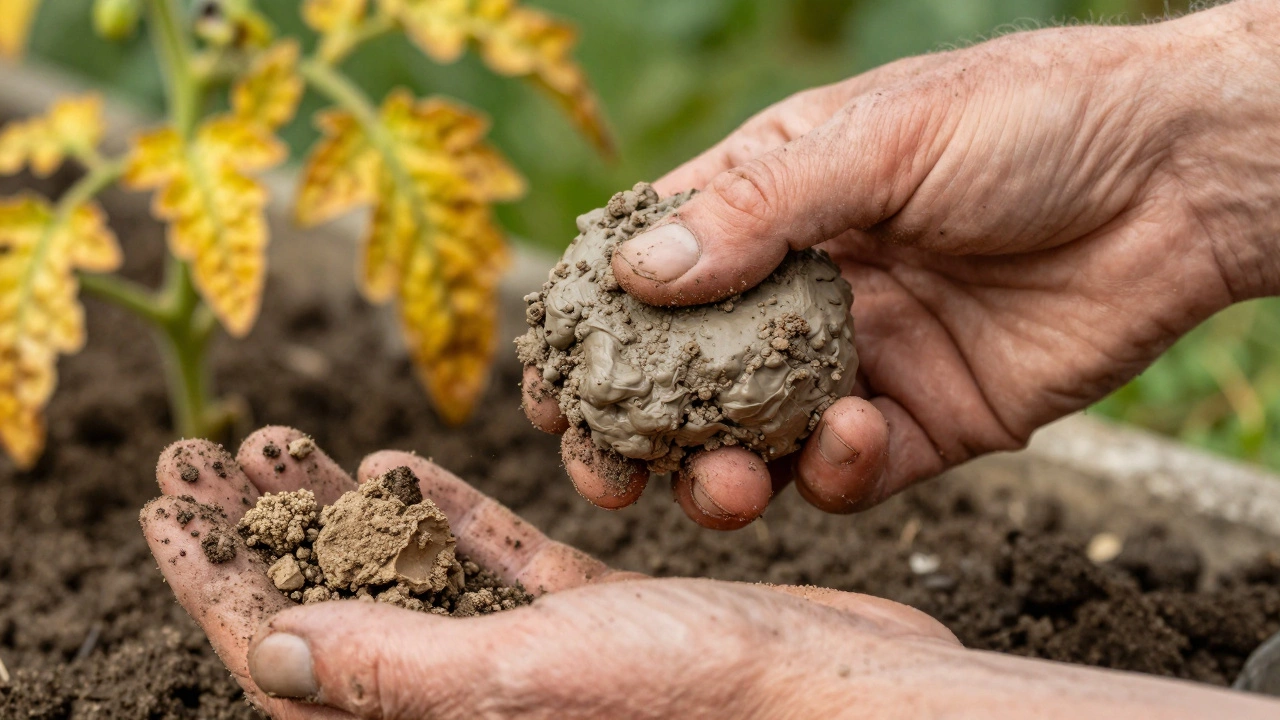
Stays in a tight, sticky ball; feels like modeling clay.
Clay SoilFalls Apart
Crumbles immediately; feels gritty and loose.
Sandy SoilCrumbles Gently
Holds a shape but breaks apart easily.
Loamy Soil🛠️ Immediate Action Plan:
⚠️ Critical Warnings:
You plant a beautiful set of heirloom tomatoes or a row of vibrant perennials, and within a month, they look like they've given up on life. Yellowing leaves, stunted growth, or maybe they just refuse to grow at all. The problem isn't your green thumb-or lack thereof-it's the dirt. Most people call it 'bad soil,' but in reality, soil is just a living system that's currently out of balance. Whether you're dealing with concrete-like clay or sandy patches where water vanishes instantly, you can turn it around without spending a fortune on professional landscaping.
Quick Wins for Better Soil
- Add Compost: The universal fix for almost every soil problem.
- Stop Tilling: Excessive digging destroys the natural fungal networks.
- Mulch Heavily: Protect the surface from erosion and moisture loss.
- Test Your pH: Know if your soil is too acidic or alkaline before adding lime or sulfur.
Identifying Your Soil Type
Before you start dumping bags of amendments, you need to know what you're actually fighting. Most 'terrible' soil falls into one of three categories. To figure out yours, try the squeeze test: grab a handful of moist soil and squeeze it. If it stays in a tight, sticky ball, it's clay. If it falls apart immediately, it's sandy. If it holds a shape but crumbles easily, you've got the gold standard: loam.
Clay Soil is a heavy soil type characterized by very small particles that pack tightly together, often leading to poor drainage and aeration. It's common in river valleys and can feel like modeling clay when wet. While it's nutrient-rich, the lack of air makes it hard for roots to breathe.
Sandy Soil is a coarse-textured soil with large particles that allow water and nutrients to leach away rapidly. It warms up quickly in the spring, which is great, but it's basically a sieve for fertilizer, meaning you have to feed your plants more often.
Silt Soil is a middle ground, containing medium-sized particles. It's fertile and holds water well, but it can become compacted easily, forming a hard crust on the surface that prevents seeds from emerging.
| Attribute | Clay Soil | Sandy Soil | Loamy Soil |
|---|---|---|---|
| Water Retention | Very High | Very Low | Balanced |
| Nutrient Levels | High | Low | High |
| Drainage Speed | Slow/Poor | Rapid | Moderate |
| Workability | Difficult | Easy | Ideal |
The Magic of Organic Matter
If there is one secret to fix terrible soil, it's adding organic matter. Think of organic matter as the "glue" that fixes both sandy and clay soils. In sandy soil, it holds onto water and nutrients. In clay soil, it creates tiny gaps between the particles, allowing water to drain and roots to penetrate.
Compost is decomposed organic material, such as food scraps and yard waste, that adds essential nutrients and improves soil structure. Adding just 2-3 inches of high-quality compost to the top of your beds every year does more for your garden than any chemical fertilizer ever could.
Beyond compost, you can use Leaf Mold, which is basically just composted fallen leaves. It's a fantastic soil conditioner that mimics the forest floor, encouraging the growth of beneficial fungi. You can also use well-rotted manure, but be careful with fresh manure-it's too high in nitrogen and can actually burn your plant roots.
Fixing Heavy Clay Soil
Dealing with clay can feel like gardening in a brick. The biggest mistake people make is adding sand to clay soil. Unless you add a massive amount of sand, you'll actually create a substance similar to concrete. Instead, focus on aeration and organic bulk.
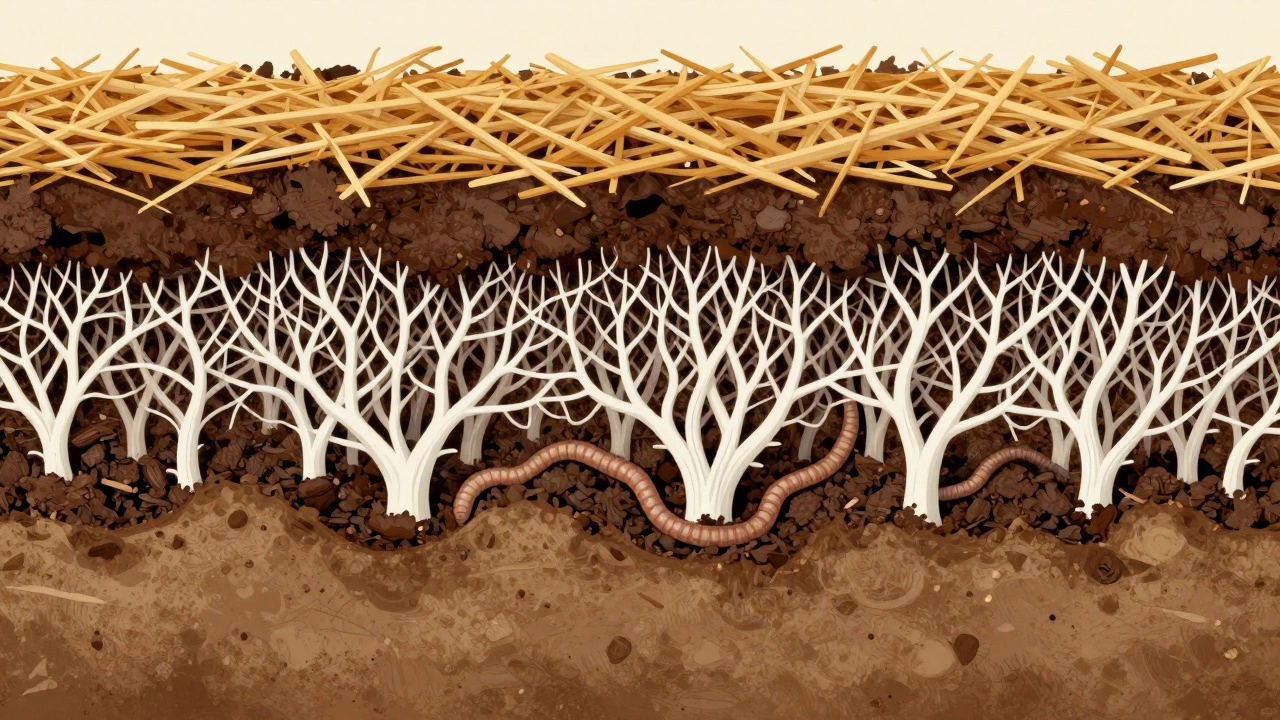
Start by applying a thick layer of organic matter on top. Rather than digging it in, which can damage the soil structure, try "no-dig" gardening. Lay down cardboard to kill weeds, then pile compost and mulch on top. Over time, earthworms will pull that organic matter down into the clay, naturally aerating the soil for you.
Another pro tip for clay is to use Gypsum, a mineral that helps break down the chemical bonds in some types of clay, making the soil more friable. However, gypsum only works on specific clay types (usually sodic soils), so it's a good idea to do a soil test first to see if it's actually necessary.
Reviving Nutrient-Poor Sandy Soil
Sandy soil is the opposite problem: it's too loose. Water runs straight through it, taking your expensive fertilizers along for the ride. To fix this, you need to increase the soil's Cation Exchange Capacity (CEC), which is just a fancy way of saying you need more "magnets" to hold onto nutrients.
The best way to do this is by incorporating Humus, the stable, dark organic matter that remains after compost has fully broken down. Humus acts like a sponge, absorbing water and locking in nitrogen, phosphorus, and potassium.
Consider using Cover Crops like clover or vetch. These plants aren't for harvest; they're grown to protect the soil from wind erosion and to pump nitrogen back into the ground through their roots. When you're ready to plant your main crop, you simply chop the cover crops down and let them rot into the surface.
Balancing the Chemistry: pH and Nutrients
You can have the best structure in the world, but if the pH is off, your plants can't "eat." Soil pH is a scale from 0 to 14, with 7 being neutral. Most garden plants love a slightly acidic range between 6.0 and 7.0. If your soil is too acidic (low pH), your plants might struggle to take up phosphorus. If it's too alkaline (high pH), they'll often suffer from iron deficiency, leading to yellow leaves with green veins.
To raise the pH of acidic soil, add Agricultural Lime, which is essentially crushed limestone. To lower the pH of alkaline soil, you can add Elemental Sulfur or peat moss. Just remember that pH changes happen slowly-don't expect an overnight transformation. It takes several months for these amendments to react with the soil.
The Long-Term Maintenance Plan
Fixing soil isn't a one-time event; it's a relationship. The goal is to create a self-sustaining ecosystem. This means moving away from synthetic fertilizers and toward biological solutions. Synthetic fertilizers provide a quick hit of nutrients but do nothing for the soil structure-and some can even kill the beneficial microbes that plants rely on.
Focus on the Soil Food Web, which consists of bacteria, fungi, protozoa, and nematodes. These microorganisms break down organic matter and deliver it directly to the roots. You can support them by avoiding chemical pesticides and keeping the soil covered at all times. Bare soil is stressed soil; it dries out, erodes, and loses its microbial life.
How long does it take to fix bad soil?
Depending on the severity, you'll see a noticeable difference in one growing season by adding compost and mulch. However, fundamentally changing the structure of heavy clay or very sandy soil usually takes 2 to 5 years of consistent organic additions to achieve a true loamy texture.
Can I just buy new soil and put it over the old stuff?
You can, but this is often a temporary fix. If you just layer new soil on top without addressing the drainage or chemistry of the original layer, you create a "perched water table" where water sits at the boundary between the two types of soil, potentially rotting your plant roots.
Is it better to use peat moss or compost?
Compost is generally superior because it provides a wide array of nutrients and beneficial microbes. Peat moss is great for moisture retention and lowering pH, but it doesn't provide much nutrition and is less sustainable to harvest from the environment.
What are the signs that my soil is improving?
Look for several markers: water should soak in more evenly without pooling (in clay) or vanishing instantly (in sand). You'll notice more earthworms when you dig, the soil will have a darker, richer color, and your plants will show deeper green foliage and more consistent growth.
Should I use a tiller to mix in amendments?
In most cases, no. Tilling can destroy the soil's natural architecture and kill the mycorrhizal fungi that help roots absorb water. It's better to layer amendments on top (top-dressing) and let nature do the mixing, or use a broadfork to gently lift the soil without flipping it over.
Next Steps for Your Garden
If you're just starting out, don't try to fix the whole yard at once. Pick one bed and treat it as an experiment. Start by ordering a basic soil test kit to find your pH and nutrient levels. Once you have those numbers, apply a 2-inch layer of compost and cover it with straw or shredded bark. Observe how the water behaves after a heavy rain. If you see the soil darkening and the plants thriving, you've found the right formula for your specific patch of earth.