Seasonal Plant Sequence Calculator
Create Your Year-Round Flower Bed
Select your region to get personalized seasonal plant recommendations based on UK climate
Winter (Dec-Feb)
Spring (Mar-May)
Summer (Jun-Aug)
Autumn (Sep-Nov)
There’s no single flower that blooms nonstop from January to December, no matter what garden catalogs or Instagram posts claim. If someone tells you they’ve found the holy grail of eternal blossoms, they’re either selling something or haven’t spent a winter in Brighton. But that doesn’t mean your flower bed has to go bare for half the year. The secret isn’t one magic plant-it’s stacking plants so that when one fades, another takes its place. Think of it like a playlist: no one song lasts forever, but the music never stops.
Why No Flower Blooms All Year
Plants follow seasons. That’s how they’ve survived for millions of years. Cold snaps, frost, short days, and dry spells aren’t annoyances-they’re signals. A flower that blooms in winter would waste energy when pollinators are asleep. A summer bloomer that tries to push through snow would freeze solid. Nature doesn’t do wasted effort. Even tropical plants like bougainvillea or hibiscus go dormant if temperatures dip below 10°C. In the UK, that happens every November.Some plants come close-like the Winter Jasmine (Jasminum nudiflorum), which throws bright yellow blooms on bare stems in January. Or the Christmas Rose (Helleborus niger), which pushes up white flowers through snow. But neither lasts past April. They’re stars in their own season, not all-season performers.
How to Build a Flower Bed That Blooms All Year
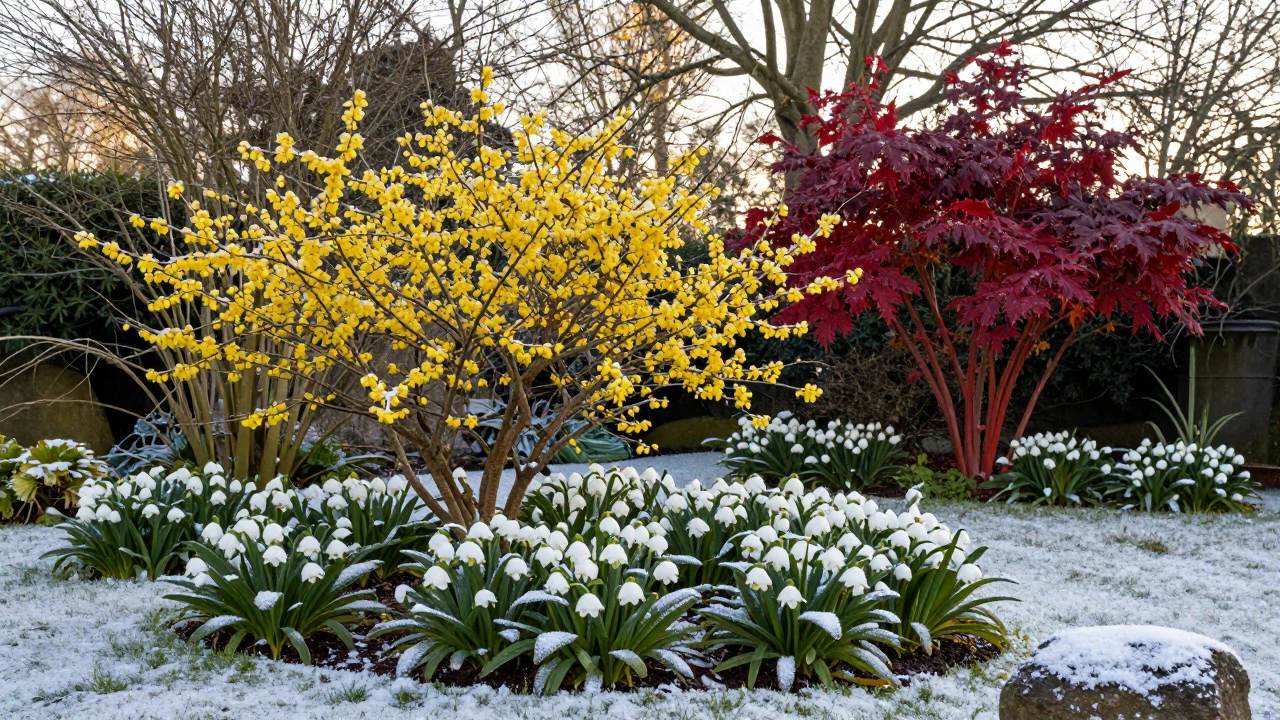
You don’t need one plant. You need a sequence. A well-designed flower bed works like a relay race: each plant hands off the spotlight to the next. Here’s how it breaks down by season in a UK climate:- Winter (Dec-Feb): Winter jasmine, Hellebores, Cornus sericea (red-stemmed dogwood), and evergreen heathers like Calluna vulgaris ‘Winter Fire’
- Spring (Mar-May): Daffodils, tulips, pansies, primroses, and early-blooming shrubs like forsythia
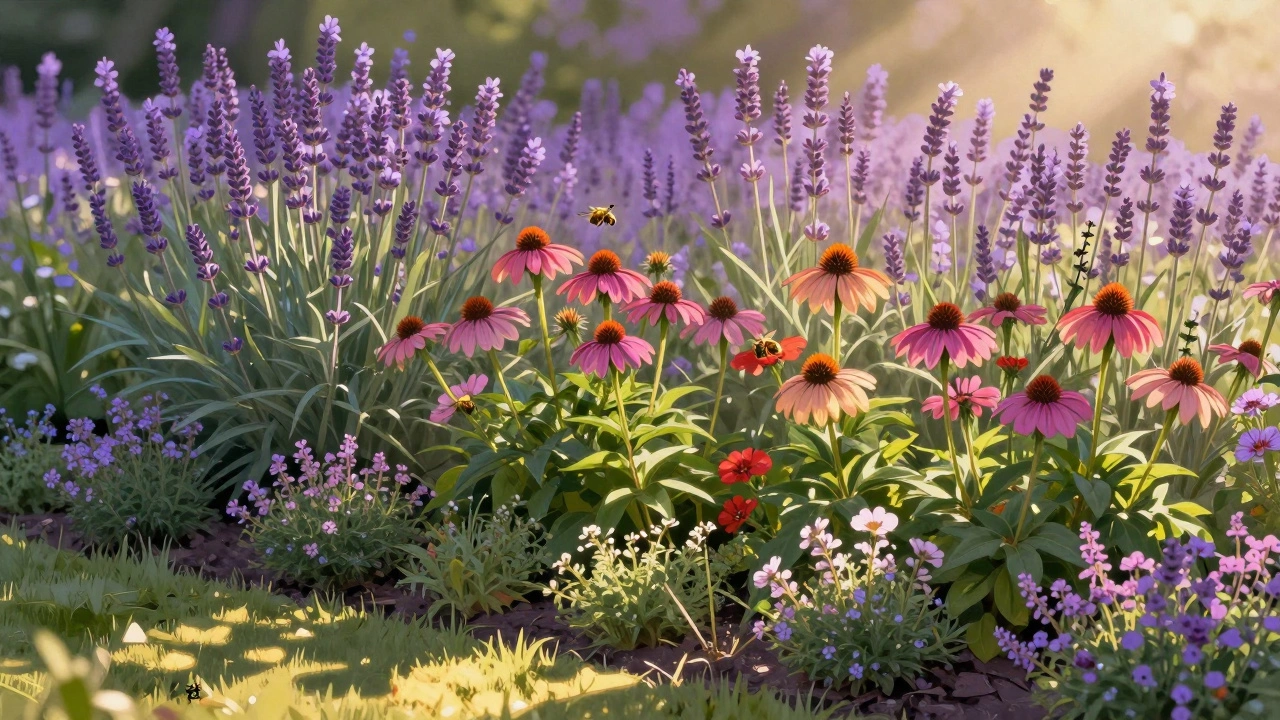
- Summer (Jun-Aug): Lavender, echinacea, salvia, cosmos, and perennial geraniums
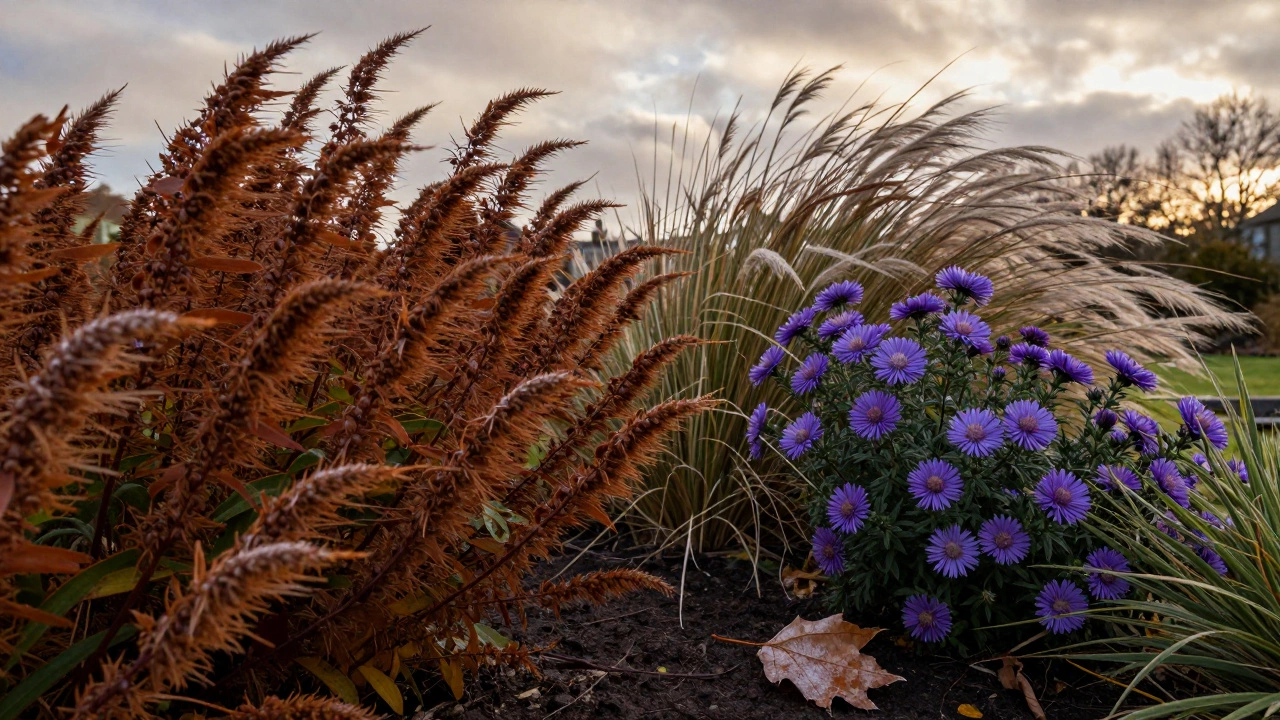
- Autumn (Sep-Nov): Sedum ‘Autumn Joy’, asters, chrysanthemums, ornamental grasses like Miscanthus, and late-blooming crocus
Plant these in layers. Put taller plants like lavender or sedum in the back. Medium-height blooms like echinacea and geraniums in the middle. Low growers like pansies and heather along the front. This way, even when one group dies back, the structure stays. No gaps. No mud.
Top 5 Plants That Cover the Most Seasons
Some plants stretch their blooming time better than others. These five are your best allies:- Lavender - Blooms June to September, sometimes into October if you deadhead. Silvery foliage stays attractive all winter.
- Echinacea (Coneflower) - Flowers July to October. The dried seed heads attract birds and look sculptural under frost.
- Heuchera (Coral Bells) - Not a traditional flower plant, but its colorful leaves last all year. Tiny blooms appear in late spring and attract bees.
- Sedum ‘Autumn Joy’ - Starts as pale green in spring, turns pink in late summer, then rust-brown in winter. Birds love the seeds.
- Hardy Geranium - Blooms May through October. Some varieties, like Geranium psilostemon, keep flowering until the first frost.
These aren’t flashy, nonstop bloomers-but they’re reliable. And when you combine them with seasonal bulbs and annuals, your bed goes from dull to dazzling without lifting a finger in winter.
What to Avoid
Don’t waste money on plants marketed as “all-season bloomers.” Many are tropical houseplants sold as perennials. A potted bougainvillea might look stunning in July, but it won’t survive your garden in December. Same goes for impatiens, petunias, and marigolds sold as “long-blooming.” They’re annuals. They die with the first frost.Also skip overplanting. A bed jammed with 15 different species looks messy, not magical. Stick to 5-7 core plants that work together. Add just two or three seasonal bulbs or annuals for pops of color. Less is more. And it’s easier to maintain.
Real Example: A Brighton Flower Bed That Never Sleeps
A client in Hove had a north-facing bed that stayed dark and bare for six months. We redesigned it with this sequence:- Winter: Hellebores + Cornus sericea
- Spring: Daffodils ‘Tete-a-Tete’ + Primula veris
- Summer: Lavender ‘Hidcote’ + Echinacea ‘Magnus’
- Autumn: Sedum ‘Autumn Joy’ + Aster ‘Frikart’s Monch’
Added a ground cover of creeping thyme between the plants. It smells good when you walk past, suppresses weeds, and stays green most of the year. No mulch needed. No replanting. Just trim the lavender in March and cut back the sedum in late winter. That’s it.
Two years later, the client still sends photos. “It looks like someone’s always tending it,” she says. But she hasn’t touched it since the first spring. The plants do the work.
What About Annuals? Should I Use Them?
Yes-but sparingly. Annuals like pansies, violas, or calendula are perfect for filling winter gaps. Plant them in October. They’ll bloom through December, then fade in February. Replace them with summer annuals like zinnias or cosmos in May. But don’t make them the backbone. They’re the spice, not the main course.Here’s a simple trick: buy a tray of winter pansies in October. Plant them in clusters around your evergreen perennials. When they die in spring, pull them out and plant marigolds in the same spots. The roots of the perennials are already established, so the new plants settle in fast.
Soil and Maintenance: The Silent Players
Even the best plants fail in bad soil. In Brighton, clay dominates. It holds water in winter and turns to brick in summer. Before planting, mix in two handfuls of compost per square foot. Add a layer of mulch-bark chips or leaf mold-after planting. It keeps roots cool, stops weeds, and feeds the soil slowly.Pruning matters too. Don’t cut back all your plants in autumn. Leave the seed heads of echinacea and sedum. They feed birds. Cut back dead stems in late February, just before new growth starts. That’s all the maintenance you need.
Final Thought: It’s About Rhythm, Not Perfection
A flower bed that blooms all year isn’t about constant color. It’s about rhythm. The quiet dignity of winter stems. The explosion of spring bulbs. The lazy haze of summer lavender. The fiery glow of autumn asters. Each season has its own beauty. You don’t need a flower that never sleeps. You need a garden that wakes up-again and again.Is there any flower that blooms all year round?
No single flower blooms continuously through all four seasons, especially in the UK’s climate. Even plants marketed as “ever-blooming” go dormant in winter or struggle with frost. The closest are winter jasmine and hellebores, but they only flower for a few months. The real solution is layering plants so one blooms as another fades.
What are the best flowers for winter color?
For winter color, choose Hellebores (Christmas Rose), Winter Jasmine, Cornus sericea (red-stemmed dogwood), and evergreen heathers like Calluna vulgaris ‘Winter Fire’. These provide structure, color, and even fragrance when most plants are bare. They’re hardy, low-maintenance, and thrive in UK winters.
Can I have color in my flower bed in November and December?
Absolutely. Plant autumn-flowering asters, Sedum ‘Autumn Joy’, and chrysanthemums in early September. They’ll bloom into November. Add winter pansies in October-they’ll flower through December and even into January if snow cover isn’t too deep. These are low-cost, easy to plant, and bring life to a dormant garden.
Do I need to replant my flower bed every year?
No, not if you choose the right plants. Perennials like lavender, echinacea, heuchera, and sedum come back every year. Annuals like pansies or zinnias need replacing, but they only take up 20-30% of your bed. Focus on building a base of perennials, then add seasonal color on top. That cuts work and saves money.
What’s the easiest way to start a year-round flower bed?
Start small. Pick one area-maybe a 1m x 1m patch. Plant three things: a winter evergreen like heather, a summer bloomer like lavender, and an autumn star like sedum. Add a few spring bulbs like daffodils. Mulch it. Don’t touch it until next February. That’s it. Once you see it work, expand. You don’t need to do everything at once.