UK Lawn Colour Diagnostic Tool
Diagnose the cause of your pale lawn and get tailored advice to achieve that deep emerald look.
Likely Cause:
Recommended Action:
You know that feeling. You drive past a neighbour’s house and their lawn looks like a deep emerald carpet, while yours is pale, yellowish, or just… average. It’s not magic, and it’s rarely just about luck with the weather. Getting super dark green grass comes down to understanding what your turf actually needs versus what you’re currently giving it. Most people think they need more water or a generic bag of "all-purpose" feed from the supermarket. They’re wrong. The secret to that rich, dark colour usually lies in nitrogen levels, iron content, and soil health.
If you live in the UK, specifically somewhere like Brighton where the soil can be slightly alkaline due to chalky substrates, getting this result requires a specific approach. This guide breaks down exactly how to achieve that lush, dark green look by tweaking your feeding schedule, managing soil chemistry, and choosing the right grass varieties.
The Nitrogen Factor: Why Your Grass Is Pale
Let’s start with the big one: Nitrogen. If your grass is light green or yellowing, it’s almost certainly starving for nitrogen. Nitrogen is the primary nutrient responsible for chlorophyll production, which gives plants their green colour. Without enough of it, your lawn can’t photosynthesize efficiently, leading to that washed-out appearance.
But here’s the catch-more isn’t always better. If you dump a high-nitrogen fertiliser on your lawn during a heatwave or when the grass is dormant (like in winter), you’ll burn the roots. Instead, you want slow-release nitrogen sources. Look for fertilisers labelled with an NPK ratio where the first number (Nitrogen) is higher than the others, such as 10-5-5 or similar. In the UK, autumn applications are crucial. Applying a potassium-rich, low-nitrogen feed in late September helps harden off the grass for winter, but if you want that immediate darkening effect in spring or early summer, a balanced spring feed is key.
The Iron Secret: Quick Fixes vs. Long-Term Health
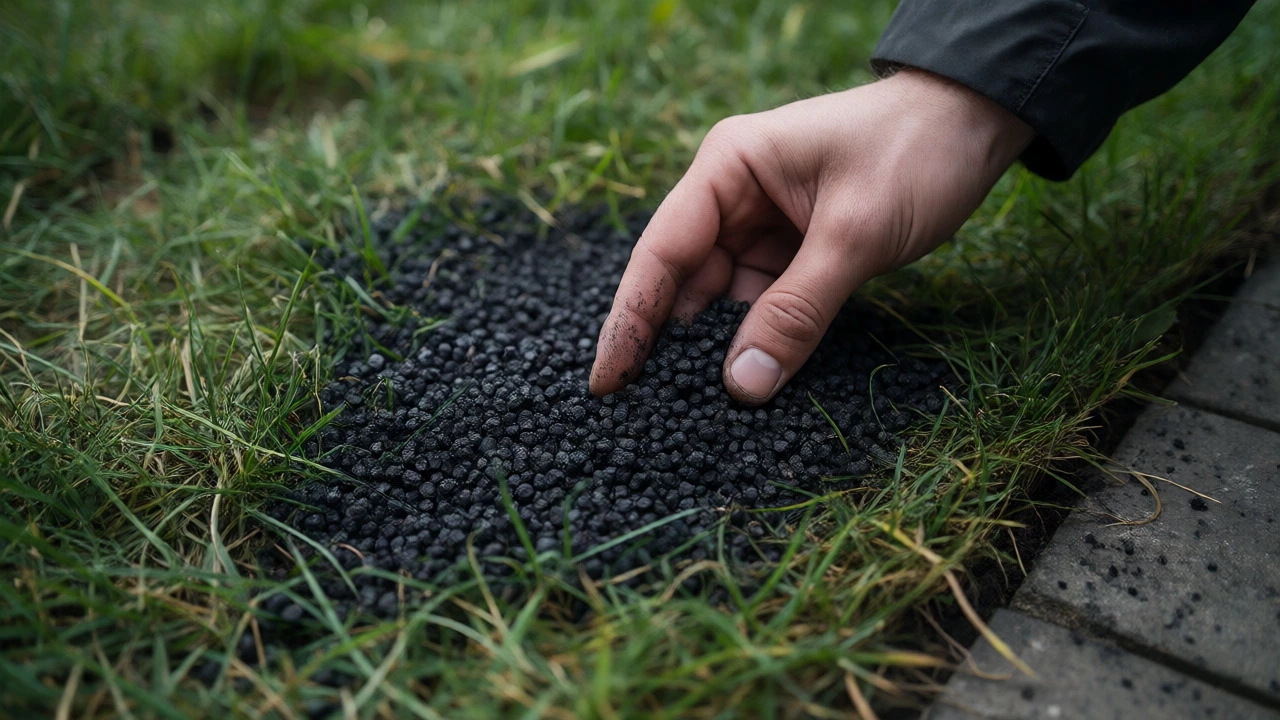
Want instant results? Iron is your best friend. While nitrogen builds long-term health, iron provides an immediate colour boost. You’ve probably seen those professional-looking lawns at football stadiums; they often use iron sulphate sprays to get that intense dark green hue quickly.
You can buy iron sulphate granules or liquid iron feeds at most garden centres. Apply them carefully. Too much iron can stain paving stones black and kill moss (which might be good, unless you have a moss-free lawn you’re trying to protect). A general rule of thumb is to apply iron products in the evening or on a cloudy day to prevent leaf scorch. Water it in lightly afterwards. Within 48 hours, you’ll notice a significant deepening of the green tone. However, don’t rely on iron alone. It’s a cosmetic fix. If you ignore the underlying soil issues, the colour will fade as soon as the rain washes it away or the next growth cycle begins.
Soil pH: The Hidden Blocker in Chalky Areas
This is where many UK gardeners, especially those in southern England near chalk downs, run into trouble. Grass prefers slightly acidic to neutral soil, ideally between pH 6.0 and 7.0. If your soil is too alkaline (above 7.5), nutrients like iron and manganese become locked up. Even if you add plenty of iron fertiliser, the grass roots simply cannot absorb it. This condition is called iron chlorosis, and it manifests as yellow leaves with green veins.
To check your soil pH, buy a cheap testing kit from a hardware store. If your pH is high, you have two options. First, you can try to lower it by adding elemental sulphur or peat moss (though peat is less sustainable now). Second, and often easier, is to choose grass varieties that tolerate alkaline conditions. Fescues, particularly Chewings fescue and Creeping red fescue, handle chalky soils much better than Ryegrass. If you’re reseeding, mix in these tolerant varieties. For existing lawns, regular applications of sequestered iron (iron chelated to stay available in high pH) can help bypass the absorption issue.
Mowing Habits That Deepen Colour
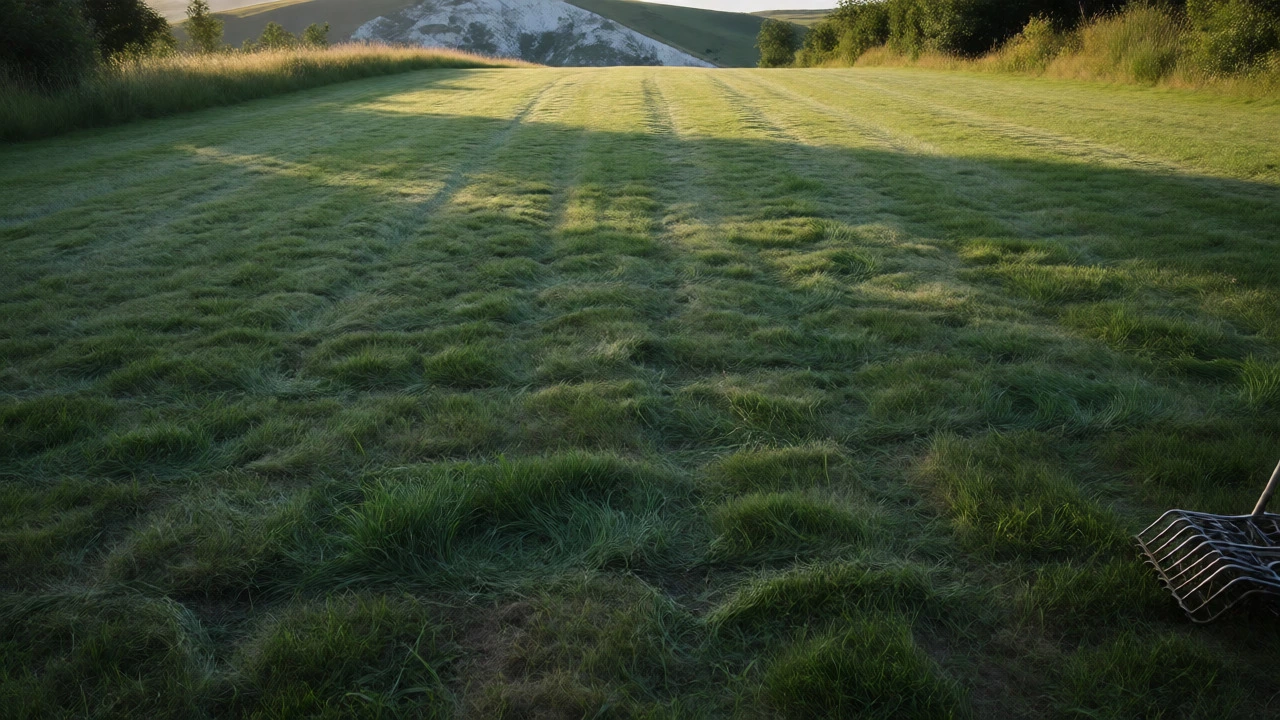
Your mowing technique plays a huge role in how dark your lawn appears. Short, frequent cuts stress the grass, forcing it to grow faster but thinner, which often leads to a lighter shade. Longer blades have more surface area for photosynthesis and tend to look richer.
- Raise the blade: During hot spells, raise your mower height to 5-7 cm. This shades the soil, reduces evaporation, and encourages deeper root growth.
- Sharp blades only: Dull mower blades tear the grass tips rather than cutting them cleanly. These torn tips turn brown and give the lawn a dull, greyish-green cast. Sharpen your blades at least once a year, preferably in spring.
- Mulch clippings: Leave the clippings on the lawn. As they decompose, they return nitrogen and moisture directly to the soil, acting as a natural, gentle fertiliser.
Avoid scalping the lawn in spring. It might seem like a fresh start, but it shocks the plant and delays that lush green recovery until mid-summer.
Watering Wisely: Depth Over Frequency
Shallow, frequent watering encourages shallow roots. Shallow roots mean the grass struggles to access nutrients and water during dry spells, leading to stress and paleness. To get dark green grass, you need deep roots.
Water deeply and infrequently. Aim for about 25mm of water per week during active growing seasons. Use a rain gauge or empty tuna cans placed around the lawn to measure output. It’s better to water thoroughly twice a week than lightly every day. This forces roots to dig deeper for moisture, anchoring the plant and improving its ability to uptake nutrients. Early morning is the best time to water, reducing evaporation loss and preventing fungal diseases that thrive in evening dampness.
Choosing the Right Grass Varieties
Not all grasses go super dark green naturally. Some varieties are bred for durability, some for shade tolerance, and some specifically for colour. If you’re starting a new lawn or overseeding thin patches, pick the right seed mix.
| Grass Type | Colour Potential | Tolerance | Best For |
|---|---|---|---|
| Perennial Ryegrass | Medium-Dark | High Traffic | Family lawns, sports pitches |
| Chewings Fescue | Dark Blue-Green | Drought & Shade | Coastal gardens, shaded areas |
| Creeping Bentgrass | Very Dark | Low Maintenance | Golf greens, fine lawns |
| Kentucky Bluegrass | Rich Dark Green | Cold Tolerant | Northern climates, mixes |
In the UK climate, mixes containing Chewings Fescue and Perennial Ryegrass are popular because they offer a balance of colour and resilience. Kentucky Bluegrass offers stunning colour but struggles with our wet winters and disease pressure unless mixed with hardier varieties.
Aeration and Scarification: Letting Nutrients Reach Roots
Compacted soil prevents air, water, and nutrients from reaching the root zone. If your soil is heavy clay, common in parts of Sussex, compaction is a major barrier to a healthy, dark lawn. Compacted roots starve, no matter how much fertiliser you throw on top.
Aerate your lawn annually using a hollow-tine aerator. This removes small plugs of soil, allowing air and water to penetrate. Follow up with scarification if you have a thick layer of thatch (dead organic matter). Thatch acts like a sponge, holding water and nutrients above the soil line where roots can’t reach them. Remove thatch in early spring or autumn, then top dress with a thin layer of compost or sandy loam to improve soil structure over time.
Final Thoughts on Maintenance
Getting super dark green grass isn’t a one-time project. It’s a cycle of feeding, mowing, and monitoring. Start by testing your soil. Adjust your pH if necessary. Feed with nitrogen in spring and iron in early summer. Mow high and sharp. Water deep. Do this consistently, and within a season, your lawn will transform from pale and patchy to deep, lush, and envy-inducing.
Why is my grass still yellow after fertilising?
This is likely due to incorrect soil pH. If your soil is too alkaline (common in chalky UK regions), the grass cannot absorb the iron and nitrogen in the fertiliser. Test your soil pH and consider using chelated iron or lowering the pH with sulphur.
Can I use household items to darken my lawn?
Yes, but cautiously. Used coffee grounds can add slight acidity and nitrogen, but they must be composted first or used sparingly to avoid mould. Epsom salts (magnesium sulphate) can help if your soil lacks magnesium, which also affects green colour, but they won't fix nitrogen deficiency.
How often should I apply iron to my lawn?
Apply iron-based products 2-3 times a year, typically in spring, early summer, and early autumn. Avoid applying during droughts or extreme heat, as this can scorch the grass. Always water in after application.
Does mowing height really affect grass colour?
Absolutely. Cutting grass too short stresses the plant, causing it to divert energy to root survival rather than leaf growth, resulting in a lighter, thinner appearance. Keeping blades longer promotes denser, darker foliage.
What is the best fertiliser for dark green grass in the UK?
Look for a spring/summer feed with a higher Nitrogen (N) ratio, such as 10-5-5, combined with micronutrients including iron. Slow-release formulations are safer and provide consistent colour without burning.