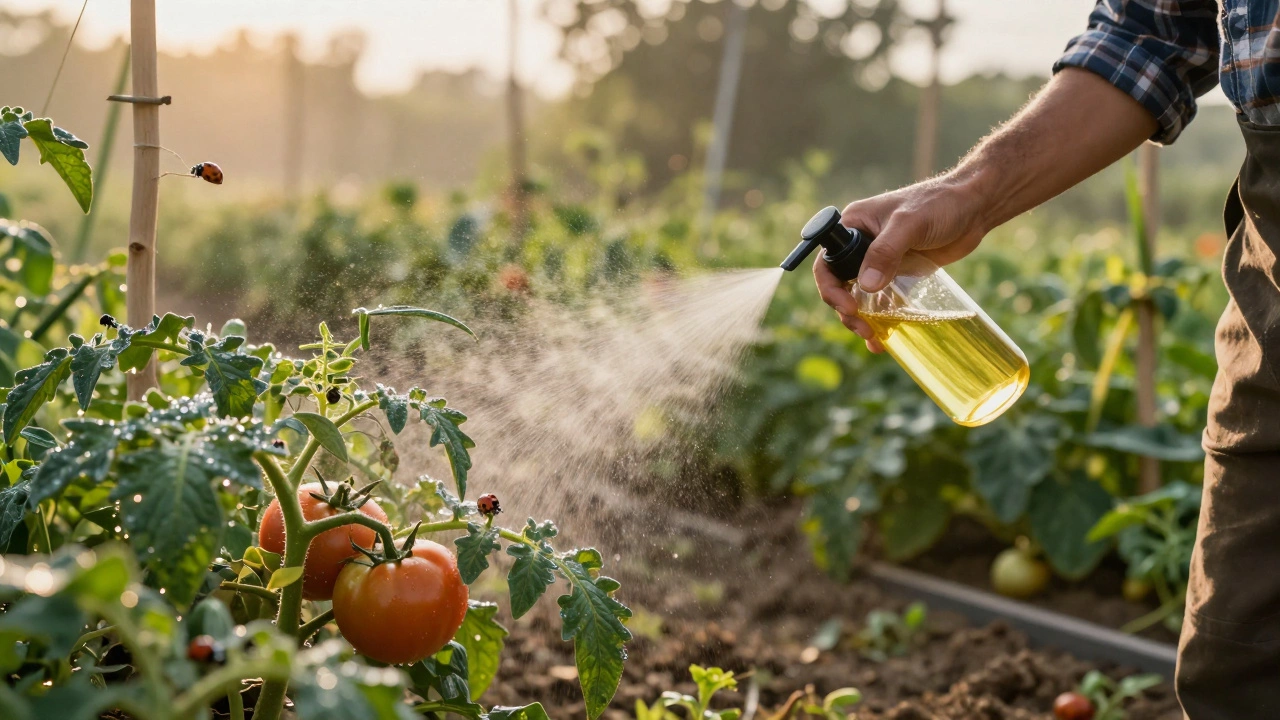
Natural Pesticide Dilution Calculator
How to make it:
Important safety note:
Every gardener who grows vegetables knows the frustration: one day your plants are thriving, the next they’re covered in aphids, caterpillars, or whiteflies. You don’t want to reach for chemical sprays-your tomatoes, lettuce, and peppers are meant to be eaten, not soaked in synthetics. The good news? You don’t need to buy expensive products. You can make effective, safe, and cheap natural pesticides right in your kitchen using ingredients you already have.
Why Natural Pesticides Work Better Than You Think
Chemical pesticides kill bugs on contact, but they also wipe out beneficial insects like ladybugs, lacewings, and parasitic wasps that naturally keep pests in check. Over time, pests develop resistance, and you end up spraying more often. Natural remedies work differently. They disrupt feeding, repel insects, or interfere with their life cycles without poisoning the soil or your food.
Studies from the University of California Agriculture and Natural Resources show that simple sprays made from neem oil, garlic, or soap can reduce aphid populations by 70-90% within days-without harming bees or butterflies. And unlike synthetic chemicals, these formulas break down quickly in sunlight and rain, leaving no toxic residue on your veggies.
Recipe 1: Neem Oil Spray (The Gold Standard)
Neem oil comes from the seeds of the neem tree, native to India. It’s been used for centuries as a natural insecticide and fungicide. It doesn’t kill bugs on contact. Instead, it messes with their hormones, stops them from eating, and prevents larvae from turning into adults.
What you need:
- 1 teaspoon cold-pressed neem oil
- 1/2 teaspoon liquid Castile soap (not dish detergent)
- 1 quart (32 oz) lukewarm water
How to make it:
- Pour the water into a spray bottle.
- Add the Castile soap and swirl gently to mix.
- Add the neem oil and shake well.
How to use it:
- Spray early in the morning or late in the evening-avoid midday sun, which can cause leaf burn.
- Coat both sides of leaves, especially where you see bugs or sticky residue (honeydew from aphids).
- Reapply every 5-7 days, or after heavy rain.
Neem oil works on aphids, whiteflies, spider mites, cabbage worms, and even fungal issues like powdery mildew. It’s safe for bees if applied when they’re not active.
Recipe 2: Garlic-Chili Spray (For Stubborn Pests)
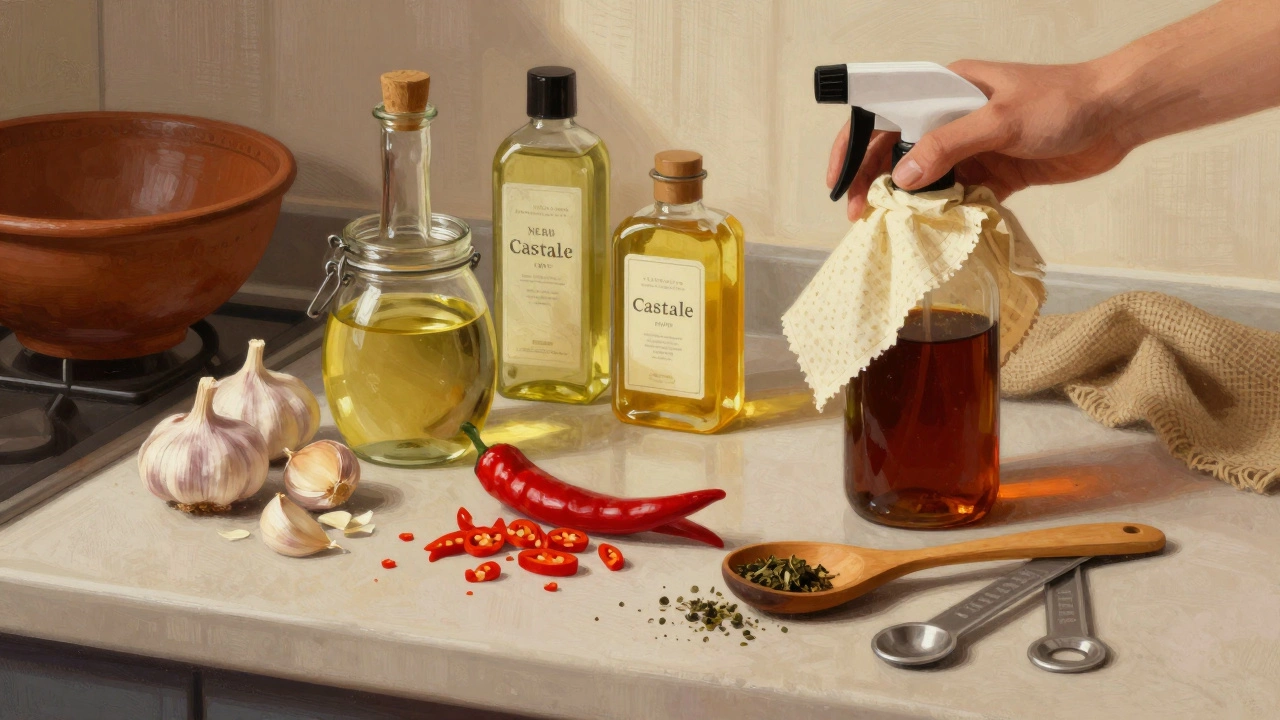
If aphids or caterpillars keep coming back, this strong-smelling spray is your next move. Garlic repels insects with sulfur compounds. Chili peppers contain capsaicin, which burns soft-bodied pests on contact.
What you need:
- 3 garlic bulbs, peeled and crushed
- 2 hot chili peppers (like jalapeño or habanero), chopped
- 2 cups water
- 1 tablespoon liquid Castile soap
- 1 quart spray bottle
How to make it:
- Combine garlic, chili peppers, and water in a pot.
- Bring to a boil, then simmer for 15 minutes.
- Let cool completely, then strain through a cheesecloth or coffee filter into a jar.
- Add the Castile soap and mix well.
- Pour into a spray bottle.
How to use it:
- Test on a single leaf first-some plants (like spinach or lettuce) can be sensitive.
- Spray directly on pests, especially under leaves.
- Use every 3-4 days until infestation clears.
Warning: Wear gloves when handling this spray. Avoid spraying near your eyes or face. Don’t use on young seedlings-they’re too delicate.
Recipe 3: Soap and Water Spray (Quick Fix for Soft-Bodied Insects)
This is the easiest and fastest solution for aphids, spider mites, whiteflies, and mealybugs. The soap breaks down their protective outer layer, causing them to dry out.
What you need:
- 1 tablespoon liquid Castile soap (or pure liquid soap with no additives)
- 1 quart water
Important: Do not use dish soap like Dawn or Ajax. These contain degreasers and fragrances that can burn plant leaves. Only use Castile soap or insecticidal soap labeled for plants.
How to make it:
- Mix soap and water in a spray bottle.
- Shake gently.
How to use it:
- Spray directly on pests-don’t just mist the leaves.
- Wait 2-3 hours, then rinse leaves with clean water to prevent soap buildup.
- Repeat every 2-3 days for 2 weeks.
Works best in dry weather. Avoid using on hot days. Test on a small area first.
Recipe 4: Sticky Traps and Companion Planting (Prevention Is Key)
Not all pest control means spraying. Sometimes the best pesticide is a smart garden layout.
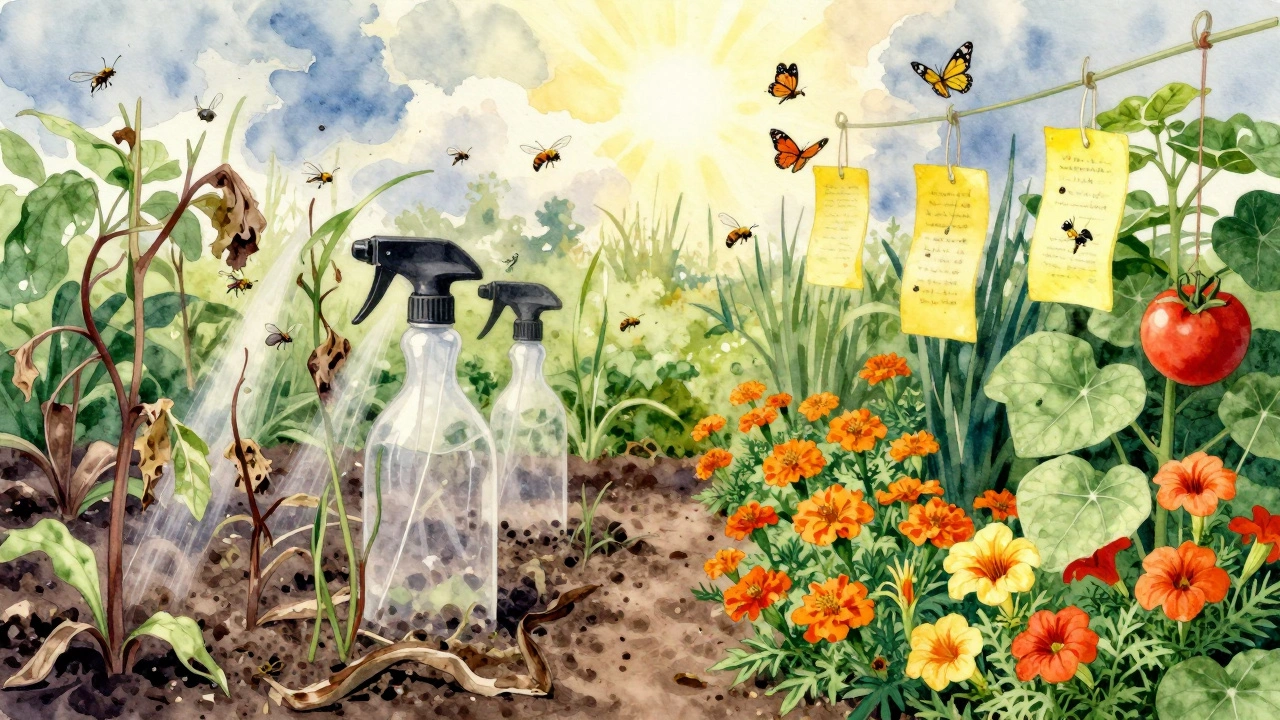
Yellow sticky traps: Hang these near your vegetables. They catch whiteflies, fungus gnats, and thrips. You can buy them or make your own: smear bright yellow cardboard with petroleum jelly or sticky insect glue.
Companion planting: Planting certain plants next to your veggies deters pests naturally.
- Marigolds near tomatoes and peppers → repel nematodes and aphids
- Basil near lettuce and tomatoes → keeps flies and mosquitoes away
- Nasturtiums near cucumbers and squash → lure aphids away from your crops
- Garlic and chives near roses and beans → discourage Japanese beetles
These plants don’t just look nice-they create a living barrier. A 2023 study in the Journal of Applied Entomology found that gardens using companion planting had 50% fewer pest outbreaks than those relying on sprays alone.
What NOT to Do
Some home remedies sound smart but actually harm your plants or make pests worse.
- Don’t use vinegar. It burns leaves and kills beneficial microbes in the soil. It’s a weed killer, not a pest control.
- Don’t spray oil on hot days. Even neem oil can scorch leaves in direct sun.
- Don’t over-spray. Natural doesn’t mean harmless. Too much soap or garlic can stress plants.
- Don’t ignore early signs. One aphid on a leaf today means a colony tomorrow. Check undersides of leaves weekly.
When to Use These Sprays
Timing matters. You’re not trying to kill every bug in the garden-you’re trying to keep populations under control.
- Start spraying at the first sign of pests-don’t wait for an outbreak.
- Apply every 5-7 days as a preventive, especially during warm, humid months.
- After heavy rain, reapply-water washes sprays off.
- Stop spraying 3-5 days before harvest. Let the plants breathe and the residue dissipate.
Keep a small journal: note what you sprayed, when, and how the pests responded. Over time, you’ll learn what works best for your garden.
Storage and Shelf Life
These sprays don’t last forever.
- Neem oil spray: Use within 8 hours. It breaks down fast.
- Garlic-chili spray: Store in the fridge for up to 2 weeks. Shake well before each use.
- Soap spray: Make fresh each time. No need to store.
Always label your bottles. Write the date and ingredients. Keep them out of reach of kids and pets-even natural sprays can cause stomach upset if swallowed.
Final Tip: Build a Healthy Garden Ecosystem
The best long-term pesticide is a balanced garden. Healthy soil grows strong plants that resist pests naturally. Add compost, mulch your beds, rotate crops yearly, and leave some flowers for pollinators.
When you see a few caterpillars on your cabbage? Let a few stay. They’ll turn into butterflies-and attract birds that eat the rest. Nature’s system works better than any spray.
Can I use dish soap instead of Castile soap?
No. Most dish soaps contain synthetic detergents, fragrances, and degreasers that can burn plant leaves and damage roots. Castile soap is made from plant oils and is gentle enough for plants. If you don’t have Castile soap, skip the spray and try sticky traps or companion planting instead.
Will these sprays hurt bees and butterflies?
Not if you use them correctly. Neem oil and soap sprays only affect insects that are actively feeding on treated leaves. Bees and butterflies aren’t herbivores-they don’t eat leaves. Spray in the early morning or late evening when pollinators are less active. Avoid spraying open flowers. You’ll protect your veggies without harming the good bugs.
How often should I spray for pests?
Check your plants every 3-4 days. If you see pests, spray immediately. For prevention, spray every 5-7 days during peak growing season. After rain, reapply. Once the infestation clears, stop spraying. Overuse can stress plants and reduce beneficial insect populations.
Can I use these sprays on indoor vegetable plants?
Yes, but with caution. Indoor plants have less airflow, so sprays can linger longer. Use soap spray or neem oil at half strength. Spray in a well-ventilated area. Wipe leaves with a damp cloth after 2 hours to remove residue. Avoid spraying near windows where sunlight intensifies the effect.
What if the pests come back after spraying?
Pests return because their eggs or larvae weren’t fully eliminated. Rotate your sprays: use neem one week, soap the next, and introduce sticky traps. Check for hidden colonies under leaves. If the problem persists, inspect your soil-some pests like fungus gnats live in damp soil. Let the top inch dry out between waterings.