Lawn Care Monthly Planner
Your Lawn Care Calendar
Select your current month to see what lawn care actions you should take. Based on the UK lawn care guidelines from the article.
Recommended Actions
Most people think a perfect lawn needs hours of work, expensive gear, and years of experience. That’s not true. If you live in the UK and your lawn looks patchy, brown, or full of weeds, it’s not because you’re doing it wrong-it’s because no one ever showed you the basics. Start simple. Stick to these steps, and by next spring, your lawn will look better than your neighbour’s.
Know Your Grass Type
Not all grass is the same. In the UK, you’re most likely dealing with perennial ryegrass or fine fescue. These types handle our wet winters and cool summers well. They grow dense, recover from foot traffic, and don’t need constant heat to survive. If your lawn was installed by a builder or came with your house, it’s probably one of these. You don’t need to buy a lab test to know. Just watch it in spring: if it turns green fast after rain and stays green into autumn, you’ve got good UK grass.
Don’t waste money on exotic seeds or ‘luxury’ blends. Stick to what works here. If you’re reseeding, buy a mix labelled ‘UK lawn seed’ from a garden centre. Avoid anything promising ‘instant green’-that’s usually just dyed sawdust.
Mow Right, Not Just Often
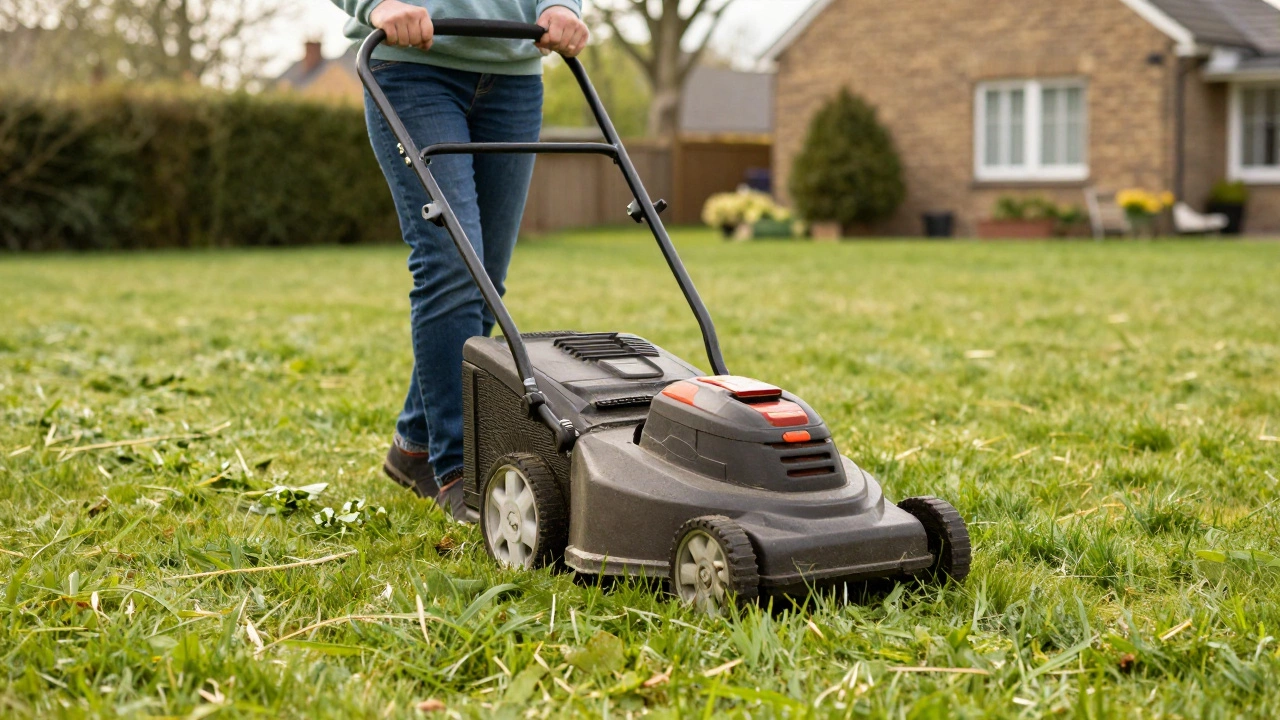
Mowing is the most misunderstood part of lawn care. People think the shorter the grass, the neater it looks. That’s wrong. Cutting too short stresses the grass, lets weeds in, and dries out the soil. The golden rule: never cut off more than a third of the blade at once.
Set your mower to 5-6 cm (2-2.5 inches). That’s taller than you think. In spring and autumn, mow once a week. In summer, when growth slows, once every 10-14 days is enough. Always use sharp blades. Dull blades tear the grass instead of cutting it clean. Torn grass turns brown and invites disease.
Leave the clippings on the lawn. They’re not trash-they’re free fertilizer. Grass clippings break down in days and return nitrogen to the soil. Only rake them if they form thick clumps after a long spell without mowing.
Water Less, But Better
Most people water their lawns too often and too lightly. Sprinkling every day for 10 minutes does more harm than good. It tricks the roots into staying near the surface, where they dry out fast and can’t handle drought.
Instead, water deeply but rarely. Once a week, give your lawn a good soak-about 2-3 cm of water. That’s enough to reach 10-15 cm down into the soil. Do it early in the morning. Watering at night invites fungus. Watering in the heat of the day wastes water to evaporation.
How do you know if you’ve watered enough? Put a tuna can on the lawn. Run your sprinkler until it’s half full. That’s your target. In the UK, you rarely need to water unless it’s been dry for 3 weeks straight. Rain does most of the work. Let your lawn go a little brown in summer. It’s not dead-it’s resting.
Fertilise at the Right Time
You don’t need to feed your lawn every month. In fact, over-fertilising burns the grass and pollutes waterways. Stick to two applications a year: early spring and early autumn.
In March, use a slow-release organic fertiliser with nitrogen, phosphorus, and potassium (NPK). Look for something with seaweed or compost in the ingredients. Avoid those bright green chemical bags with ‘instant green’ on the label. They give a quick fix but weaken the lawn long-term.
In September, switch to a fertiliser higher in potassium. That helps the grass build strength for winter. Apply it after mowing and before rain. If you don’t get rain, water lightly after spreading. Don’t overdo it-follow the package instructions. More is not better.
Deal with Weeds and Moss
Weeds and moss aren’t signs of failure-they’re signs of imbalance. If moss is taking over, your lawn is too shady, too wet, or too acidic. If dandelions or clover are everywhere, the soil lacks nutrients or is compacted.
For moss: rake it out in late autumn or early spring. Then, aerate the soil (more on that below). Apply a moss killer only if it’s thick and spreading fast. But fix the cause: improve drainage, reduce shade by pruning trees, or overseed with shade-tolerant grass.
For weeds: hand-pull dandelions and plantain when the soil is moist. Clover isn’t bad-it fixes nitrogen. If you hate it, boost your lawn’s health with proper fertiliser and mowing height, and it will naturally outcompete it. Avoid chemical weedkillers unless you’re dealing with a serious infestation. They kill everything, including the good microbes in your soil.
Aerate and Overseed
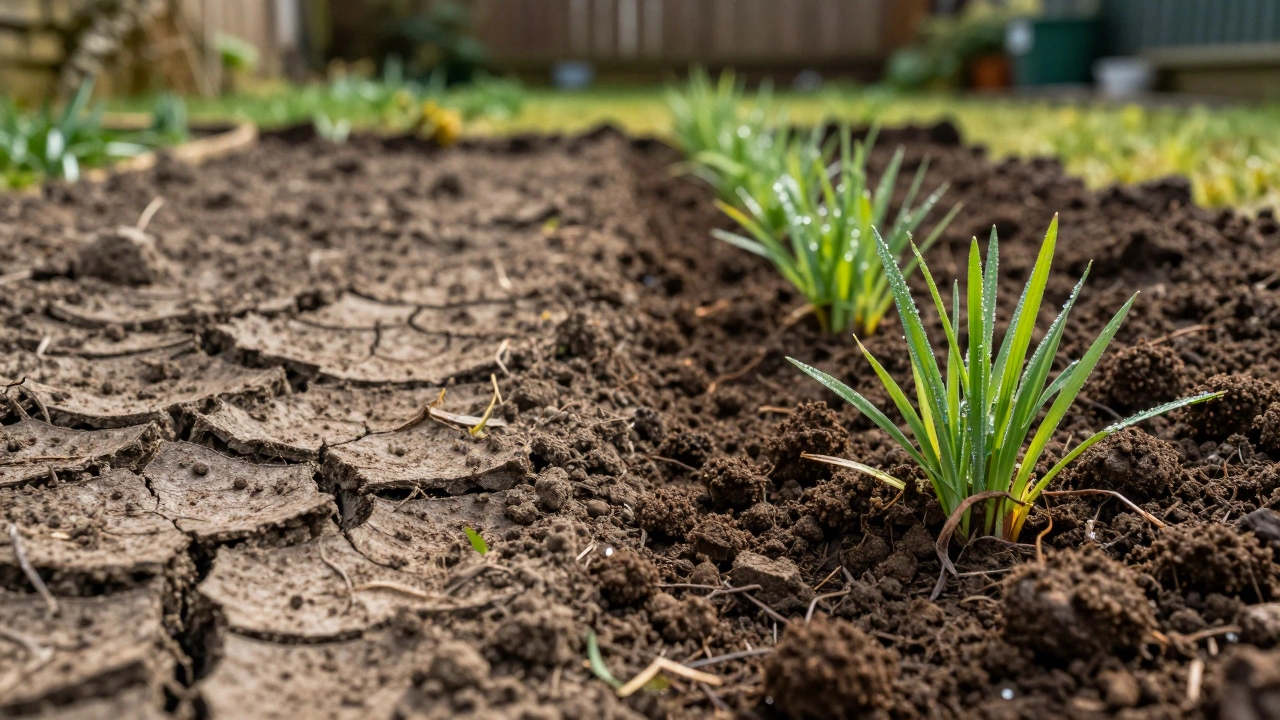
Compact soil is the silent killer of lawns. Foot traffic, rain, and clay soil squeeze out air and water. That’s why your grass gets thin in high-traffic areas. Aerate once a year, ideally in autumn. Use a spike aerator or a manual coring tool. Push it into the soil every 15 cm across the whole lawn. You’ll pull out small plugs of soil. Leave them-they break down and feed the grass.
Right after aerating, overseed. Spread grass seed over thin or bare spots. Use the same mix you started with. Lightly rake it in. Water gently every day for two weeks until the new grass is 5 cm tall. Don’t walk on it. Don’t mow it until it’s 8 cm tall.
This is the single most effective thing you can do to revive a tired lawn. No chemicals. No expensive machines. Just soil, seed, and time.
What Not to Do
Here are the top five mistakes beginners make:
- Using a rotary mower on wet grass-it clumps and pulls up roots.
- Applying lawn feed in summer-it burns the grass in heat.
- Watering daily-it creates shallow roots.
- Using a power washer to clean paths next to the lawn-it washes soil and seeds away.
- Buying ‘miracle’ products from TV ads-they rarely work and often cost 10x more than basics.
Stick to the basics. Lawn care isn’t magic. It’s consistency.
Your 12-Month Lawn Care Plan
Here’s a simple calendar to follow. No need to memorise it-just print it or save it on your phone.
- February: Rake out winter debris. Check for moss.
- March: Apply spring fertiliser. Aerate if soil is hard.
- April: Overseed bare patches. Start mowing weekly.
- May-August: Mow weekly. Water only if dry for 3 weeks. Leave clippings.
- September: Apply autumn fertiliser (high potassium). Aerate if you didn’t in spring.
- October: Rake leaves. Don’t let them smother the grass.
- November: Final mow. Set height to 6 cm for winter.
- December-January: Do nothing. Let the lawn rest.
That’s it. Twelve months. Six actions. No stress.
When to Call a Pro
You don’t need a gardener for a healthy lawn. But if after a year of following these steps, your lawn still looks like a patchwork of dead spots, moss, and crabgrass, it might be time to check the soil. A simple pH test from a garden centre (costs £5) will tell you if your soil is too acidic. Most UK soils are. Lime can fix it.
If drainage is the issue-water pools after rain-you may need to install land drains. That’s a job for a professional. But 90% of lawn problems are fixed by mowing right, watering deep, feeding twice, and aerating once.
How often should I mow my lawn as a beginner?
Mow once a week in spring and autumn, and every 10-14 days in summer. Never cut off more than a third of the grass blade. Keep the height between 5-6 cm. Sharp blades and leaving clippings make a big difference.
Can I use grass clippings as fertilizer?
Yes, and you should. Grass clippings are 80% water and contain nitrogen, potassium, and phosphorus. They break down in a few days and feed the soil naturally. Only remove them if they form thick clumps after a long gap between mowing.
Why is my lawn turning brown in summer?
It’s normal. UK grasses go dormant in dry heat to survive. They don’t die-they rest. Water deeply once a week if it hasn’t rained in 3 weeks. Don’t panic. Greening up again in autumn is natural. Overwatering in summer does more harm than good.
Do I need to use chemical weedkillers?
No. Most weeds appear because the lawn is weak. Fix the root causes: mow higher, feed in spring and autumn, aerate, and overseed. Clover and dandelions are signs of low nitrogen or compacted soil. Hand-pull them or let the healthy grass outgrow them. Chemicals kill beneficial microbes and can harm pets and wildlife.
How do I know if my soil needs aeration?
If water sits on the surface after rain, if your lawn feels hard underfoot, or if grass is thinning in high-traffic areas, your soil is compacted. Try pushing a screwdriver into the ground. If it’s hard to push in deeper than 5 cm, it’s time to aerate. Do it once a year in autumn.
Next Steps
Start this week. Grab a rake, check your mower blade, and mow your lawn at 6 cm. Leave the clippings. That’s it. You’ve already done more than most people who pay gardeners.
By next month, you’ll notice the grass is thicker. By spring, you’ll be proud of it. Lawn care isn’t about perfection. It’s about showing up, consistently, with simple habits. You don’t need to be an expert. You just need to be patient.