Permaculture Water Savings Calculator
Calculate Your Savings
See how much water and money you can save with permaculture techniques
How Permaculture Saves Water
Permaculture gardens use natural systems to reduce water dependency:
-
Water harvesting
Collect rainwater for irrigation
-
Soil health
Mulch and compost retain moisture
-
Plant layering
Taller plants shade lower ones to reduce evaporation
Why This Matters
With water shortages increasing globally, permaculture gardens can help you:
- Reduce water bills by up to 80%
- Create drought-resistant gardens
- Contribute to sustainable water management
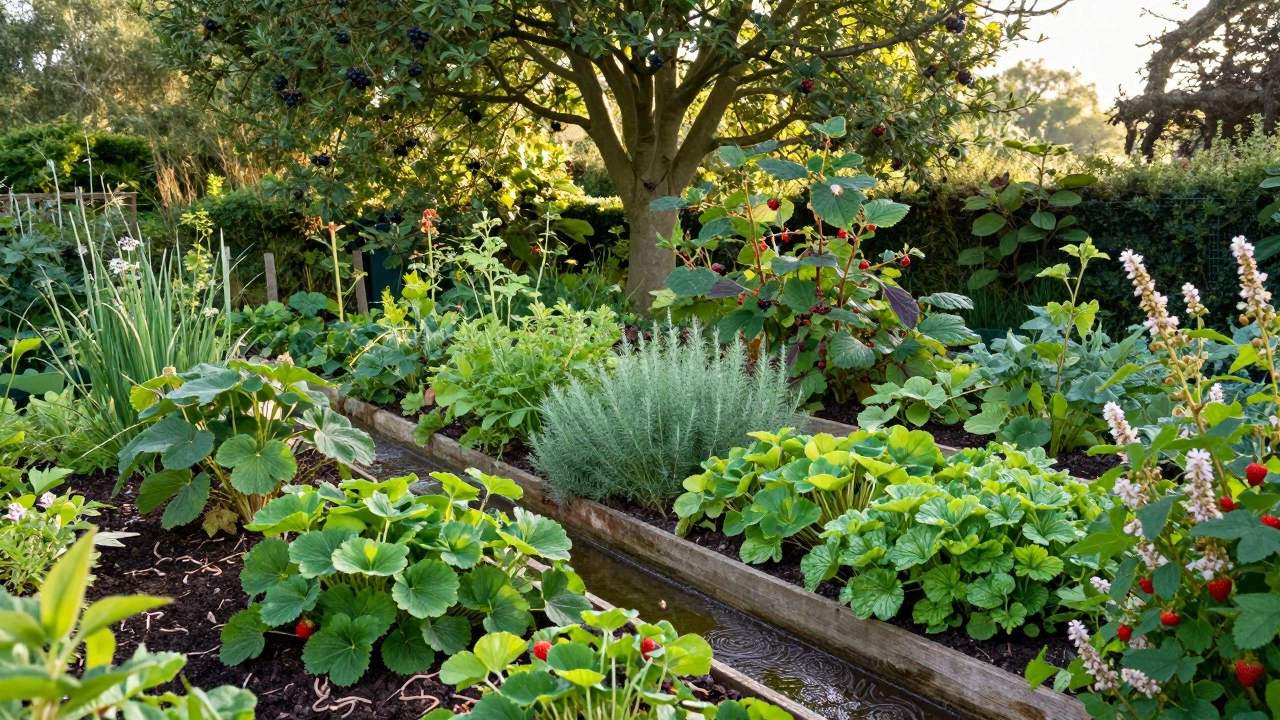
Ever walked through a garden that seems to take care of itself-no watering cans, no fertiliser bags, no weeding every weekend-and wondered how it works? That’s not magic. It’s a self-sustaining garden. But what’s the real name for it? And more importantly, how do you build one that actually works in your backyard?
It’s Called a Permaculture Garden
The most accurate term for a self-sustaining garden is a permaculture garden. Permaculture isn’t just a gardening style-it’s a design system. It was developed in the 1970s by Australians Bill Mollison and David Holmgren, based on observing how natural ecosystems function without human intervention. The goal? To create gardens that mimic nature’s patterns so they require almost no outside inputs.Unlike traditional gardens that rely on bought compost, chemical fertilisers, and daily watering, a permaculture garden builds its own fertility, recycles water, and keeps pests in check naturally. It’s not about working harder-it’s about working smarter by letting nature do the heavy lifting.
How a Permaculture Garden Works
Think of a forest. Trees drop leaves that feed the soil. Rain soaks in slowly. Insects pollinate flowers. Birds eat pests. No one waters it. No one adds fertiliser. It just keeps growing.A permaculture garden copies that. Here’s how:
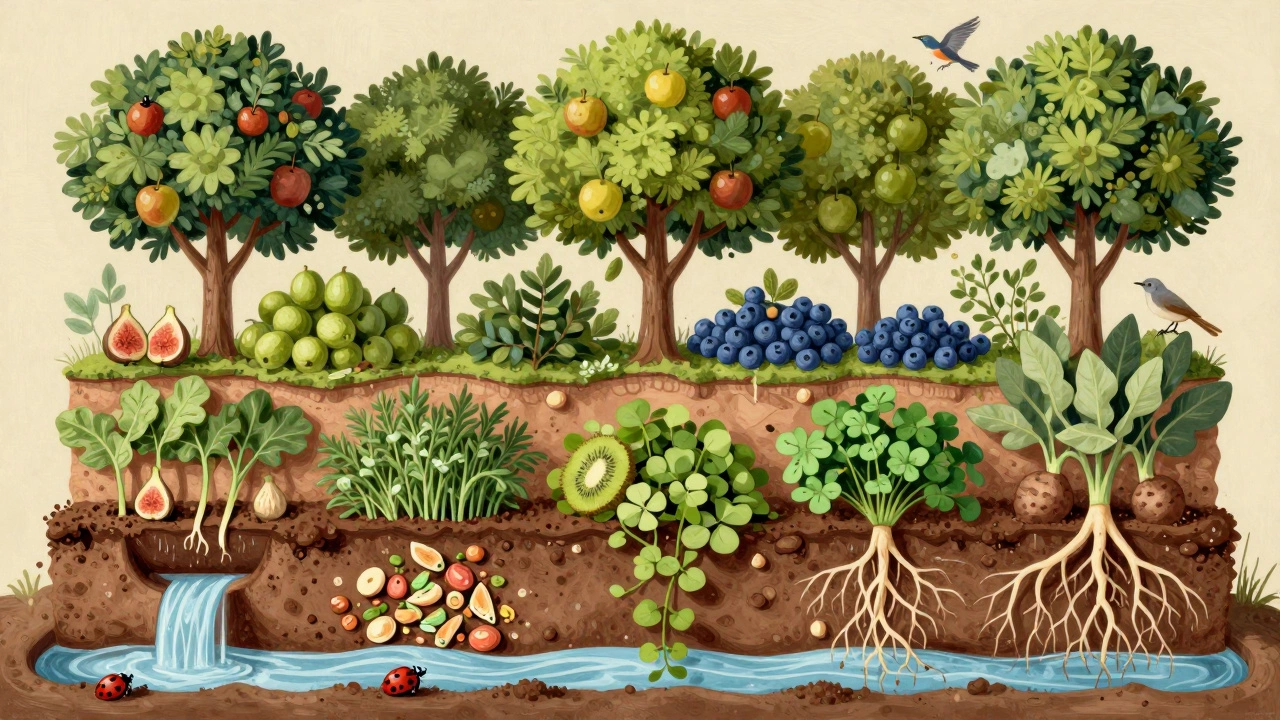
- Layered planting: You grow tall trees, shrubs, herbs, ground covers, and root crops all in the same space-just like a forest. Each layer supports the others. A fruit tree shades lettuce, which stays cool and doesn’t dry out.
- Compost and mulch: Instead of hauling in bags of compost, you make your own from kitchen scraps, prunings, and leaves. Mulch covers the soil to hold moisture and block weeds.
- Water capture: Rainwater is directed into swales (shallow ditches) that slow runoff and soak into the ground. No sprinklers needed.
- Beneficial insects and animals: Ladybugs eat aphids. Chickens scratch and fertilise. Bees pollinate. You don’t spray poison-you invite the right helpers.
- Perennial plants: You plant things that come back every year-artichokes, asparagus, rhubarb, berries-instead of annuals that die and need replanting.
One of the most powerful ideas in permaculture is the edge effect. The more boundaries you create-between soil and water, sun and shade, plants and paths-the more life thrives. A curved garden bed has more edge than a straight one. A pond with a wavy shoreline supports more bugs, frogs, and birds than a rectangular one.
What’s a Food Forest?
A food forest is a type of permaculture garden that focuses on growing edible plants in layers. It’s like a wild orchard that feeds people. You might have:- Canopy layer: Apple, pear, or chestnut trees
- Understory layer: Dwarf fruit trees like plum or fig
- Shrub layer: Blueberries, currants, or gooseberries
- Herbaceous layer: Rhubarb, mint, comfrey, and perennial herbs
- Ground cover: Strawberries, clover, or creeping thyme
- Vine layer: Kiwi, grapes, or passionfruit climbing trellises
- Root layer: Potatoes, garlic, or Jerusalem artichokes
Once established, a food forest needs almost no maintenance. It’s not a quick fix-you’ll wait 2-4 years for full yields-but after that, you’re harvesting food with maybe 10 hours of work a year. Compare that to a vegetable patch that needs watering, weeding, and replanting every few weeks.
Is It the Same as a Closed-Loop Garden?
Yes. A closed-loop garden is another name for the same thing. The term highlights how everything inside the system gets reused. Kitchen scraps become compost. Compost feeds plants. Plants feed people. Water is captured and reused. Even plant waste becomes mulch or animal feed.It’s the opposite of a conventional garden, where you buy fertiliser from a store, throw out plant trimmings, and haul away soil that’s been stripped of nutrients. A closed-loop garden doesn’t send anything out-it keeps everything in.
One real-world example: A gardener in Brighton turned a 50-square-metre patch of lawn into a food forest. She planted 12 fruit trees, 20 perennial vegetables, and installed a rainwater tank. Three years later, she harvests 80% of her summer fruit and vegetables without buying a single bag of compost or turning on a hose. Her soil is richer than her neighbour’s, and her garden buzzes with bees and birds.
What You Need to Start
You don’t need a big space or fancy tools. Here’s what you actually need:- Observation: Spend a week watching your yard. Where does water collect after rain? Where does the sun hit hardest? What grows wild on its own?
- Soil: Healthy soil is your foundation. Add compost and mulch-don’t dig it in. Let worms do the work.
- Plants: Start with hardy perennials: comfrey (for compost), rhubarb, asparagus, globe artichokes, and berry bushes. They survive neglect better than tomatoes.
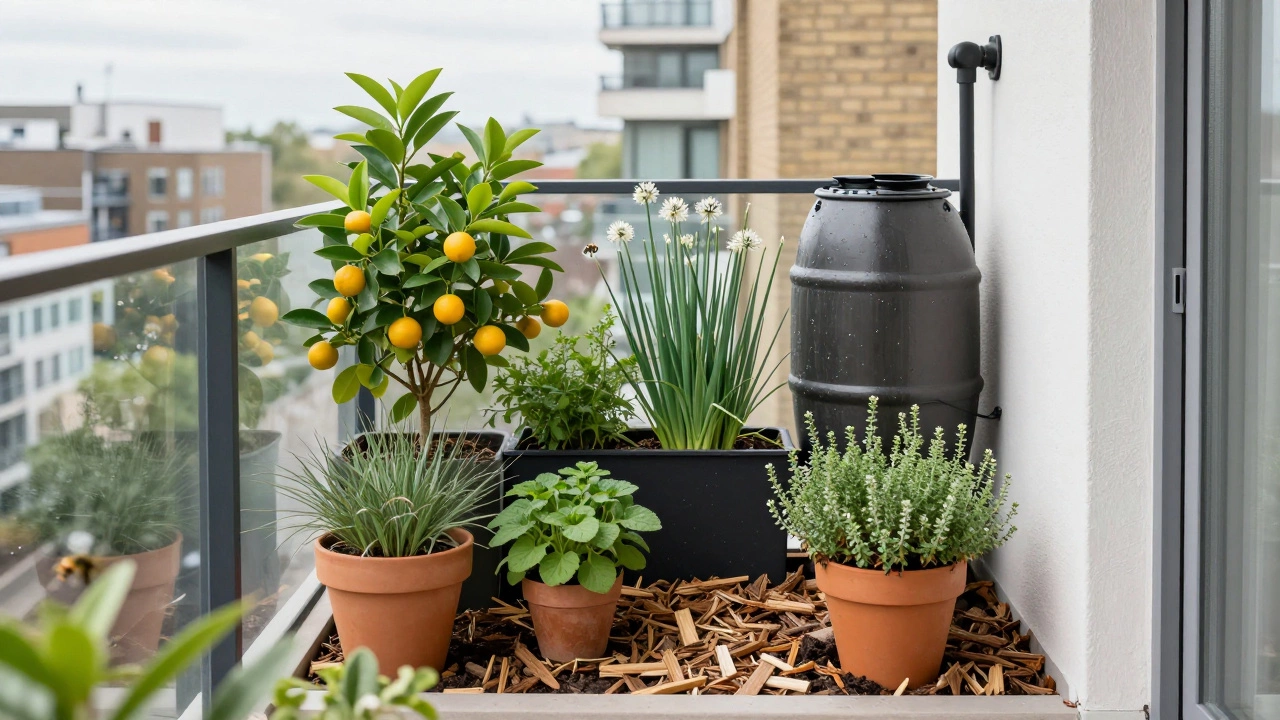
- Water: Install a simple rain barrel under a downspout. Even one barrel can water a small food forest for weeks.
- Patience: Don’t expect a harvest in year one. Permaculture is a long game.
Common Mistakes to Avoid
People try to build permaculture gardens too fast-and fail. Here’s what goes wrong:- Planting too many things at once: You’ll get overwhelmed. Start with three plants: one fruit tree, one berry bush, and one nitrogen-fixing plant like comfrey.
- Using mulch that breaks down too fast: Straw and wood chips last longer than grass clippings. Avoid dyed mulch-it can leach chemicals.
- Ignoring sunlight: Don’t plant shade-loving plants under a big tree. Don’t put sun-lovers in a north-facing corner.
- Thinking it’s zero work: It’s low work, not no work. You’ll still need to prune, harvest, and observe. But you won’t be chained to the garden every day.
Why This Matters Right Now
In 2025, with water shortages and rising food prices, self-sustaining gardens aren’t just trendy-they’re practical. The UK’s Environment Agency warns that by 2030, parts of southern England could face serious droughts. Gardens that rely on taps will struggle. Gardens that capture rain and build soil will thrive.Plus, the average British household spends over £400 a year on groceries for fruits and vegetables. A small permaculture garden can cut that by half. And the food tastes better-riper, more flavourful, picked fresh.
It’s not about going back to the past. It’s about using ancient wisdom-how nature works-to solve modern problems.
What Comes Next?
If you’ve got a patch of land-even a balcony or a window box-you can start small. Put a pot of comfrey on your patio. Let kitchen scraps go into a bucket with leaves. Collect rainwater in a bucket. That’s the first step.Permaculture isn’t about perfection. It’s about progress. One layer at a time. One season at a time.
Is a self-sustaining garden the same as a native garden?
Not exactly. A native garden uses plants that naturally grow in your region, which helps local wildlife. A self-sustaining garden-like a permaculture garden-uses design principles to create a closed system. You can combine both: plant native species in a permaculture layout for the best results.
Can I have a self-sustaining garden in a small urban space?
Yes. Even a 2m x 2m balcony can host a mini food forest. Use vertical planters for berries, pots for comfrey and herbs, and a small rain barrel. Focus on perennials like chives, garlic chives, and dwarf citrus. You won’t grow a whole year’s food, but you’ll cut grocery bills and attract pollinators.
Do I need to use organic methods?
You don’t have to label it ‘organic,’ but you can’t use synthetic fertilisers or pesticides in a true self-sustaining garden. They break the loop. Chemicals kill soil microbes, wash into waterways, and make plants dependent on you. Permaculture relies on natural systems-so yes, organic is built in.
How long does it take for a permaculture garden to become self-sustaining?
It usually takes 2-4 years. Year one is about building soil and planting. Year two, things start to connect-plants shade each other, insects arrive, water soaks in. By year three, you’re harvesting. By year four, it’s mostly self-running. Think of it like planting a tree-you don’t see results right away, but the payoff lasts decades.
Can I convert my existing vegetable patch into a permaculture garden?
Absolutely. Start by adding mulch, planting perennial herbs around the edges, and installing a rain barrel. Next season, replace one annual crop with a perennial-like asparagus or artichokes. Slowly phase out synthetic inputs. You’re not tearing it all up-you’re evolving it.
If you’re ready to start, don’t wait for the perfect time. The best time to plant a tree was 20 years ago. The second-best time is today.