Soil Compaction Assessment Tool
Soil Health Assessment
Answer these questions to determine your soil compaction level and get tailored recommendations for healthier plants.
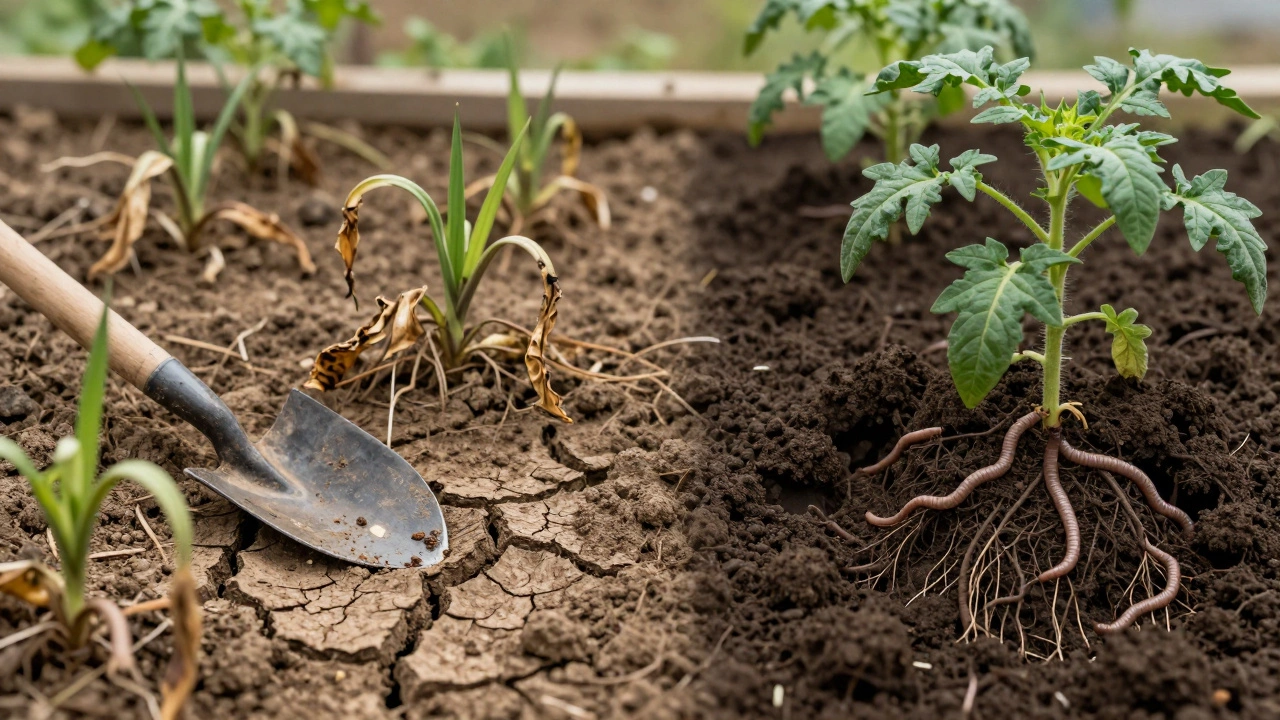
Hard, cracked soil that won’t let water sink in. Roots struggling to grow. Plants turning yellow even when you water them. If this sounds familiar, your soil is compacted-and it’s not just a nuisance, it’s killing your garden.
Compacted soil is one of the most common reasons gardens fail, especially in urban areas, clay-heavy regions like the UK, and places with heavy foot traffic. It’s not about lack of fertilizer or poor plant choices. It’s about the ground itself being too dense to breathe. The good news? You can fix it. Not with chemicals, not with expensive tools, but with simple, proven methods that work even in small backyard plots.
Why Soil Gets Compacted
Soil doesn’t just get hard by itself. It happens because of repeated pressure. Think about it: every time you walk over your garden bed, park your bike on the lawn, or use heavy equipment like a wheelbarrow, you’re pressing down on the soil. Rain and irrigation also play a role-water fills the tiny air pockets between soil particles, and when it dries, those particles stick together like wet clay.
Clay soils are the worst offenders. They’re naturally fine-grained and stick together tightly. Sandy soils rarely compact, but they’re rare in the UK. Most gardens here have loamy or clay-loam soil, which is great for growing-but only if it’s loose. Once it gets squeezed, air can’t get in, water pools on top, and roots suffocate.
Compacted soil also kills the microbes that feed your plants. Earthworms won’t live in it. Fungi can’t spread. Your soil becomes a lifeless brick.
Signs Your Soil Is Too Compacted
You don’t need a lab test to know your soil is compacted. Look for these signs:
- Water sits on the surface for hours after rain or watering
- Plants grow slowly, even with regular feeding
- Roots stay near the surface instead of digging down
- Grass turns brown in patches, even with enough water
- It’s hard to push a screwdriver or trowel more than 2 inches into the ground
If you can’t push a finger in past the second knuckle without effort, your soil is in trouble.
Step-by-Step: How to Fix Heavily Compacted Soil
Fixing compacted soil isn’t a one-day job. But you can start seeing results in weeks if you follow these steps.
- Stop walking on problem areas. If you’ve got a path or a patch where people always step, put down a board or stepping stones. Even a temporary fix reduces pressure and lets the soil begin to recover.
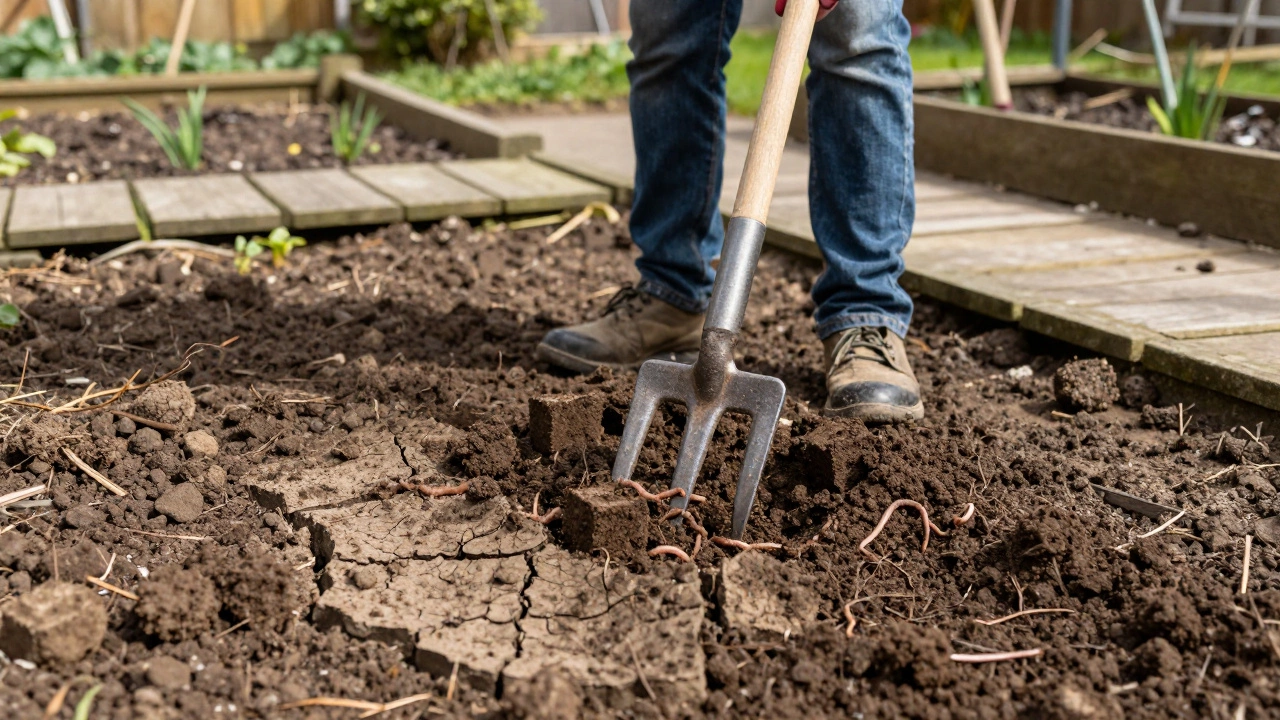
- Aerate the soil. For small beds, use a garden fork. Push it down as deep as you can, then rock it back and forth. Don’t just poke holes-lift and loosen the soil. Do this every 6-8 inches across the whole area. For lawns, use a manual spike aerator or rent a core aerator from a hardware store. Core aeration pulls out small plugs of soil, which is far better than just poking holes.
- Add organic matter. This is the key. Spread 2-3 inches of compost, well-rotted manure, or leaf mold over the surface. Don’t dig it in yet. Let earthworms and microbes do the work. Over time, they’ll pull it down and mix it naturally. If you’re in a hurry, gently fork it in to a depth of 4-6 inches. Avoid using peat moss-it’s not sustainable and doesn’t improve structure long-term.
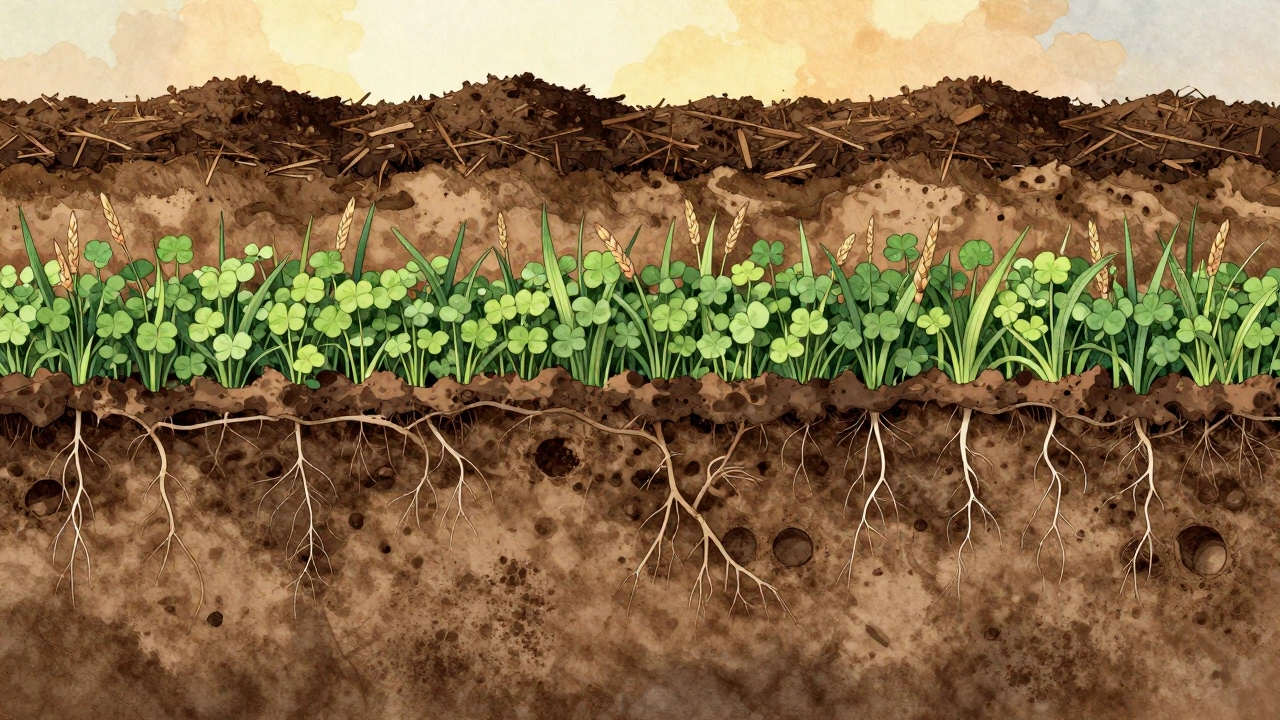
- Plant cover crops. In fall or early spring, sow fast-growing plants like clover, rye, or mustard. Their roots break up hard layers as they grow. When they die back, they leave behind channels for water and air. This is how farmers fix fields-and it works just as well in your garden.
- Mulch heavily. After amending the soil, cover it with 2-4 inches of wood chips, straw, or shredded bark. Mulch protects the soil from rain impact, keeps moisture in, and slowly breaks down to feed the soil. It also stops weeds and keeps the surface soft.
Do this in early spring or late autumn. Avoid working soil when it’s wet-it turns into mud and compacts even more when it dries. Test it by squeezing a handful: if it forms a ball that doesn’t crumble, it’s too wet.
What NOT to Do
There are a lot of myths out there. Don’t fall for them.
- Don’t add sand to clay soil. This is the most common mistake. Sand and clay mix to make something like concrete. It gets harder, not softer.
- Don’t use a rototiller regularly. Tilling breaks up soil temporarily but destroys its structure over time. It kills beneficial fungi and brings buried weed seeds to the surface. Use it only once, if at all, when starting a new bed.
- Don’t rely on chemical soil conditioners. Products claiming to “loosen soil” with additives are often expensive and ineffective. Real improvement comes from biology-not chemistry.
Long-Term Soil Health
Fixing compacted soil is the first step. Keeping it healthy is the real win.
Once your soil is loose, keep it that way:
- Always walk on paths, never on planting beds.
- Keep mulch topped up every year.
- Add compost annually-half an inch is enough.
- Rotate crops and avoid planting the same thing in the same spot every year.
- Let plants grow naturally. Crowded plants stress the soil. Give them space.
Over time, your soil will become darker, crumbly, and full of worms. You’ll notice plants grow faster, need less watering, and resist pests better. That’s the power of healthy soil.
When to Call in Professionals
If your soil is rock-hard, you’ve got a driveway where your garden should be, or you’re dealing with construction fill (common in new builds), you might need help. A professional soil technician can do a full analysis and recommend deep-tilling or soil replacement. In the UK, companies like SoilFix or local landscape contractors often offer soil testing and remediation services. But for most home gardens, the steps above will do the job-no need for expensive interventions.
Real Results: What Happens After 6 Months
One gardener in Brighton replaced a patch of compacted clay with the steps above. She didn’t use any chemicals. Just compost, a garden fork, and mulch. After six months, her tomato plants grew twice as tall as last year. Her carrots came out straight instead of twisted. Her lawn turned green without fertilizer.
She didn’t get lucky. She fixed the foundation.
Soil isn’t dirt. It’s a living system. When you treat it like a living thing, it rewards you.
Can I fix compacted soil without digging?
Yes. You can use the no-dig method: layer compost and mulch on top and let worms and microbes work it in naturally. This works best over several months but avoids damaging soil structure. It’s ideal for raised beds or established gardens.
How long does it take to fix compacted soil?
You’ll see improvement in 4-6 weeks after aerating and adding compost. Full recovery takes 6-12 months, depending on severity. Clay soils take longer than loamy ones. Consistent care matters more than speed.
Is lime good for compacted soil?
Only if your soil is too acidic. Lime adjusts pH, but it doesn’t loosen soil. In fact, adding lime to already alkaline soil can make compaction worse. Test your soil pH first-most UK garden soils are slightly acidic and don’t need lime.
Can I use gypsum to break up clay soil?
Gypsum can help in some clay soils by binding particles into larger aggregates, improving drainage. But it’s not a magic fix. It works best in sodic soils (high sodium), which are rare in the UK. For most gardeners, compost and organic matter are far more effective and cheaper.
What’s the best time of year to fix compacted soil?
Late autumn or early spring, when the soil is moist but not wet. Avoid working it in winter when it’s frozen, or in summer when it’s dry and hard. Autumn is ideal because you can plant cover crops right after aerating, and winter rains help settle the amendments.
Next Steps for Your Garden
Start small. Pick one patch-maybe the corner where your plants always struggle. Aerate it. Add a layer of compost. Mulch it. Wait. Watch. In a few weeks, you’ll see the difference. Then do the same in another spot. Before long, your whole garden will feel alive underfoot.
Healthy soil doesn’t happen overnight. But it’s the only thing that makes everything else in your garden possible. Fix the ground, and everything else grows easier.