Grass Cutting Time Calculator
Calculate Your Grass Cutting Time
Determine how long it will take to safely cut your overgrown lawn using the proper sequence.
Warning: Grass over 12 inches requires brush cutter first!
If your grass has grown past your knees, you’re not alone. It happens-maybe you were away, maybe the rain came hard and fast, or maybe you just didn’t get around to it. Now you’re staring at a jungle of tangled blades, and your regular push mower won’t even turn over. So what’s the best thing to cut very long grass with? The answer isn’t one tool. It’s a sequence. And if you skip the first step, you’ll waste hours, damage equipment, or end up with uneven, patchy results.
Don’t Start With a Lawn Mower
Most people reach for their lawn mower first. Big mistake. A standard rotary mower isn’t built for grass taller than 6 inches. When you try to cut through 12-inch or 18-inch blades, the motor stalls, the deck clogs, and the blades get bent. Even high-end riding mowers can’t handle it. I’ve seen people try-and end up with shredded belts, burned-out motors, and a pile of wet, matted grass that won’t blow away.
Long grass doesn’t cut cleanly. It wraps around spindles, pulls up roots, and creates clumps that smother the soil underneath. If you try to mow it all at once, you’re not cutting-you’re shredding. And that’s worse than leaving it alone.
Step One: Use a String Trimmer or Brush Cutter
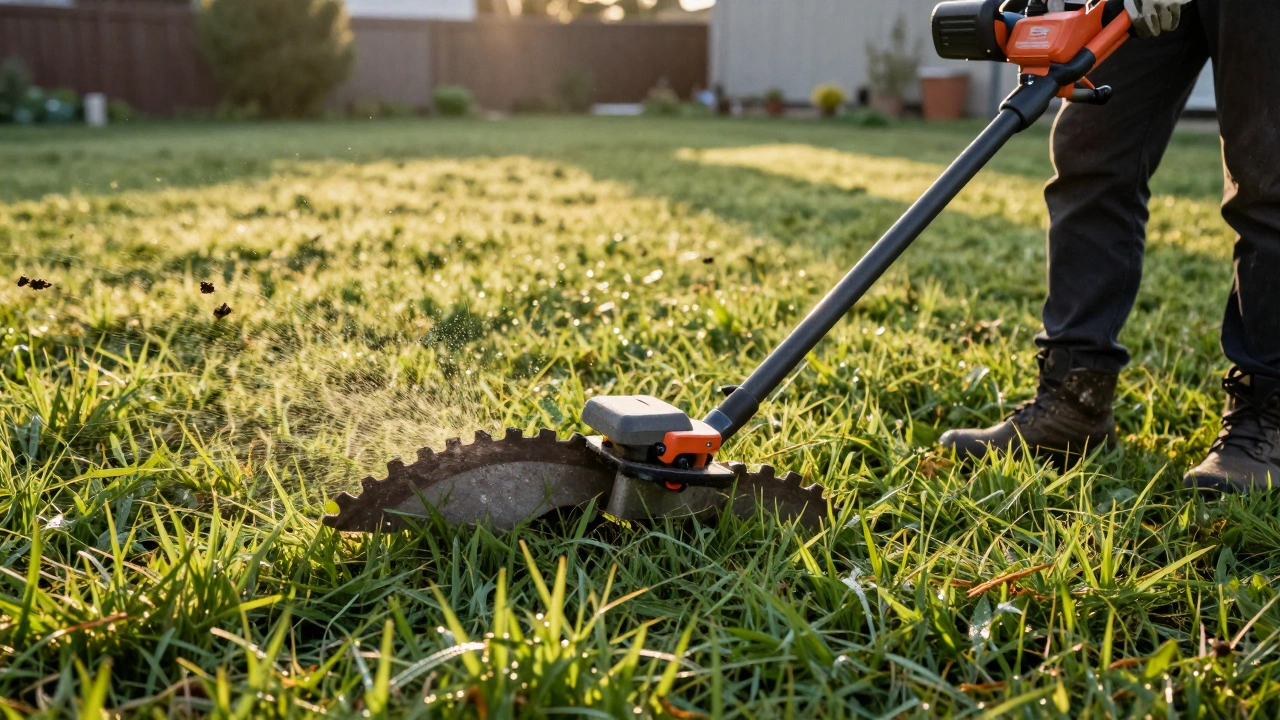
The real first move? A gas-powered brush cutter. Not the little electric trimmer you use around flower beds. You need something with a heavy-duty metal blade or a thick nylon line, at least 0.095 inches thick, and a minimum of 25cc engine. Brands like Stihl, Husqvarna, or Echo make models designed for this exact job.
Why a brush cutter? Because it slices through thick, woody stems and tangled grass without clogging. It’s precise, portable, and lets you work in sections. Start at the edges-along fences, driveways, and garden beds-then work your way inward in 3-foot-wide strips. Cut the grass down to about 4-6 inches. Don’t try to make it neat. Just get it short enough so a mower can handle it.
If you don’t have a brush cutter, a heavy-duty string trimmer with a thick line can work. But it’ll take longer, and you’ll go through a few spools. Avoid battery-powered trimmers here-they’ll die before you finish the first 50 square feet.
Step Two: Use a Reel Mower or High-Wheel Mower
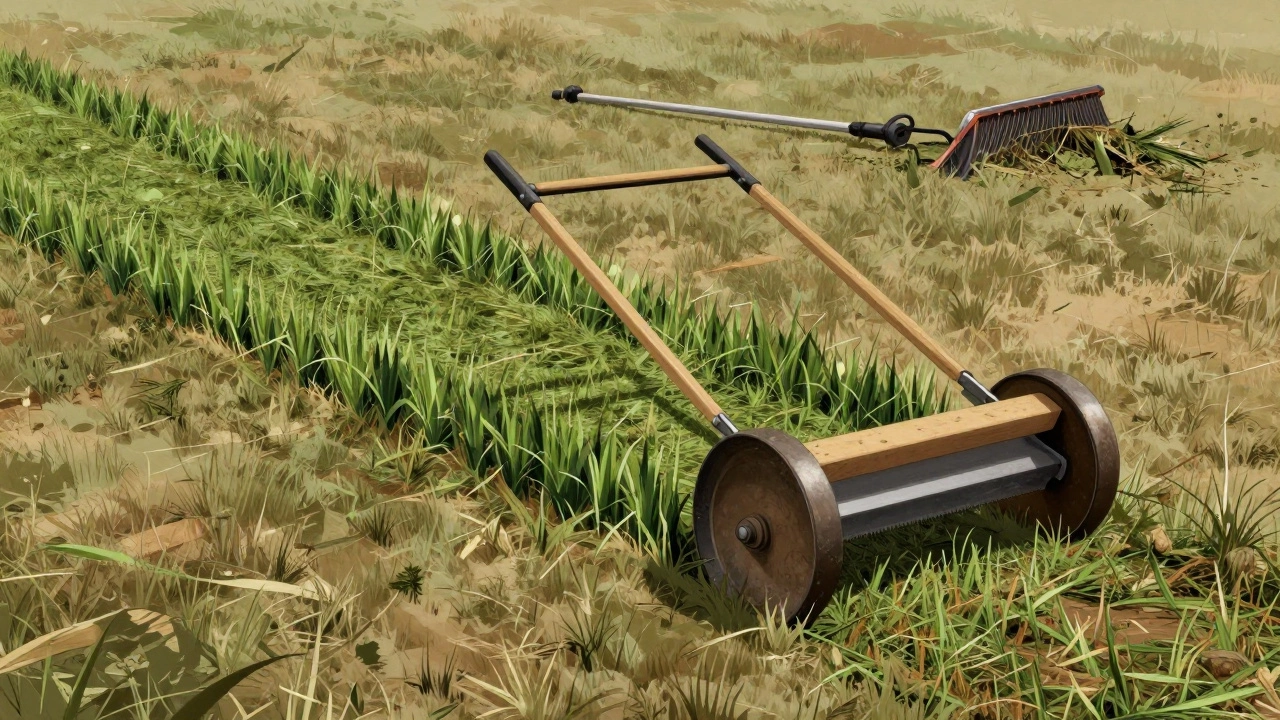
Once the grass is under 6 inches, it’s time for a mower. But not your standard one. A regular push mower still struggles with uneven ground and clumps. Instead, use a reel mower with large rear wheels-or better yet, a high-wheel push mower designed for rough terrain. These have taller wheels that roll over bumps and clumps without getting stuck.
Reel mowers are quiet, gas-free, and cut grass cleanly by shearing it like scissors. They don’t tear or bruise the blades like rotary mowers do. That’s important after a long growth spurt-your lawn is stressed already. A clean cut helps it recover faster.
If you must use a rotary mower, raise the deck to its highest setting. Mow slowly. Empty the bag after every pass. And don’t go over the same patch twice. You’ll just create more clumps.
Step Three: Mow in Cross Patterns
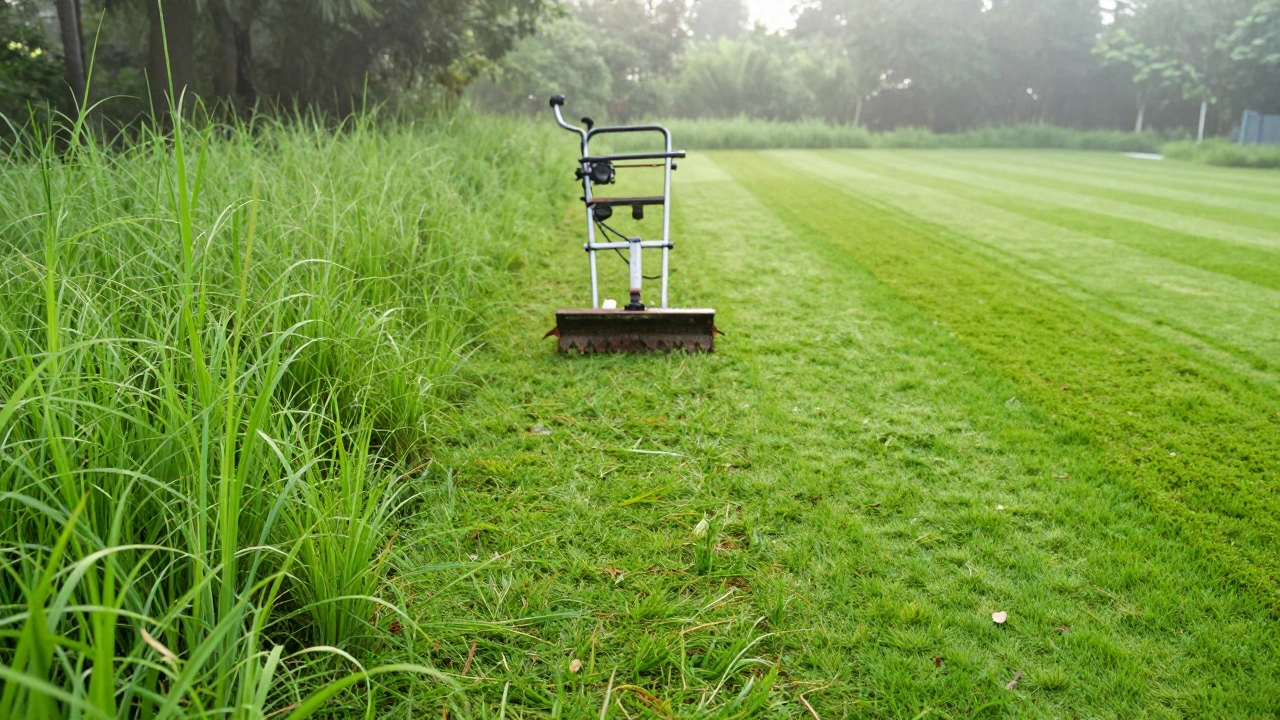
After the first pass with the high-wheel mower, wait a day. Let the grass settle. Then go over it again, this time at a right angle to your first pass. This lifts any remaining clumps and ensures you don’t miss patches where the grass was lying flat. It also helps the lawn stand up straighter, which makes future mowing easier.
Don’t try to get it perfect in one go. Cutting very long grass is a three-step process: cut down, cut even, then cut short. Rushing it will cost you more time in the long run.
What Not to Use
Here’s what doesn’t work:
- Electric trimmers-they lack the power and durability. They’ll overheat and break.
- Scissors or shears-you’ll be there all week. And your arms will hate you.
- Chainsaws-yes, someone tried it. Don’t be that person.
- Strimming in wet grass-it clogs faster, pulls roots, and makes a muddy mess.
Also, avoid cutting more than one-third of the grass height at a time-even after the initial trim. That rule still applies. If your grass was 18 inches tall and you cut it to 6, that’s 12 inches gone. That’s too much shock. You need to do it in stages.
What About Riding Mowers?
Riding mowers can work-if you prep the lawn first. But if you try to drive over 12-inch grass without trimming it down, you’ll get stuck. The wheels sink into the mat, the deck fills with grass, and the engine stalls. Even a 50-inch deck won’t save you.
Some people use a tow-behind flail mower attached to a garden tractor. That’s a good option for large overgrown fields, but it’s overkill for a typical suburban lawn. They’re expensive, loud, and need a lot of storage space. Stick to the brush cutter + high-wheel mower combo unless you’re dealing with an acre or more.
After You’ve Cut It
Don’t just walk away. Long grass often hides weeds, moss, or bare patches. After mowing, rake up the clippings. They’re heavy and wet-leave them and they’ll rot, killing the grass underneath.
Use a leaf blower or a stiff-bristled broom to lift any remaining clumps. Then, if the soil looks compacted or the grass is thin, give it a light aeration with a manual spike aerator. That lets air and water reach the roots.
Wait a week before fertilizing. Your lawn is in recovery mode. Too much nitrogen too soon will burn the stressed blades. A light application of organic compost or slow-release fertilizer after the first week is enough.
Preventing It From Happening Again
The best tool for long grass is a consistent mowing schedule. Once your lawn is back to normal height, cut it every 7-10 days in spring and summer. Don’t wait for it to look tall-cut it when it’s about 3 inches high. That’s the sweet spot.
Keep your mower blades sharp. Dull blades tear grass instead of cutting it, which makes it turn brown and invites disease. Sharpen them twice a season, or every 20 hours of use.
And if you’re going away for more than two weeks? Ask a neighbor to mow. Or set a reminder on your phone. One missed cut can turn into a month-long project.
Final Tip: Start Early in the Morning
Long grass holds moisture overnight. If you cut it in the afternoon when it’s dry and hot, the blades will shatter and turn brown. Cut early in the morning when the dew is still on it. The moisture helps the blades flex and cut cleanly. It also reduces dust and makes the job less tiring.
And wear gloves. Long grass has sharp edges. It’s not dangerous, but it’ll leave scratches on your hands-and they itch for days.