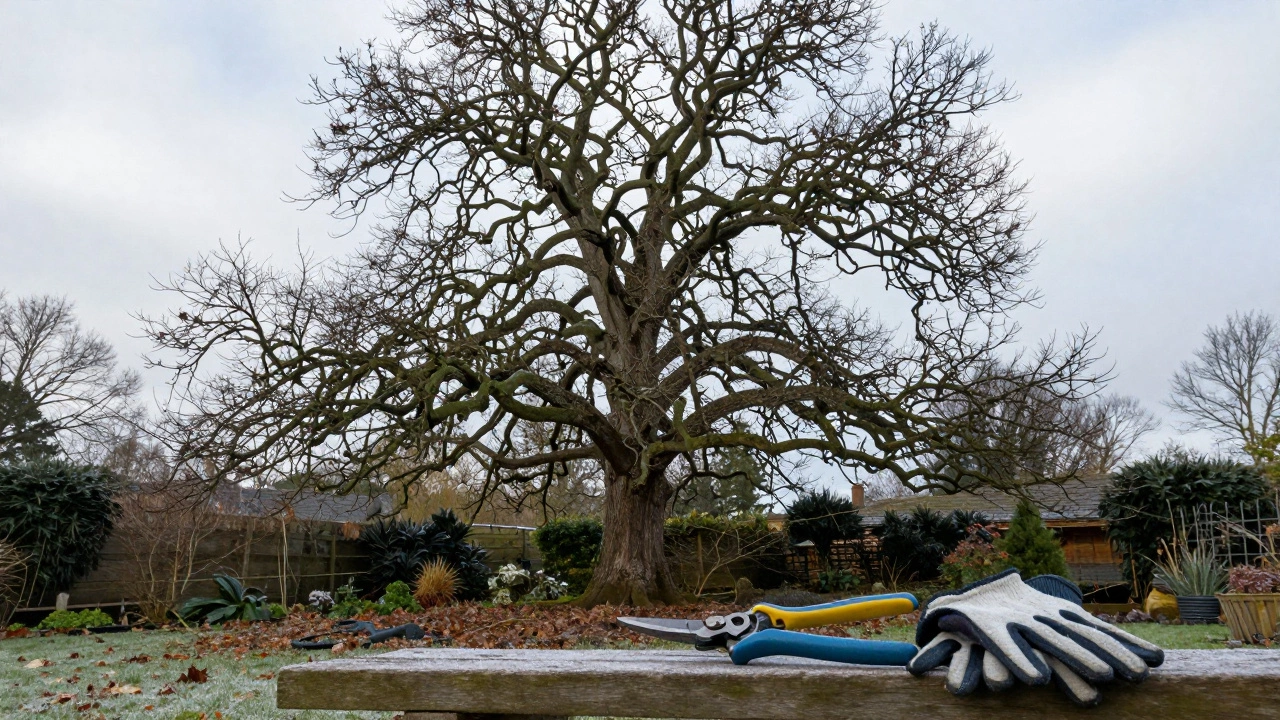
UK Tree Pruning Timing Advisor
Select your tree type and click "Check Pruning Advice" to see recommendations.
Quick Tips:
- Dormant Season: Nov - Feb (Best for structure)
- Growth Season: Jun - Aug (Best for size control)
- Avoid: Mar - May (Sap bleeding risk)
It’s May 10th. If you’re standing in your garden with a pair of loppers wondering if it’s too late to cut back that overgrown oak or shape your apple tree, you’re not alone. In the UK, timing is everything when it comes to tree pruning is the selective removal of branches and stems from a tree to improve its health, safety, or appearance. Cut at the wrong time, and you risk disease, poor growth, or even losing the tree entirely. Get it right, and you’ll have a thriving, safe, and beautiful garden all year round.
The short answer? It depends on the tree and what you want to achieve. But generally, most structural pruning happens in winter (November to February), while light shaping or fruit tree maintenance often occurs in summer (June to August). Let’s break down exactly when to prune what, why it matters, and how to do it without causing harm.
Why Timing Matters More Than You Think
Trees aren’t static objects. They breathe, bleed sap, and respond to their environment. Pruning during active growth phases can shock them. Cutting back when they’re dormant helps them heal faster and direct energy into new growth come spring.
In the UK, our temperate climate means distinct seasons dictate tree behavior. Winter dormancy is key for major cuts. Summer pruning controls size and encourages flowering. Spring is usually best avoided unless you’re dealing with dead wood or emergency hazards.
- Winter pruning promotes vigorous spring growth-ideal for young trees needing structure.
- Summer pruning slows growth and improves fruit quality-perfect for mature fruit trees.
- Spring pruning risks sap loss and attracts pests-use only for dead/diseased branches.
- Autumn pruning is risky due to wet conditions and open wounds inviting infection.
So, if you’re asking “what month do you prune trees in UK?” the real question is: “What kind of tree am I working with, and what result do I want?”
Winter Pruning: November to February
This is the prime window for heavy-duty pruning. Trees are asleep, sap flow is minimal, and wounds seal quickly once spring arrives. Ideal for:
- Structural pruning: Shaping young trees by removing competing leaders or crossing branches.
- Deadwood removal: Clearing out broken, diseased, or dead limbs before storms hit.
- Thinning crowns: Improving air circulation and light penetration in dense canopies.
Avoid pruning evergreens like conifers in deep winter-they may suffer from frost damage on fresh cuts. Stick to deciduous species such as oak, beech, and maple.
If you live in southern England (like Brighton), you might get milder winters, but still respect the dormancy period. Even if leaves haven’t fully dropped, wait until after the first hard frost has passed.
Summer Pruning: June to August
Summer isn’t just for BBQs-it’s also prime time for maintaining fruit trees and controlling hedge growth. Unlike winter pruning, which boosts growth, summer pruning restricts it. That’s useful when you want smaller trees or better fruit yields.
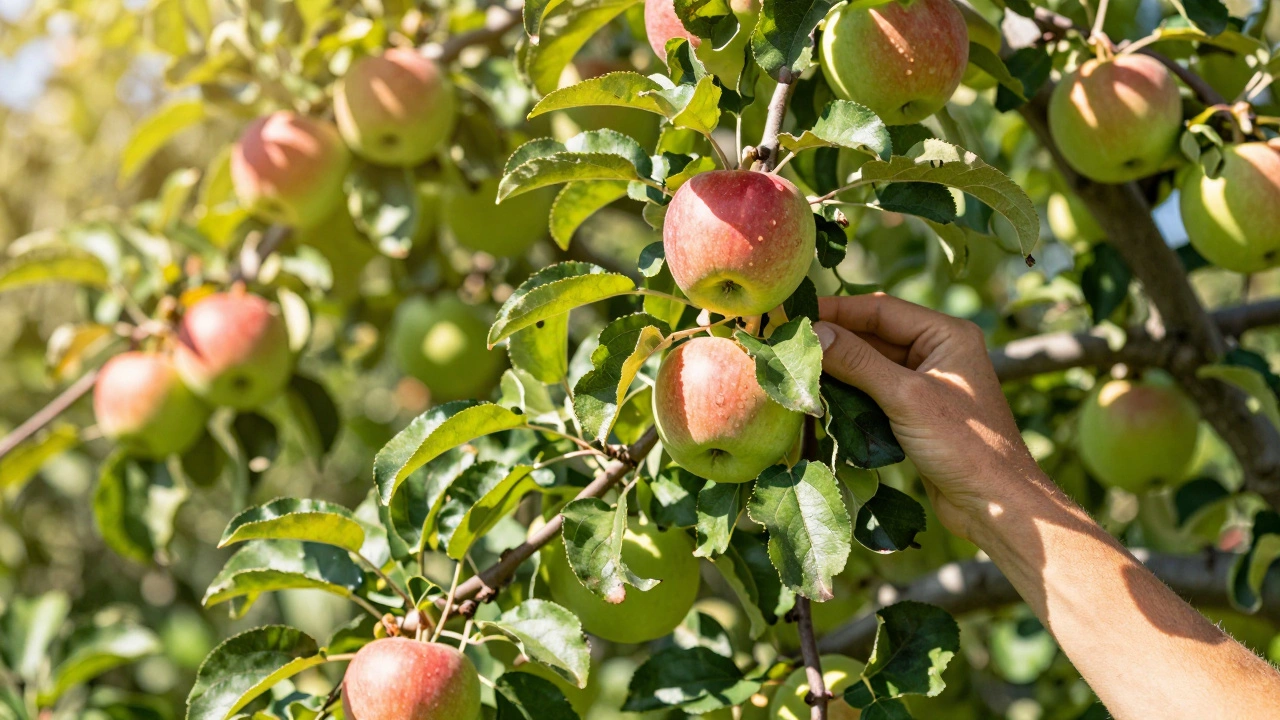
- Fruit trees like apples, pears, and plums benefit from summer pruning to encourage flower buds for next year’s harvest.
- Hedges should be trimmed twice a season-once in early July and again in September-to keep them neat and compact.
- Ornamental shrubs that bloom on old wood (like lilac or viburnum) need post-flowering pruning in early summer.
Be careful not to over-prune in hot spells. Stress from heat plus cutting can weaken trees. Water well before and after pruning sessions.
When NOT to Prune: Spring and Autumn Risks
March through May is typically off-limits for serious pruning. Why? Because trees are waking up, pushing out new leaves, and pumping sap. Cutting now causes excessive bleeding (especially in maples and birches), invites fungal infections, and wastes energy the tree needs for growth.
September to October brings damp weather and decaying foliage-perfect breeding grounds for pathogens entering open wounds. Plus, many birds use tree cavities for nesting during autumn, so disturbing branches could violate wildlife protection laws.
Exceptions exist:
- Emergency hazard reduction: Remove dangerous hanging branches anytime.
- Disease control: Cut away infected parts immediately, regardless of season.
- Light cleanup: Snipping small twigs or clearing debris doesn’t require strict timing.
Special Cases: Fruit Trees vs Ornamentals
Not all trees follow the same rules. Here’s how to handle common types:
| Tree Type | Best Time to Prune | Purpose | Notes |
|---|---|---|---|
| Apple & Pear | Winter (Nov-Feb) | Structure & yield | Heavy pruning boosts fruit size; summer thinning improves color. |
| Stone Fruits (Plum, Cherry) | Summer (Jul-Aug) | Disease prevention | Winter pruning increases silver leaf disease risk. |
| Hawthorn | After flowering (Jun) | Maintenance | Birds nest heavily March-July-check for nests first. |
| Conifers | Early spring (Mar-Apr) | Shape & size control | Never cut into old wood-they won’t regrow. |
| Willow | Hard prune every 2-3 years (Nov-Jan) | Regeneration | Can be cut to ground level for coppicing. |
Notice how stone fruits differ from pome fruits? That’s because plum and cherry trees are highly susceptible to silver leaf fungus, which enters through winter wounds. Summer pruning lets those cuts dry out naturally under sun and wind.
Legal Considerations: Tree Preservation Orders & Conservation Areas
Before swinging that saw, check whether your tree is protected. In the UK, many urban trees fall under Tree Preservation Orders (TPOs) or sit within conservation areas. Cutting without permission can lead to hefty fines-even imprisonment.
You don’t need permission to:
- Remove dead or dying branches posing immediate danger.
- Trim hedges along property boundaries (unless part of a larger protected group).
- Care for fruit trees purely for harvest purposes.
But if your tree is listed on a TPO, located in a National Park, or near a historic building, contact your local council first. Most offer free advice and sometimes even grant permits for essential work.
Tools & Techniques: Doing It Right
Good tools make good cuts. Dull blades crush tissue instead of slicing cleanly, increasing infection risk. Always sterilize equipment between trees using alcohol or bleach solution.
- Bypass pruners: For branches under 2cm diameter.
- Loppers: Handle thicker limbs up to 5cm with leverage.
- Pole saws: Reach high branches safely without climbing.
- Chainsaws: Reserved for professionals handling large trunks or hazardous situations.
Follow the three-cut method for branches over 7cm thick:
- First cut underneath, 30cm from trunk.
- Second cut above, slightly further out-this prevents bark tearing.
- Final cut just outside the branch collar (the swollen ring where branch meets trunk).
Never leave stubs-they rot inward toward the main stem. And never paint wounds; trees heal best left exposed to air.
Signs Your Tree Needs Attention Now
Sometimes waiting for the ideal month isn’t an option. Watch for these red flags:
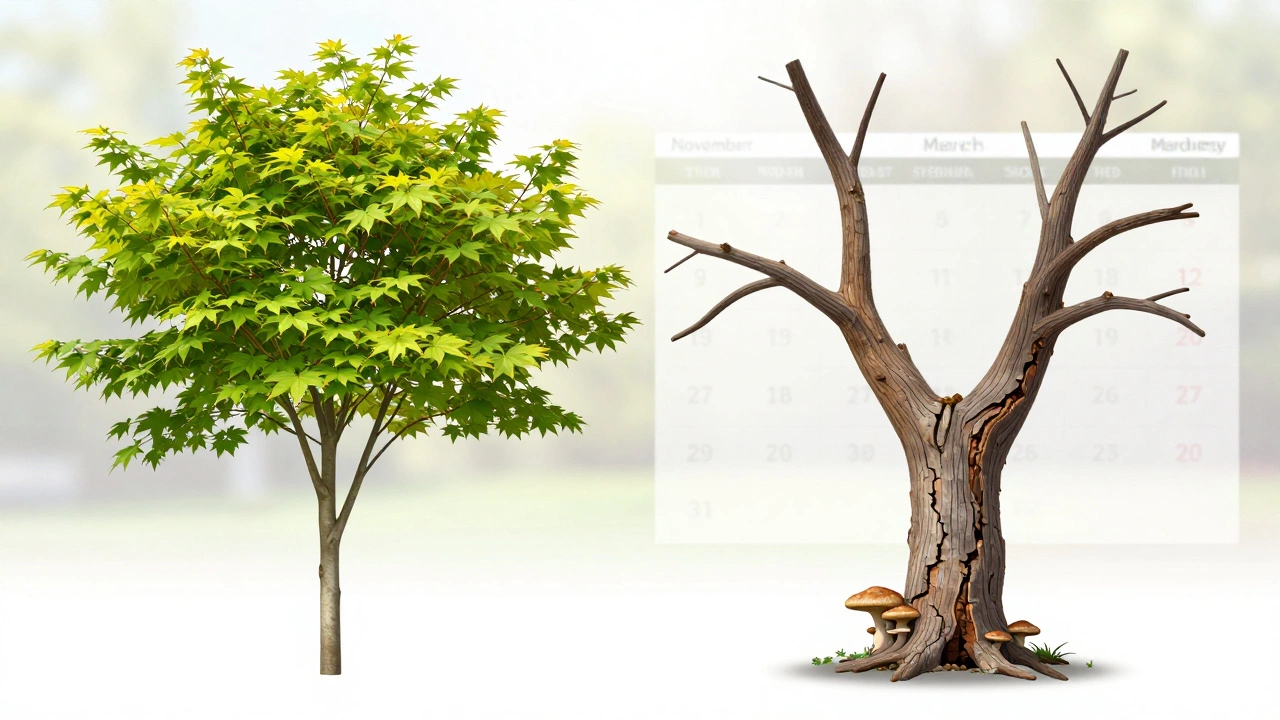
- Cracks or splits in trunk or major limbs.
- Mushrooms growing at base-sign of internal decay.
- Leaning suddenly after storm or thaw.
- Excessive dieback in upper canopy.
- Pest infestations visible as holes, webs, or oozing sap.
If any of these apply, call a certified arborist ASAP. Don’t attempt DIY fixes on structurally compromised trees.
FAQ: Common Questions About Tree Pruning in the UK
Can I prune my tree today if it's May?
Generally no-May is too late for winter pruning and too early for effective summer pruning. Only remove dead, damaged, or hazardous branches now. Wait until July for light shaping or August for fruit tree maintenance.
Is it illegal to prune certain trees?
Yes-if your tree is covered by a Tree Preservation Order (TPO) or sits in a conservation area. Check with your local council before cutting anything beyond minor trimming. Penalties include unlimited fines and criminal records.
Should I prune my apple tree in winter or summer?
Do both! Winter pruning shapes the tree and boosts next year’s crop. Summer pruning (July-August) thins overcrowded branches, improving sunlight exposure and fruit sweetness. Avoid pruning stone fruits like plums in winter due to disease risks.
How much of a tree can I safely prune?
No more than 25% of the canopy in one season. Over-pruning stresses the tree, reduces photosynthesis, and invites pests. Spread major cuts across multiple years if needed.
Do I need to seal pruning cuts?
No. Modern research shows sealing compounds trap moisture and hinder natural healing. Leave cuts open to air. Clean, angled slashes help water run off and reduce rot potential.
What about conifer trees-when should I prune them?
Prune conifers in early spring (March-April) before new growth emerges. Never cut into old woody stems-they won’t regenerate. Trim lightly to maintain shape rather than drastically reducing size.
Can I prune trees during bird nesting season?
Legally, yes-but ethically, avoid disturbing active nests between March and August. Many UK birds rely on tree cavities. If unsure, pause work until nesting season ends or consult RSPB guidelines.
Is professional pruning worth the cost?
Absolutely-for tall, complex, or legally protected trees. Certified arborists carry insurance, know local regulations, and prevent costly mistakes. Expect £150-£400 per job depending on complexity and location.
Next Steps Based on Your Situation
If you’re holding a pair of shears right now in mid-May:
- For ornamental trees: Hold off until July for light shaping or skip until next winter for structural changes.
- For fruit trees: Focus on cleaning up fallen leaves and monitoring for pests. Resume pruning in late July.
- For hedges: Give them a quick trim now if they’re getting unruly, then plan another session in September.
- For suspected diseased trees: Call an expert immediately-don’t wait for perfect weather.
Remember, pruning isn’t about making trees look tidy overnight. It’s about helping them grow stronger, safer, and healthier over decades. Patience pays off-in both beauty and bounty.