Planting fruit in the UK isn’t just about sticking a tree in the ground and waiting. Get the timing wrong, and you could be waiting years for a single apple. Get it right, and you’ll be picking juicy berries, crisp pears, and sweet plums in just a couple of seasons. The truth is, when to plant fruit in the UK depends on the type of fruit, the weather, and even the soil in your garden. There’s no one-size-fits-all date - but there are clear windows that work every time.
Fruit Trees: The Best Time to Plant
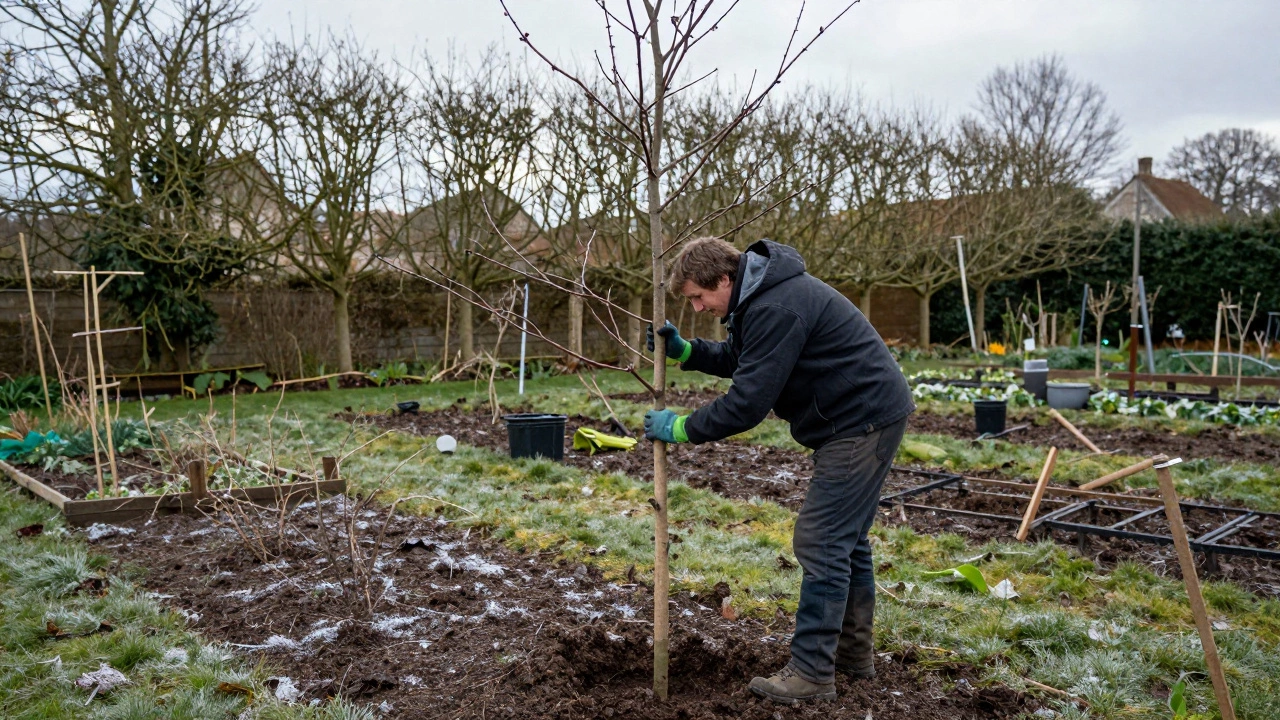
If you’re planting fruit trees - apples, pears, plums, cherries - the best window is between late autumn and early spring. That’s roughly from November to March. Why? Because during this time, the trees are dormant. They’re not actively growing leaves or fruit, so they can focus all their energy on putting down roots.
November to January is ideal in most of the UK. The ground is usually still workable, and the cold weather keeps pests and diseases at bay. If you miss that window, don’t panic. Late February and early March still work fine, especially if you’re in southern England. Just make sure the soil isn’t frozen or waterlogged. A simple test: grab a handful of soil. If it crumbles easily, it’s ready. If it turns into a sticky clump, wait a few days.
Bareroot trees - the most common type sold in garden centres - must be planted while dormant. Potted trees can go in anytime, but they still benefit from being planted in cooler months. They’ll settle in better and need less watering come summer.
Berries: Timing Matters More Than You Think
Berries are easier to plant than trees, but they’re just as sensitive to timing. Strawberries, raspberries, blackberries, and currants all have different sweet spots.
- Strawberries: Plant between late summer and early autumn (August to September). This gives them time to root before winter and they’ll produce a strong crop the following spring. If you plant them in spring, you’ll get some fruit that year, but the harvest won’t be as heavy.
- Raspberries and blackberries: Plant in late autumn (November) or early spring (March). These can handle a bit of frost, and planting them when the soil is cool helps them establish before the summer heat.
- Currants (red, white, black): Best planted from November to March. They’re hardy and don’t mind being planted even if snow is still on the ground.
One mistake I see often? People plant raspberries too close to the house. They spread. Fast. Give them at least 1.5 metres of space from walls or fences. I learned this the hard way - my neighbour’s fence is now half covered in brambles.
Soft Fruit: Gooseberries, Loganberries, and More
Gooseberries, loganberries, and tayberries are often overlooked, but they’re some of the easiest and most productive fruits for UK gardens. They thrive in cooler climates and need little fuss.
Plant them between November and March. They prefer slightly acidic soil, so if your garden is chalky, mix in some peat-free compost before planting. Don’t plant them in full shade - they need at least six hours of sun a day. A spot next to a south-facing wall works wonders.
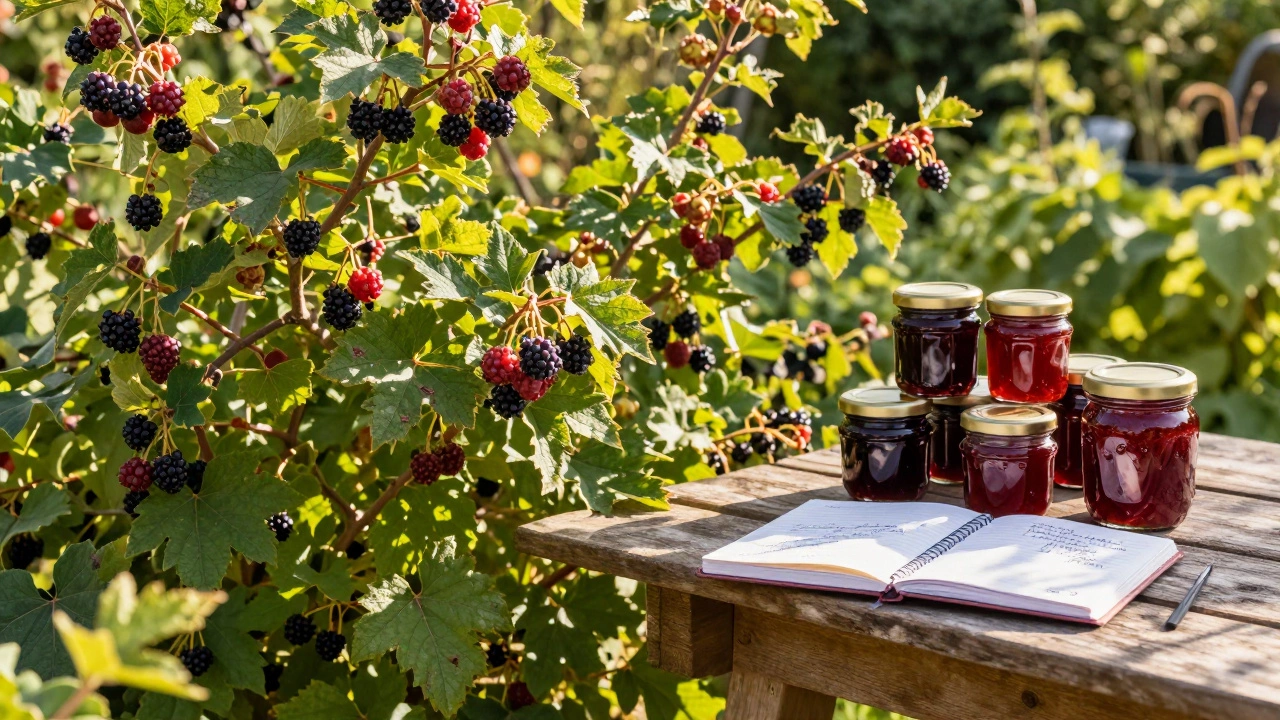
I’ve had a gooseberry bush in my Brighton garden for five years now. It’s about shoulder height, and every June, I pick enough to make three jars of jam. No spraying. No fuss. Just good timing and a bit of patience.
What About Container-Grown Fruit?
Not everyone has a big garden. If you’re planting fruit in pots - dwarf apples, citrus, or even blueberries - you can do it year-round. But even then, timing matters.
Spring (March to May) is the safest bet. The soil is warming up, and the plants have the whole growing season ahead. Avoid planting in the middle of summer. Potted plants dry out fast, and the roots can’t cope with the heat. Winter planting in containers? Only if you can protect them from frost. Move them against a wall or into a shed if temperatures drop below -3°C.
Blueberries are tricky. They need acidic soil (pH 4.5-5.5). Use a specialist potting mix, and never use regular garden soil. I’ve seen too many people kill their blueberry plants by planting them in compost meant for roses. It’s a common mistake.
Soil Prep: The Secret Most People Skip
Planting at the right time means nothing if the soil is poor. Fruit needs deep, well-drained soil with plenty of organic matter. Before you dig in:
- Test your soil pH. Most fruit trees like a pH between 6.0 and 7.0. Raspberries and blueberries are the exceptions - they need acidic soil.
- Remove weeds. Perennial weeds like bindweed or couch grass will fight your fruit for nutrients for years.
- Work in compost or well-rotted manure. Don’t use fresh manure - it can burn roots and attract pests.
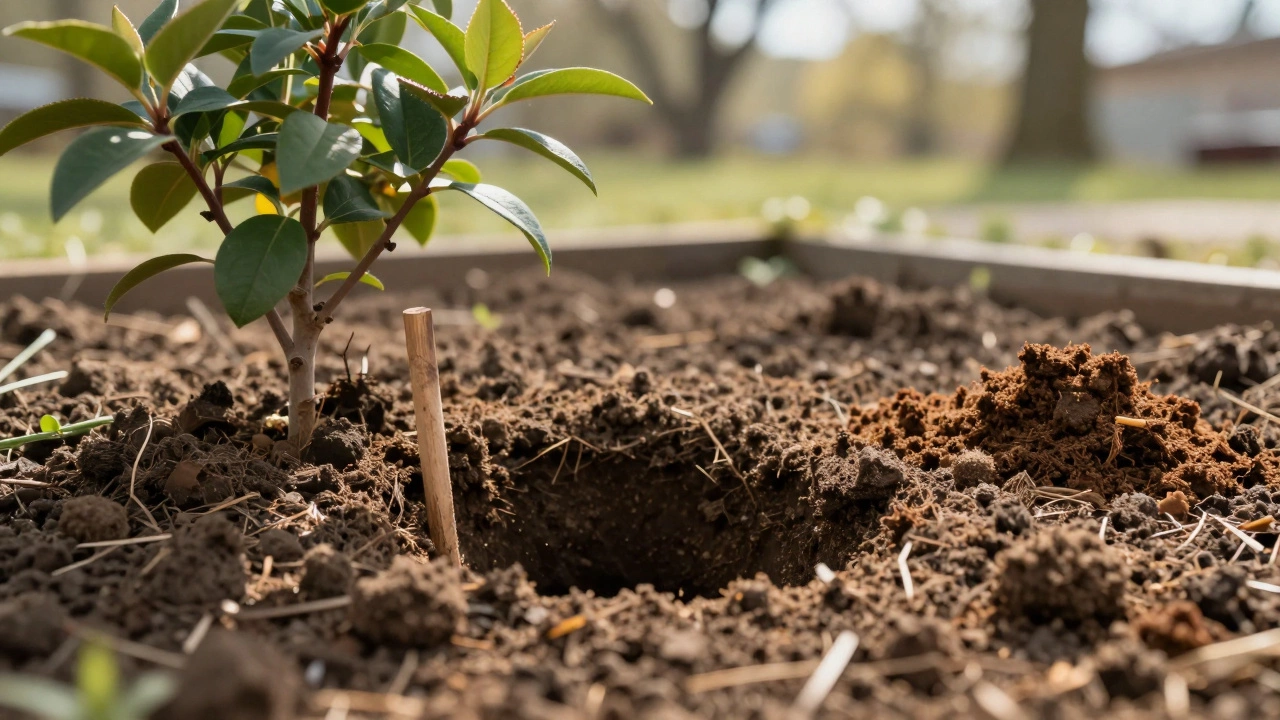
- Dig a hole twice as wide as the root ball. Don’t dig it deeper than the roots. Planting too deep is one of the top reasons fruit trees fail.
I always mark the depth with a stick before planting. You want the graft union - that bump near the base of the trunk - to sit just above soil level. If it’s buried, the tree might grow its own roots instead of staying true to the variety. That means weaker growth and no fruit.
Regional Differences: South vs North
The UK isn’t one climate. In Cornwall, you can plant apples in late October and get away with it. In the Scottish Highlands, you’re better off waiting until April. Here’s a rough guide:
| Region | Best Time for Trees | Best Time for Berries |
|---|---|---|
| South England (e.g., Brighton) | November - March | August - September (strawberries), November - March (others) |
| Midlands | December - February | September - October, March |
| North England & Wales | February - March | March - April |
| Scotland | March - April | April - May |
Don’t rush. If your soil is still cold and wet in March, wait. Fruit roots rot in waterlogged ground. Better to delay a few weeks than lose a whole tree.
What Not to Do
- Don’t plant in summer. Even if the garden centre has fruit trees on sale, it’s a trap. The heat stresses the roots. You’ll spend all summer watering, and the plant may not survive.
- Don’t plant too close together. Fruit trees need space to breathe. A standard apple tree needs 5-6 metres between it and its neighbour. Dwarf varieties still need 2-3 metres.
- Don’t use fertiliser right after planting. Wait until next spring. Too much food too soon burns the roots.
- Don’t forget to water in the first year. Even if it’s raining, the roots are shallow. A bucket of water every 10 days is enough.
What to Expect After Planting
Don’t expect fruit the first year. Most trees take 2-4 years to produce. Raspberries might give you a few berries in the first summer, but the real crop comes in year two. Strawberries? You’ll get some in the first year, but the second year is when they really shine.
Pruning is key. In the first winter after planting, cut back the main stem of a fruit tree by a third. It encourages branching. For bushes, remove weak stems and any that cross. Good pruning now means better fruit later.
And yes - mulch. A 5cm layer of wood chips or straw around the base of the plant keeps weeds down, holds moisture, and slowly feeds the soil. I use old lawn clippings from my neighbour’s garden. Free, and it works.
Final Tip: Keep a Planting Log
I keep a small notebook. Each year, I write down what I planted, when, and how it did. Last year, I planted a Bramley apple in late February. It’s thriving. The one I planted in January? It didn’t make it. The soil was too wet. Now I know. A simple log like this saves you years of trial and error.
Can I plant fruit trees in pots?
Yes, but only dwarf or semi-dwarf varieties. Apples, pears, and citrus can all be grown in large pots (at least 45cm wide). Use a soil mix designed for fruit trees, and make sure the pot has drainage holes. Water regularly - pots dry out fast. Move them to a sheltered spot in winter if you live in a frost-prone area.
Is it too late to plant fruit this year?
If it’s February, you’re still in the window for most fruit trees and bushes. If it’s March and the ground is still cold, wait until April. If it’s May or later, avoid planting bareroot trees. Potted fruit can still go in, but you’ll need to water heavily all summer. The best time is always behind you - but it’s never too late to start planning for next year.
Which fruits grow best in the UK?
Apples, pears, plums, raspberries, blackberries, strawberries, and currants are the most reliable. Hardy varieties like ‘Bramley’ apples, ‘Autumn Bliss’ raspberries, and ‘Red Lake’ strawberries perform well across most regions. Avoid tropical fruits like mango or pineapple - they won’t survive UK winters.
Do I need to protect fruit from frost?
Young plants need protection if frost is forecast in spring. Cover them with horticultural fleece. Mature trees and bushes usually handle light frost fine. But if blossoms appear early and a hard frost hits, the flowers can die - meaning no fruit. A light covering can save the crop.
How long until I get fruit after planting?
Strawberries: first year. Raspberries and blackberries: second year. Currants and gooseberries: second or third year. Apple and pear trees: 3-5 years. Plums and cherries: 4-6 years. Patience pays off - the first real harvest is always the sweetest.
Next Steps
Check your soil type. Dig a small hole and feel it. Sandy? Add compost. Clay? Mix in grit. Then choose your fruit. Start with one or two types. Don’t try to plant a whole orchard in one go. And mark your calendar - next November, you’ll be ready.