Greenhouse Location Suitability Checker
Score
Evaluate Your Site
Check the boxes on the left based on your garden conditions. The tool will calculate a suitability score and provide specific advice.
You’ve bought the perfect greenhouse is a controlled environment structure used to protect plants from harsh weather and extend growing seasons. It’s sturdy, it looks great, and you’re ready to grow tomatoes that taste like summer. But before you drill those screws into the ground, stop. The single biggest mistake gardeners make isn’t choosing the wrong type of glass or plastic-it’s putting it in the wrong spot.
I’ve seen too many expensive structures rot away in damp corners or bake their contents into crisps under direct southern sun without ventilation. In the UK, where our weather can shift from blazing sunshine to driving rain in minutes, site selection is everything. Get it wrong, and your greenhouse becomes a greenhouse effect oven or a cold, dark cage. Let’s look at exactly where you should never place your investment.
The Damp Shadow of Large Trees
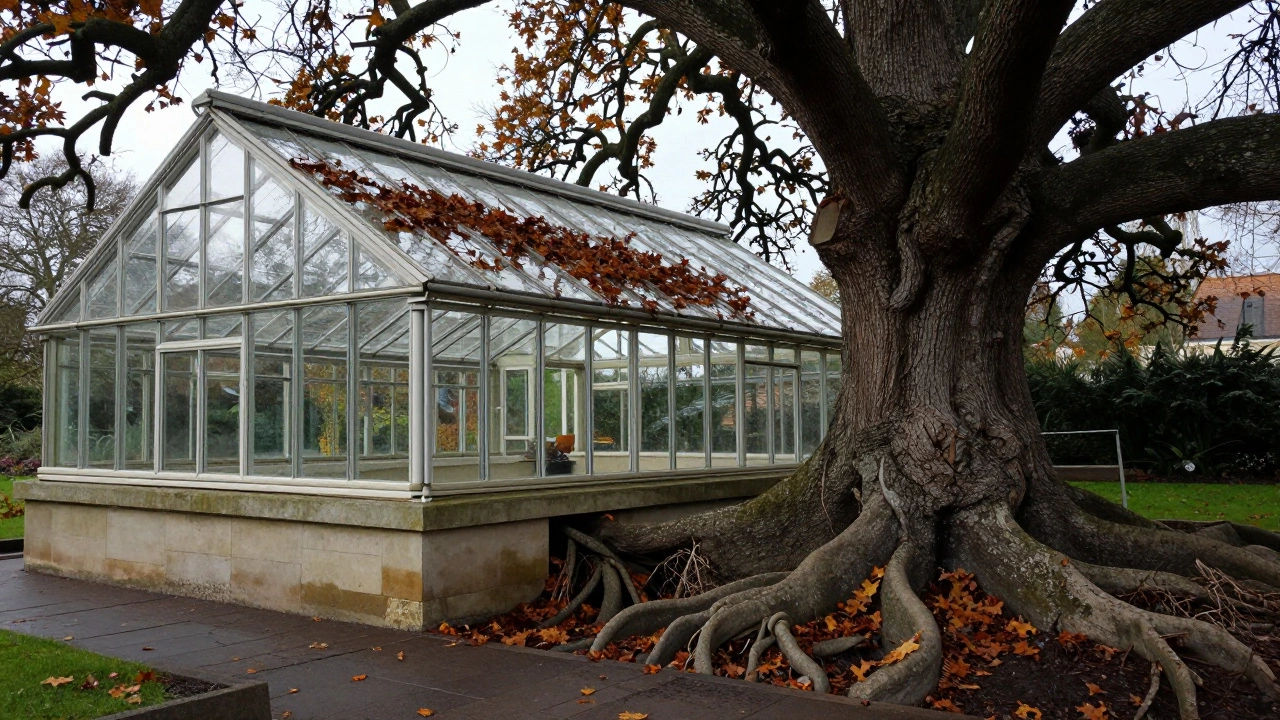
It seems romantic to tuck a greenhouse under the canopy of an old oak or maple. You get shade in summer, right? Wrong. Trees are enemies of good greenhouse placement for three brutal reasons. First, roots. Large tree roots seek out moisture and nutrients. They will invade your greenhouse foundation, cracking concrete slabs and lifting paving stones as they swell with winter rains. I once watched a £800 polytunnel frame warp because a nearby sycamore root pushed up through the soil beneath it.
Second, leaf litter. In autumn, thousands of leaves will fall onto your roof. Wet leaves create a breeding ground for algae and moss, which blocks light and adds significant weight. When snow follows, that combined load can collapse a poorly ventilated roof. Third, the shadow itself. A mature tree casts a long shadow, especially in the UK’s lower-angle winter sun. Your greenhouse needs maximum light during the short days of November to February to keep seedlings alive. If you’re placing it in the shadow of a tree, you’re fighting a losing battle against nature.
- Avoid: Placing within 5-10 meters of large deciduous or evergreen trees.
- Risk: Root damage to foundations, blocked light, heavy debris accumulation.
- Solution: Choose an open lawn area or a cleared patch far from major root systems.
The Wind Tunnel Effect
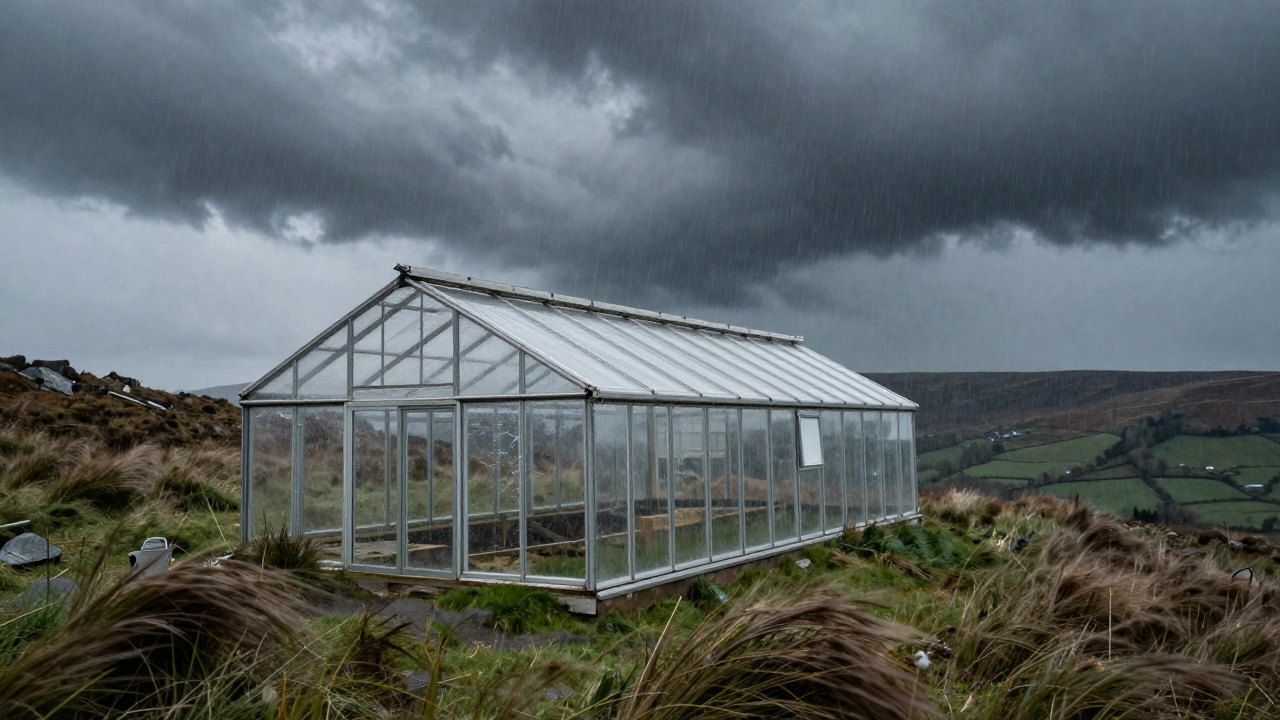
If you live anywhere in the UK except perhaps the sheltered valleys of Wales, wind is a factor. Many people think, “I’ll just put it on the highest point so it gets more sun.” That’s a dangerous gamble. Exposed ridges and hilltops act as wind tunnels. Constant gusts batter the structure, stressing the frame and forcing heat out through gaps in the seals.
Worse, strong winds drive rain horizontally. If your greenhouse faces directly into the prevailing wind (usually south-west in most of the UK), rain will hammer the glass or polycarbonate panels. Over time, this causes seal failure and leaks. Even worse, if the wind hits a flat side rather than a sloped roof, the pressure can shatter older glass panes. Modern twin-wall polycarbonate is tougher, but it still degrades faster when constantly buffeted by gales.
Look at your garden map. Where does the wind funnel through? Between two fences? Down a narrow lane? Avoid these spots. Instead, look for natural windbreaks. A solid fence, a hedgerow, or even the wall of your house can deflect the worst of the gusts while allowing air to circulate gently around the structure.
| Location Type | Wind Speed Impact | Expected Lifespan Reduction | Repair Frequency |
|---|---|---|---|
| Exposed Ridge | High (Constant Gusts) | 30-40% Shorter | Annual Seal Checks |
| Sheltered Corner | Low (Filtered Air) | No Reduction | Every 3-5 Years |
| Between Fences | Medium (Turbulent) | 15-20% Shorter | Biannual Checks |
The Low-Lying Cold Pocket
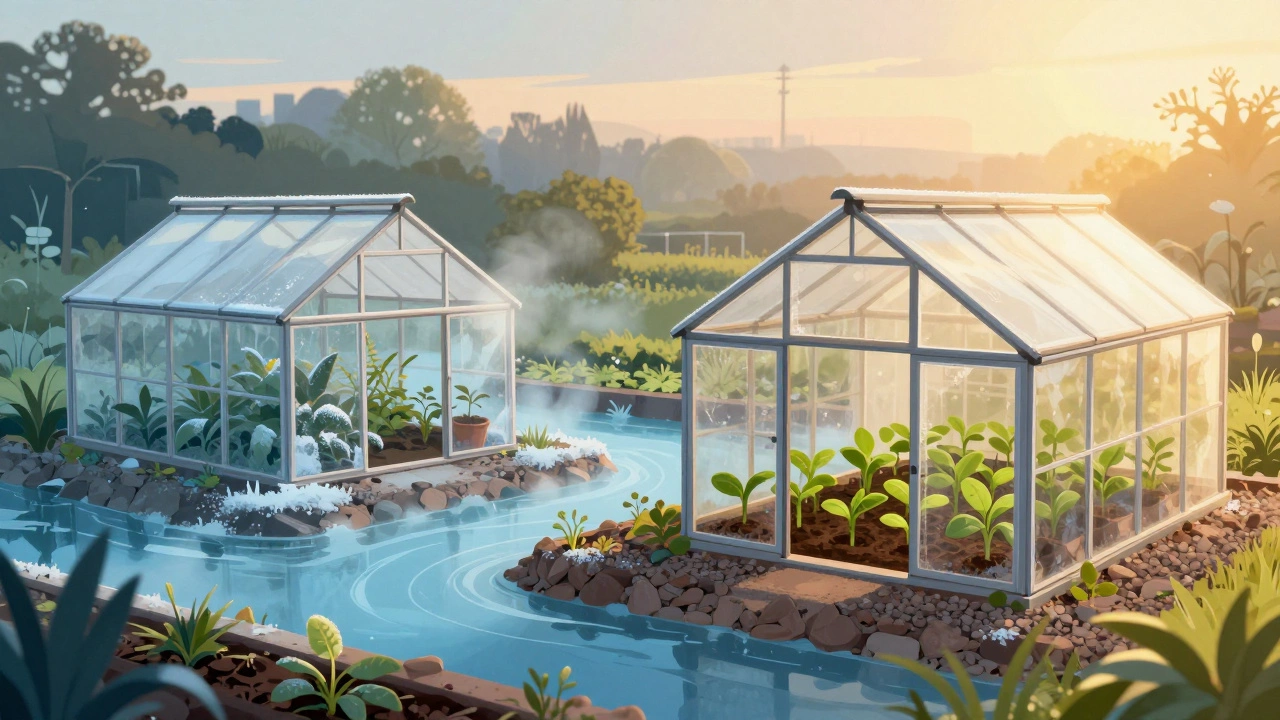
Cold air sinks. This is basic physics, but it’s often ignored in garden planning. If your garden has a slope, the bottom is not where you want your greenhouse. During frosty nights, cold air drains down from higher ground and pools in low areas. This creates a “frost pocket” where temperatures can be 3-5 degrees Celsius colder than the rest of the garden.
In the UK, we rely on greenhouses to give us a head start in spring. If your structure sits in a cold pocket, you lose that advantage. Frost kills tender seedlings overnight. You’ll find yourself buying electric heaters or thermal curtains to compensate for a simple placement error. Plus, poor drainage in low spots means waterlogging. Roots rot in soggy soil, and humidity inside the greenhouse spikes, leading to fungal diseases like botrytis grey mould on your tomatoes and cucumbers.
Always choose the highest well-drained part of your garden. If your entire garden is flat, consider building a raised base or using gravel underneath to ensure water doesn’t pool around the foundation. Good airflow beneath the structure keeps the floor dry and reduces pest habitats.
Under Power Lines and Overhead Cables
This one is non-negotiable and often overlooked until it’s too late. Never build a greenhouse under power lines. Beyond the obvious safety risk of electrocution if a branch falls or the structure collapses, there are practical issues. Most greenhouses are tall-often over 2 meters high. Adding shelves, hanging baskets, or tall plants like sweet peas pushes the height even further. You need clearance for maintenance and safety.
Furthermore, electromagnetic fields from high-voltage lines have been debated for their effect on plant growth, though evidence is mixed. The bigger issue is access. If a storm knocks out a line, utility trucks need space to work. Your greenhouse could be in the way, causing delays or even requiring removal. Check with your local council and electricity provider before marking out any spot near overhead cables.
The Sun-Blocked North Side
In the Northern Hemisphere, including the UK, the sun rises in the east, travels across the south, and sets in the west. The north side of your house or garden receives the least direct sunlight. Placing a greenhouse here means relying entirely on reflected light and ambient brightness. While some hardy herbs might survive, fruiting crops like peppers, aubergines, and tomatoes will struggle. They need intense, direct light to ripen fruit.
If you must use a north-facing spot due to space constraints, you’ll need artificial lighting solutions. Grow lights add cost and complexity. For most home gardeners, this defeats the purpose of a passive solar greenhouse. Aim for a south-east or south-west orientation. South-east gives you morning sun, which helps dry dew off leaves and reduces fungal disease. South-west provides afternoon heat, boosting temperatures for warm-season crops.
Too Close to Property Boundaries
It’s tempting to squeeze a greenhouse into every spare inch of garden. But placing it right next to a neighbor’s fence or boundary wall creates problems. First, privacy and light disputes. Your greenhouse might block their view or cast shadows on their patio. Second, maintenance access. You need room to walk around the structure to clean gutters, check seals, and paint frames. If it’s flush against a wall, you can’t reach the sides.
In the UK, planning permission rules vary by local authority, but generally, structures within 2 meters of a boundary may require approval if they exceed certain heights. Always check with your local council’s planning department. A safe bet is to leave at least 1 meter of clearance on all sides. This allows for air circulation, prevents moisture buildup against walls, and gives you room to maneuver.
The Wet Patch Near Drains
Does your garden have a spot that stays wet after every rain? Maybe near a downpipe or a surface drain outlet? Don’t put your greenhouse there. Standing water breeds mosquitoes, attracts slugs, and creates muddy conditions that are unpleasant to work in. More importantly, dampness promotes rust on metal frames and mold on wooden bases.
If you suspect drainage issues, do a simple test. Dig a small hole about 30cm deep in the proposed spot. Fill it with water and see how long it takes to drain. If it takes more than 2 hours, the soil is too clay-heavy or compacted. You’d need extensive landscaping to fix it, which costs more than moving the greenhouse to a better spot. Look for areas where grass grows well year-round-that’s usually a sign of decent drainage.
Summary: The Golden Rules of Placement
To summarize, avoid trees, wind tunnels, cold pockets, power lines, north-facing shadows, boundary walls, and wet patches. Instead, aim for a sunny, sheltered, well-drained spot with easy access. Take time to observe your garden throughout the day and across different seasons. Note where the sun hits in winter, where the wind blows hardest in autumn, and where puddles form in spring. These observations will save you thousands in repairs and lost crops.
Your greenhouse is an investment in your food security and mental well-being. Treat its location with the same care you’d treat the foundation of a house. Get it right once, and it will serve you for decades.
Can I put a greenhouse on grass?
Yes, but only temporarily. Grass will die under the structure due to lack of light, creating a weed haven. For permanent installations, remove the turf and lay a solid base like concrete, paving, or gravel to prevent weeds and provide stability.
How far from my house should a greenhouse be?
Ideally, leave at least 1 meter between the greenhouse and your house. This allows for air circulation, prevents heat transfer issues, and gives you space to maintain both structures. Attaching it to the house can save energy but requires careful sealing to avoid condensation damage.
Is south-east or south-west better for a greenhouse?
South-east is generally preferred in the UK. Morning sun dries dew quickly, reducing fungal diseases. Afternoon sun can be too hot, requiring extra ventilation. South-west works well for heat-loving crops but demands more shading and cooling in summer.
Do I need planning permission for a greenhouse?
In most cases, no. Under permitted development rights, greenhouses under 25 cubic meters and not forward of the principal elevation usually don’t need permission. However, listed buildings, conservation areas, and national parks have stricter rules. Always check with your local council first.
What is the best base for a greenhouse?
A concrete slab is the most durable and stable option. Paving slabs are cheaper but allow weeds to grow between joints. Gravel is budget-friendly but shifts over time. Avoid wooden bases unless treated, as they rot quickly in damp UK conditions.