Tomato Fertilizer Timing Calculator
Tomato Growth Stage
Growing Conditions
Recommended Fertilizer
Select your growth stage and conditions to see recommendations.
Important: Feed only when the first truss forms (flowers set tiny fruit). Overfeeding with nitrogen during fruiting causes leafy growth but no tomatoes.
Common Mistake: Using general-purpose fertilizers like Miracle-Gro All Purpose will produce lush leaves but few tomatoes due to high nitrogen content.
Tomatoes in the UK don’t just need water and sun-they need the right food at the right time. A plant that looks healthy in May can turn into a pale, fruitless mess by July if it’s been fed wrong. It’s not about using the most expensive product or the one with the flashiest packaging. It’s about matching the nutrient needs of the plant to the season, the soil, and the weather we actually get here.
What tomatoes really need
Tomatoes are heavy feeders, but they’re picky about how they get their food. They need a steady supply of nitrogen early on to build strong leaves and stems. But once flowers appear, too much nitrogen turns the plant into a leafy jungle with zero fruit. What they switch to then is phosphorus and potassium-the fuel for blooms and ripening tomatoes.
Most gardeners don’t realise this shift happens. They keep feeding the same all-purpose feed every two weeks, and wonder why their plants look lush but produce nothing. It’s like giving a sprinter protein shakes before a marathon and then expecting them to run faster. Timing matters more than the brand.
Organic options that actually work
If you’re growing tomatoes organically-and most UK gardeners are-you need fertilisers that release nutrients slowly and don’t burn the roots. Compost tea is popular, but it’s weak. You’d need to apply it weekly just to get basic nutrients, and even then, it won’t give you the potassium boost tomatoes need when fruiting.
Far better is seaweed extract. It’s rich in trace minerals and natural growth hormones that help tomatoes handle stress from chilly spring nights or sudden heatwaves. Used as a foliar spray every 10-14 days from transplanting, it builds resilience. But it’s not a complete feed. You still need something heavier later.
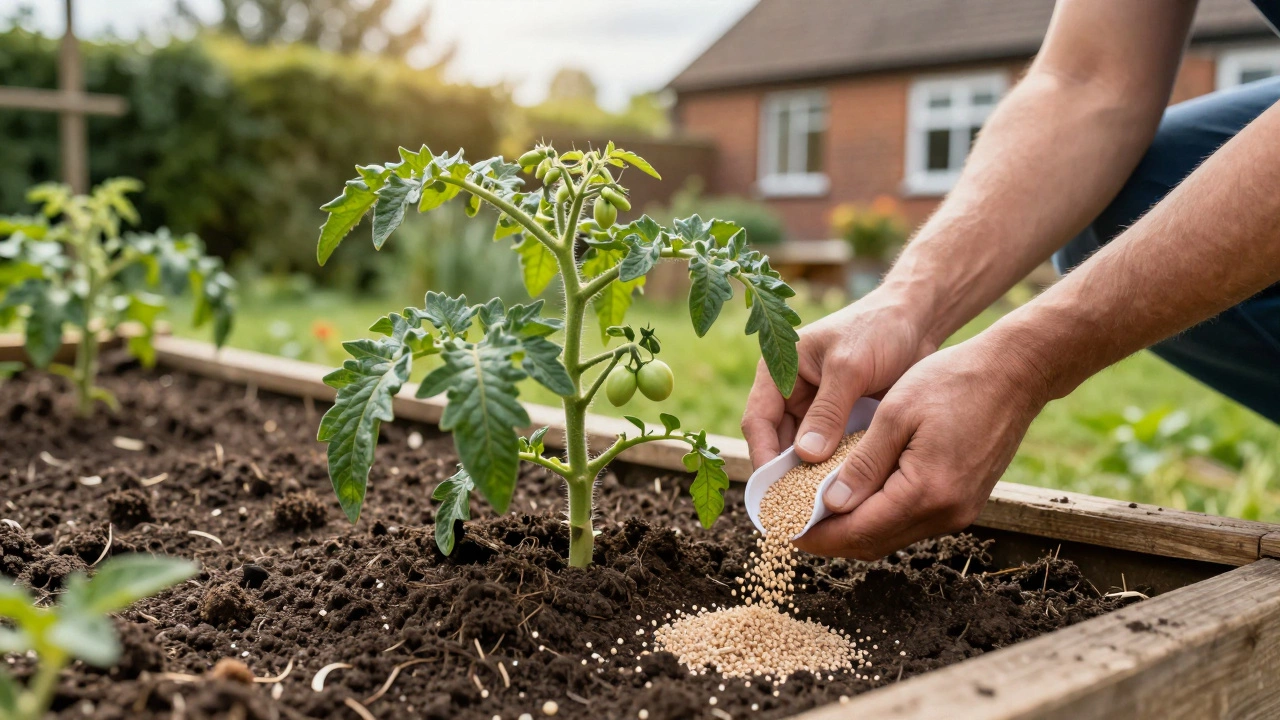
For fruiting, nothing beats tomato-specific organic fertilisers like **composted chicken manure pellets** or **fish, blood and bone**. These release nutrients over 6-8 weeks, so you only need to apply them once when the first truss forms. I’ve used **Westland Tomato Feed** (organic version) for five years in my Brighton raised beds. It’s granular, easy to sprinkle, and doesn’t smell like a fish market. After application, water it in well. Within 10 days, you’ll see the flowers thickening and the first tiny fruits swelling.
Chemical fertilisers: when they make sense
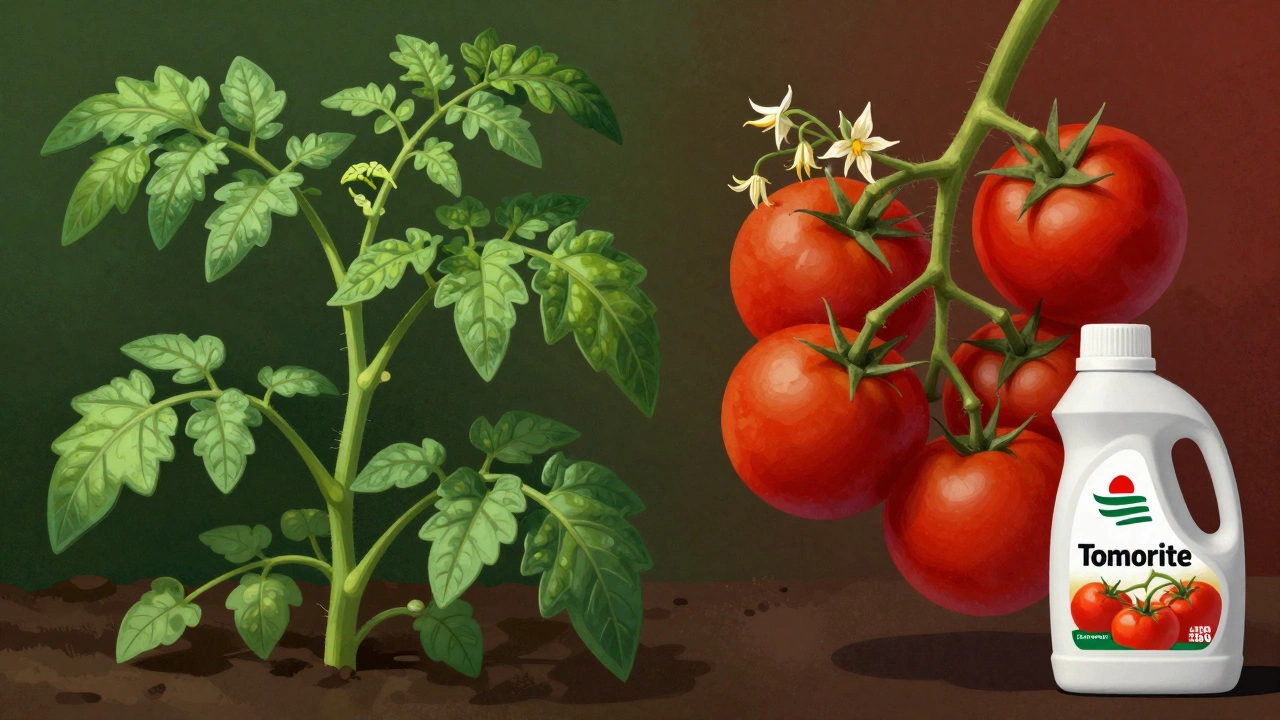
Some gardeners avoid synthetic feeds because they think they’re bad for the soil. That’s partly true-if you overuse them. But used correctly, they’re precise, fast-acting, and reliable. A balanced liquid feed like **Tomorite** (a UK staple since the 1980s) is still the go-to for greenhouse tomatoes.
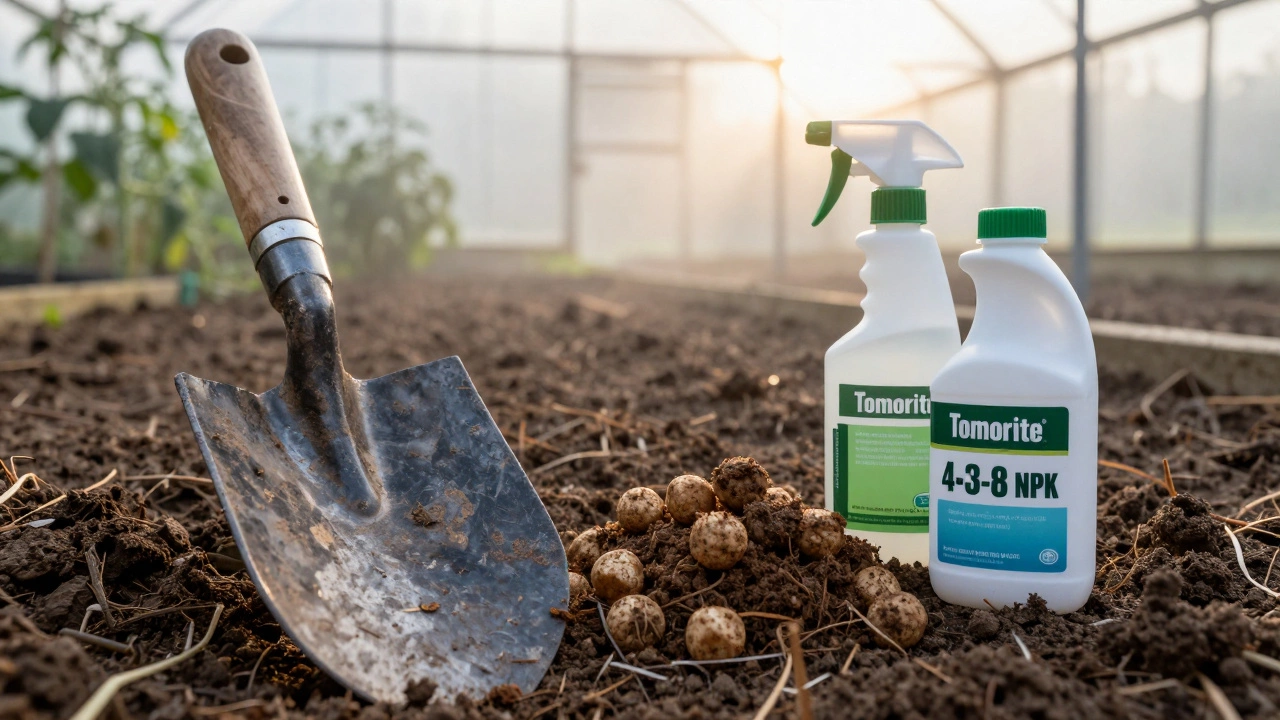
Tomorite has a 4-3-8 NPK ratio-low nitrogen, medium phosphorus, high potassium. That’s the exact profile tomatoes need when fruiting. You mix it into water and feed every 4-7 days once flowers appear. It’s not organic, but it’s not toxic either. It doesn’t harm earthworms or soil microbes when used at the recommended strength. The key is consistency: feed every week, no skipping. Miss one, and the fruit set drops.
For outdoor plants in cooler parts of the UK, liquid feeds work better than granules because the soil doesn’t warm up enough to activate slow-release nutrients. In places like Yorkshire or Scotland, you’ll get better results with Tomorite than with pellets.
What not to use
Don’t use general-purpose fertilisers like Miracle-Gro All Purpose. It’s too high in nitrogen. Your tomatoes will grow big, bushy, and green-but the flowers will drop. I saw this happen last year in a neighbour’s garden. They used it every two weeks. Got 12 tomatoes off six plants. I got 47 off three plants using tomato-specific feed.
Also avoid manure straight from the farm. Fresh cow or horse manure is too strong. It can burn roots and carry pathogens. Even well-composted manure should be mixed into the soil before planting, not used as a top-up later. It’s not designed for the flowering stage.
And no, Epsom salts aren’t magic. Yes, magnesium helps with chlorophyll. But if your soil isn’t deficient in magnesium (most UK soils aren’t), adding Epsom salts won’t boost yield. It might even unbalance other nutrients. Only use it if your leaves show yellowing between the veins-a clear sign of magnesium deficiency.
When to feed: the UK timeline
Here’s the real secret: timing beats product. In the UK, you’re racing against the weather. Most gardeners plant tomatoes outdoors after the last frost-usually late May. But feeding shouldn’t start then.
- At planting: Mix a slow-release organic granule (like fish, blood and bone) into the soil at the bottom of the hole. Don’t let roots touch it directly-just beneath them.
- Week 1-4 after planting: No feed. Let the plant settle. Water deeply once a week.
- When first truss forms: This is your trigger. The first cluster of flowers has set tiny fruits. That’s when you start feeding. Apply your chosen fertiliser-liquid or granule-then water well.
- Every 7-10 days after that: Keep feeding until early August. After that, stop. Let the plant focus on ripening, not new growth.
Greenhouse tomatoes can start feeding earlier-sometimes as soon as you transplant in April. They’re shielded from cold and grow faster. But the same rule applies: no feed until the first truss is set.
Soil matters more than the feed
A tomato plant in poor soil will struggle no matter what you feed it. The best fertiliser in the world won’t fix compacted clay or sandy soil that drains too fast. Before planting, work in at least two handfuls of well-rotted compost per plant. Add a bucket of leaf mould to your raised bed if you can. It improves water retention and feeds microbes that help roots absorb nutrients.
Test your soil pH. Tomatoes like it between 6.0 and 6.8. If it’s below 5.5, they can’t take up phosphorus-even if you’ve added it. A simple home test kit from a garden centre costs £8. It’s worth it.
Final tip: watch the leaves
Your plant will tell you what it needs. Yellowing lower leaves? Could be natural aging-or a sign of nitrogen deficiency. Purple stems and slow growth? Likely phosphorus shortage. Curling leaves and poor fruit set? Probably too much nitrogen or not enough potassium. Learn to read these signs. They’re more reliable than any label.
The best fertilizer for tomatoes isn’t a bottle or a bag. It’s understanding your plant’s rhythm-and feeding it when it asks, not when you think it should.
Can I use tomato feed on other plants?
Yes, but it’s not ideal. Tomato feed is high in potassium, which helps fruiting plants like peppers, aubergines, and cucumbers. But for leafy greens like lettuce or spinach, it’s too strong-they need more nitrogen. For flowers, it works fine, but you might get fewer blooms because the ratio isn’t balanced for them. Use it only on fruiting crops.
How often should I water tomatoes after feeding?
Water deeply right after applying liquid feed to help it soak into the root zone. After that, water only when the top inch of soil feels dry. Overwatering washes away nutrients and causes root rot. In hot weather, you might need to water every 2-3 days. In cool, damp spring weather, once a week is enough.
Is liquid or granular fertilizer better for tomatoes?
It depends on your setup. Liquid feed gives quick, precise control and works best for greenhouse tomatoes or if your soil is cold. Granular feeds are easier for outdoor beds-they last longer and you only apply them once or twice per season. Many gardeners use both: granules at planting, liquid during fruiting.
Can I make my own tomato fertilizer?
You can try, but it’s hard to get the balance right. A mix of compost, crushed eggshells (for calcium), and seaweed tea can help. But you won’t get consistent potassium levels without a commercial product. For reliable results, especially if you’re new to growing tomatoes, stick to proven formulas like fish, blood and bone or Tomorite.
Why are my tomatoes cracking?
Cracking happens when the plant gets too much water after a dry spell. The fruit swells faster than the skin can stretch. It’s not a nutrient problem-it’s a watering issue. Keep moisture even. Mulch around the base with straw or wood chips to hold water in. Don’t overfeed with high-nitrogen feeds either-they encourage rapid growth that makes cracking worse.