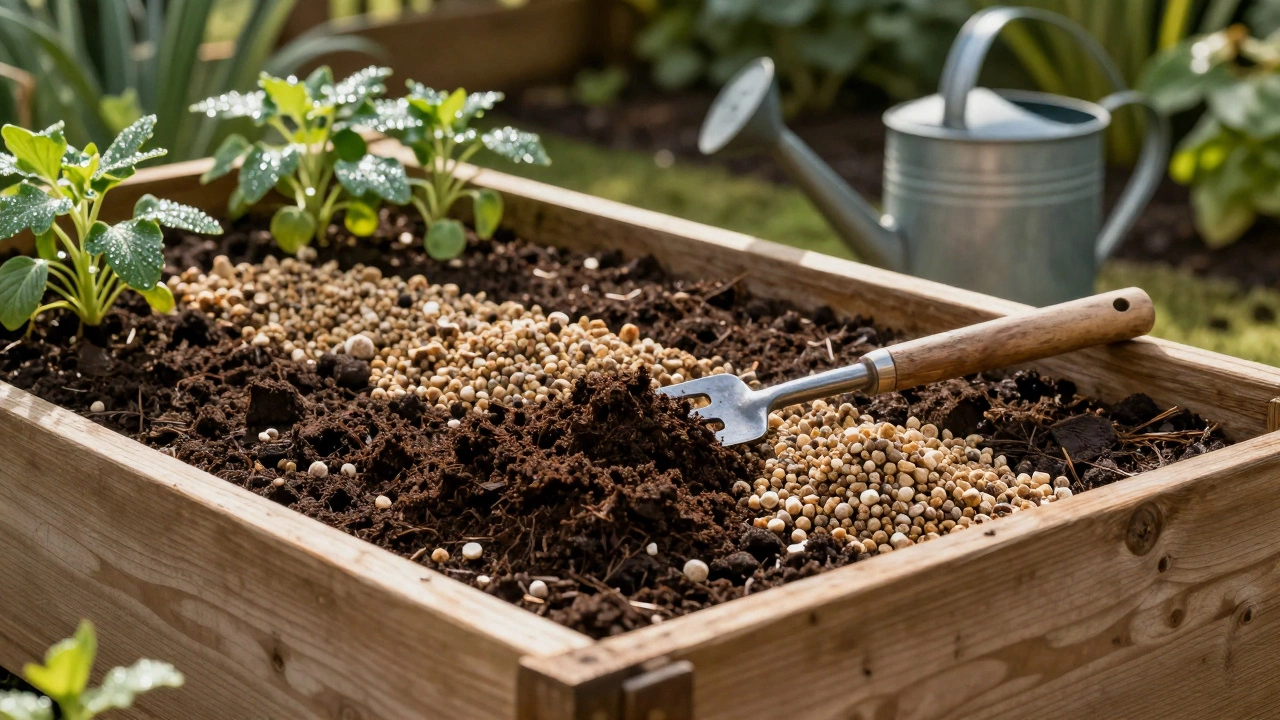
Raised Bed Soil Calculator
Calculate Your Soil Mix
Why This Mix Works
The proven 3-part soil blend for raised beds:
40%
Compost
Nutrient engine
40%
Topsoil
Base structure
20%
Coarse material
Drainage & aeration
Your Soil Mix Results
Enter dimensions to see your soil mix requirements
If you’ve built a raised bed, you already know it’s one of the smartest moves for growing food or flowers. But now comes the real question: what do you actually put in it? Too many people fill their raised beds with plain topsoil from the garden center-and then wonder why their plants look weak by midsummer. The truth is, what you put in your raised bed determines everything: how well your plants grow, how much water you need, and even how long the bed lasts.
Why Raised Beds Need More Than Just Dirt
Raised beds drain faster than in-ground gardens. That’s good for preventing root rot, but it also means nutrients wash out quicker. Plain topsoil? It’s often just dug-up subsoil with little organic matter. It compacts fast, holds too little water, and doesn’t feed plants for long. In a raised bed, you’re starting from scratch. You need a mix that acts like a living system-not just a container for roots.Think of your raised bed like a pot, but bigger. You wouldn’t put pure clay or sand in a flowerpot, right? Same logic applies here. You need structure, nutrients, and biology.
The Gold Standard: 3-Part Soil Mix
The most reliable formula used by professional growers and experienced gardeners in the UK is a simple 3-part blend:- 40% compost - the nutrient engine
- 40% topsoil - the base structure
- 20% coarse material - for drainage and aeration
This mix gives you the right balance: enough organic matter to feed plants for months, enough mineral content to anchor roots, and enough air space to keep roots breathing. In Brighton’s damp climate, the coarse material is especially important to stop the bed from turning into a swamp in winter.
What Compost Works Best?
Not all compost is equal. You want compost that’s dark, crumbly, and smells like a forest floor-not sour or like ammonia. Avoid bagged compost labeled "garden compost" unless it’s certified by the Soil Association. Too many are made from green waste that hasn’t broken down fully.Best options:
- Home-made compost - from your own bin. It’s rich in microbes and tailored to your soil.
- Well-rotted manure - cow, horse, or chicken (aged at least 6 months). Chicken manure is high in nitrogen, so mix it well.
- Commercial mushroom compost - great for raising pH slightly, ideal for brassicas and beans.
- Peat-free multi-purpose compost - only if it’s high in organic matter. Check the label: if it says "loam-based," it’s better than peat.
Never use peat. It’s ecologically destructive, and the UK has banned its sale for garden use since 2024. You don’t need it anyway.
What Topsoil Should You Use?
Topsoil here means the upper layer of natural earth, not the cheap stuff sold in bags. Look for topsoil that’s:- Dark brown or black
- Free of weeds and stones
- Moist but not muddy
- Has a crumbly texture when squeezed
Ask the supplier if it’s "agricultural topsoil" or "cultivated topsoil." Avoid "fill soil" or "subsoil"-those are for leveling land, not growing plants. If you’re buying in bulk, get it delivered from a local farm or landscape supplier. Big box stores often sell topsoil that’s been stockpiled for months and dried out.
The Coarse Material: Don’t Skip This
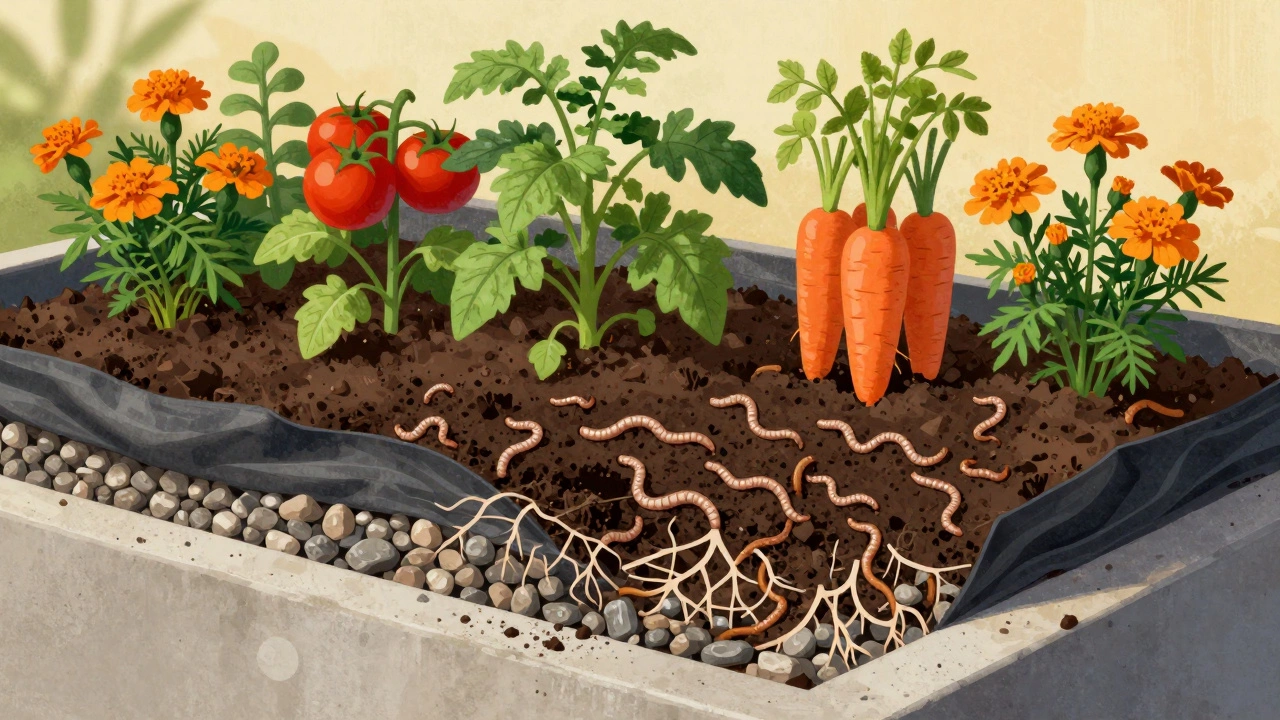
This is where most people mess up. They think compost and topsoil are enough. But without something coarse, your bed will compact within a year. Here’s what works:- Coarse grit or horticultural grit - 2-5mm particles. Ideal for drainage.
- Perlite or vermiculite - good for small beds, but vermiculite holds too much water in wet climates like ours.
- Well-rotted bark chips - fine grade, not wood chips. Breaks down slowly and adds structure.
- Recycled crushed brick or tile - a local, sustainable option. Crushed red brick is common in Brighton and works great.
Never use builder’s sand. It’s too fine and turns into concrete when dry. And don’t use pine needles or leaves alone-they break down too fast and make the soil acidic.
What About Fertilizers?
You don’t need to add synthetic fertilizers right away. The compost you use will feed plants for 4-6 months. After that, top up with:- Organic granular feed - like blood, fish, and bone. Apply in spring and midsummer.
- Compost tea - brew it from your own compost and pour it over the soil every 3 weeks during growing season.
- Seaweed extract - great for boosting plant resilience, especially in cooler months.
Wait until your plants are established before feeding. Overfeeding early leads to leggy growth and weak roots.
What to Avoid
Here’s what you should never put in a raised bed:- Recycled wood chips or sawdust - they rob nitrogen as they rot.
- Construction debris - concrete, bricks, or metal fragments can leach toxins.
- Asphalt or tar - common in old driveways. Toxic and persistent.
- Uncomposted kitchen scraps - they attract pests and smell.
- Clay-heavy soil from your yard - it will sink and create a hard layer at the bottom.
Layering vs. Mixing: Which Way Is Better?
Some gardeners swear by lasagna gardening-layering compost, cardboard, leaves, and soil. It works, but it’s messy and slow. For a raised bed, mixing everything together gives you consistent results faster.Here’s the easiest method:
- Place your raised bed on level ground. Remove any weeds from the base.
- Spread a 5cm layer of coarse material (grit or crushed brick) on the bottom. This prevents compaction from below.
- Layer in 50% of your compost.
- Add all your topsoil.
- Top with the remaining 50% of compost.
- Use a garden fork to mix everything gently, not a rototiller. You want to preserve the soil structure.
Let the bed settle for 2-4 weeks before planting. Water it well. This gives microbes time to wake up and the materials to stabilize.
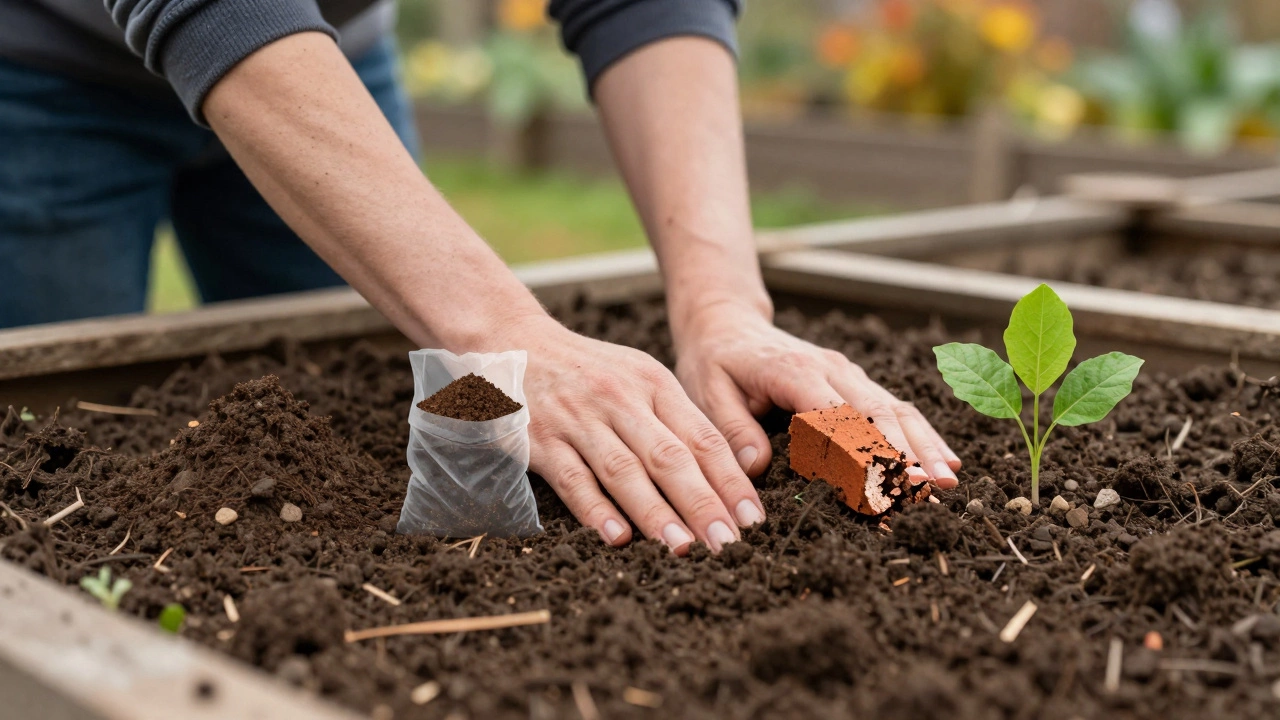
What About Raised Beds on Concrete?
If your raised bed sits on a patio or driveway, you’ll need a drainage layer. Line the bottom with a 10cm layer of gravel or crushed stone. Then add a permeable landscape fabric to stop soil from washing out. Don’t use plastic-it traps water and kills roots.For container-style raised beds (like those on balconies), use a mix of 50% compost, 30% topsoil, and 20% perlite. These beds dry out fast, so you’ll need to water more often.
How Often Should You Refresh the Soil?
You don’t need to replace the whole mix every year. But you should top it up:- Every autumn: add a 5cm layer of compost. Let worms and rain work it in.
- Every spring: apply a light dusting of organic fertilizer.
- Every 3-4 years: dig out 20% of the old soil and replace it with fresh compost and topsoil.
Over time, the organic matter breaks down. That’s normal. Your goal isn’t to keep the soil the same-it’s to keep it alive.
Real Results: What Grows Best in This Mix?
This blend works for everything:- Vegetables - tomatoes, carrots, lettuce, peppers, beans, and brassicas all thrive.
- Herbs - rosemary, thyme, oregano, and basil love the drainage.
- Flowers - marigolds, zinnias, and nasturtiums bloom longer.
- Strawberries - they hate wet feet. This mix keeps them dry.
One gardener in Hove switched from bagged soil to this 3-part mix in 2023. Her tomato crop tripled. Her carrots didn’t split. Her soil didn’t turn to dust in summer. She says it’s the only thing that made her garden feel "alive."
Final Tip: Test Your Soil Once a Year
You don’t need a lab. Buy a $15 soil pH and nutrient test kit from a garden center. Check it in early spring. If your pH is below 5.5, add a bit of garden lime. If it’s above 7.5, add more compost. Most plants want a pH between 6.0 and 7.0.What you put in your raised bed isn’t just dirt. It’s the foundation of your whole garden. Get it right, and you’ll spend less time fixing problems and more time enjoying the harvest.
Can I use potting soil in raised beds?
Potting soil is designed for containers, not large raised beds. It’s too light, drains too fast, and lacks the mineral content plants need for strong roots. You can mix 20% potting soil into your raised bed blend for extra aeration, but don’t use it alone.
How deep should a raised bed be?
For most vegetables, 30cm is the minimum. Root crops like carrots and parsnips need 45cm. If you’re planting potatoes or deep-rooted perennials, go for 60cm. Depth matters more than width-don’t skimp.
Should I line my raised bed with plastic?
Never use plastic. It traps moisture, suffocates soil life, and can leach chemicals. If you need a barrier (e.g., on concrete), use permeable landscape fabric. It lets water through but stops weeds.
Is it okay to use compost from a municipal green waste site?
Only if it’s certified as "passively composted" and tested for heavy metals. Some municipal composts contain contaminants from treated wood or plastic. Ask for test results. If they can’t provide them, avoid it.
How long does a raised bed last before needing a full refill?
With proper care-annual compost top-ups and no chemical fertilizers-a raised bed can last 10-15 years. The wood frame may rot sooner, but the soil itself only needs partial replacement every 3-4 years.