Tomato Magnesium Deficiency Checker
Diagnose your tomato plant's health. Select the symptoms you are observing below to determine if Epsom salt (Magnesium Sulfate) is the right solution.
Look at the older leaves near the bottom of the plant first.
You’ve probably seen it in the gardening aisle: a box of white crystals promising greener leaves and sweeter fruit. It’s Epsom salt, which is actually hydrated magnesium sulfate. For decades, home gardeners have sprinkled this stuff around their tomato plants like magic dust. But do tomatoes actually like it? The short answer is yes, but only if they’re hungry for magnesium. If your soil already has plenty, adding more won’t help-and might even hurt.
Here’s the thing about gardening advice: half of it is folklore, and the other half is science that got oversimplified. Epsom salt isn’t a pesticide or a fungicide, despite being listed under pest control topics because it often addresses stress symptoms that look like pests. It’s a nutrient supplement. Specifically, it provides two things: Magnesium and Sulfur. Both are essential secondary nutrients for plants, meaning they aren’t needed in as huge quantities as Nitrogen, Phosphorus, or Potassium (the N-P-K trio on every fertilizer bag), but they are critical for specific biological processes.
Why Magnesium Matters for Your Tomato Plants
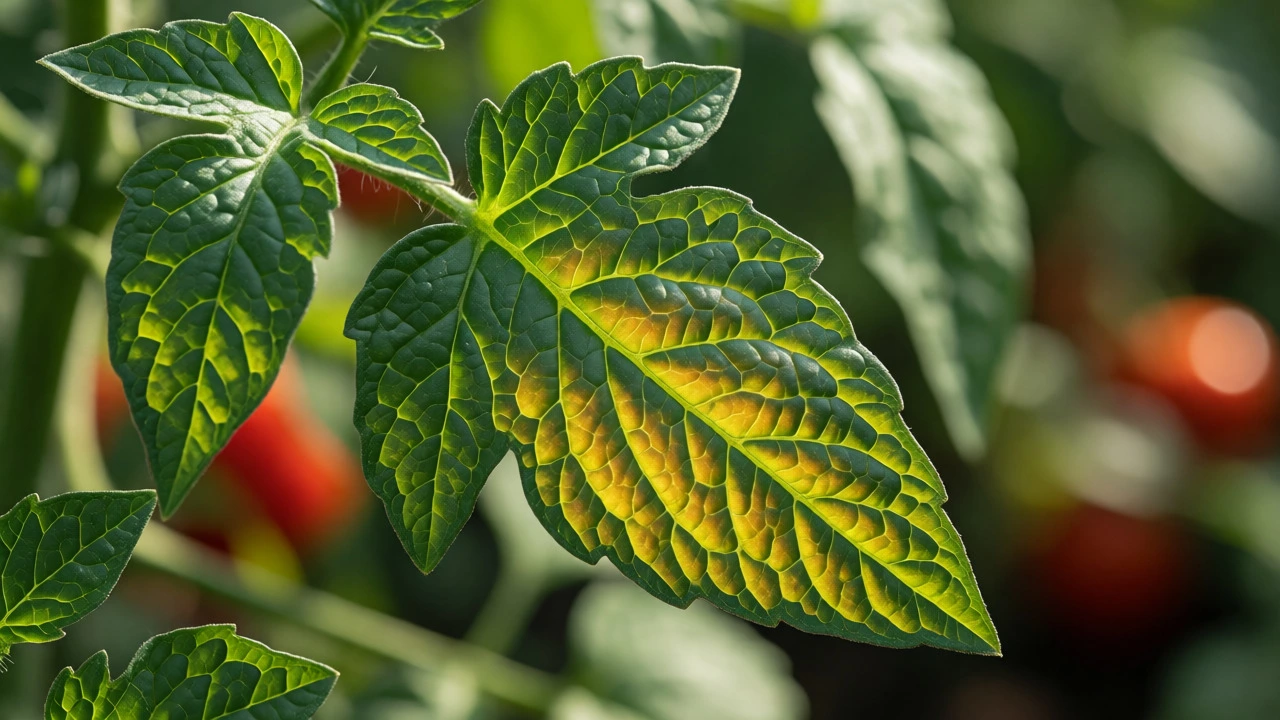
Think of magnesium as the engine room of your tomato plant. It sits at the center of the chlorophyll molecule-the green pigment that captures sunlight. Without enough magnesium, your plant can’t photosynthesize efficiently. You’ll see this first in older leaves turning yellow between the veins while the veins stay green. This condition is called interveinal chlorosis.
Sulfur, the other half of the Epsom salt equation, plays a different role. It helps form proteins and enzymes. While sulfur deficiency is rarer in typical garden soils than magnesium deficiency, it still contributes to overall plant health and flavor development. Some gardeners swear that sulfur boosts the sweetness of tomatoes, though scientific evidence here is mixed. What is clear is that a balanced diet leads to better fruit set and resistance to common issues like blossom end rot, although calcium is the primary player there.
| Product | Primary Nutrients | Best Used For | Soil Impact |
|---|---|---|---|
| Epsom Salt | Magnesium, Sulfur | Correcting yellowing leaves, boosting enzyme production | Neutral pH; does not alter soil acidity significantly |
| Balanced Fertilizer (10-10-10) | Nitrogen, Phosphorus, Potassium | General growth and fruiting | Can build up salts over time |
| Lime | Calcium, Magnesium | Raising soil pH, preventing blossom end rot | Raises pH (makes soil less acidic) |
| Gypsum | Calcium, Sulfur | Improving clay soil structure without changing pH | Neutral pH; improves drainage |
Signs Your Tomatoes Are Begging for Magnesium
How do you know if your plants actually need this supplement? Don’t just guess. Look at the leaves. Start with the oldest ones near the bottom of the plant. If they are yellowing in patches between the green veins, that’s a classic sign of magnesium deficiency. As the problem worsens, the yellowing spreads upward, and the leaves may eventually drop off.
Another indicator is poor fruit quality. If your tomatoes are ripening slowly or taste bland, it could be related to inefficient photosynthesis caused by low magnesium levels. However, don’t blame Epsom salt for everything. Blossom end rot (that dark, sunken spot on the bottom of the fruit) is usually a calcium issue, not magnesium. Adding Epsom salt to a calcium-deficient plant won’t fix blossom end rot and might even interfere with calcium uptake if you overdo it.
Keep in mind that sandy soils drain quickly and tend to lose magnesium faster than clay soils. If you live in an area with heavy rainfall or have sandy ground, your tomatoes are more likely to benefit from supplementation. Conversely, if you’ve been using dolomitic lime (which contains magnesium) regularly, you probably have plenty in your soil already.
The Science Behind the Sprinkle
Let’s debunk a few myths. First, Epsom salt doesn’t kill pests directly. It’s not going to zap aphids or slugs. Why is it often grouped with pest control products? Because healthy plants resist pests better. A magnesium-starved plant is stressed, and stressed plants attract bugs. By fixing the nutrient gap, you indirectly help your defense system.
Second, Epsom salt is not a complete fertilizer. It lacks nitrogen, phosphorus, and potassium. If your plant is pale all over, including the veins, it’s likely nitrogen deficient, not magnesium. Adding Epsom salt won’t turn those leaves green. You need a nitrogen-rich feed for that.
Third, more is not always better. While magnesium sulfate is relatively safe, dumping excessive amounts into the soil can disrupt the balance of other nutrients. High levels of magnesium can lock out calcium and potassium, leading to new deficiencies. Always test before you treat.
How to Apply Epsom Salt Correctly
If you’ve diagnosed a deficiency or want to give your plants a boost during peak fruiting season, here is how to apply it properly. There are two main methods: soil drenching and foliar spraying.
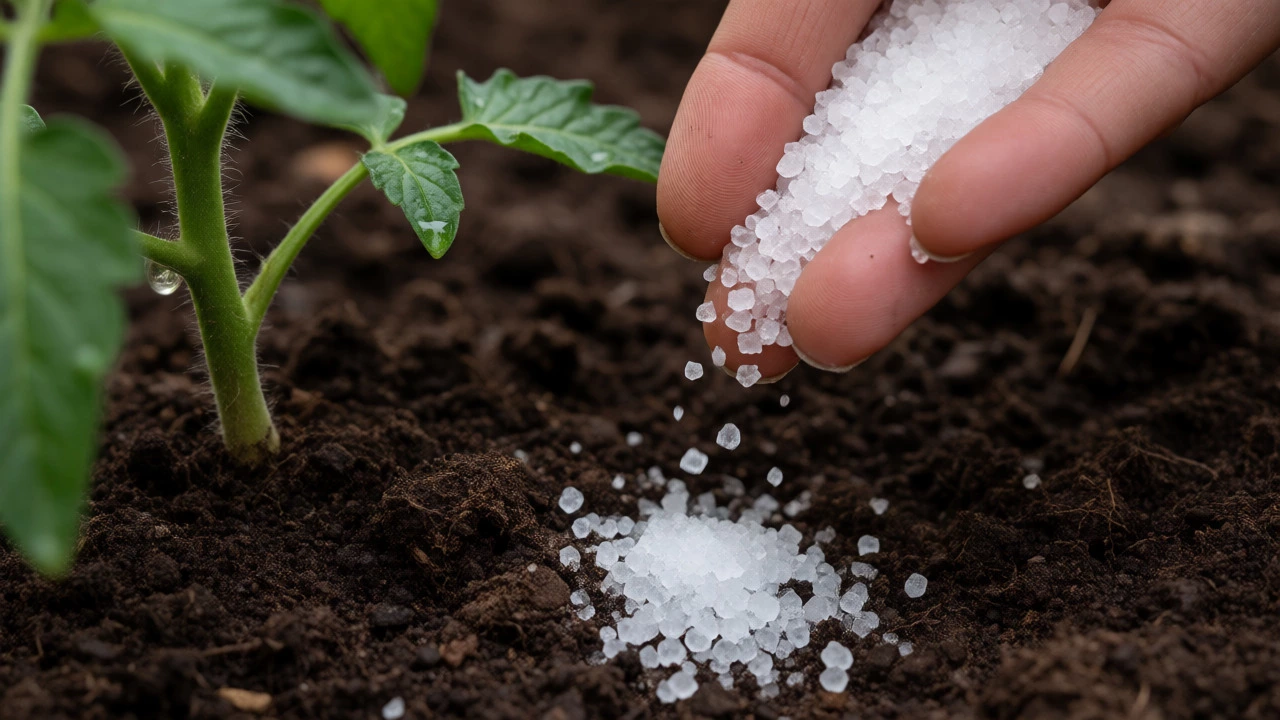
- Soil Drench: Mix one tablespoon of Epsom salt per gallon of water. Water your tomato plants with this solution once a month during the growing season. Pour it at the base of the plant, avoiding direct contact with the stem. This method allows the roots to absorb the nutrients gradually.
- Foliar Spray: Mix one teaspoon of Epsom salt per gallon of water. Spray the leaves thoroughly, covering both the top and underside, early in the morning or late in the evening. Foliar feeding works faster because the nutrients enter through the leaf stomata. This is great for quick fixes when you see yellowing starting.
A pro tip: Never spray Epsom salt solution in full sun. The water droplets can act like magnifying glasses and burn the leaves. Also, avoid spraying when temperatures are above 85°F (29°C). In Brighton, where we get plenty of rain but occasional heatwaves, timing matters. Wait for a cloudy day or the cool of the evening.
When Not to Use Epsom Salt
There are scenarios where skipping the Epsom salt saves you money and hassle. If your soil test shows adequate magnesium levels, adding more is pointless. Plants take what they need; excess salts remain in the soil and can accumulate over years.
Also, if you are growing tomatoes in containers, be careful. Container soil has limited volume, so salt buildup happens faster. Flush your pots with plain water periodically to wash out excess salts. If you notice white crust forming on the soil surface, stop adding Epsom salt immediately.
Finally, consider your existing fertilization routine. Many commercial tomato feeds already include magnesium. Check the label. If you see “Mg” listed in the guaranteed analysis, you might not need extra supplements. Over-fertilizing is a common mistake among enthusiastic gardeners who think more love equals more growth.
Alternatives to Epsom Salt
If you prefer organic options or want a slower-release source of magnesium, consider these alternatives:
- Dolomitic Lime: Adds both calcium and magnesium while raising soil pH. Great for acidic soils but avoid if your soil is already alkaline.
- Kieserite: A natural mineral form of magnesium sulfate. It dissolves slower than Epsom salt, providing a steady supply over time.
- Compost: Good compost made from diverse materials contains trace amounts of magnesium. It improves soil structure and microbial life, helping plants access nutrients more effectively.
- Manure Tea: Soaking aged manure in water creates a liquid fertilizer that includes small amounts of magnesium and other micronutrients.
Each option has its place. Kieserite is excellent for long-term soil improvement. Compost is the foundation of any healthy garden. Epsom salt shines as a quick corrective tool.
Can I use too much Epsom salt on my tomatoes?
Yes. While Epsom salt is mild compared to synthetic fertilizers, excessive application can lead to salt accumulation in the soil. This can interfere with the uptake of other essential nutrients like calcium and potassium. Stick to recommended rates-typically one tablespoon per gallon for soil drenches-and observe your plants for signs of stress.
Does Epsom salt make tomatoes sweeter?
Anecdotally, many gardeners report sweeter fruit after using Epsom salt. Scientifically, sulfur is involved in protein synthesis and may influence flavor compounds. However, sweetness is primarily determined by variety, sunlight exposure, and watering consistency. Epsom salt supports overall health, which indirectly contributes to better fruit quality, but it is not a sugar booster on its own.
Is Epsom salt safe for edible plants?
Absolutely. Epsom salt breaks down into magnesium and sulfate, both of which are naturally occurring minerals found in soil and water. It leaves no toxic residue and is safe for humans, pets, and wildlife when used according to instructions. Just ensure you rinse vegetables before eating them to remove any surface dust.
How often should I apply Epsom salt to tomato plants?
For soil drenching, once a month during the active growing season is sufficient. For foliar sprays, you can apply every two weeks if you see signs of deficiency. Once the plants start setting fruit heavily, you might increase frequency slightly, but always monitor leaf color. If the yellowing stops, reduce the application rate.
Will Epsom salt prevent blossom end rot?
Not directly. Blossom end rot is caused by calcium deficiency, often due to inconsistent watering rather than lack of calcium in the soil. While magnesium is important for overall plant health, adding Epsom salt will not cure blossom end rot. Focus on consistent moisture and proper calcium sources like gypsum or crushed eggshells for this issue.