Garden Structure Planner
Not sure if you're building a bed or a border? Answer the questions below to get tailored planting advice.
Recommendation:
Planting Strategy
Maintenance & Tips
You’re standing in the garden centre, staring at a bag of lavender and a packet of tulips, wondering where they actually go. Is this a flower border? A flower bed? Or just "that bit by the fence"? It’s a question that trips up even seasoned gardeners because, let’s be honest, the terms are often used interchangeably in casual conversation. But if you want your garden to look intentional rather than accidental, understanding the structural difference between these two elements is crucial. It changes how you plant, how you maintain it, and ultimately, how your space feels.
The Core Distinction: Access and Boundaries
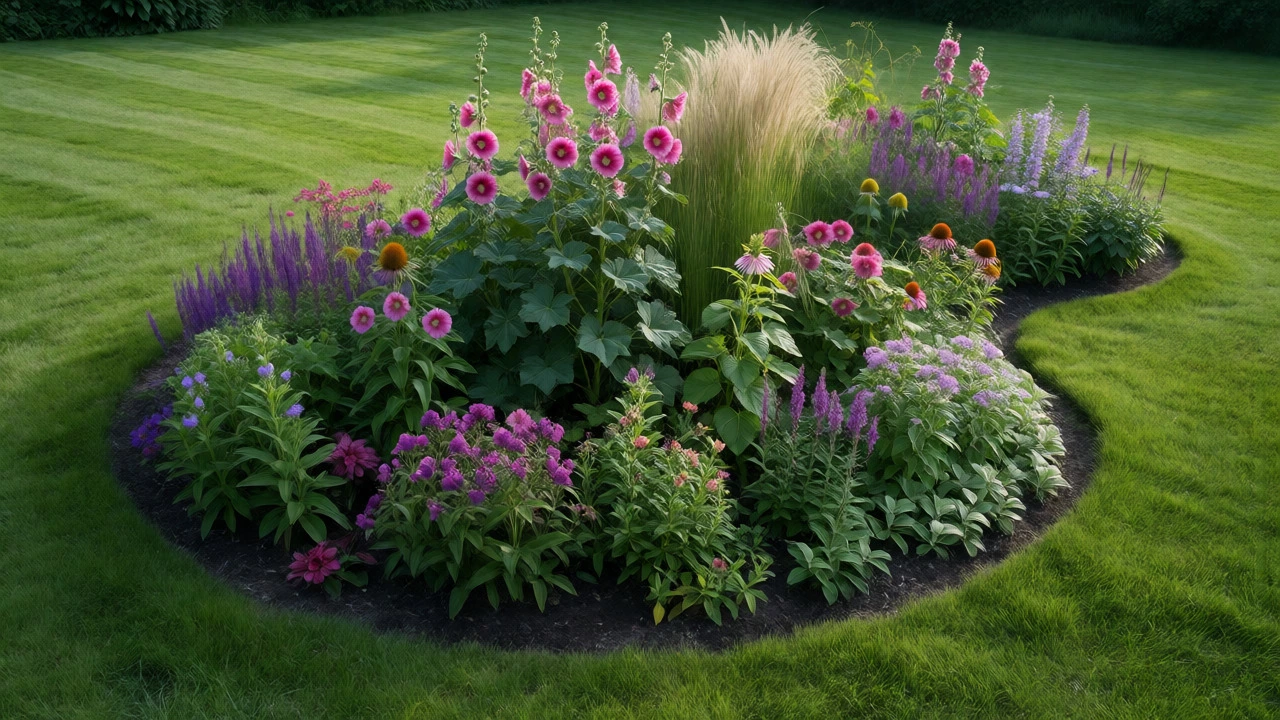
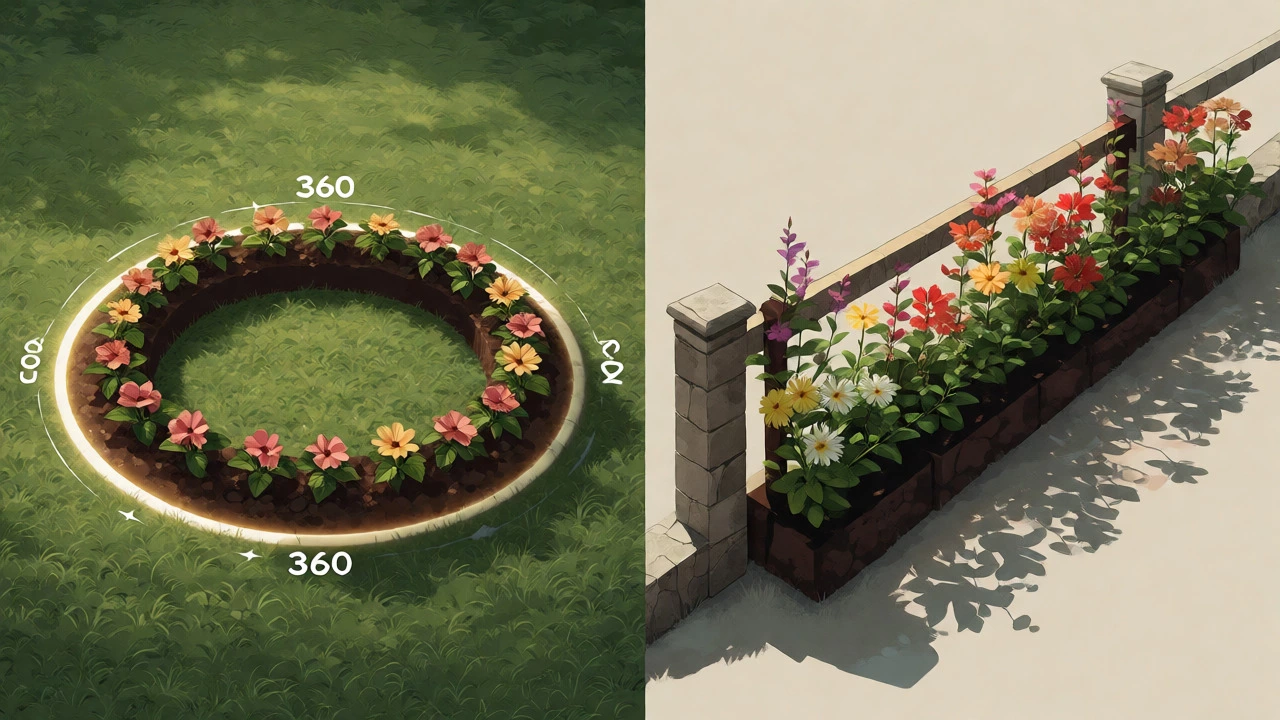
Here is the simplest way to visualize the difference. Imagine a flower bed as an island. You can walk around all four sides of it. It is free-standing, surrounded by lawn, gravel, or paving. In contrast, a flower border is attached to something. It runs along a wall, a fence, the edge of a house, or the boundary of your property. You typically only access it from one side-the front.
This isn’t just pedantry; it dictates everything else. Because a bed is accessible from all angles, you need plants that look good from every direction. A border, however, has a "back" that faces the wall or fence, so you hide the messy stems there and showcase the blooms toward the viewer. If you try to treat a border like a bed, you’ll end up with ugly bare patches at the back. If you treat a bed like a border, you’ll have a lopsided mess that looks unfinished from the other three sides.
Designing a Free-Standing Flower Bed
When you commit to a flower bed, you are creating a focal point. Think of it as a sculpture made of living things. Since you see it from the lawn, the path, or the patio, symmetry and balance matter more here. You don’t have a vertical backdrop to lean against, so the shape of the bed itself becomes part of the design.
Most successful beds use curved edges. Straight lines on a free-standing island can feel harsh and unnatural, cutting sharply into the softness of the grass. Curves mimic nature and guide the eye gently. When planting, think in layers radiating outward or concentric circles. Put your tallest plants-like hollyhocks or tall grasses-in the center or slightly off-center for a more relaxed look. Move medium-height shrubs and perennials outward, and finish with low-growing ground cover at the very edge to blend into the lawn.
A common mistake I see in Brighton gardens (and everywhere else) is making the bed too large to reach across. If you can’t weed the middle without stepping onto the soil and compacting it, the bed is too big. Keep the width manageable-usually no more than 1.5 meters wide-so you can reach the center from both sides easily. This saves your knees and keeps the planting tidy.
Mastering the Linear Flower Border
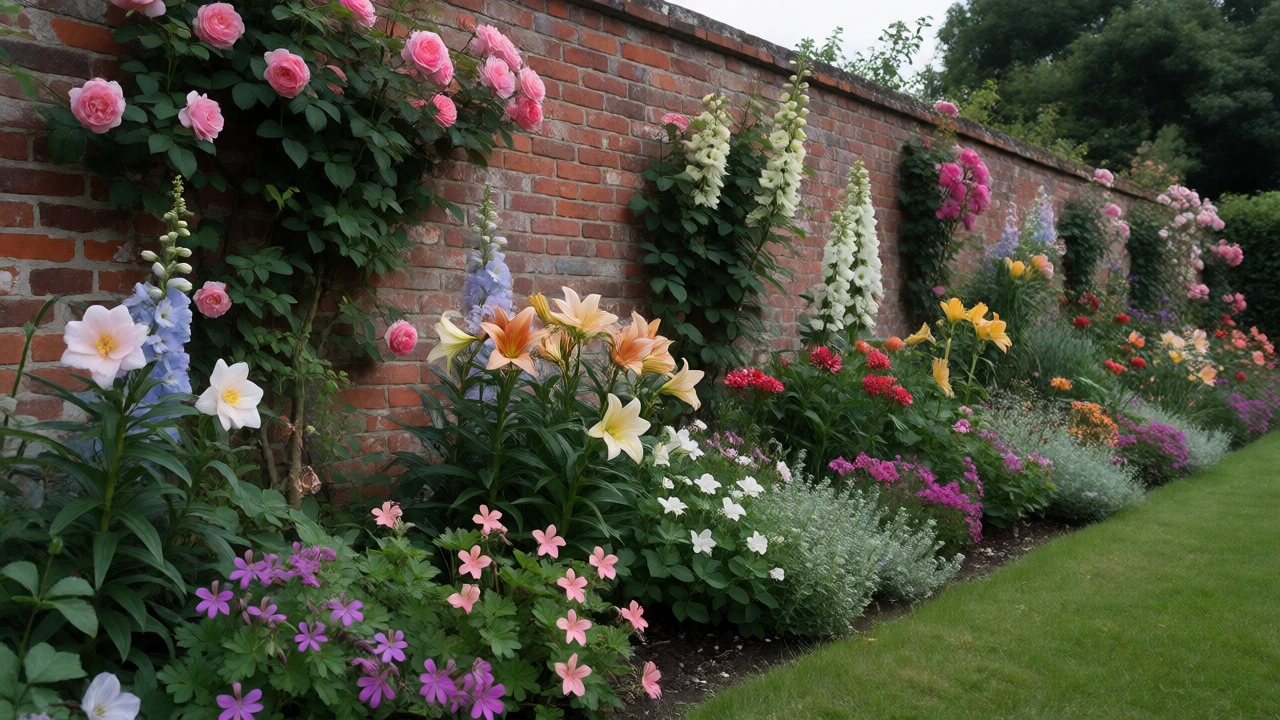
A flower border is about depth and layering against a static background. It’s essentially a stage set. The wall or fence is your backdrop, and the plants are the actors. The key here is height progression. You never want a flat wall of color. Instead, you create a staircase effect.
Start at the back, right against the structure. This is where your climbers and tall shrubs live. Roses climbing a trellis, clematis weaving through wire, or tall delphiniums provide the vertical drama. Next comes the middle tier, where your main showy perennials sit-lilies, salvias, or echinacea. Finally, the front row gets the short stuff: bulbs, dwarf geraniums, or creeping thyme. This ensures that nothing blocks anything else. Everyone gets their moment in the sun.
Borders also allow for continuity. You can run them along the entire length of a driveway or the side of a house, creating a long, uninterrupted ribbon of greenery. This helps elongate narrow spaces, a common issue in urban terraces. By drawing the eye down the line, a border makes a small garden feel longer and more substantial.
Practical Comparison: What Changes?
It’s not just about looks; the logistics differ significantly. Let’s break down the practical implications so you can decide which fits your current project.
| Feature | Flower Bed | Flower Border |
|---|---|---|
| Access | 360 degrees (walk around) | Single side (front only) |
| Plant Orientation | Multi-directional beauty | Front-facing display |
| Height Strategy | Tallest in center/middle | Tallest at back (against wall) |
| Shape | Island, circle, oval | Linear, L-shaped, rectangular strip |
| Maintenance | Easier weeding (access all sides) | Harder to clean back edge |
Soil Preparation and Planting Logic
Regardless of whether you choose a border or a bed, the soil prep is similar, but the planting density varies. For a border, you’re dealing with a confined strip. Often, borders are narrower than beds. This means you can’t afford to leave gaps. Plants in a border should be spaced closer together to create a lush, filled-in look quickly. They will compete for root space, so enrich the soil heavily with compost before you start digging.
In a bed, especially a large circular one, you have more room to breathe. You can space plants according to their mature size more generously. This reduces competition and makes maintenance easier later on. However, because a bed is exposed to wind from all sides, taller plants might need staking more frequently than those protected by a wall in a border. If you’re planting a bed in an open lawn area, consider adding some evergreen shrubs to the mix. These provide structure during winter when the herbaceous perennials die back, preventing the "island" from looking like a muddy patch.
Common Pitfalls to Avoid
The biggest error people make is ignoring the scale. A tiny flower bed in the middle of a vast lawn looks lost. It needs mass to hold its own. Conversely, a massive border with sparse planting looks empty and neglected. Fill it out.
Another trap is treating the "back" of a border as invisible. Yes, it faces a wall, but birds fly over fences, and neighbors might peek over. Don’t just dump dead leaves and weeds there. Use foliage plants like hostas or ferns that look good even when not in bloom. For beds, the mistake is often poor edging. If the grass creeps into your bed, it ruins the crisp definition. Invest time in cutting a clean edge or installing physical barriers like plastic strips or metal edging. It makes the difference between "professional" and "abandoned."
Which One Fits Your Space?
If you have a long, narrow terrace or a side passage, a border is your best friend. It maximizes planting area without eating into your walking space. It frames the architecture of your home and softens hard lines. If you have a spacious lawn or a courtyard, a bed adds interest and breaks up the monotony of grass. It draws people into the garden and gives them a reason to stop and look.
Remember, you don’t have to choose just one. Many of the most beautiful gardens combine both. A border running along the back fence, with a central flower bed acting as a centerpiece in the lawn. This combination creates rhythm and variety, guiding the eye through different zones of the garden. Start with what your space demands. Look at your boundaries. Do you have walls? Go border. Open space? Go bed. Then adjust based on what you want to grow.
Can a flower bed be placed against a wall?
Technically, yes, but once it touches a wall, it functions structurally as a border. The planting strategy must shift to single-sided viewing. You would place tall plants against the wall and shorter ones facing away, losing the 360-degree view that defines a true bed.
How wide should a flower border be?
For a standard mixed border, aim for at least 60-90 cm (2-3 feet) wide. This allows for three distinct layers: tall, medium, and short. Anything narrower than 45 cm restricts you to only one or two rows of plants, limiting visual depth and impact.
Do flower beds require more maintenance than borders?
Not necessarily. Beds are often easier to weed because you can approach from all sides. Borders can be harder because the back edge near walls or fences can be difficult to reach and clean thoroughly. However, borders benefit from microclimates created by walls, which can reduce watering needs compared to exposed beds.
What is the best shape for a flower bed?
Curved shapes like ovals, kidneys, or circles generally work best for free-standing beds. They blend naturally with lawns and soften the landscape. Angular shapes can work in modern, geometric gardens but require precise maintenance to keep the edges sharp.
Can I turn a border into a bed?
Yes, but it requires replanting. You must rearrange the plants so that the tallest ones move to the center and the shortest to the outer edges. You also need to ensure the soil is prepared evenly around the entire perimeter, as the previous back-of-border soil may have been neglected.