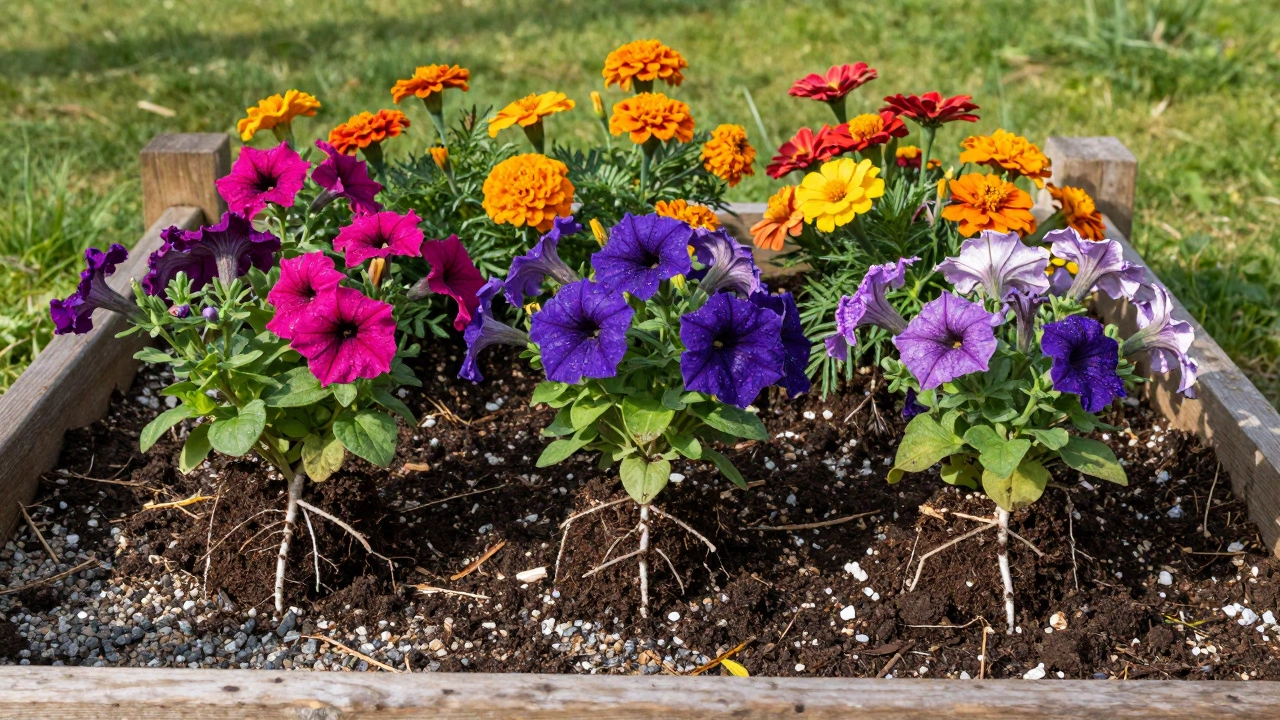
When you're planting flowers in a raised bed, the depth isn't just about how much dirt you can shovel in-it's about whether your blooms will thrive or struggle. Too shallow, and roots can't reach water or nutrients. Too deep, and you're wasting time, money, and effort on soil you don’t need. So how deep should a raised bed be for flowers? The short answer: 12 inches is the sweet spot for most flowering plants, but some need more.
Why depth matters more than you think
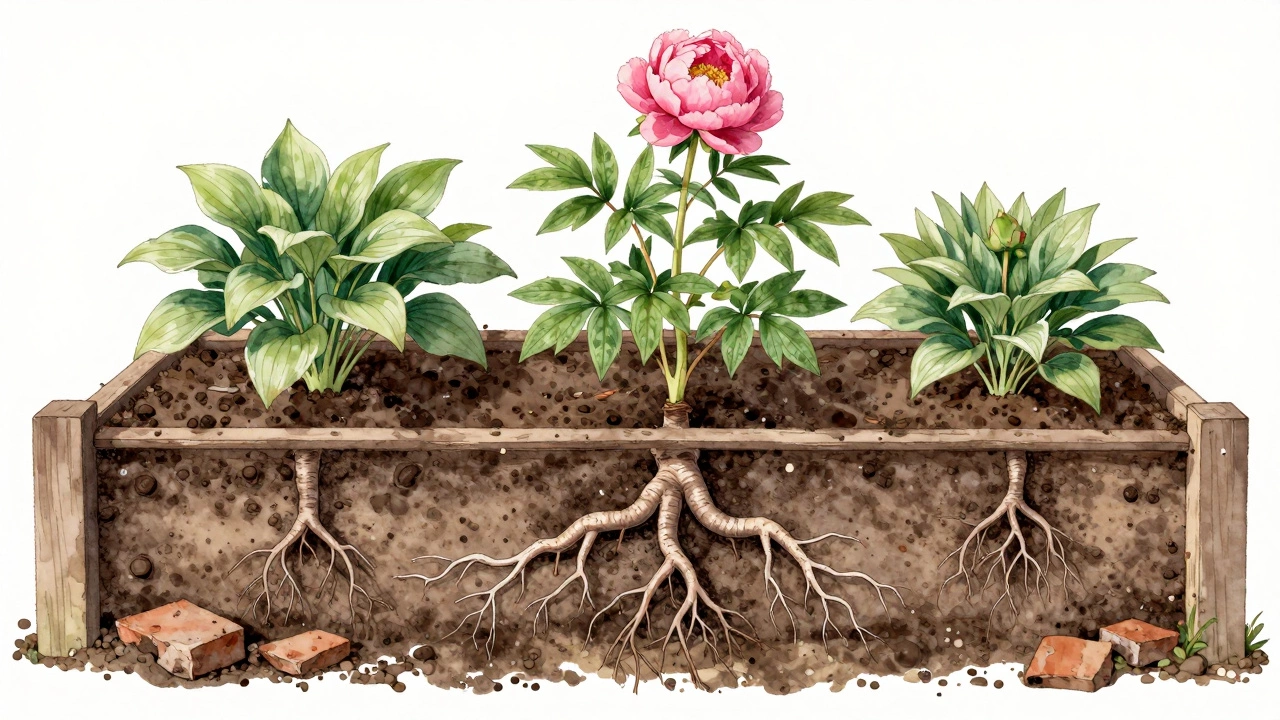
Flowers aren’t like grass. Their roots don’t spread out flat across the surface. Most perennials and annuals develop taproots or dense fibrous systems that need room to grow downward. If the soil below is compacted clay or rocky subsoil, your flowers will hit a wall at 6 inches and start to wilt, even if you water them daily. Raised beds solve this by giving you full control over what’s underneath.Think of it like this: a petunia’s root system can stretch 8-12 inches deep. A peony? Up to 24 inches. If your bed is only 6 inches tall, you’re forcing deep-rooted flowers to behave like shallow ones. They’ll flower once, then fade fast. You’ll end up replanting every year, wondering why your ‘low-maintenance’ flowers keep dying.
What depth works for common flowers
Not all flowers are the same. Some are happy with a thin layer of soil. Others demand space. Here’s what works in practice:- Annuals like marigolds, zinnias, and petunias - 8-12 inches. Their roots stay fairly shallow, so 12 inches gives them breathing room and holds moisture well.
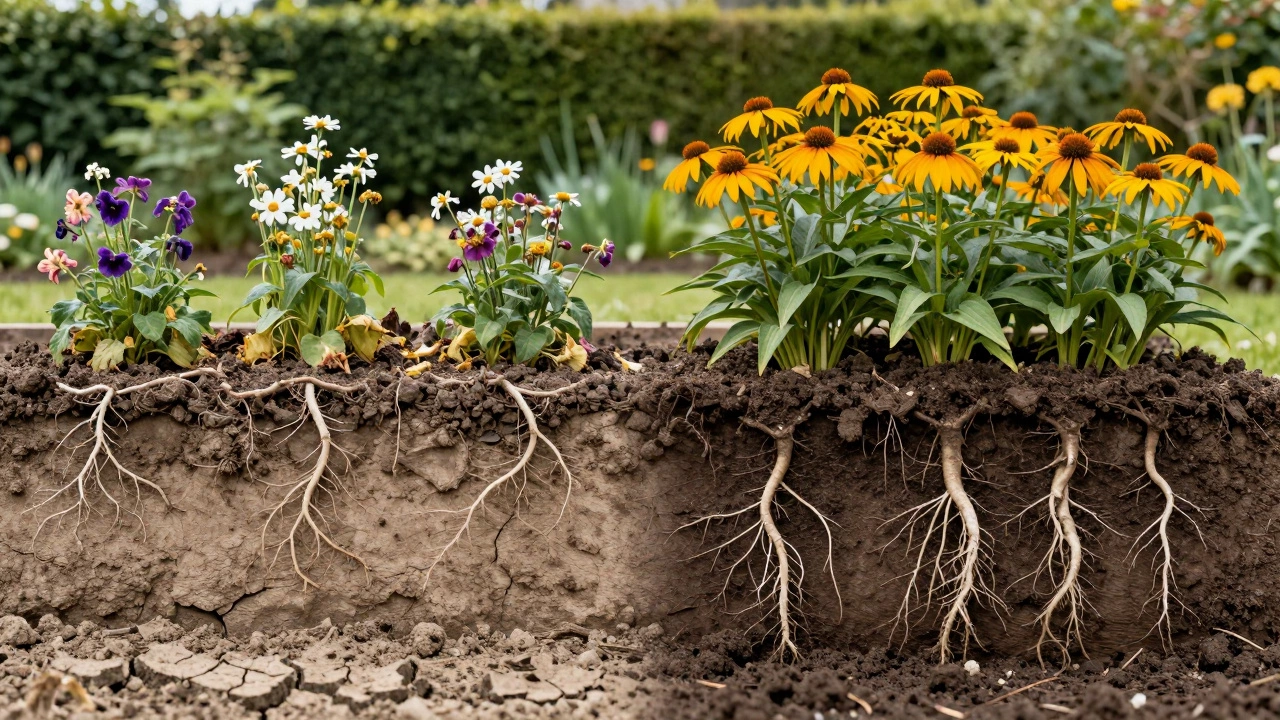
- Perennials like coneflowers, black-eyed Susans, and daylilies - 12-18 inches. These live for years. Their roots grow deeper to survive winter and drought. Anything less than 12 inches means they’ll struggle by year three.
- Deep-rooted flowers like peonies, hostas, and iris - 18-24 inches. Peonies, especially, need room to develop thick, fleshy roots. If you plant them in a 10-inch bed, they’ll never bloom properly.
- Flowers in containers within raised beds (like tuberous begonias or geraniums) - 10-12 inches. Since they’re in pots, the bed depth just needs to support drainage and root spread around the container.
These aren’t guesses. They’re based on horticultural research from the Royal Horticultural Society and decades of trial-and-error by UK gardeners. In Brighton, where winters are damp and summers can be dry, having the right depth means your flowers survive both.
Soil quality beats depth-but depth enables quality
You might hear someone say, “Just use good soil, depth doesn’t matter.” That’s misleading. You can put the best compost in a 6-inch bed, but if the roots can’t go deeper than 6 inches, they’ll dry out fast. Rainwater runs off the surface. In summer, the top layer heats up, and roots cook. A 12-inch bed holds moisture longer because the lower soil stays cooler and damp.Plus, deeper beds let you layer soil properly. Start with a 2-inch base of coarse gravel or broken bricks for drainage (especially important in clay-heavy areas like East Sussex). Then add 10-22 inches of mix: 60% topsoil, 30% compost, 10% perlite or coarse sand. This creates a sponge-like structure that holds water but drains excess. Shallow beds can’t do this-they turn into puddles or dust bowls.
What about cost and effort?
Building a 24-inch raised bed takes more wood, more soil, and more money. Is it worth it? For annuals? Probably not. For perennials you want to last five years? Absolutely.Here’s a practical rule: if you’re planting flowers you plan to keep for more than two seasons, go 18 inches minimum. If you’re doing a seasonal display with cheap annuals, 12 inches is fine. Most people make the mistake of building beds too shallow because they’re trying to save a few pounds. But then they spend twice as much replacing dead plants every spring.
For example, a 4ft x 8ft bed at 12 inches deep needs about 12 cubic feet of soil. At £25 per cubic yard (common UK price), that’s around £90. A 24-inch bed needs 24 cubic feet-£180. But if that bed holds peonies, hellebores, and ornamental grasses for five years? You’ve saved £300+ in replacement plants and labour.
What happens if your bed is too shallow?
If your raised bed is only 6-8 inches deep, here’s what you’ll see:- Plants wilt in hot weather even after watering
- Flowers bloom once, then look tired by July
- Roots grow sideways along the bottom edge, not down
- Soil dries out in 2-3 days during dry spells
- You notice roots poking through the bottom gaps in the wood
This isn’t just bad gardening-it’s a waste of money. I’ve seen gardeners in Brighton spend £200 on a new bed, then replace half their flowers every year because they didn’t dig deep enough. The fix? Add another 6-12 inches of soil on top, or build a second layer underneath with salvaged timber. It’s easier than starting over.
Special cases: bulbs and tall flowers
Bulbs like tulips, daffodils, and alliums need depth too. They’re planted deeper than most flowers-usually 4-8 inches below the surface. If your raised bed is only 10 inches tall, you’re left with just 2-6 inches of soil above the bulb. That’s not enough for roots to develop after flowering. Aim for 14-18 inches to give bulbs room to grow and store energy for next year.Tall flowers like sunflowers or delphiniums need deep roots to stay upright. A 12-inch bed might hold a 3-foot sunflower, but in a windy spot like the South Downs, it’ll snap. Go 18 inches. The extra depth anchors the plant and lets it draw water from lower layers during dry spells.
How to build the perfect flower bed depth
Here’s how to get it right the first time:- Decide which flowers you’re planting. Check their root depth online or on seed packets.
- Choose your bed height based on the deepest-rooted plant. Don’t build for the easiest flower-build for the hardest one.
- Use untreated cedar or composite lumber. Avoid pressure-treated wood-it can leach chemicals into the soil.
- Line the bottom with landscape fabric if you’re placing the bed on grass. This stops weeds but lets water drain.
- Add 2 inches of gravel or broken pottery for drainage.
- Fill with a mix of 60% topsoil, 30% compost, 10% coarse sand or perlite.
- Water thoroughly and let it settle for a week before planting.
Pro tip: If you’re reusing an old raised bed, lift the soil, add 4-6 inches of fresh compost underneath, and mix it in. You don’t need to rebuild-just deepen what’s there.
Final rule of thumb
For most flower gardens in the UK: 12 inches is the minimum, 18 inches is ideal. If you’re planting peonies, lilies, or any long-term perennials, go 24 inches. It’s the difference between a patch of flowers that looks good for one summer and a garden that becomes a showpiece for years.Don’t cut corners on depth. It’s the one thing you can’t fix easily after planting. Get it right once, and your flowers will thank you every spring.
Can I use a 6-inch raised bed for flowers?
Only for very shallow-rooted annuals like marigolds or alyssum. Even then, they’ll need frequent watering and won’t thrive in dry spells. For anything you want to last more than a season, 6 inches is too shallow. Roots can’t develop properly, and the soil dries out too fast.
Does the depth of the raised bed affect drainage?
Yes. Deeper beds allow for better drainage layers underneath. A 12-inch bed with 2 inches of gravel at the bottom gives water room to move away from roots. Shallow beds (under 8 inches) often flood because there’s no space for excess water to drain downward. Always add a gravel base, no matter the depth.
What’s the best soil mix for a flower raised bed?
Use 60% topsoil, 30% well-rotted compost, and 10% coarse sand or perlite. This gives structure, nutrients, and drainage. Avoid pure potting soil-it’s too light and breaks down too fast. Local garden centres in Brighton sell pre-mixed flower bed soil that works well if you don’t want to blend your own.
Do I need to replace the soil every year?
No. With proper mulching and annual compost top-ups, the soil in a raised bed lasts 3-5 years. Just add 1-2 inches of compost each spring. Replace all the soil only if it becomes compacted, waterlogged, or shows signs of disease like root rot.
Can I build a raised bed on concrete?
Yes, but you need extra depth. Concrete blocks natural drainage. Use a 24-inch bed with 3-4 inches of gravel at the bottom. Line the bottom with landscape fabric to keep soil in but allow water to escape through gaps. Make sure the bed has drainage holes if possible.
Is 24 inches too deep for flowers?
Not at all. Twenty-four inches is perfect for deep-rooted perennials like peonies, hostas, or ornamental grasses. It gives roots room to grow, improves drought resistance, and makes the bed more stable in wind. The only downside is cost and weight-but if you’re planting long-term flowers, it’s worth it.