Landscaping Distance Calculator
Enter plant details to see recommended distance.
You’ve just bought a plot with a lovely old brick house and you’re dreaming of hydrangeas hugging the walls or maybe a tall oak providing shade. But then a nagging question pops up: how far should landscaping be from your house? It’s not just about aesthetics; it’s about keeping your structure standing and your basement dry. Get this wrong, and you might end up with cracked foundations, blocked gutters, or a damp problem that costs thousands to fix. The good news? You don’t need an engineering degree to get it right. With a few simple rules of thumb and an understanding of how plants interact with buildings, you can create a beautiful garden that respects your home.
The Golden Rule: Distance Depends on Size
There is no single number that applies to every plant. The distance required changes drastically depending on what you are planting. Think of it like parking a car versus parking a bus. You wouldn’t park a double-decker bus in a compact spot, right? Similarly, you shouldn’t plant a massive tree right next to your bay window.
For most small shrubs and perennials, staying within 12 inches (30 cm) of the wall is perfectly safe. These plants have shallow root systems that rarely extend deep enough to threaten the foundation slab. However, as soon as you move to medium-sized shrubs or small trees, you need to start pulling back. A general guideline used by landscape architects is to keep the mature width of the plant away from the house. If a shrub grows to be six feet wide at maturity, give it three feet of clearance. This prevents branches from rubbing against siding, which can cause paint damage and provide entry points for pests like ants and termites.
Understanding Foundation Risks
The biggest fear homeowners have is root damage to foundations. In the UK, where clay soils are common, this risk is amplified. Clay expands when wet and shrinks when dry. Large trees, particularly species like Willow, Poplar, and Oak, have extensive root systems that seek out moisture. If these roots penetrate near your foundation, they can extract water from the soil beneath, causing the ground to subside and the building to settle unevenly. This leads to those classic diagonal cracks around windows and doors.
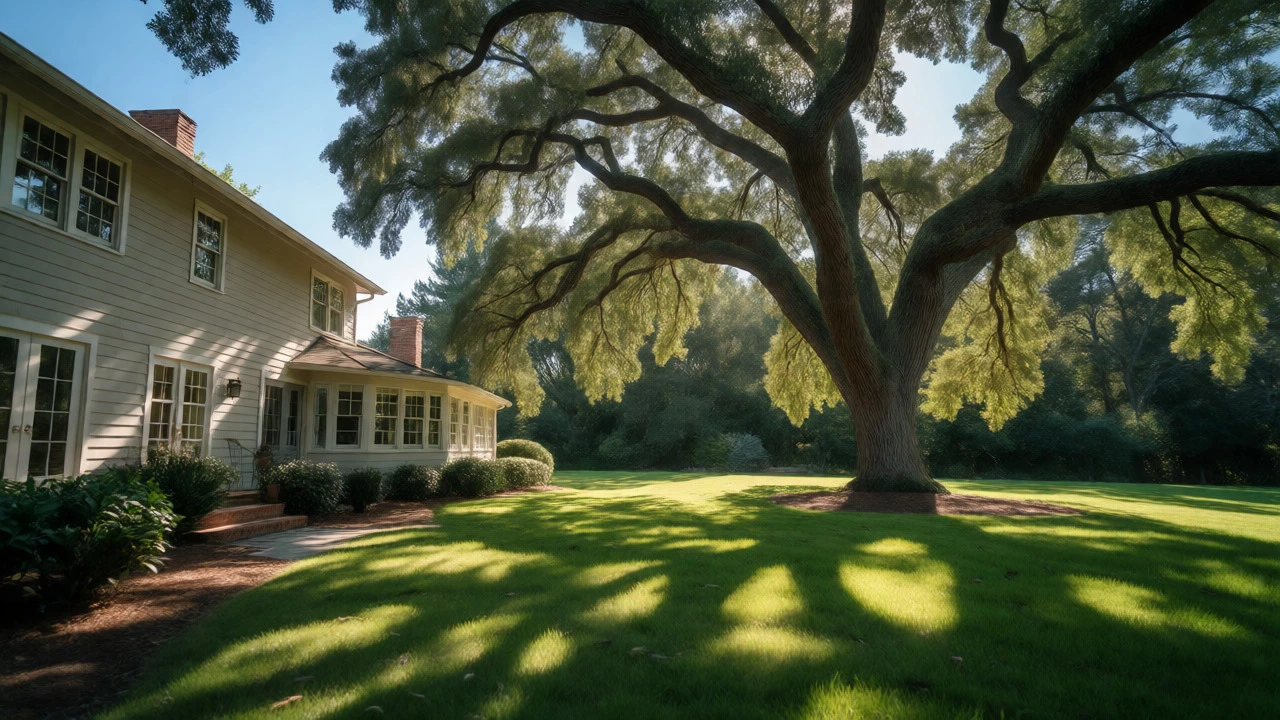
To mitigate this, consider the type of foundation you have. Older homes often have shallow strip footings, which are more vulnerable than modern concrete slabs or piled foundations. For standard residential properties, experts generally recommend keeping large trees at least one full height of the tree away from the structure. So, if you’re planting a 50-foot high Maple, try to plant it 50 feet away. That sounds like a lot of space, doesn’t it? If you don’t have that much room, choose smaller ornamental trees instead, such as Japanese Maples or Dogwoods, which have less aggressive root systems.
| Plant Type | Mature Height | Min. Distance from House | Risk Level |
|---|---|---|---|
| Perennials & Groundcover | Under 2 ft | 6-12 inches | Low |
| Small Shrubs | 2-4 ft | 12-18 inches | Low-Medium |
| Medium Shrubs | 4-8 ft | 2-3 feet | Medium |
| Large Trees | Over 30 ft | One Tree Height | High |
Drainage and Moisture Management
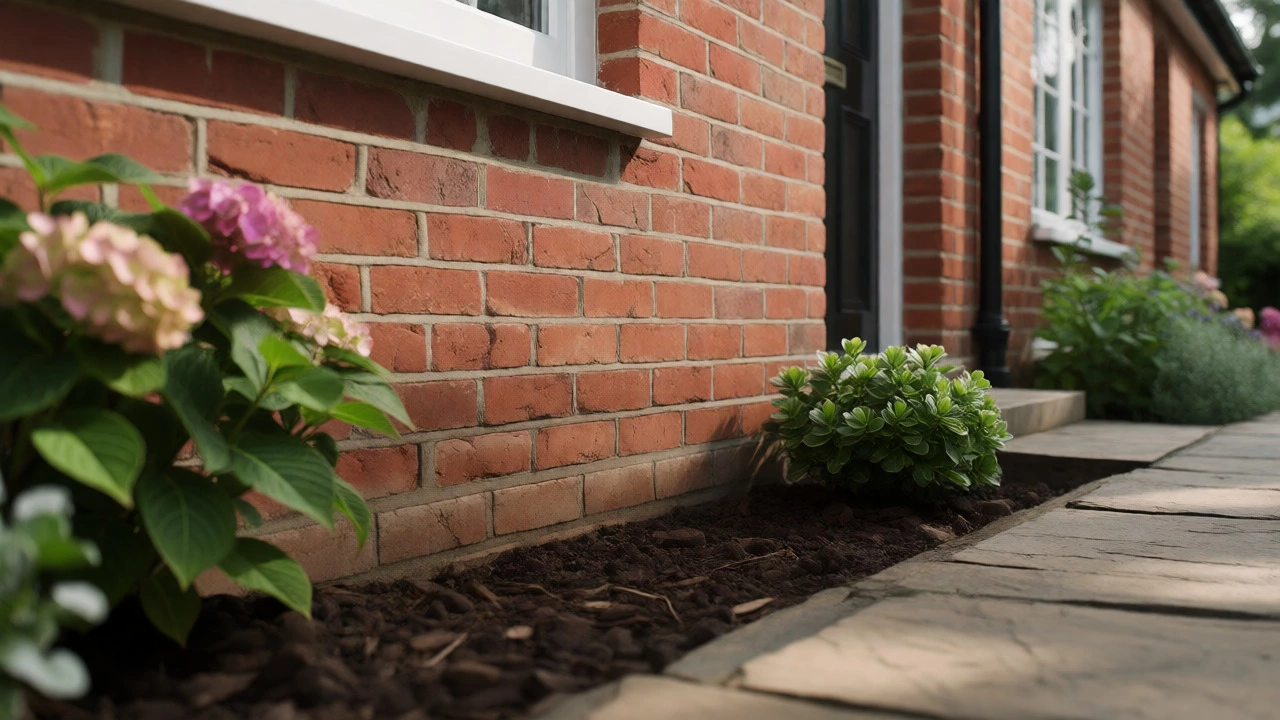
Beyond structural integrity, landscaping plays a huge role in water management. If you pile mulch or soil high against your exterior walls, you create a bridge for moisture to travel into your brickwork. This is known as rising damp. Ideally, there should be a clear gap between the soil line and the bottom edge of your siding or brick veneer-usually at least 6 to 8 inches. This gap allows air to circulate and prevents splashback during heavy rain, which can stain your walls and erode mortar joints over time.
Also, think about your gutters. Overhanging branches drop leaves and twigs directly into your gutter system. If you plant tall trees too close to the roofline, you’ll spend every autumn on a ladder clearing blockages. This isn’t just annoying; blocked gutters lead to overflowing water that runs down the side of the house, potentially damaging render and saturating the ground near the foundation. When planning your layout, look up. Consider the mature canopy spread, not just the trunk location.
Pest Control and Airflow
Dense vegetation touching the house acts as a highway for insects. Ants, cockroaches, and even rodents use branches and vines as bridges to enter your home. By maintaining a buffer zone, you break this path. Furthermore, airflow is critical for the health of your exterior surfaces. Walls that stay damp because they’re shaded constantly by foliage are prone to mold and mildew growth. In Brighton, where humidity can linger, ensuring sunlight hits your south-facing walls helps keep them dry and discourages fungal issues.
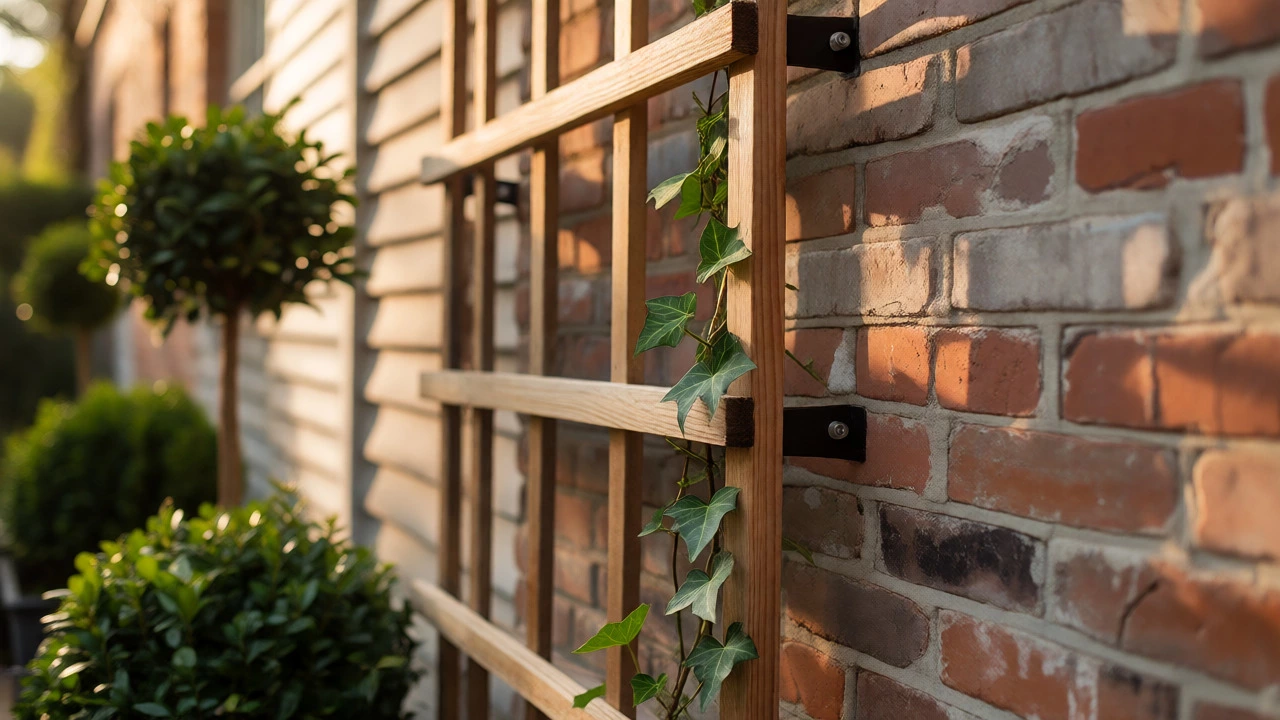
Vines are a special case here. While Ivy looks charming, it can trap moisture against brickwork and its aerial roots can exploit existing cracks in mortar. If you love climbing plants, opt for self-clinging varieties only on well-maintained, sound masonry, or better yet, use trellises attached to the wall with stand-off brackets. This keeps the plant off the surface entirely, allowing air to flow behind the foliage.
Choosing the Right Plants for Tight Spaces
If your property is small, you might feel restricted. Don’t worry. There are plenty of options that offer visual impact without the structural risk. Look for plants with fibrous, non-invasive root systems. Boxwood, Yew, and Holly make excellent formal hedges that can be kept close to the house because they respond well to pruning and their roots remain relatively contained compared to fast-growing conifers.
Avoid planting Willows, Birches, and Poplars near the house. These are thirsty giants. Instead, consider Dwarf Conifers, Ornamental Grasses, or Hydrangeas. They provide texture and color but won’t threaten your foundations. Remember, the goal is harmony between the built environment and the natural one. You want the garden to enhance the house, not fight against it.
Practical Steps Before You Dig
Before you rush to the garden center, take some measurements. Walk the perimeter of your house and note any existing utilities. Gas pipes, water lines, and electrical cables often run close to the foundation. Digging a hole for a bush could puncture a pipe if you aren’t careful. Check your local council regulations too. Some areas have restrictions on planting certain species due to allergy concerns or historic preservation rules.
Finally, think long-term. A sapling planted today will be a giant in twenty years. Visualize the mature size. Imagine the view from your living room window when the tree is fully grown. Does it block light? Does it cast a shadow over your patio? Plan for the future, not just the present moment.
Can I plant bushes directly against my house?
Yes, but with caution. Small shrubs and perennials can be planted within 12 inches of the foundation. However, ensure there is a gap between the soil/mulch line and the siding to prevent moisture buildup and pest access. Larger shrubs require more space based on their mature width.
Do tree roots really damage house foundations?
Tree roots themselves rarely push through solid concrete foundations. The real danger is subsidence caused by soil shrinkage. Roots absorb moisture from the soil, causing clay soils to contract and the foundation to settle unevenly. This is most common with large, thirsty trees like Oaks and Willows planted too close to the structure.
How far should a tree be from a house?
A safe rule of thumb is to plant large trees at a distance equal to their mature height. For example, if a tree grows to 40 feet tall, plant it 40 feet away from the house. For smaller ornamental trees, a distance of 15-20 feet is usually sufficient to avoid root interference and branch contact.
Is ivy bad for brick walls?
Ivy can be problematic if the mortar is already weak or crumbling. Its roots can widen existing cracks. On sound, modern brickwork, it’s generally harmless but can trap moisture. Using a trellis allows you to enjoy the greenery while keeping the plant off the wall, preventing potential damage.
What happens if landscaping touches the siding?
Contact between plants and siding creates a pathway for insects and rodents to enter the home. It also traps moisture, leading to rot in wood siding or mold growth. Additionally, wind-blown branches can scratch paint and wear down protective coatings over time.