Artificial Grass Watering Calculator
Your Situation
Your Recommended Schedule
Artificial grass doesn’t need water to grow - that’s the whole point. But that doesn’t mean you should ignore it completely. If you’ve installed synthetic turf in your garden, driveway, or balcony, you still need to clean and refresh it regularly. The question isn’t about survival - it’s about hygiene, smell, and longevity.
Why Water Artificial Grass at All?
Unlike real grass, synthetic lawns don’t drink up moisture. They’re made from polyethylene or polypropylene fibers, designed to last 15-20 years with minimal care. But here’s the catch: pets, dust, pollen, leaves, and sweat from kids playing all stick to the surface. Over time, that builds up. Without rinsing, it starts to smell. Especially in warm weather. In places like Brighton, where damp winters are followed by dry springs, the buildup can get worse fast.
Watering your artificial grass isn’t about keeping it green - it’s about keeping it fresh. A quick rinse removes dirt, neutralizes odors, and helps the blades stand upright again after being flattened by foot traffic or snow.
How Often Should You Water It?
There’s no fixed schedule. It depends on how you use your lawn. Here’s a practical guide:
- Every 2-4 weeks - For light use: a quiet garden, occasional sitting, no pets. A 10-minute rinse with a hose is enough.
- Once a week - For moderate use: kids playing daily, family barbecues, light foot traffic. This keeps dust and pollen from sticking.
- 2-3 times a week - For heavy use: dogs running around, frequent outdoor activities, or high pollen areas. Pet urine is the biggest culprit here. If your dog pees on the grass, rinse it within 24 hours to prevent ammonia smell.
- After heavy events - After a party, a sports game, or a storm that leaves debris, give it a quick wash.
Seasonal changes matter too. In spring and summer, when temperatures climb above 18°C, bacteria multiply faster. That’s when odor builds up. In autumn, fallen leaves clog the drainage system. A monthly rinse then helps keep the backing clear. Winter? Unless you have snow melt or ice buildup, you don’t need to water - but do clear debris.
How to Water It Right
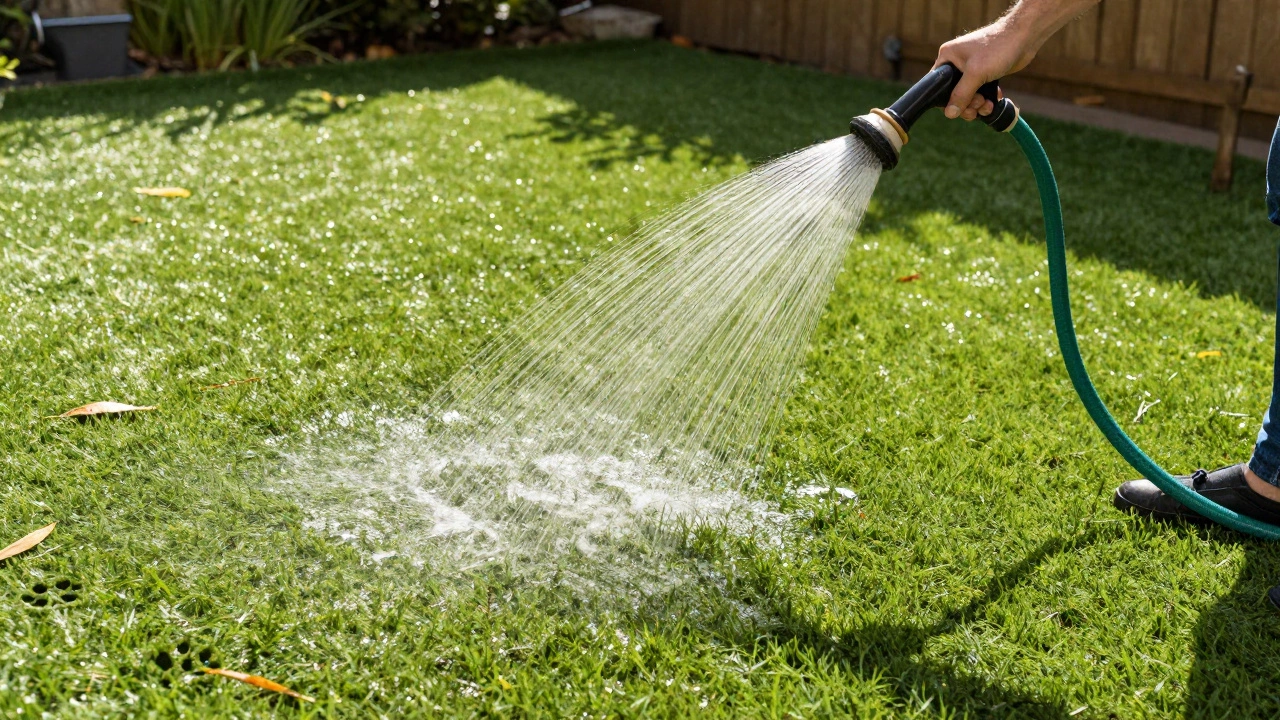
Don’t just blast it with high pressure. That can flatten the fibers and damage the backing. Use a standard garden hose with a spray nozzle. Set it to a gentle shower setting - not jet mode.
Start at one end of the lawn and move slowly across, like you’re mowing. Let the water soak in, then let it drain. Most quality artificial grass has perforated backing that lets water pass through into the base layer. If water pools on top after 10 minutes, your installation might have poor drainage - and that’s a bigger problem than watering frequency.
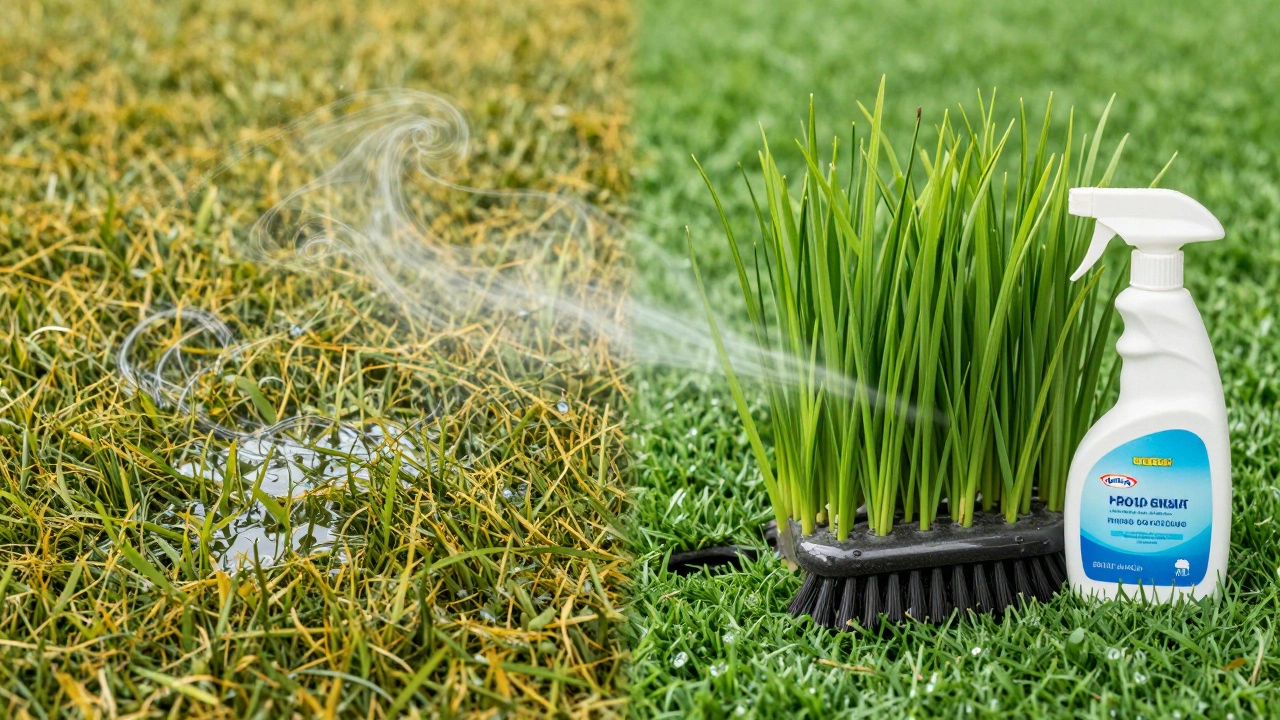
For pet owners, consider a two-step process: rinse first, then use a pet-safe enzymatic cleaner once a month. These break down urine crystals without harming the turf. Avoid bleach, vinegar, or harsh chemicals. They degrade the fibers over time.
What Happens If You Don’t Water It?
Ignoring maintenance leads to three common issues:
- Odor buildup - Especially from pet urine. Ammonia smells get trapped in the fibers and backing. Once it sets in, it’s hard to remove.
- Flattened blades - Without rinsing, dust and dirt weigh down the fibers. They stay matted instead of springing back up.
- Drainage blockage - Leaves, sand, and debris clog the tiny holes in the backing. Water can’t drain. That leads to standing water, mold, and even mildew under the turf.
One homeowner in Hove had to replace their 5-year-old lawn after years of ignoring it. The smell was unbearable. The backing had started to rot. The cost? Over £1,200. A few minutes of weekly rinsing would’ve saved that.
Watering vs. Brushing
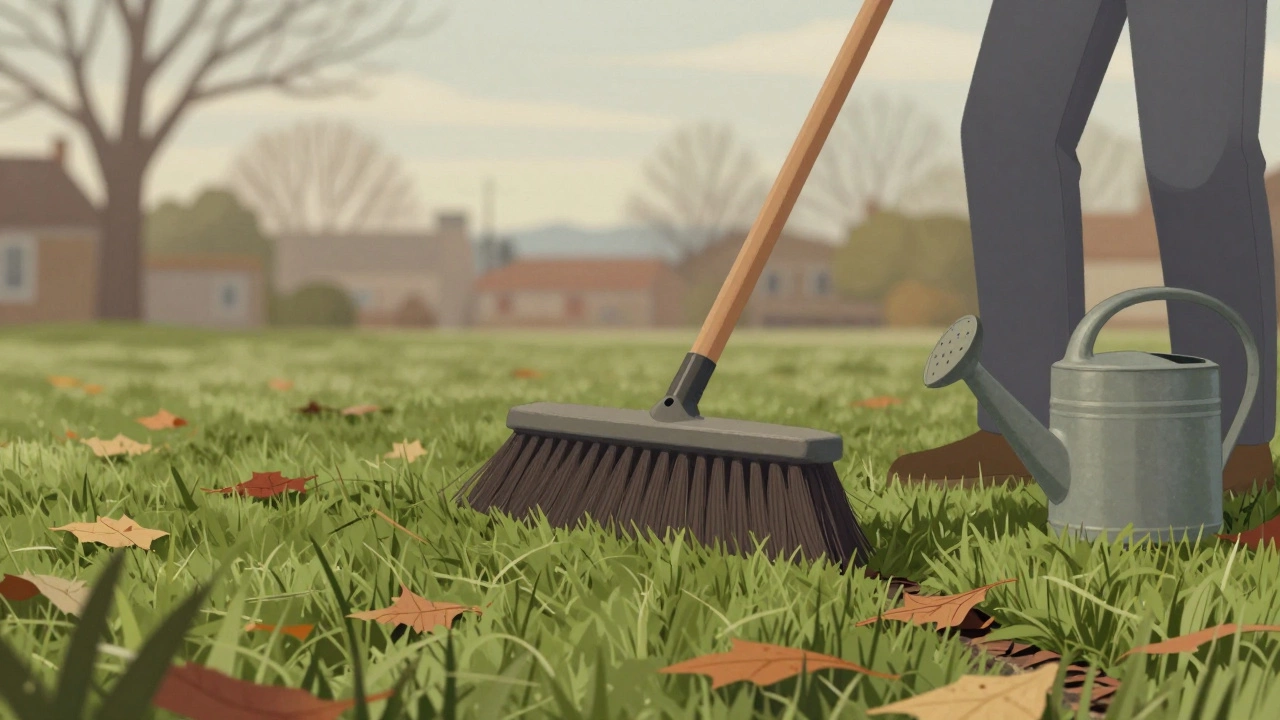
Water isn’t the only tool. Brushing matters too. Use a stiff-bristle broom or a specialized turf rake every 2-3 weeks. Brush in the direction of the fibers to lift them up. This restores the lawn’s bounce and helps with drainage.
Think of it like this: water cleans. Brushing revives. You need both.
Some people buy power brushes or electric turf groomers. They’re useful for large lawns or commercial spaces, but for a typical home garden, a hand brush works fine. Just make sure it’s plastic or nylon. Metal bristles can scratch the fibers.
Do You Need a Special Hose or Nozzle?
No. A regular garden hose with a trigger nozzle is all you need. You don’t need a pressure washer. You don’t need a sprinkler system. In fact, sprinklers are overkill - they waste water and can push dirt deeper into the turf.
If you’re worried about water bills, use a watering can for small areas. Or collect rainwater in a barrel. Artificial grass doesn’t need much - a 5-gallon bucket’s worth every week is enough for a 10m² lawn.
Special Cases
Artificial grass on balconies: Use a shallow tray or drain pan underneath to catch runoff. Don’t let water leak into the apartment below. Rinse every 10-14 days.
Indoor synthetic turf (like in home gyms or playrooms): Vacuum weekly to remove dust. Rinse monthly with a damp mop and mild soap. Never soak.
Commercial installations (daycares, dog parks): Clean daily with a pressure washer set to low (under 1,500 PSI). Deep clean with enzymatic solution weekly.
Myth Busting
- Myth: Artificial grass never needs water. Truth: It doesn’t need water to survive, but it needs water to stay clean and odor-free.
- Myth: Rain is enough. Truth: Rain doesn’t always clean - it can leave behind dirt and minerals. A manual rinse is more effective.
- Myth: More water = longer life. Truth: Overwatering can cause mold under the backing. Balance is key.
Quick Maintenance Checklist
- Weekly: Brush fibers with a stiff broom
- Every 2-4 weeks: Rinse with hose (more often if pets use it)
- Monthly: Check drainage points for clogs
- After storms: Remove leaves and debris
- Every 3 months: Use pet-safe enzymatic cleaner if you have dogs
That’s it. No fancy gadgets. No complicated routines. Just a little consistency.
Do I need to water artificial grass in winter?
Not usually. In the UK, winter rain and frost are enough to keep things clean. Focus on clearing leaves and snow instead. If the surface is dry and dusty, a light rinse once a month helps. But avoid watering if temperatures are below 4°C - water can freeze and damage the backing.
Can I use a pressure washer on artificial grass?
Only on low setting (under 1,500 PSI) and only for deep cleaning. High pressure can rip fibers or dislodge the infill. For regular cleaning, a garden hose with a spray nozzle is safer and just as effective. Reserve the pressure washer for once a year, or if you have stubborn stains.
Why does my artificial grass smell like ammonia?
That’s almost always pet urine. Dogs’ urine contains urea, which breaks down into ammonia. If not rinsed within 24 hours, the smell gets trapped in the backing. Rinse the area immediately after your pet pees. Use an enzymatic cleaner monthly to break down residue. Avoid bleach - it makes odors worse over time.
Will watering artificial grass cause mold?
Only if water can’t drain. Quality artificial grass has perforated backing designed to let water pass through. If water pools on top for more than 30 minutes, your installation may have poor base drainage. Check for compacted soil or crushed gravel underneath. Fix that first - no amount of watering will help if the water has nowhere to go.
How much water does it take to clean artificial grass?
Very little. A 10m² lawn needs about 10-15 liters per rinse - roughly a full watering can. That’s less than a single toilet flush. If you rinse once a week, you’re using under 700 liters a year. Compare that to real grass, which can use 50,000 liters annually. Artificial grass saves water - if you use it wisely.