Cardboard in Garden Effectiveness Assessment
Assess Your Garden Conditions
People love using cardboard in the garden because it’s free, easy to find, and seems like a smart way to kill weeds before planting. You lay it down, pile on some compost or mulch, and wait for nature to do the rest. But here’s the truth: cardboard isn’t the miracle solution it’s made out to be-especially in raised garden beds. If you’ve noticed soggy soil, slow plant growth, or weird fungi popping up after using cardboard, you’re not alone. Let’s break down the real downsides you won’t find in those viral TikTok gardening hacks.
It Blocks Water and Air Flow
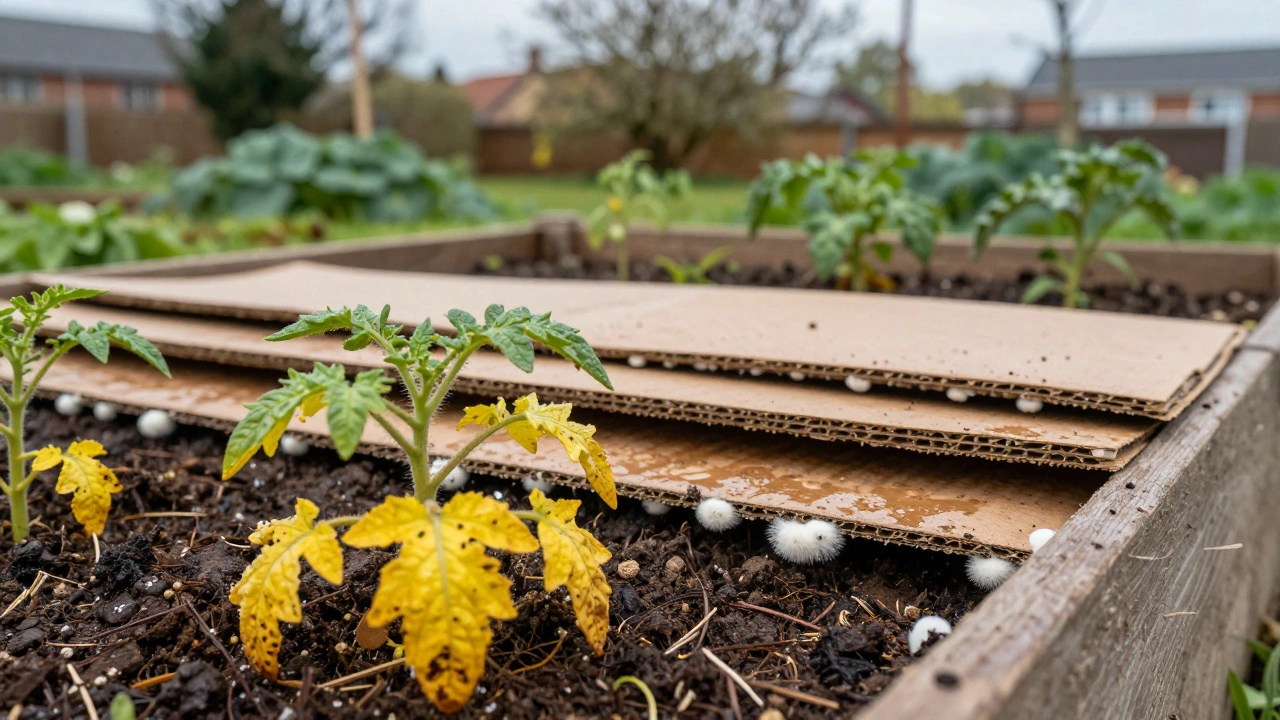
Cardboard looks thin, but when it gets wet and sits for weeks, it turns into a dense, waterlogged barrier. In raised beds, where drainage is supposed to be one of the biggest advantages, cardboard can actually trap water underneath. Roots need oxygen, and when the soil below the cardboard stays soggy for days, they suffocate. I’ve seen tomato plants turn yellow and stunt in beds where cardboard was used as a weed barrier. The roots couldn’t reach the deeper soil because the cardboard acted like a plastic sheet-just less durable.
Even worse, in places like Brighton where rain is frequent, cardboard doesn’t just break down-it hangs around for months. By the time it starts to decompose, it’s already ruined the soil structure beneath it. Gardeners who swear by cardboard often don’t realize their plants are struggling not because of poor soil, but because the cardboard is holding back essential airflow and moisture movement.
It Attracts Pests and Fungi
Cardboard is basically wood pulp soaked in glue and ink. To insects and fungi, it’s a five-star buffet. Slugs, earwigs, and even rats are drawn to the damp, dark space under cardboard. I’ve pulled up sheets in early spring and found entire colonies of slugs underneath, plus a thick layer of white mold that looked like cotton candy but smelled like a damp basement.
Some gardeners think cardboard is "organic" so it’s safe. But mold doesn’t care if it’s organic-it just wants moisture and cellulose. The fungi that grow on wet cardboard can spread to plant stems and roots, especially in cool, wet climates like the UK. Fusarium and Pythium, two common soil-borne pathogens, thrive in these conditions. You’re not preventing disease-you’re creating the perfect breeding ground for it.
It Leaches Chemicals Into Your Soil
Not all cardboard is created equal. Most boxes you get from online shopping are printed with heavy inks, coated with plastic films, or glued with synthetic adhesives. These aren’t harmless. A 2021 study from the University of Reading tested 12 types of cardboard commonly used in UK gardens and found that 7 of them contained measurable levels of heavy metals like lead, cadmium, and zinc. These don’t just disappear-they slowly leach into the soil over time.
And if you’ve ever used cardboard from a shipping box that held chemicals, food waste, or pet bedding? You’re introducing unknown toxins into your food garden. Even "plain" cardboard can have residual glue from manufacturing. If you’re growing carrots, lettuce, or herbs, you’re putting those chemicals right where your food grows. There’s no safe way to tell if the cardboard you’ve pulled from the recycling bin is clean.
It Slows Down Soil Building
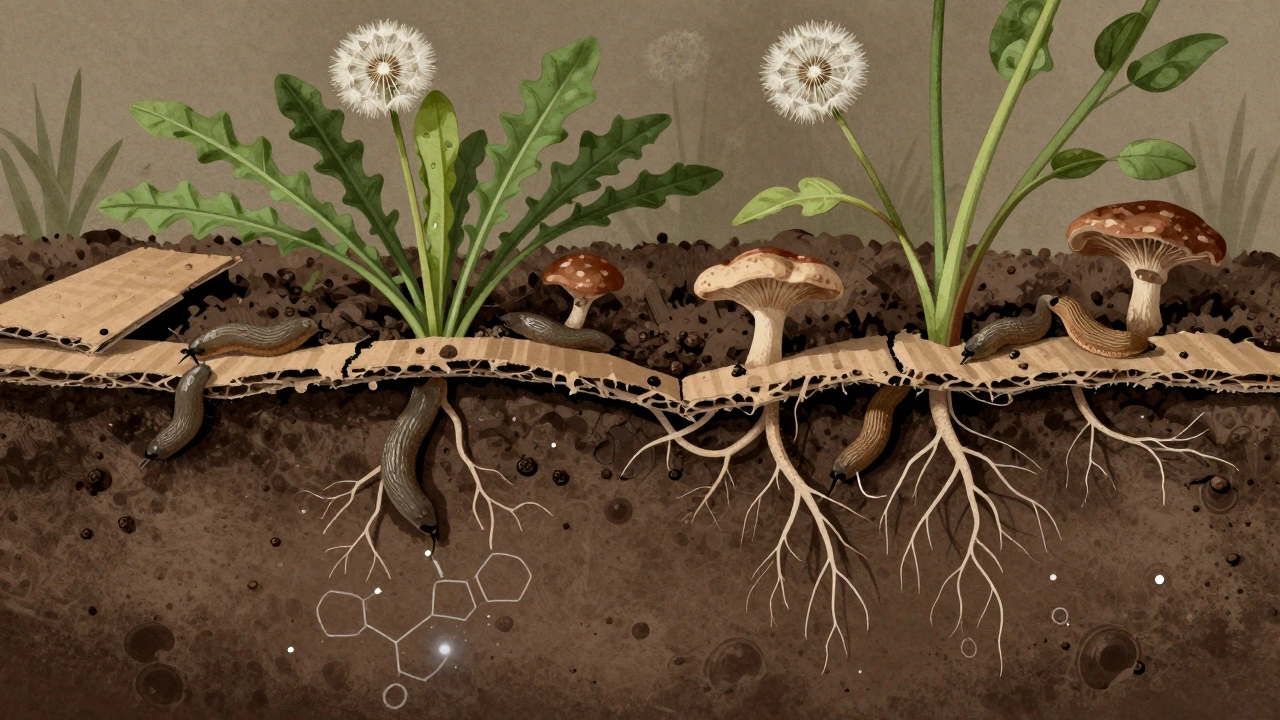
One of the biggest promises of cardboard is that it "breaks down into soil." But in reality, it takes way longer than people think. In a raised bed with good sun and airflow, it might take 6-8 months to fully decompose. In shaded, damp, or clay-heavy soil? It can linger for over a year. During that time, it doesn’t feed the soil-it just sits there, blocking microbes, worms, and root penetration.
Healthy soil needs structure. It needs air pockets, organic matter breaking down naturally, and worms moving through it. Cardboard creates a flat, uniform layer that disrupts this. Instead of encouraging life, it creates a dead zone. I’ve dug into beds where cardboard was laid two years prior-and the soil beneath was still compacted, lifeless, and pale. The worms had avoided it entirely.
It’s Not a Reliable Weed Killer
People say cardboard smothers weeds. But in raised beds, weeds don’t just grow from the surface-they come up from below. Perennial roots like bindweed, dandelion, and couch grass can push right through thin cardboard. I’ve watched bindweed vines grow through a 3-layer cardboard barrier like it was tissue paper. Once the cardboard starts to break down, those weeds explode through the gaps.
Plus, cardboard doesn’t kill seeds in the soil. It just covers them. When you finally remove it, you’re left with a fresh crop of weeds that were waiting for sunlight. You didn’t prevent them-you just delayed them. And now you’ve got to dig up a rotting sheet of cardboard to get rid of them.
It Creates a Mess When You Need to Replant
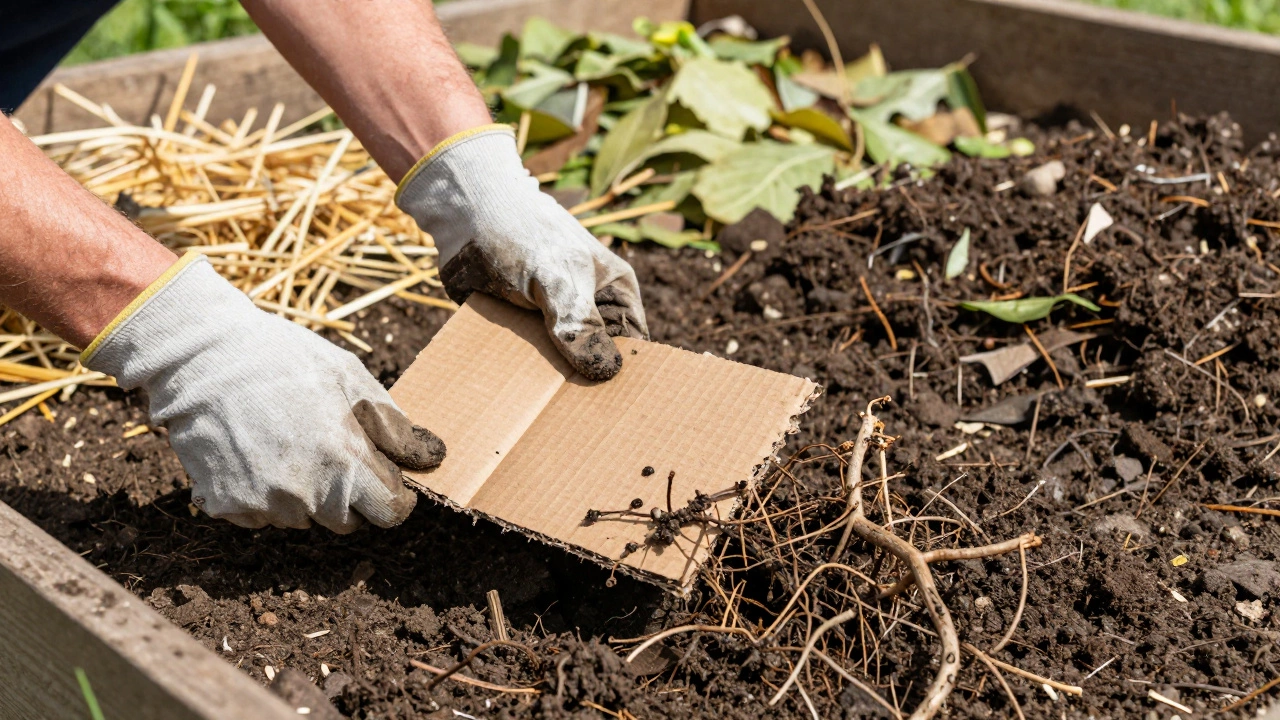
Imagine spring comes, and you want to rotate crops or add new plants. You lift the cardboard, and it’s half-decomposed-torn, slimy, and tangled with roots. It’s a sticky, smelly nightmare to remove. Unlike biodegradable mulch that just dissolves into the soil, cardboard leaves behind a rubbery, plastic-like residue that clings to tools and gloves.
And if you’ve layered compost or manure on top, you’re now mixing rotting cardboard with your nutrient-rich soil. That doesn’t improve fertility-it dilutes it. You end up spending hours pulling apart fibers that should’ve been gone by now. It’s extra work for zero gain.
There Are Better Alternatives
You don’t need cardboard to suppress weeds or improve soil. Here’s what actually works:
- Straw mulch-breaks down slowly, feeds soil, doesn’t attract pests
- Leaf litter-free, local, and improves microbial activity
- Compost-applied 2-3 inches thick, it naturally blocks weeds and nourishes plants
- Landscape fabric-if you need a physical barrier, use woven, breathable fabric (not plastic)
- Cardboard-free lasagna gardening-layer compost, grass clippings, and aged manure instead
These options don’t come with the hidden costs of cardboard. They don’t leach toxins. They don’t trap water. They don’t invite slugs. And they actually feed your plants as they break down.
When Cardboard Might Work (and When It Definitely Won’t)
There’s one scenario where cardboard isn’t terrible: temporary weed suppression in a new, empty bed that you’re preparing for planting next season. If you lay it in autumn, cover it with 6 inches of compost, and leave it alone until spring, it might break down enough to be useful. But even then, you’re better off just piling on the compost and letting it sit.
Cardboard fails in:
- Wet climates like the UK
- Raised beds with shallow soil depth
- Vegetable gardens where you plant frequently
- Soils that are already heavy or clay-like
- Any bed where you care about food safety
If you’re using cardboard because it’s free, ask yourself: Is it really free if it’s costing you plant health, extra labor, and soil quality?
Does cardboard kill weeds permanently?
No. Cardboard only blocks light temporarily. Weeds with deep roots or persistent seeds will push through or sprout once the cardboard breaks down. It doesn’t kill weed seeds in the soil-it just hides them. For permanent weed control, you need to smother with thick mulch, solarize the soil, or use physical barriers like landscape fabric.
Can I use cardboard from Amazon boxes?
It’s risky. Many shipping boxes have plastic coatings, glossy inks, or synthetic adhesives that don’t break down safely. In the UK, a 2021 study found that over half of common shipping cardboard contained lead and zinc residues. Stick to plain, unprinted cardboard from dry goods like cereal boxes if you must use it-but even then, it’s not worth the risk in food gardens.
How long does cardboard take to decompose in garden soil?
In ideal conditions-warm, moist, and aerated-it can take 3 to 6 months. But in raised beds, especially in the UK’s damp climate, it often takes 8 to 12 months or longer. During that time, it blocks soil life and creates a barrier. Most gardeners remove it before it fully breaks down, leaving behind a sticky, half-decomposed mess.
Is cardboard better than plastic for weed control?
It’s not better-it’s just different. Plastic blocks water and air completely and never breaks down. Cardboard breaks down, but slowly, and introduces organic contaminants. Neither is ideal. The best alternatives are organic mulches like straw or leaf litter, which improve soil health as they decompose instead of harming it.
Why do some gardeners still swear by cardboard?
Many gardeners see short-term results-like fewer weeds in the first few weeks-and assume it’s working. They don’t notice the slow decline in plant health, the increased pest activity, or the compacted soil underneath. Social media makes it look easy, but real gardening requires understanding soil biology, not just layering materials. Cardboard gives the illusion of a quick fix, but it often makes problems worse over time.
If you’re serious about healthy raised beds, skip the cardboard. Focus on building soil with compost, mulch, and cover crops. Your plants-and your back-will thank you.