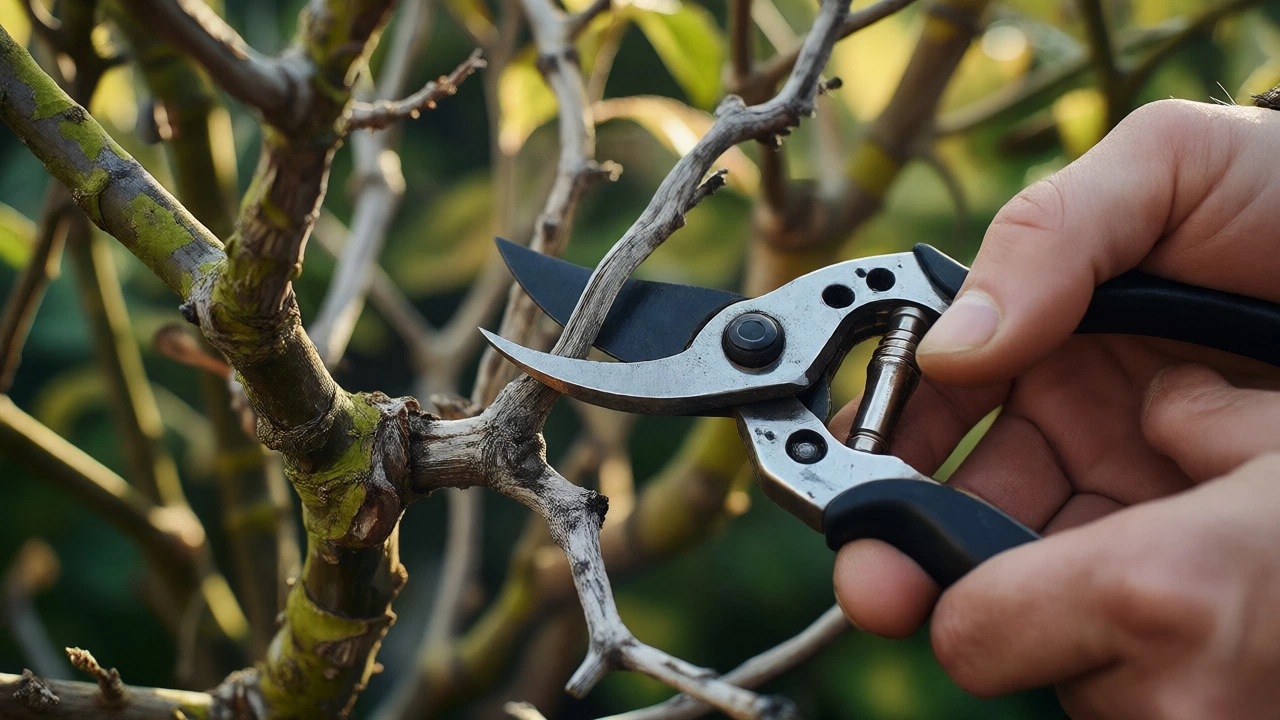
Pruning Decision Assistant
Select the type of branch you are looking at to get immediate advice on whether to cut it.
Dead Wood
Brittle, grey/brown, no buds, dry cambium.
Damaged Wood
Broken by storm, torn by lawnmower, jagged tears.
Diseased Wood
Cankers, oozing sap, unusual discoloration.
Crossing Branches
Two branches growing toward each other, rubbing bark.
Suckers & Water Sprouts
Vertical shoots from base or main branches.
Inward Growing
Branches pointing into the center of the canopy.
Click a branch type above to see the recommendation.
You stare at the shrub in your front yard. It’s a tangled mess of wood, some parts healthy, others looking like they’ve given up on life. You grab your secateurs, heart pounding slightly because you know one wrong snip can ruin years of growth. The question isn't just when to cut; it's what branches to cut when pruning. If you get this right, you’ll have a plant that breathes, blooms, and stays strong. Get it wrong, and you might invite disease or stunt its potential for good.
Pruning isn't about hacking away until it looks tidy. It’s surgery. And like any good surgeon, you need to know exactly what tissue is vital and what is dead weight. Whether you’re dealing with a young apple tree or an overgrown rose bush, the logic remains surprisingly consistent. Let’s break down the specific targets you should aim for, so you can prune with confidence rather than fear.
The Universal Rule: Remove the Three Ds
Before you even think about shaping or size control, there is a non-negotiable first step. Every professional arborist and master gardener starts here. You must remove the Three Ds: Dead, Damaged, and Diseased wood. This isn’t optional. Leaving these branches on the plant is like leaving an open wound exposed to infection.
Start by identifying dead wood. These branches are brittle, often grey or brown, and lack any signs of life like buds or green cambium under the bark. They don’t contribute energy to the plant; they just sit there collecting rain and rot. Next, look for damaged wood. Did a storm snap a limb? Is there a jagged tear from a lawnmower? Damaged branches rarely heal cleanly. They become entry points for fungi and bacteria. Finally, check for diseased wood. Look for cankers, unusual discoloration, or oozing sap. If you spot diseased branches, cut them out immediately. Crucially, sterilize your blades between cuts if you suspect a contagious issue like fire blight or bacterial canker. You don’t want to spread the problem from one branch to another.
Removing the Three Ds clears the canvas. It improves air circulation immediately, which reduces humidity around the leaves-a major factor in preventing fungal diseases like powdery mildew. Once these are gone, you can move on to structural decisions.
Crossing and Rubbing Branches
Nature doesn’t always design efficient structures. Often, two branches will grow toward each other and cross paths. This creates friction. Over time, the bark rubs off, exposing the inner wood to pests and pathogens. Worse, as the branches thicken, they strangle each other. One usually dies, leaving a stub that rots.
When you see crossing branches, ask yourself: which one is better positioned? Usually, you keep the outer-facing branch and remove the inner one. Why? Because plants generally want to expand outward to capture light. Keeping the inner branch often leads to a congested center later. However, if the inner branch is younger, straighter, and healthier, it might be worth keeping while removing the older, awkwardly angled outer one. Use your judgment based on the overall shape you want.
| Scenario | Action | Reasoning |
|---|---|---|
| One branch is clearly weaker/damaged | Remove the weaker branch | Preserves the strongest structural element |
| Both are healthy but cross tightly | Remove the inward-growing branch | Promotes open canopy and airflow |
| Branches rub but don't cross yet | Monitor or redirect | Preventative measure before damage occurs |
Suckers and Water Sprouts
If you’ve ever pruned a fruit tree or a grafted rose, you’ve likely encountered these unwanted guests. They look vigorous, green, and tempting to keep because they seem full of life. But they are energy vampires.
Suckers are shoots that emerge from the rootstock or base of the trunk. On grafted plants (like most fruit trees and roses), the rootstock is a different variety than the top part. Suckers produce different flowers or fruits-often inferior-and steal nutrients from the desirable upper growth. Pull them off at the source. If you just cut them above ground, they’ll regrow thicker next season.
Water Sprouts are vigorous vertical shoots growing directly from main branches or trunks. They appear after heavy pruning or stress. While they photosynthesize, they rarely produce fruit or quality flowers. Instead, they crowd the canopy, blocking light to the productive branches below. Remove them flush with the parent branch. If you leave them, they’ll turn into large, weak limbs that shade out the rest of the tree.
Inward-Growing Branches
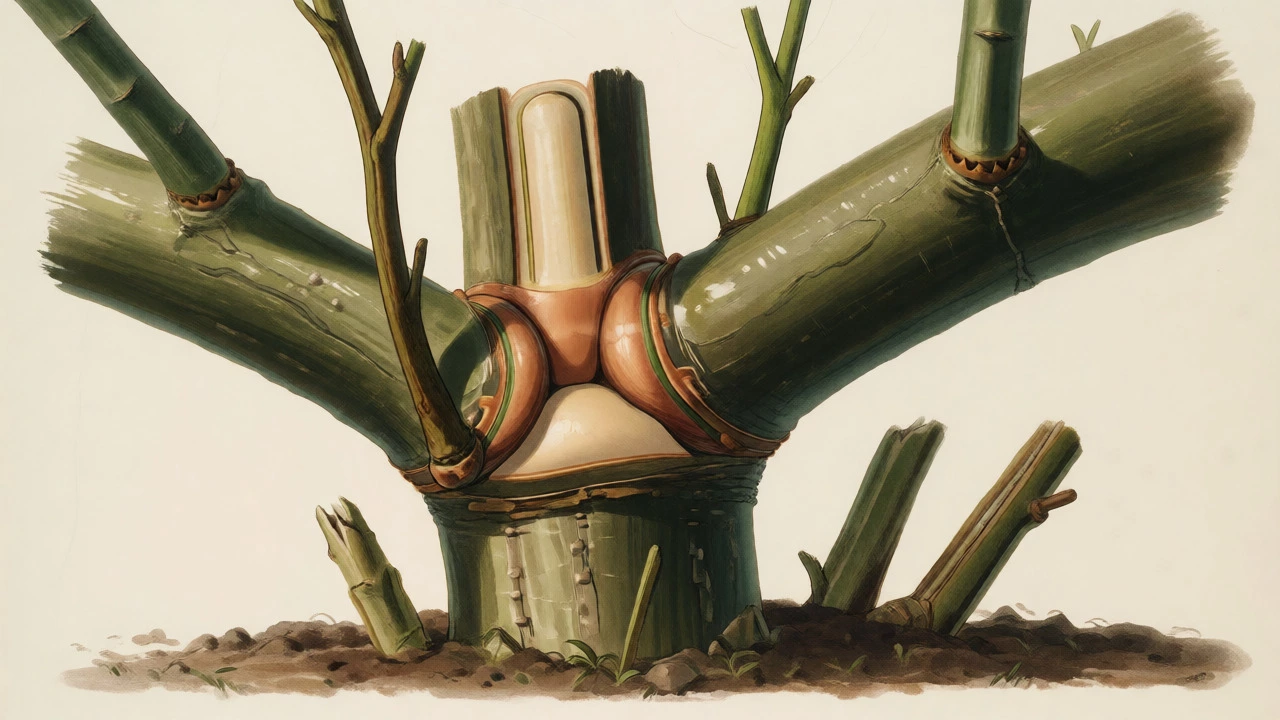
A healthy tree needs light to reach its interior. If branches grow toward the center of the plant, they create a dense thicket. This blocks sunlight and traps moisture. Fungi love dark, damp centers. By removing branches that point inward, you open up the canopy. This technique is especially critical for fruit trees like apples and pears, where fruit quality depends heavily on sun exposure.
Look for branches that originate near the trunk and angle sharply toward the middle. Follow them back to their origin point. If the branch crosses another or simply clutters the core, cut it back to the lateral branch or the collar. Don’t leave stubs. A clean cut heals faster. Remember, you’re trying to create an open vase shape or a well-spaced scaffold structure, not a solid ball of wood.
Overcrowded Canopy
Even without obvious crossings or inward growers, a plant can suffer from general congestion. Too many small twigs compete for resources. The result is smaller leaves, fewer flowers, and weaker overall health. Thinning is different from heading back (cutting tips). Thinning removes entire branches at their point of origin.
Step back and look at the silhouette. Are there areas that look like a bird’s nest? Pick out the smallest, weakest twigs in those clusters. Removing 10-20% of the total volume is usually safe for deciduous trees during dormancy. For evergreens, go lighter, perhaps 5-10%, to avoid shock. Thinning allows wind to pass through, reducing the risk of breakage during storms. It also lets pollinators access the flowers more easily.
Structural Flaws and Poor Angles
This is where long-term planning comes in. Some branches are fine now but will cause problems later. Look for narrow crotch angles. If a branch joins the trunk at a sharp V-shape (less than 45 degrees), it’s structurally weak. As both the trunk and the branch grow, they pinch together, trapping bark in the union. This creates a weak joint prone to splitting under snow load or wind.
Wide angles (closer to 90 degrees) are stronger because the wood fibers interlock properly. If you catch these narrow unions early, you can remove the competing leader or branch. If the tree is mature, you might need to use cables or braces, but for home gardeners, removal is often the best option. Also, consider the balance of the plant. Does one side dominate? Remove excess weight from the heavy side to prevent tipping.
Timing Matters: What to Cut When
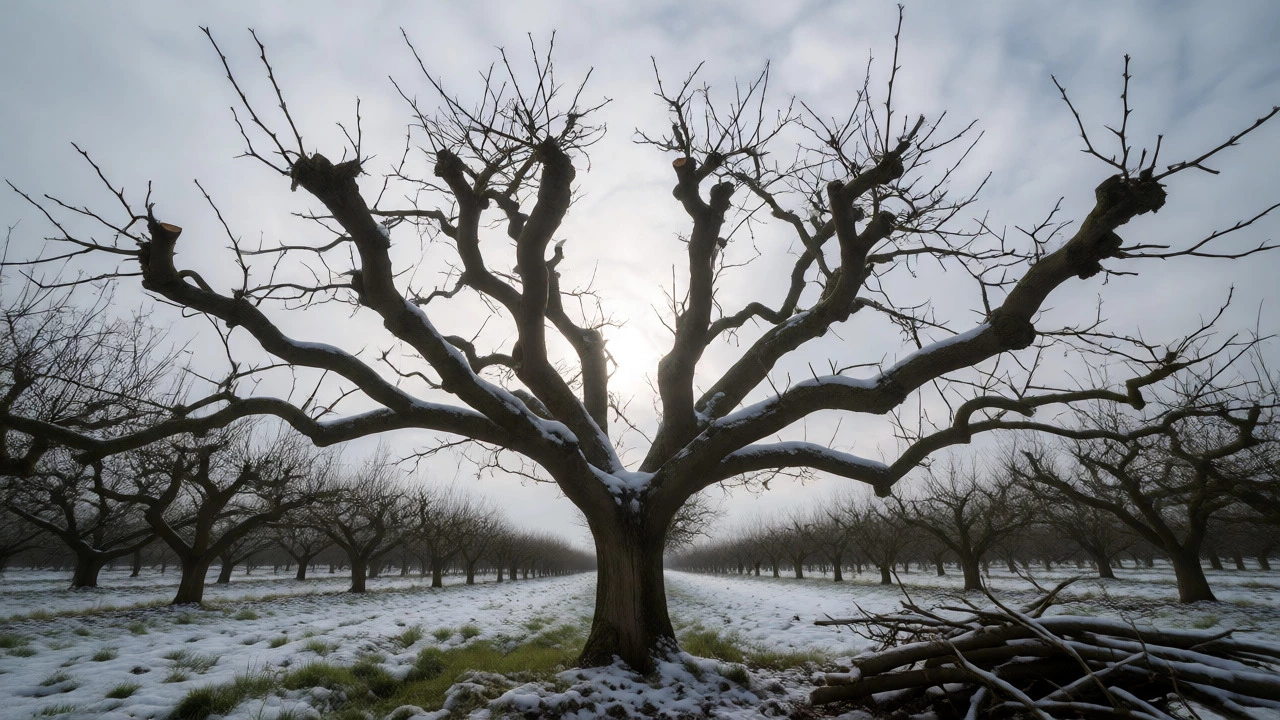
Knowing what branches to cut when pruning is half the battle. Knowing when to do it prevents disaster. Most deciduous trees and shrubs are best pruned in late winter or early spring, while they are dormant. Without leaves, you can see the structure clearly. Plus, the plant wakes up ready to heal fast.
Spring-flowering shrubs (like lilacs and forsythia) bloom on old wood. If you prune them in winter, you cut off next year’s flowers. Prune these immediately after they finish blooming. Summer-flowering shrubs (like hydrangeas paniculata) bloom on new wood. You can prune these in late winter to encourage vigorous new growth.
Avoid heavy pruning in late summer. New growth triggered by cutting won’t harden off before frost, making it susceptible to cold damage. And never prune oak or elm trees during high-risk periods for beetle-borne diseases (usually spring/early summer) unless absolutely necessary.
Common Mistakes to Avoid
It’s easy to get carried away. Here are pitfalls that undo good work:
- Topping: Cutting the top off a tree arbitrarily. This leads to weak, water-sprout regrowth and decay.
- Flush Cuts: Cutting too close to the trunk, damaging the branch collar. Leave the collar intact; it contains healing hormones.
- Stub Cuts: Leaving a long piece of branch beyond the bud. This stub dies back and invites rot.
- Over-pruning: Removing more than 30% of the live crown in one season. This stresses the tree significantly.
Always make your cut just outside the branch collar. Do not apply tar or sealants to most cuts today; modern research shows they can trap moisture and slow healing. Let the tree do its job.
Tools of the Trade
Your results depend on your tools. Sharp blades crush less tissue, leading to cleaner wounds and faster recovery. Keep a few essentials handy:
- Bypass Secateurs: Best for living stems up to 2cm thick. The curved blade slices past the counter-blade, like scissors.
- Anvil Pruners: Good for dead wood. The blade presses against a flat surface. Less precise, but powerful.
- Loppers: Two-handed leverage for branches up to 5cm.
- Pruning Saw: Essential for anything thicker than 5cm. Choose a fine-toothed saw for clean cuts.
Clean your tools with alcohol wipes between plants. It takes ten seconds and saves hours of disease management later.
Can I prune all branches at once?
No, it is generally recommended not to remove more than 25-30% of the live foliage in a single season. Heavy pruning can stress the plant, leading to reduced flowering or fruiting and increased susceptibility to pests. Spread major rejuvenation projects over several years.
Do I need to seal pruning cuts?
For most trees and shrubs, no. Modern horticultural science suggests that trees compartmentalize wounds naturally. Sealants can sometimes trap moisture and fungi against the fresh cut, slowing down the healing process. Only use sealant for specific cases like oaks (to prevent oak wilt) if advised by local extension services.
What is the branch collar?
The branch collar is the swollen area of tissue where the branch connects to the trunk or larger limb. It contains specialized cells that help the tree seal off the wound. Always cut just outside this ridge, preserving it. Cutting into the collar damages the tree's natural defense mechanism.
Should I prune evergreens differently?
Yes. Many conifers do not regenerate from old wood. If you cut back too far into bare branches, they may never leaf out again. Prune evergreens lightly, focusing on shaping and removing damaged tips. Broadleaf evergreens like holly can handle heavier pruning but still prefer timing aligned with their growth cycles, typically late spring.
How do I know if a branch is dead?
Scratch the bark lightly with your fingernail or a knife. Living wood underneath will be green and moist. Dead wood will be brown, dry, and brittle. Additionally, dead branches lack buds and often have cracked or peeling bark. If you're unsure, wait until spring when living branches show leaf-out.