Mother of Many Babies Plant Propagation Calculator
Grow Your Own Green Family
See how quickly your mother of many babies plant can multiply with our propagation calculator.
Results
Enter your values and click calculate to see the propagation results.
Ever heard of a plant that grows babies? Not metaphorically. Literally. If you’ve seen a mother of many babies plant hanging on a windowsill, you’ve probably stared at it in awe. Those tiny plantlets, dangling like green jewels from long stems, look like they’re ready to hop off and start their own lives. And they do. That’s the whole point.
This plant doesn’t need pots, soil, or fancy tools to spread. It doesn’t even need you to do much of anything. That’s why it’s become a quiet hero in sustainable gardening. No buying new plants. No peat moss. No plastic nursery pots. Just one plant, and suddenly you’ve got five. Then ten. Then enough to share with neighbors.
What Exactly Is the Mother of Many Babies Plant?
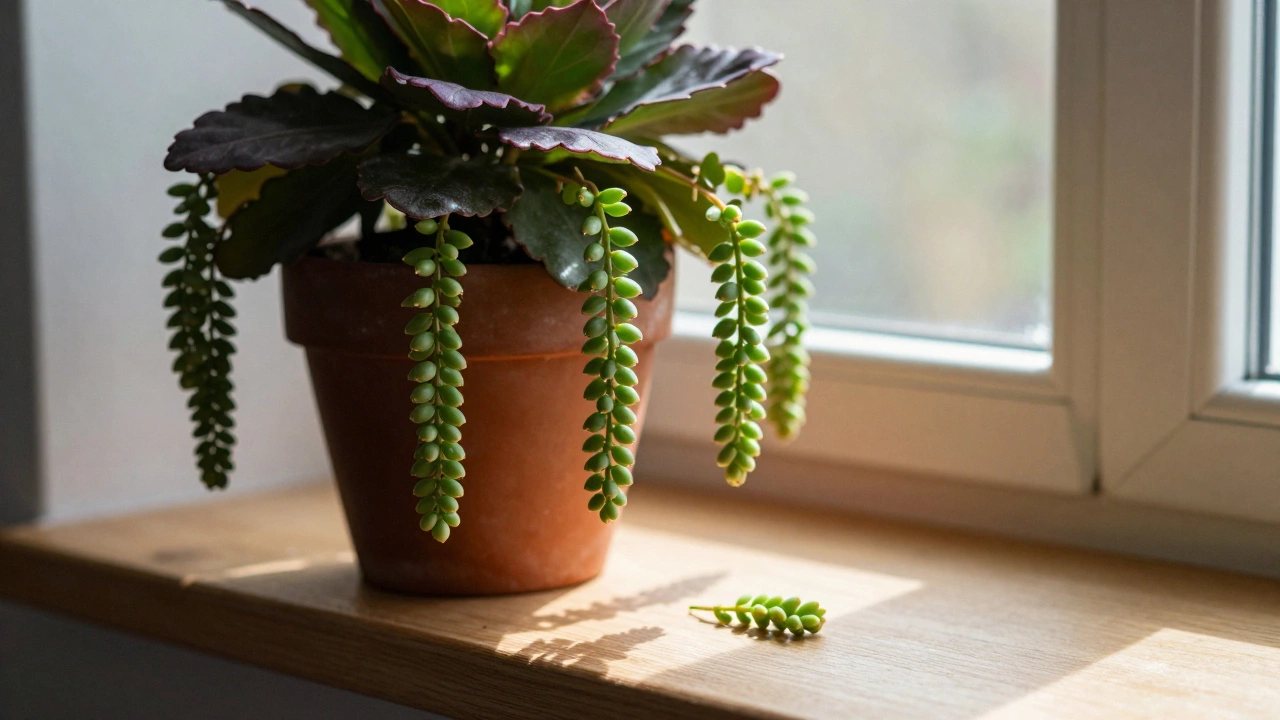
The mother of many babies is a common name for Kalanchoe daigremontiana, a succulent native to Madagascar. It’s also called the devil’s backbone, bryophyllum, or air plant. But ‘mother of many babies’ sticks because it’s so accurate.
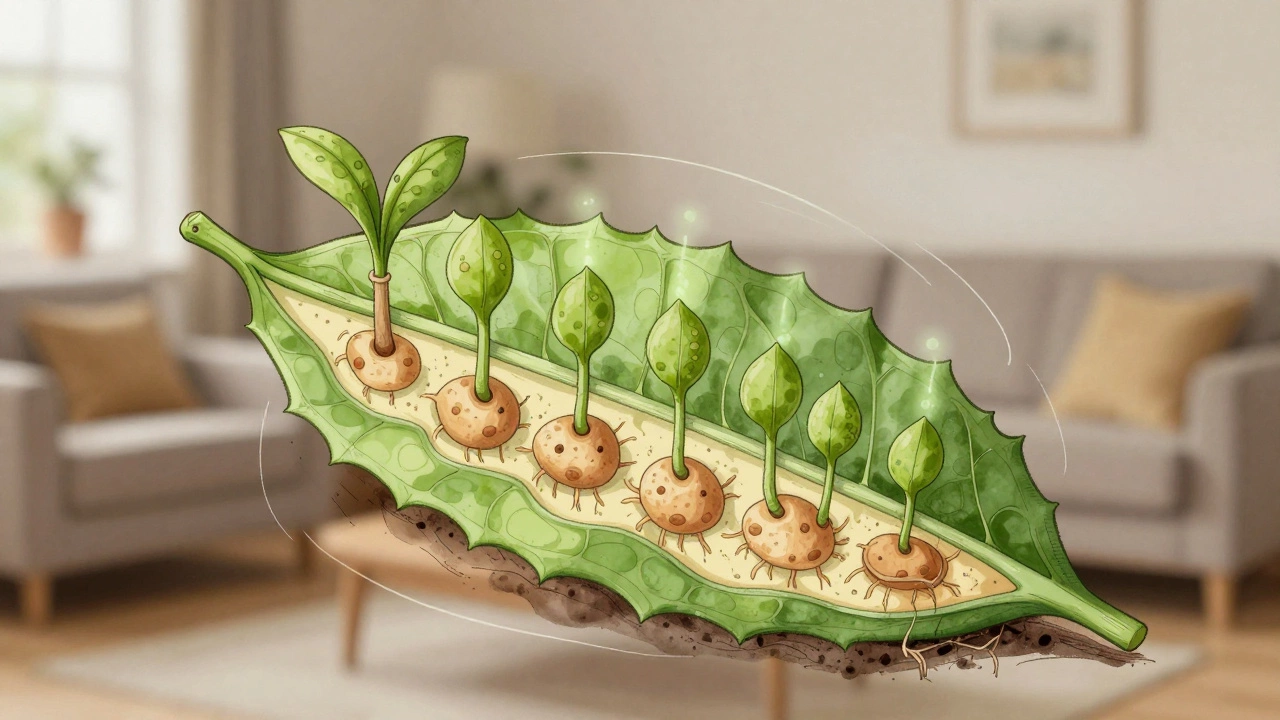
Unlike most plants that grow from seeds, this one reproduces through tiny plantlets that form along the edges of its leaves. Each leaf can carry 10 to 20 of these miniature versions of itself. They’re fully formed - roots, leaves, and all - before they even fall off. When they drop, they root into the soil below. If they land on a windowsill, they’ll cling to the edge and grow sideways. No help needed.
It’s not magic. It’s biology. But it’s biology that makes zero waste gardening possible.
Why It’s a Game-Changer for Sustainable Gardening
Most houseplants you buy come in plastic pots, wrapped in plastic, shipped across continents, and watered with resources that aren’t always renewable. The mother of many babies plant changes that.
One plant, bought once, can become a dozen over a year. No shipping. No packaging. No nursery waste. You’re not buying new plants - you’re cloning your own. That’s a direct cut in carbon footprint.
And here’s the kicker: it doesn’t need much water. It stores moisture in its thick leaves like a desert plant. In the UK, where rain is common but sunlight isn’t always, this plant thrives on windowsills with even weak winter light. You might forget to water it for weeks. It doesn’t care. It just keeps making babies.
Compare that to a fern that needs daily misting or a peace lily that droops if you look at it wrong. The mother of many babies plant is the opposite of high-maintenance. It’s the first plant you should grow if you want to reduce your gardening footprint.
How It Works: The Science Behind the Babies
Here’s how it happens: along the serrated edges of each leaf, special cells activate and form tiny plant embryos. These aren’t seeds. They’re clones. Genetic copies of the parent. They grow roots while still attached, and if they’re not brushed off, they’ll hang there for weeks, drawing nutrients from the leaf until they’re ready to go solo.
Scientists call this vegetative propagation. It’s rare in houseplants. Most succulents need cuttings. This one? It’s built-in. It’s like nature’s version of a self-replicating robot.
And it’s not alone. A few other plants do this - like Kalanchoe pinnata (the cathedral bells plant) or even some ferns. But none do it with the same volume or ease. The mother of many babies plant is the champion.
How to Grow and Care for It (Seriously, It’s That Easy)
You don’t need a green thumb. You just need a windowsill.
- Light: Bright, indirect light. East or west-facing windows work best. It can handle a little direct sun in the morning, but harsh afternoon light will burn the leaves.
- Water: Every 3-4 weeks in winter. Every 2 weeks in summer. Let the soil dry out completely between waterings. Overwatering kills it faster than neglect.
- Pot: Any container with drainage. Terracotta is ideal - it breathes. But even a thrifted mug with a hole poked in the bottom works.
- Soil: Cactus or succulent mix. Regular potting soil holds too much moisture and will rot the roots.
- Temperature: 60-75°F (15-24°C). It hates frost. Keep it away from drafty windows in winter.
That’s it. No fertilizer. No pruning. No misting. If you see a baby plantlet fall off, just place it on top of the soil. In a few weeks, it’ll root. You can even stick it in a glass of water first - it’ll grow roots there too. Then transplant. No rush. It’s patient.
What to Do With All the Babies
Once you’ve got five, then ten, then twenty plants, what do you do?
Give them away. That’s the real sustainable move.
Swap them with neighbors. Drop a few in a community garden. Give one to a friend who’s just moved into their first flat. Plant them in a shared balcony. They’re not just plants - they’re conversation starters. They’re symbols of resilience. They’re proof that you don’t need to buy new things to grow.
Some people even use them in plant-based gift swaps. No wrapping paper. No plastic tags. Just a little pot, a baby plant, and a handwritten note. It’s cheap, meaningful, and zero-waste.
Common Myths - And Why They’re Wrong
People think this plant is invasive. It’s not. In the UK, it’s a houseplant. It won’t take over your garden. It won’t spread through your lawn. It doesn’t flower often, and when it does, the flowers are small and pink. It’s not aggressive.
Others think it’s toxic. True - it contains compounds that can upset pets if eaten. But so do lilies, pothos, and philodendrons. Keep it out of reach of curious cats, and you’re fine. Most pets leave it alone anyway.
And no, it’s not a weed. It’s a cultivated plant with a wild trick up its sleeve.
How It Compares to Other Propagating Plants
| Plant | Propagation Method | Speed of Spread | Water Needs | Light Tolerance | Waste Reduction Potential |
|---|---|---|---|---|---|
| Mother of Many Babies | Plantlets on leaves | Very fast | Very low | Low to medium | High |
| Spider Plant | Stilt plantlets | Fast | Low | Medium | High |
| Pothos | Stem cuttings | Medium | Low | Low | Medium |
| Sedum | Leaf cuttings | Slow | Very low | High | Medium |
| Peace Lily | Division | Slow | High | Low | Low |
The mother of many babies plant wins on every front: speed, ease, water savings, and waste reduction. It’s the most efficient plant for turning one purchase into endless supply.
Where to Get One - And How to Spot a Healthy Plant
You won’t find it at every garden center. But most local plant shops in Brighton, London, or Edinburgh carry it. Look for:
- Dark green, thick leaves with dark purple edges
- Plantlets already forming along the leaf margins
- No brown spots or mushy stems
- A plant that feels firm, not limp
A healthy one costs between £5 and £12. That’s less than a single pot of new soil. And it’ll last you years.
Or, ask a friend. Someone you know probably has one. Just ask for a baby. They’ll be happy to give you one.
Why This Plant Matters More Than You Think
Climate change isn’t just about big policies. It’s about daily choices. Choosing a plant that doesn’t need new resources. Choosing a plant that doesn’t need packaging. Choosing a plant that multiplies without you lifting a finger.
The mother of many babies plant is a quiet rebellion against consumerism. It doesn’t ask for money. It doesn’t ask for time. It just asks for a little light and a little patience.
And in return, it gives you more life. More green. More connection. One baby at a time.
Is the mother of many babies plant safe for pets?
No, it’s not entirely safe. The plant contains compounds that can cause vomiting or diarrhea if ingested by cats or dogs. Keep it out of reach, especially if you have curious pets. Most animals avoid it, but if your pet has a habit of chewing on plants, it’s best to place it on a high shelf or in a room they can’t access.
Can I grow the mother of many babies plant outdoors in the UK?
Not reliably. It’s frost-sensitive and won’t survive UK winters outside. It thrives as a houseplant or in a greenhouse. In summer, you can move it to a sheltered patio, but bring it back inside before temperatures drop below 50°F (10°C). It’s not a garden plant - it’s a windowsill superstar.
Why is it called ‘mother of many babies’?
Because it grows tiny plantlets - fully formed mini versions of itself - along the edges of its leaves. These plantlets fall off and root on their own, creating dozens of new plants from a single parent. It’s like the plant gives birth to clones, and it does it again and again.
How fast does the mother of many babies plant spread?
Very fast. Under good conditions, a single plant can produce 10-20 plantlets every few months. Within a year, you can easily go from one plant to 15-20. It’s one of the fastest propagating houseplants available.
Do I need to fertilize the mother of many babies plant?
Not really. It grows slowly and doesn’t need much nutrition. If you want to encourage faster growth, use a diluted succulent fertilizer once in spring. But it will thrive without any fertilizer at all. Less input = less waste. That’s the point.
Next Steps: Start Small, Think Big
Don’t try to grow ten plants at once. Start with one. Find a mother plant. Bring it home. Watch it. Wait. Let the babies fall. Let them root. Then, give one away.
That’s how change begins. Not with a grand gesture. But with a single leaf, a single baby, and a single act of sharing.