Watering Globe Duration Calculator
Trip Details
Enter your trip details and click calculate to see if watering globes will work for your plants.
Picture this: You’re packing your bags for a long weekend away. You’ve just spent the last hour misting your ferns and checking the soil moisture in your succulents. You stick a glass watering globe into each pot, feeling confident that your plants will be fine while you’re gone. Fast forward three days later. You get home to find your beloved monstera looking like a sad, crispy salad. What went wrong?
The short answer is: it depends. Do watering globes work? Yes, but they are not the miracle cure many marketing videos claim them to be. They are a simple tool with specific limitations. If you treat them as a "set and forget" solution for two weeks, you’ll likely lose your plants. If you use them correctly for short trips or as a supplemental aid, they can save your garden.
How Watering Globes Actually Function
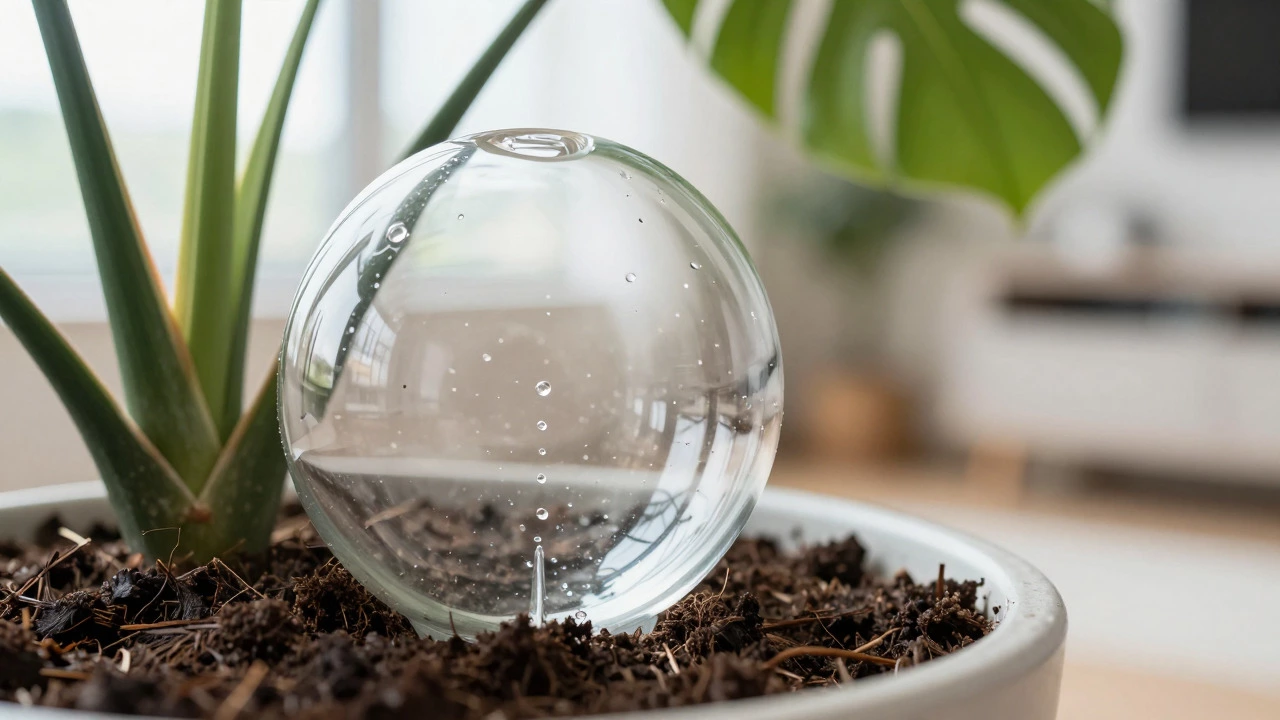
To understand if they work for you, you need to know what’s happening inside that glass bulb. A self-watering spike relies on basic physics, specifically air pressure and gravity. When you fill the globe with water and invert it into the soil, the vacuum seal at the neck prevents the water from rushing out all at once. As the surrounding soil dries out, air bubbles rise up through the neck of the globe, displacing water. This allows more water to drip down into the root zone.
This process is passive. It doesn’t pump; it drips. The rate of flow is determined by the size of the opening at the neck and how dry the soil gets. In dense, clay-heavy soil, water moves slowly. In sandy, fast-draining mix, the globe might empty itself in hours rather than days. Understanding this mechanism is crucial because it means the globe reacts to the soil’s condition, not a timer.
| Advantages | Disadvantages |
|---|---|
| Simple, no electricity required | Limited water capacity (usually 10-16 oz) |
| Prevents overwatering when used correctly | Can crack in freezing temperatures |
| Aesthetic appeal for indoor decor | Not suitable for large plants or outdoor beds |
| Cost-effective compared to smart irrigation | Risk of algae growth in clear glass |
The Capacity Problem: Why Size Matters
Most standard glass watering bulbs hold between 10 and 16 ounces (roughly 300-500ml) of water. Let’s do some quick math. A medium-sized houseplant like a Pothos or Spider Plant might drink 2-4 ounces of water per day during peak summer heat. If you leave for five days, that plant needs 10-20 ounces. One standard globe simply isn’t enough.
I’ve tested this extensively in my own home here in Brighton. During a humid July week, I placed one 16oz globe next to a Fiddle Leaf Fig. By day three, the globe was empty, and the top inch of soil was bone dry. The plant survived because the roots had access to deeper moisture, but it wasn’t ideal. For larger plants, you often need two or three globes per pot to ensure adequate hydration. This clutter can look messy and takes up valuable surface space in the pot.
Soil Type: The Hidden Variable
The effectiveness of a watering globe is heavily dependent on the growing medium. These devices work best in well-aerated, standard potting mixes. They struggle significantly in:
- Succulent and Cactus Mixes: These soils are designed to drain quickly. Air enters the globe too easily, causing it to empty rapidly, or conversely, the water sits in pockets without reaching the sparse root system, leading to rot.
- Dense Clay Soil: Water moves very slowly through clay. The globe may stay full while the roots nearby remain parched because the water hasn’t migrated far enough from the spike.
- Hydrophobic Soil: If your soil has dried out completely and repels water, the globe’s slow drip won’t rehydrate the core of the root ball. You’d need to soak the pot first before inserting the globe.
If you have a mix with perlite or vermiculite, the globe works better because these materials help distribute moisture evenly around the spike.
Glass vs. Plastic: Which Material Lasts Longer?
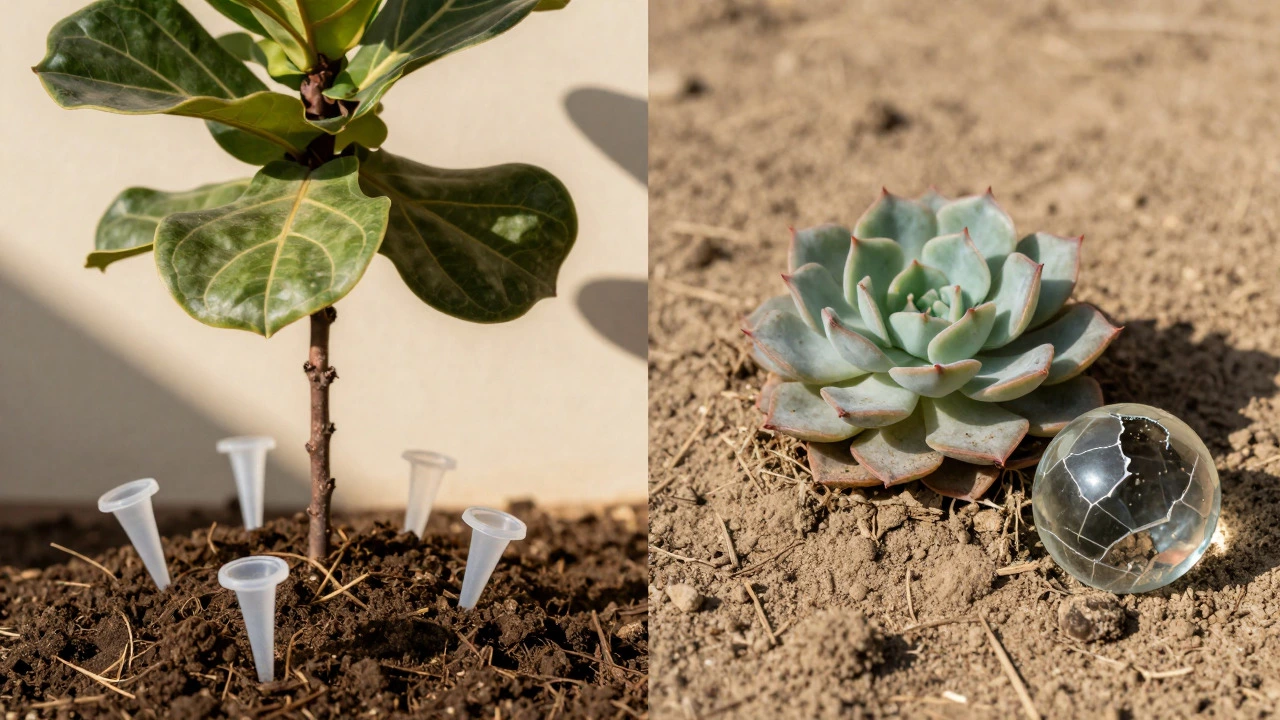
You’ll see two main types on the market: traditional borosilicate glass and modern BPA-free plastic. Each has distinct trade-offs.
Globes made of glass look elegant and don’t degrade over time. However, they are fragile. Dropping one on a tile floor is a guaranteed breakage. More importantly, glass conducts temperature. If you place a glass globe in direct sunlight, the water inside heats up, promoting algae growth. Algae clogs the neck, stopping the flow entirely. You’ll find yourself scrubbing globes with vinegar every few weeks.
Plastic watering spikes are durable and cheaper. Many come in opaque colors, which blocks light and prevents algae. They are also lighter, reducing the risk of tipping over small pots. However, cheap plastics can become brittle under UV exposure if used outdoors, and they aren’t as aesthetically pleasing for minimalist interiors. For sustainable gardening, glass is recyclable, but plastic lasts longer if cared for, reducing replacement waste.
Common Mistakes That Kill Plants
Even if the device works, user error is the biggest killer. Here are the most frequent pitfalls I see:
- Inserting Too Deeply: Pushing the globe straight down to the bottom of the pot places the water source below the main root zone. Roots grow horizontally near the surface. Insert the globe at an angle, aiming for the middle third of the soil depth.
- Ignoring Pre-Watering: Never insert a globe into dry soil. Water the plant thoroughly first, let it drain, then insert the globe. This ensures the soil structure is ready to accept the slow drip.
- Using Them for Outdoor Beds: Rain, wind, and temperature fluctuations make globes unreliable outdoors. They can blow over, crack, or empty too fast in high heat. Stick to potted plants indoors or on sheltered patios.
- Leaving Them for Too Long: Two weeks is pushing it. Even with multiple globes, the water supply runs out. Check your plants after day seven if possible.
Better Alternatives for Extended Absences
If you’re planning a trip longer than a week, or if you have thirsty plants, consider these more reliable methods:
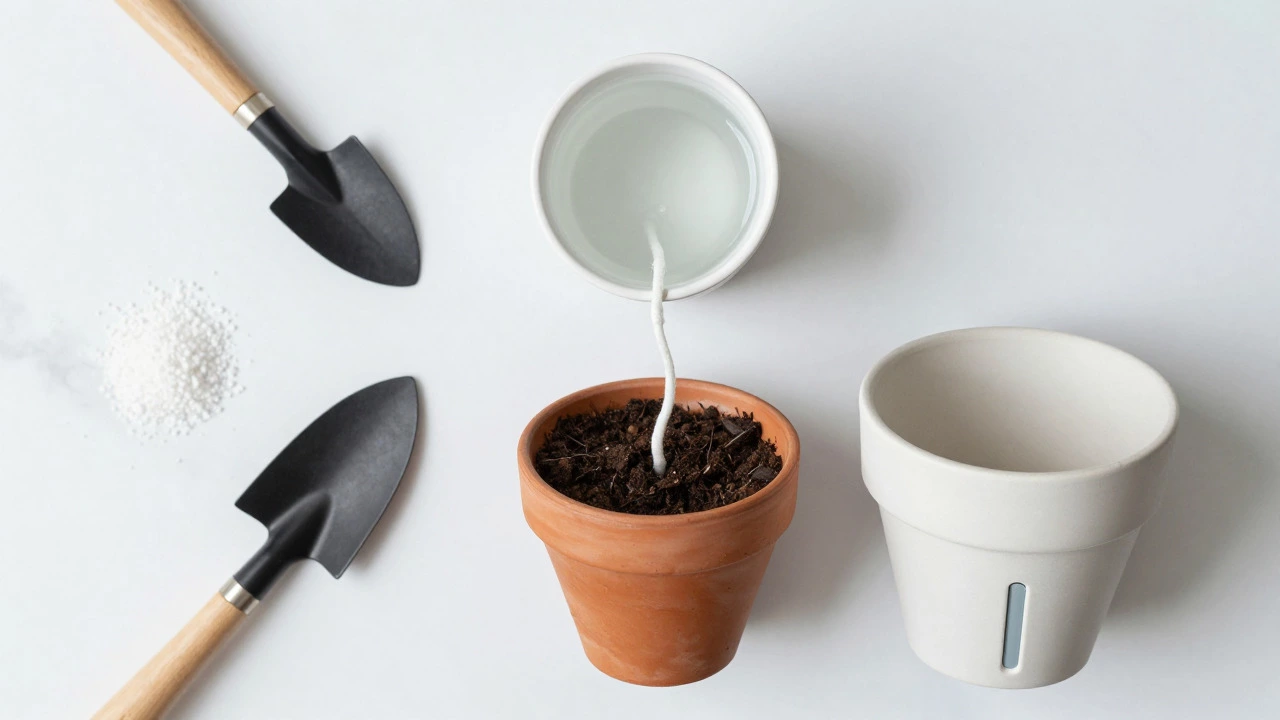
- The Wick Method: Use cotton rope or yarn to connect a reservoir of water (like a bucket placed higher than the pot) to the soil. Capillary action draws water up consistently. It’s cheap, effective, and holds much more water than a globe.
- Self-Watering Pots: These pots have a built-in reservoir. You fill the bottom, and the soil wicks up what it needs. This is the gold standard for low-maintenance care.
- Ask a Friend: Sometimes, human intervention beats technology. A neighbor who checks once a week is better than any passive device for critical plants.
Verdict: Are They Worth It?
Watering globes work for short trips (3-5 days), small to medium-sized indoor plants, and as a backup for busy schedules. They are not a substitute for proper watering habits, nor are they suitable for large trees, outdoor gardens, or extended vacations. If you buy them, choose opaque plastic to avoid algae, use multiple units for larger pots, and always pre-water your plants before insertion. For true peace of mind, invest in self-watering containers instead.
How long does one watering globe last?
A standard 16oz watering globe typically lasts between 3 to 7 days, depending on the plant's thirst, soil type, and ambient temperature. In hot, dry conditions, it may empty in less than 48 hours. For a week-long trip, you usually need two globes per medium-sized plant.
Can I use watering globes for succulents?
Generally, no. Succulents prefer dry soil and are prone to root rot if kept too moist. Watering globes provide a constant trickle of moisture, which can suffocate succulent roots. Only use them if your succulent is in a very deep pot and you monitor the soil closely to prevent over-saturation.
Why is there green stuff in my watering globe?
That green substance is algae. It grows because sunlight penetrates the clear glass and warms the water, creating a perfect environment for photosynthesis. Algae can clog the neck of the globe, stopping water flow. To fix this, remove the globe, rinse it with white vinegar, and switch to an opaque plastic globe or keep it out of direct sun.
Should I put the watering globe in the center of the pot?
No. Placing it in the dead center often puts the water source too deep or too close to the main stem, which can cause rot. Instead, insert the globe at an angle, about one-third to halfway down the side of the pot, targeting the area where most lateral roots grow.
Are self-watering spikes better than watering globes?
Self-watering spikes often refer to larger, plastic reservoir systems that screw into the soil. These are generally more reliable than glass globes because they hold more water (often 1 liter+), are less prone to breaking, and usually have adjustable flow rates. They are a better investment for frequent travelers.