Tomato Fungicide Spray Calculator
Input Settings
Based on the standard safe ratio: 1 tbsp per gallon.
Your Custom Recipe
- Baking Soda: 1 Tbsp
- Liquid Soap: 1 tsp
- Water: 1 Gallon
• Never apply dry powder directly.
• Shake well before every use (it settles).
• Apply only in early morning or late evening to avoid sun scorch.
• Test on a single leaf first to check for sensitivity.
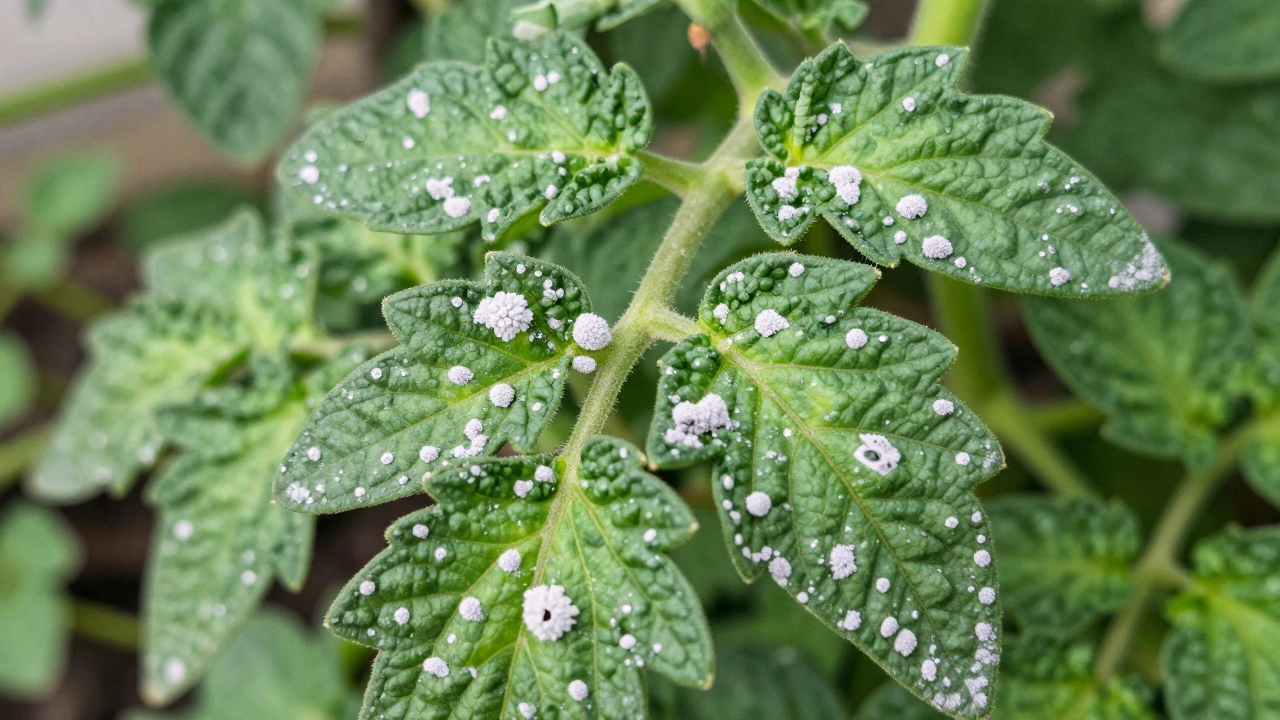
You’ve probably seen it in old gardening forums or heard a neighbor swear by it: sprinkling baking soda around the base of your tomato plants. It sounds too simple to be true, doesn’t it? A kitchen staple solving complex garden problems? The short answer is yes, but with a major catch. You aren’t using it to kill slugs or deter aphids directly. You are using it to fight one specific enemy that ruins tomatoes faster than anything else: powdery mildew.
If you’ve ever pulled up a tomato leaf only to find it covered in white, dusty spots that look like someone shook flour over it, you know the panic. That’s powdery mildew, a fungal disease that thrives in humid conditions and can wipe out your crop if left unchecked. While baking soda won’t cure every ailment your plants face, it is a legitimate, low-cost tool for managing this specific fungus. But how does it actually work, and more importantly, how do you use it without accidentally burning your precious harvest?
The Science Behind the Sprinkle
To understand why we use sodium bicarbonate (the chemical name for baking soda) on tomatoes, we have to look at what fungi need to survive. Fungi, including the ones that cause powdery mildew, prefer neutral to slightly acidic environments. They grow best when the pH level is balanced. Baking soda is alkaline. When you apply it to the surface of a leaf, it raises the pH level of that surface area.
Think of it like changing the temperature in a room so an insect can’t live there. By making the leaf surface more alkaline, you create an environment where the fungal spores struggle to germinate and spread. It doesn’t necessarily kill the existing fungus instantly, but it stops it from taking hold and spreading to healthy leaves. This is why timing matters immensely. If you wait until your entire plant is coated in white dust, baking soda alone won’t save it. It works best as a preventative measure or when the infection is just starting.
Does baking soda kill bugs on tomato plants?
No, baking soda is not an insecticide. It will not kill aphids, whiteflies, or caterpillars. Its primary function in the garden is as a fungicide against powdery mildew. Relying on it for bug control will leave your plants vulnerable to infestation.
The Danger Zone: Why Pure Baking Soda Burns
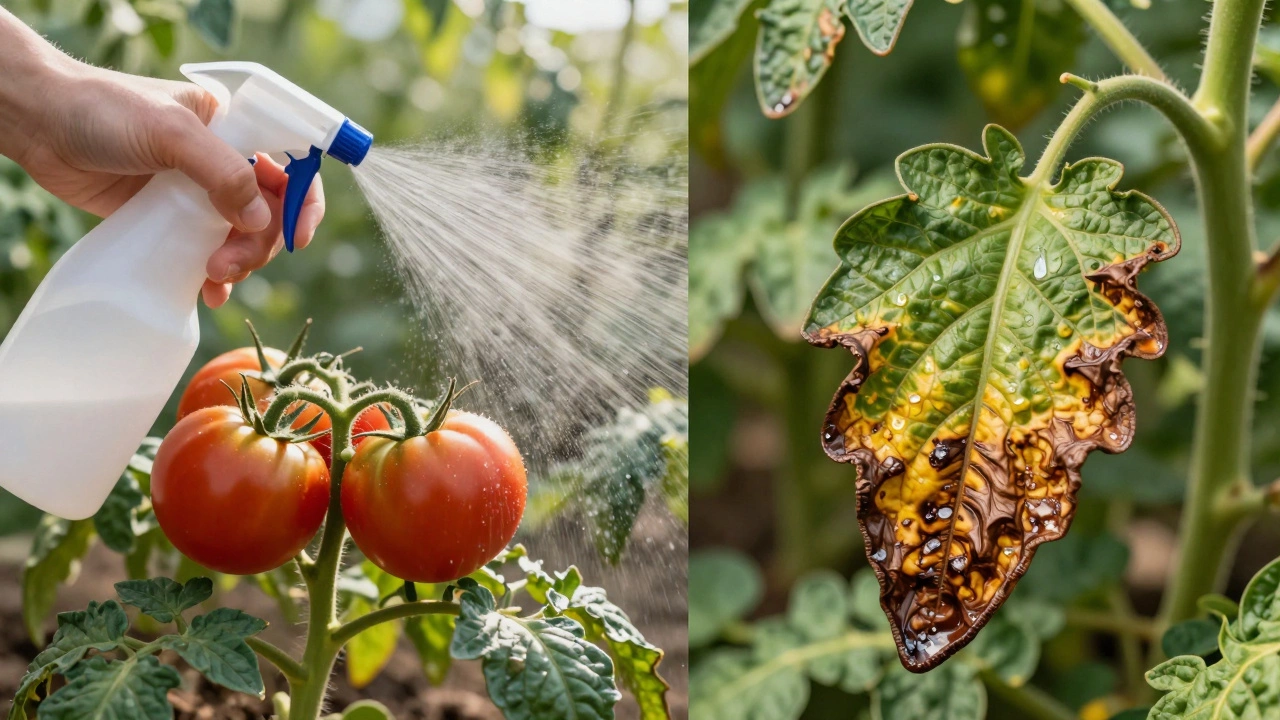
Here is where most gardeners go wrong. I’ve seen people take a box of baking soda and shake it generously over their soil and leaves. Within days, those leaves turn brown, crispy, and fall off. This isn’t the disease; it’s chemical burn. Sodium bicarbonate is harsh. In high concentrations, it draws moisture out of the plant tissue and damages cell walls.
Tomato plants are sensitive. Their leaves are large and broad, providing plenty of surface area for absorption. If you apply undiluted powder, you risk damaging the very parts of the plant responsible for photosynthesis. Without healthy leaves, your tomatoes won’t get the energy they need to ripen. So, never sprinkle dry baking soda directly onto foliage. Always mix it into a solution, and even then, keep the concentration low.
The Right Recipe for a Tomato Fungicide Spray
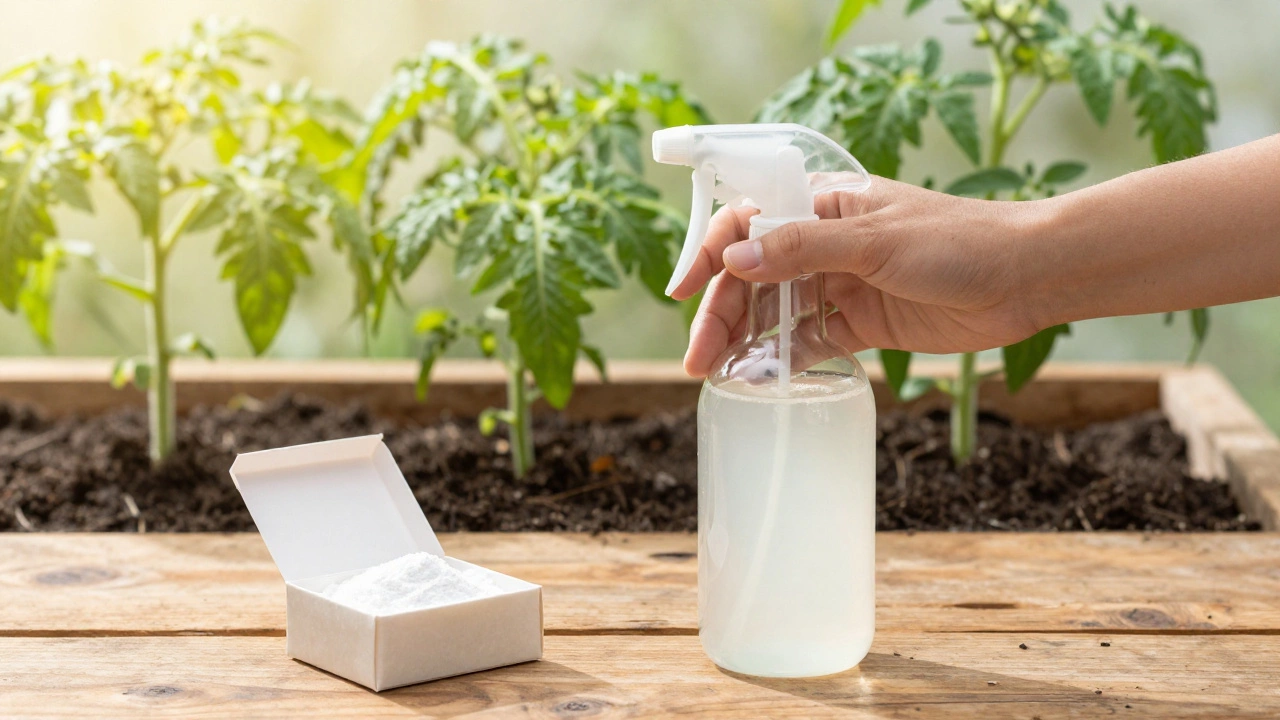
Using baking soda effectively requires a precise recipe. You’re not just mixing water and powder; you’re creating a stable suspension that sticks to the leaves and includes a surfactant to help it spread. Here is the standard, safe ratio used by many organic growers:
- 1 tablespoon of baking soda
- 1 gallon of water
- 1 teaspoon of liquid soap (like castile soap or mild dish soap)
- 1 teaspoon of horticultural oil (optional, but helps stickiness)
Mix these ingredients thoroughly in a spray bottle. The soap acts as a surfactant, breaking the surface tension of the water so it spreads evenly across the waxy cuticle of the tomato leaf. The oil helps the mixture adhere to the leaf, especially if it rains lightly. Shake well before each use, as the baking soda will settle at the bottom.
Application Strategy: Timing Is Everything
When you apply this spray makes a huge difference in its success. Never spray your tomatoes during the heat of the day. Sunlight hitting wet leaves can act like a magnifying glass, focusing heat and causing severe scorch marks. Even without direct sun, evaporation happens quickly in the afternoon, leaving behind concentrated salts that can burn the leaf edges.
The best time to treat your plants is early in the morning or late in the evening. Early morning is ideal because the spray has time to dry before nightfall. Wet leaves overnight encourage bacterial growth, which can lead to blight-a different problem entirely. Aim for complete coverage. You want to hit the undersides of the leaves too, as that’s where mildew often starts. Apply the spray every 7 to 10 days as a preventative measure, or every 5 to 7 days if you see early signs of infection.
| Remedy | Target Issue | Effectiveness | Risk Level |
|---|---|---|---|
| Baking Soda Spray | Powdery Mildew | High (Preventative) | Medium (Leaf Burn) |
| Neem Oil | Aphids, Mildew, Whiteflies | High | Low |
| Milk Spray | Powdery Mildew | Moderate | Very Low |
| Vinegar Solution | Weeds, Some Fungi | Low for Leaves | High (Plant Death) |
What Baking Soda Won’t Do
It’s crucial to manage expectations. Baking soda is not a silver bullet. It will not stop blight, which is caused by bacteria or different types of fungi that thrive in wet soil rather than humid air. It won’t deter squirrels, deer, or rabbits. If your tomatoes are being eaten by insects, baking soda will do nothing. In fact, some pests might ignore the slight change in taste, while others might be repelled temporarily, but it’s not a reliable deterrent.
If you’re dealing with blossom end rot, adding baking soda to the soil is useless. Blossom end rot is a calcium deficiency issue related to inconsistent watering, not pH balance in the leaves. Don’t confuse foliar treatments with soil amendments. Putting baking soda in the soil can actually harm your tomatoes by raising the soil pH too high, locking out essential nutrients like iron and manganese. Keep the baking soda on the leaves, strictly diluted, and keep it out of the ground.
Alternative Organic Solutions
If baking soda feels too risky or you’ve tried it without success, there are other organic options. Neem oil is a powerhouse. It contains azadirachtin, which disrupts the life cycle of insects and also has antifungal properties. It’s safer for leaves than baking soda because it’s designed for agricultural use. Another popular home remedy is milk. A solution of one part milk to nine parts water can suppress powdery mildew. The proteins in milk react with sunlight to produce hydrogen peroxide, which kills the fungus gently without burning the plant. It’s less effective than baking soda for heavy infections but much safer for delicate seedlings.
Prevention Over Cure
The best way to avoid needing any spray is to prevent the conditions that allow mildew to thrive. Powdery mildew loves humidity and poor air circulation. When planting your tomatoes, give them space. Crowded plants trap moisture between their leaves, creating a perfect breeding ground for fungus. Use drip irrigation instead of overhead watering. Wetting the leaves regularly encourages disease. Water at the base of the plant, keeping the foliage dry.
Pruning is also key. Remove lower leaves that touch the soil. These are the first to get infected and often don’t contribute much to fruit production anyway. Improving airflow around your plants reduces humidity levels naturally. If you grow tomatoes in containers, ensure they have good drainage and aren’t sitting in saucers full of water. Healthy, airy plants resist disease far better than stressed, crowded ones.
Final Thoughts on Garden Hacks
Gardening is full of myths passed down through generations. Some work, some don’t, and some work only if you do them exactly right. Using baking soda around tomato plants falls into the latter category. It’s a valid tool for fighting powdery mildew, but it demands respect. Dilute it properly, apply it at the right time, and monitor your plants closely for signs of stress. If you see yellowing or browning edges, stop immediately and rinse the leaves with plain water. Your tomatoes will thank you for the protection, provided you don’t overdo it.
Can I put baking soda in the soil for tomatoes?
No, you should not add baking soda to the soil. Tomatoes prefer slightly acidic soil (pH 6.0-6.8). Adding baking soda raises the pH, which can lock out essential nutrients like nitrogen, phosphorus, and potassium, leading to stunted growth and poor fruit yield.
How long does it take for baking soda to work on powdery mildew?
You may see a reduction in new spore formation within 24 to 48 hours. However, existing white patches may not disappear completely. Consistent application every 7-10 days is necessary to prevent spread and allow the plant to outgrow the infected areas.
Is baking soda safe for edible tomatoes?
Yes, baking soda is non-toxic and safe for edible crops. However, it is recommended to wash your tomatoes thoroughly before eating to remove any residue from the spray, which can affect the taste.
Why are my tomato leaves turning brown after spraying baking soda?
This is likely leaf burn caused by a solution that is too strong or applied in direct sunlight. Reduce the amount of baking soda in your next batch and always spray in the early morning or late evening.
Does baking soda help with blight?
Baking soda is not effective against early or late blight, which are caused by different pathogens (oomycetes). Blight requires copper-based fungicides or systemic treatments for effective management.