🌱 Lawn Health & Greenness Score Calculator
Answer these three key questions to see how close your lawn is to that deep emerald look. Based on the guide, optimal conditions are a pH of 6.0–7.0, mowing at 6–8 cm, and consistent autumn feeding.
Your Lawn Health Score
Your grass isn't turning yellow because you're doing something wrong. It's usually turning pale because it's stressed or starving. If you want that rich, deep emerald look without looking like a professional groundskeeper, you need to fix three things: the soil chemistry, the light exposure, and how high you cut your blades.
Most UK lawns suffer from acidic soil, which locks up nutrients so the roots can't grab them. Even if you feed the lawn, if the pH is too low, the fertilizer sits there unused. That’s why your neighbor’s lawn looks darker than yours despite using the same products. Let’s fix that first.
Fix the Foundation: Soil pH and Nutrients
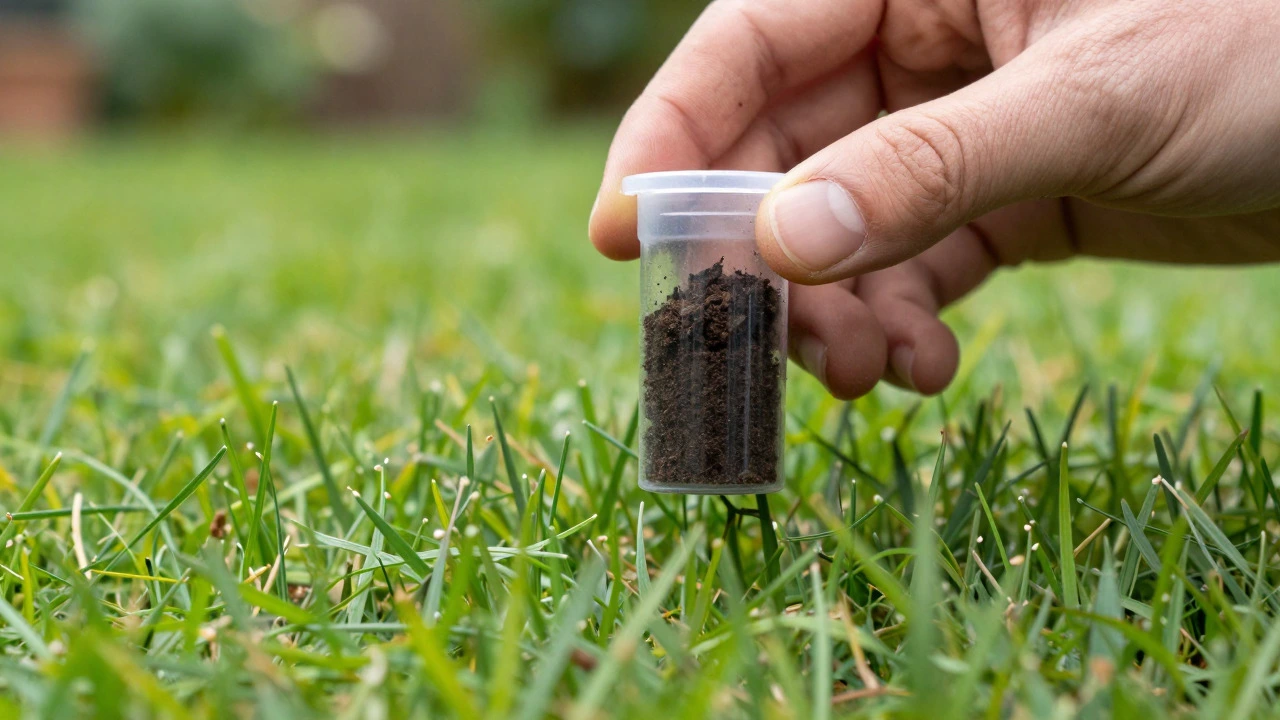
Soil pH is a measure of acidity or alkalinity in the ground that determines nutrient availability. For most cool-season grasses common in the UK, like Perennial Ryegrass and Kentucky Bluegrass, the sweet spot is between 6.0 and 7.0. If your soil is below 5.5, iron and phosphorus become hard for roots to absorb, leading to chlorosis (yellowing).
You don’t need a fancy lab test to start. A simple home kit costs about £10-£15 and gives you a ballpark figure. If the result comes back acidic (below 6.0), apply agricultural lime. In Brighton, where rainfall is frequent, leaching happens faster, so check twice a year-once in spring and once in late summer. If the soil is alkaline (above 7.5), sulfur or acidifying fertilizers help bring it down.
Nitrogen is the engine for green color. But here’s the catch: too much burns the leaves, and too little keeps the lawn brown. Use a balanced NPK fertilizer with a higher first number (Nitrogen). For example, a 30-4-4 blend is great for boosting color quickly. Apply in early September for autumn greening, not just in spring. Autumn feeding helps the grass build root reserves before winter, resulting in a more vibrant start next May.
Mow Higher Than You Think
This is the biggest mistake amateur gardeners make. We think short grass looks neat, but short grass is weak grass. When you mow below 2 inches (5 cm), you expose the soil to heat and sunlight, drying it out. The grass responds by growing upward rather than rooting downward. Shallow roots mean less water absorption and more stress during dry spells.
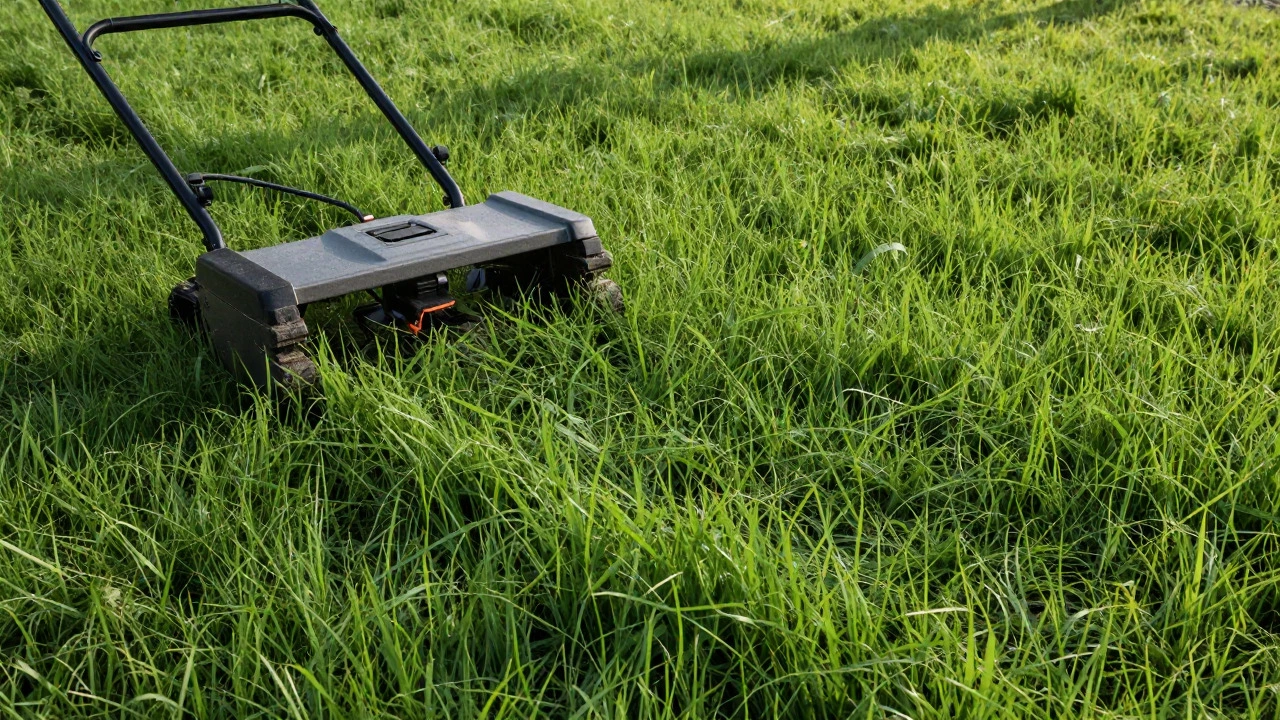
Set your mower deck to 2.5 to 3 inches (6-8 cm). Yes, it will look slightly wilder, but the blades are thicker and healthier. This creates a dense carpet that shades out weeds naturally. Also, never remove more than one-third of the blade height in a single pass. Cutting too aggressively causes scalping, leaving white patches that take weeks to heal. If the grass has grown long after a holiday, mow at the highest setting first, then lower it gradually over two passes.
Water Deeply, Not Daily
In the UK, we often forget about irrigation until the ground cracks. But even in wetter regions, localized dry spots appear in late summer. Shallow daily watering encourages shallow roots. Instead, water deeply for 20-30 minutes every two to three days. This forces the roots to dig deeper into the subsoil for moisture, making the plant more drought-resistant and robust.
Check your soil moisture before watering. Stick your finger into the ground. If it feels damp an inch down, skip the hose. Overwatering leads to fungal diseases like brown patch, which kills the green color faster than thirst does. Early morning is the best time to water, as it minimizes evaporation and reduces the risk of mold developing on wet leaves overnight.
Light Exposure and Aeration
Grass needs light to photosynthesize. If your lawn is under heavy tree shade, no amount of fertilizer will give you a deep green. You have two options: accept a lighter green and use shade-tolerant varieties, or thin the tree branches to let more light through. Aim for at least four to six hours of direct sun per day for optimal color.
If your soil feels spongy or water pools after rain, compaction is likely the issue. Compacted soil suffocates roots, preventing oxygen exchange. Core aeration solves this. Rent a hollow-tine aerator or buy a manual spike tool. Punch holes 3-4 inches deep across the lawn in late summer. This opens up pathways for air, water, and fertilizer to reach the root zone. Follow up with top-dressing: spread a thin layer of compost or loam over the holes to fill them in.
Feeding Schedule for Maximum Color
Consistency beats intensity. Here is a simple annual schedule tailored for UK conditions:
- March/April: Apply pre-emergent weed control if needed, followed by a slow-release nitrogen fertilizer.
- June: Light feeding if the lawn looks tired. Focus on mowing height and watering.
- September/October: Heavy feeding with a high-nitrogen, low-phosphorus formula. This is the critical window for deep green color heading into winter.
- November: Stop fertilizing. Let the grass go dormant.
Avoid quick-release fertilizers in hot weather, as they can burn the turf. Slow-release granules provide steady nutrition over 6-8 weeks, keeping the color consistent without spikes and drops.
| Issue | Likely Cause | Action Plan |
|---|---|---|
| Pale Yellow Patches | Low Nitrogen or Acidic Soil | Test pH; apply lime if acidic; use high-N fertilizer |
| Brown Spots | Drought Stress or Fungus | Deep watering; improve drainage; aerate soil |
| Thin Growth | Compaction or Low Light | Aerate; prune trees; overseed with shade-tolerant mix |
| Weedy Appearance | Weak Grass Competing with Weeds | Raise mowing height; thicken turf via feeding; spot treat weeds |
Common Mistakes That Kill Color
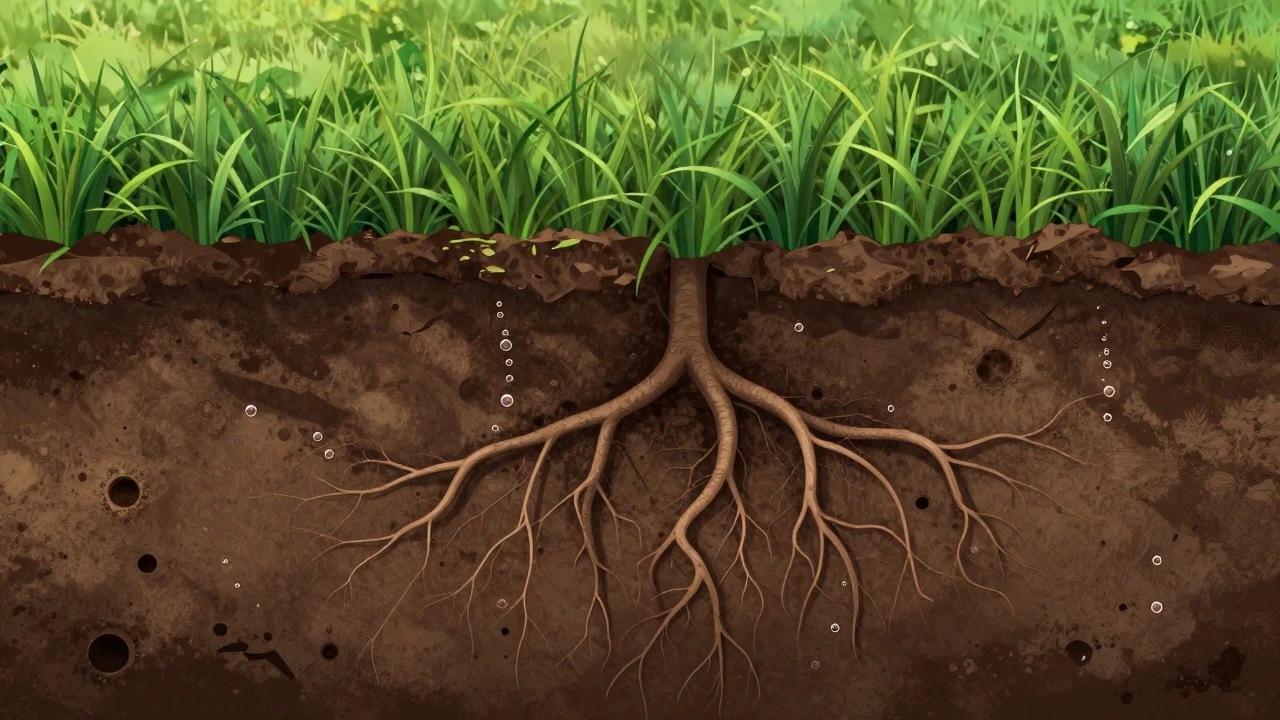
One major error is ignoring thatch buildup. Thatch is the layer of dead stems and roots between the soil and the living grass. A little thatch (up to 1/2 inch) is good insulation. More than that blocks water and air. Dethatch annually in spring if the layer gets thick. Another mistake is using the wrong seed mix. If you live in a shady area but planted full-sun ryegrass, it will always struggle. Match the seed to your site conditions.
Also, be careful with pesticides. Some broadleaf weedkillers can temporarily stunt growth or lighten color. Wait at least two weeks after spraying before applying fertilizer to avoid chemical interactions. And finally, don’t ignore edge burning. Dry edges happen when sprinklers miss the perimeter or when foot traffic compacts the border. Water these areas manually and consider installing edging to define the boundary clearly.
Frequently Asked Questions
Why is my lawn yellow even though I water it daily?
Daily shallow watering encourages shallow roots, making the grass vulnerable to heat stress. Switch to deep, infrequent watering (every 2-3 days) to force roots deeper. Also, check your soil pH; if it’s too acidic, nutrients aren’t being absorbed regardless of water volume.
What is the best time to fertilize for a greener lawn in the UK?
Late August to mid-September is the prime window. Applying a high-nitrogen fertilizer now helps the grass store energy for winter, leading to a much darker, thicker start in spring. Avoid fertilizing in peak summer heat to prevent burning.
Does mowing higher really make grass greener?
Yes. Taller grass has larger leaf surfaces for photosynthesis and casts shade on the soil, reducing moisture loss. This allows the roots to grow deeper and stronger, resulting in a denser, healthier, and visually darker turf.
Can I use Epsom salts to make my lawn greener?
Epsom salts contain magnesium and sulfur. They can help if your soil is deficient in magnesium (causing interveinal yellowing). However, they are not a replacement for nitrogen. Use them sparingly, dissolved in water, only if a soil test confirms a deficiency.
How do I fix compacted soil without renting expensive equipment?
You can use a manual hollow-tine aerator or even a pitchfork. Poke holes 3-4 inches deep across the entire lawn. Then, spread a thin layer of compost or sand over the holes. This fills the voids and improves soil structure over time. Do this in late summer when the soil is moist but not waterlogged.