Peach Tree Health & Pruning Simulator
Enter your tree's details to see how neglect or proper care affects its future.
Health Assessment
You bought a lovely young peach tree, planted it in your Brighton garden, and figured you’d just let nature take its course. After all, wild trees grow fine without help, right? Wrong. When it comes to stone fruits like peaches, doing nothing is actually doing harm. If you skip pruning, your tree won’t just get messy; it will fundamentally change how it grows, produces fruit, and fights off disease.
Here’s the blunt truth: an unpruned peach tree becomes a tangled, shaded mess that stops producing good fruit within three to five years. It doesn’t die immediately, but it slowly suffocates itself under its own weight. For UK gardeners, especially those dealing with our damp winters and unpredictable summers, neglecting this task turns a productive asset into a liability. Let’s break down exactly what happens, stage by stage, so you can decide if you’re willing to accept the consequences.
The Immediate Impact on Structure and Light
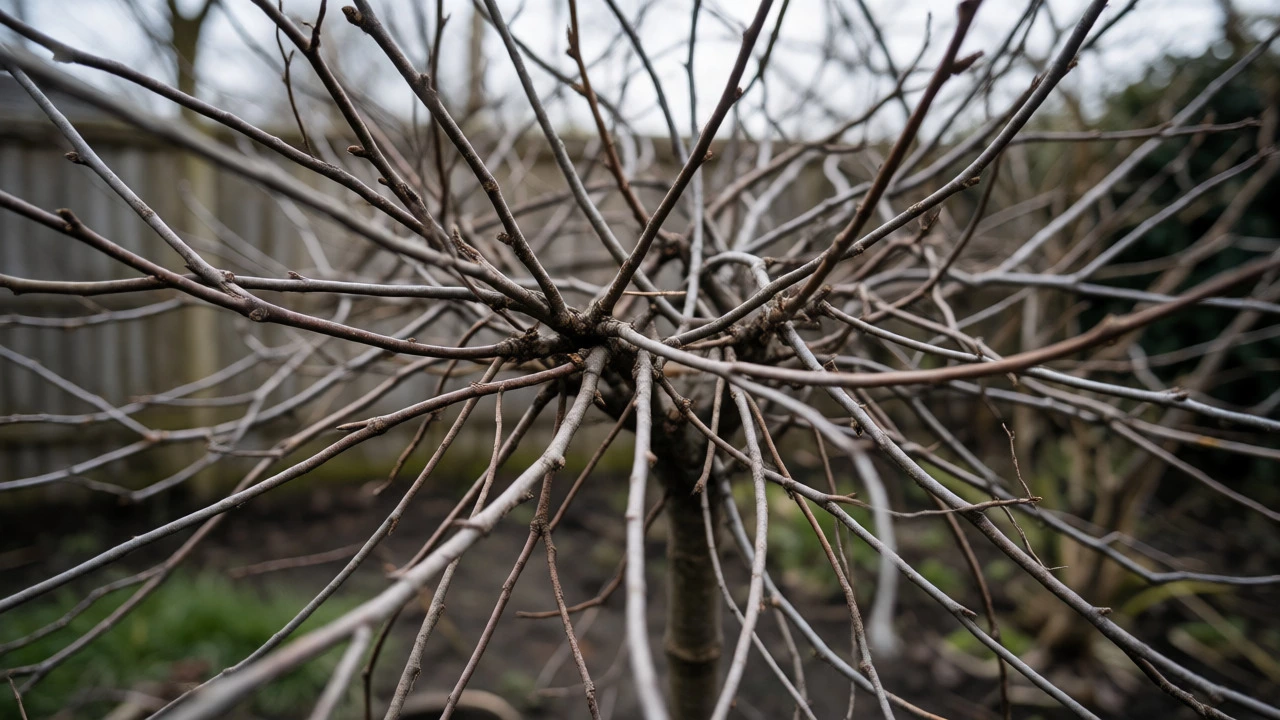
Peach trees are naturally vigorous growers. In their first year or two after planting, they send out long, whip-like branches called "whips." Without intervention, these whips continue to elongate rapidly. By year three, you’ll notice the canopy becoming dense and bushy rather than open and airy.
This density creates a serious problem: light competition. Peach fruit buds form primarily on one-year-old wood-the growth produced in the previous season. These buds need sunlight to mature properly. When the center of the tree fills up with old, crossing branches, light cannot penetrate deep into the canopy. The result? The inner branches become leggy and bare because they aren’t photosynthesizing efficiently. They essentially starve while the outer tips hog all the sun.
- Dense Canopy: Airflow is blocked, creating humid microclimates inside the tree.
- Leggy Growth: Inner branches stretch desperately for light, becoming weak and spindly.
- Bare Centers: Lower and inner branches drop leaves due to shade, leaving only fruit at the very top.
Fruit Quality Deteriorates Rapidly
You might think more branches mean more fruit. Initially, yes, you might see a burst of small peaches. But quality plummets fast. Because the tree is spreading its energy across hundreds of thin, unmanaged shoots, it cannot concentrate resources into developing large, sweet fruits.
In a neglected tree, you’ll typically see three issues with the harvest:
- Small Size: Fruits remain pea-sized or walnut-sized because the tree has too many competing sinks for sugar and nutrients.
- Poor Flavor: Sunlight is crucial for sugar development (Brix levels). Shaded fruits taste bland and watery.
- Biennial Bearing: The tree gets stuck in a boom-and-bust cycle. One year it produces a tiny crop, the next it rests entirely. This exhausts the tree’s reserves and leads to erratic yields.
If you’re growing varieties like 'Avalon Pride' or 'Hale Haven'-popular choices for UK climates-you want big, juicy fruits. Neglect guarantees you’ll end up with hard, tart pebbles instead.
Disease and Pest Vulnerability Skyrockets
This is the biggest risk for UK gardeners. Our climate is notorious for dampness, which fuels fungal diseases. An unpruned peach tree acts like a sponge for moisture. Without proper airflow, water sits on the bark and leaves for days after rain, creating the perfect environment for pathogens.
| Feature | Unpruned Tree | Pruned Tree |
|---|---|---|
| Airflow | Poor; stagnant air pockets | Good; wind penetrates canopy |
| Drying Time | Slow; stays wet longer | Fast; dries quickly after rain |
| Disease Risk | High (Brown Rot, Leaf Curl) | Low (easier to spot early) |
| Pest Access | Hidden; hard to treat | Visible; easy to spray/manage |
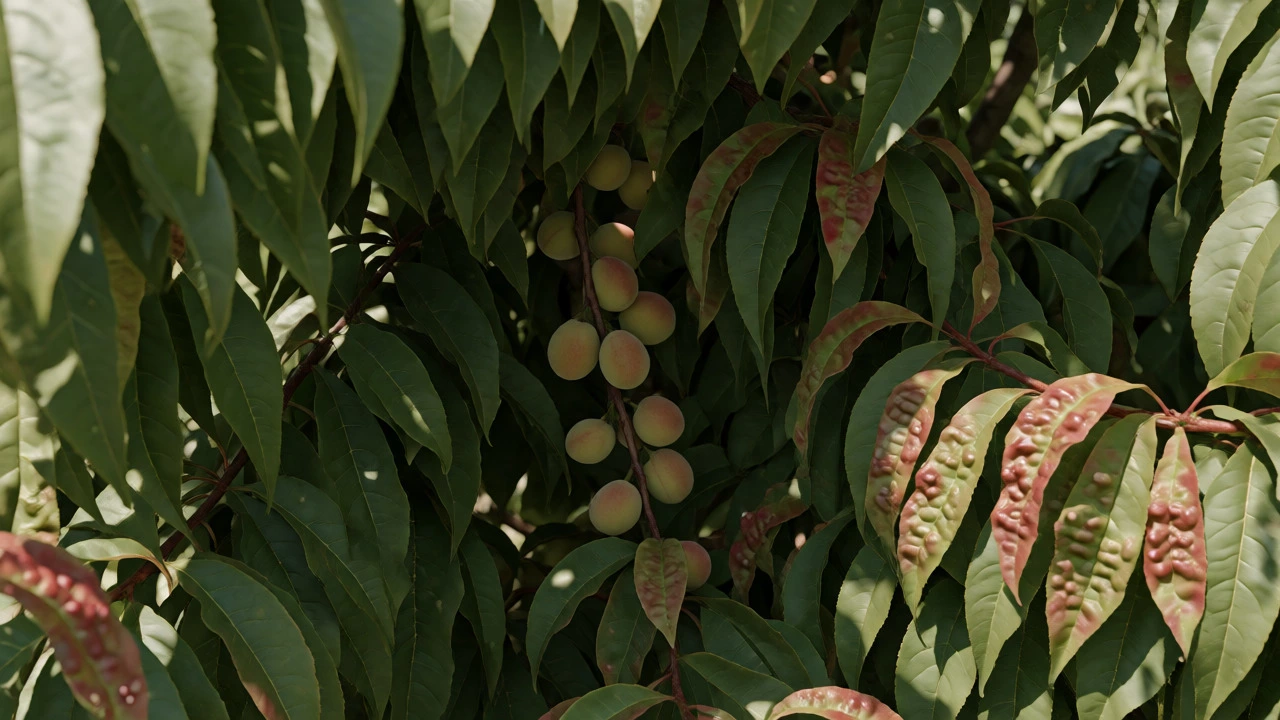
Peach Leaf Curl (a fungal disease caused by Taphrina deformans) thrives in these conditions. It causes leaves to pucker, turn red, and fall off prematurely. Once infected, the tree loses its ability to feed itself for the rest of the season, weakening it further. Similarly, Brown Rot attacks the fruit directly. In a dense tree, you won’t even see the rotting fruit until it’s a black, mummy-like blob hanging from a branch, having already spread spores to neighbors.
Structural Failure and Branch Breakage
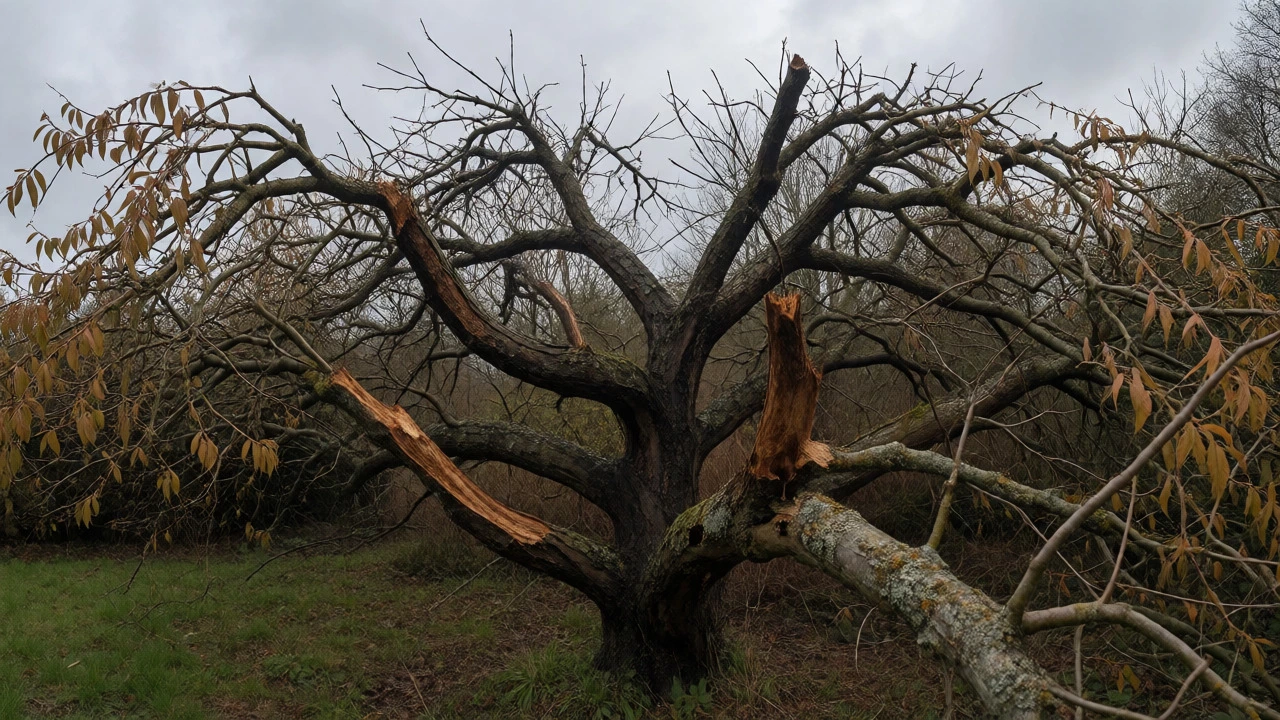
Peach wood is relatively brittle compared to apple or pear wood. It breaks easily under stress. In an unpruned tree, branches often cross each other. As they thicken, they rub together, wearing away the protective bark. These wounds are entry points for bacteria like Pseudomonas syringae, which causes bacterial canker-a common killer of stone fruits in the UK.
Furthermore, heavy crops on unsupported branches lead to breakage. Imagine a thick branch laden with 50kg of peaches during a late summer storm. Without the structural support provided by strategic pruning (keeping the tree short and wide), that branch snaps. A snapped main limb is a major wound that takes years to heal, if it heals at all. Often, the whole side of the tree dies back.
Long-Term Decline and Death
So, where does this path lead? Eventually, the tree gives up. The combination of poor light, disease pressure, and structural weakness drains the tree’s vitality. You’ll notice less new growth each spring. The tree becomes stressed, making it susceptible to borers and root rots.
Most unpruned peach trees in the UK last about 8-10 years before they become too diseased or broken to be worth keeping. Compare this to a well-maintained tree, which can produce high-quality fruit for 15-20 years. You’re effectively halving the lifespan of your investment.
Can You Fix an Overgrown Peach Tree?
If you’ve inherited a monster or simply forgot for a few years, don’t panic. You can revive it, but you have to be gentle. Never remove more than 30% of the live wood in one season. Aggressive pruning on a stressed tree can shock it into death.
Follow this recovery plan:
- Year 1: Remove dead, damaged, and crossing branches. Open up the center slightly to let light in.
- Year 2: Reduce height if necessary to make harvesting easier. Remove any remaining inward-growing shoots.
- Year 3: Begin selective thinning to encourage new fruiting wood near the outside of the canopy.
Timing matters. In the UK, prune in late winter (February) or early spring before bud break. Avoid pruning in autumn, as cuts made then are prone to silver leaf disease, a fatal fungal infection prevalent in our wetter months.
FAQ
Do I really need to prune my peach tree every year?
Yes. Peaches fruit on new wood (growth from the previous year). Annual pruning encourages the production of this fresh, fruit-bearing wood. Skipping a year means you miss the window for optimal fruiting sites, leading to sparse harvests on old, tired branches.
What happens if I prune too heavily?
Heavy pruning stimulates vigorous vegetative growth at the expense of fruit production. The tree tries to replace lost foliage quickly, resulting in lots of green leaves but few flowers. Aim to remove no more than 20-30% of the canopy annually to maintain balance.
When is the best time to prune a peach tree in the UK?
Late winter to early spring (February to March) is ideal. Pruning when the tree is dormant reduces stress and minimizes the risk of fungal infections entering through fresh cuts. Avoid pruning in autumn or winter rains to prevent Silver Leaf disease.
Will my peach tree die if I never prune it?
It won’t die overnight, but it will decline significantly. Expect reduced fruit size, increased disease susceptibility (like Brown Rot), and eventual structural failure. Most unpruned trees become unproductive nuisances within 5-7 years.
How do I know if my peach tree needs pruning?
Look for signs like: branches crossing and rubbing, a dense center where you can’t see through the tree, fruit only forming at the very top, and visible damage or disease spots hidden deep within the canopy.