Flower Magnesium Deficiency Checker
This tool helps you determine if your flowers actually need Epsom salt based on scientific evidence. Most gardeners don't need it!
Many gardeners swear by Epsom salt for their flower beds. You’ve probably heard the advice: sprinkle it around your roses, petunias, or marigolds, and watch them explode with color. But is it really a fertilizer-or just a gardening myth? Let’s cut through the noise and look at what actually happens when you use Epsom salt on flowers.
What Is Epsom Salt, Really?
Epsom salt isn’t salt at all. It’s Magnesium sulfate, a naturally occurring mineral compound made of magnesium, sulfur, and oxygen. It’s named after Epsom, a town in England where it was first discovered in mineral springs. Unlike nitrogen-phosphorus-potassium (NPK) fertilizers, Epsom salt contains no nitrogen or phosphorus. Its only nutrients are magnesium and sulfur.
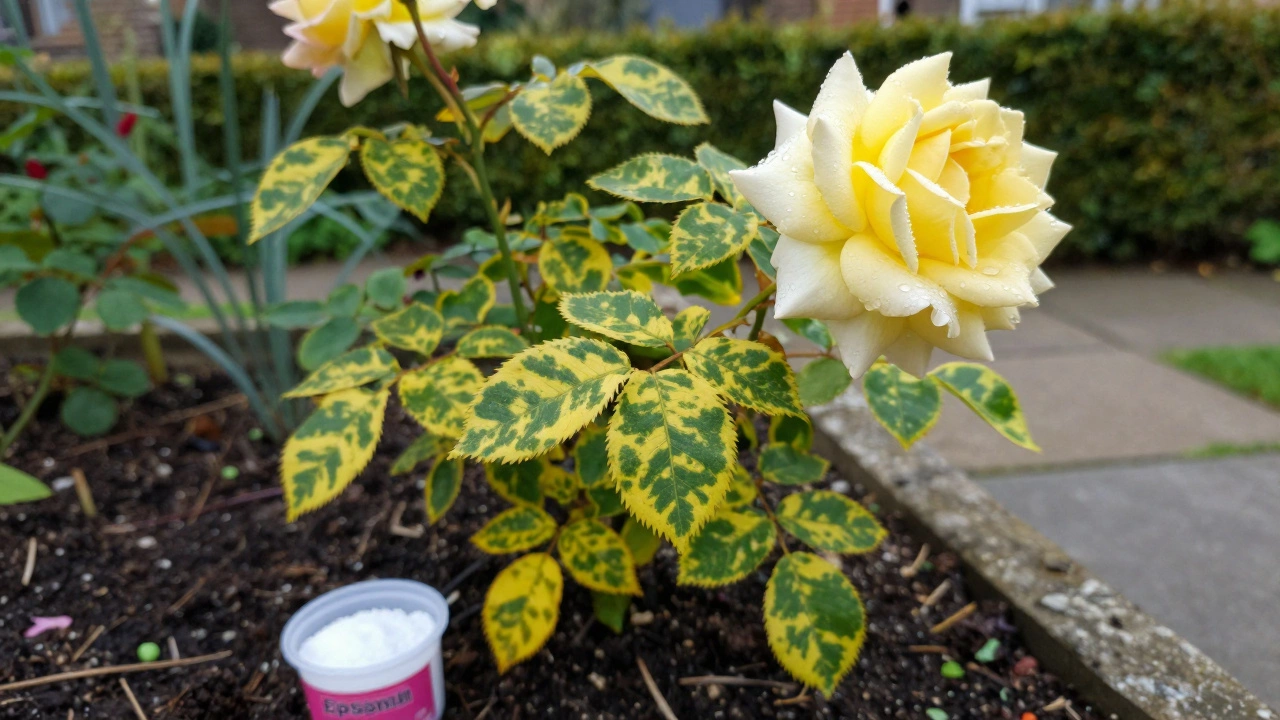
So if you’re hoping it’ll act like a full fertilizer, you’re setting yourself up for disappointment. But that doesn’t mean it’s useless. Magnesium is a core part of chlorophyll-the green pigment plants use to turn sunlight into energy. Without enough magnesium, leaves turn yellow between the veins. Sulfur helps with protein formation and enzyme activity. Both are essential, but most soils already have enough.
When Epsom Salt Actually Helps Flowers
Flowers don’t need Epsom salt unless they’re deficient in magnesium or sulfur. And in most UK soils? That’s rare. The UK has naturally high levels of magnesium in clay and loam soils. If your garden is in Brighton, where the soil is often sandy or chalky, you might be one of the few who actually benefit.
Here’s when you might see a difference:
- Your flowers show interveinal chlorosis-yellowing between leaf veins while the veins stay green.
- You’ve been growing the same flowers in the same spot for years without soil amendments.
- You’re growing magnesium-hungry plants like roses, tomatoes, or peppers in pots with potting mix that’s been reused.
A 2021 study from the University of Reading tested Epsom salt on 120 rose bushes across southern England. Only 14% showed clear magnesium deficiency before treatment. Of those, 89% improved leaf color and bloom size after one application of 1 tablespoon per gallon of water, applied as a foliar spray. The rest? No change. Not even a whisper.
Why So Many People Think It Works
There’s a reason Epsom salt has such a cult following. It’s cheap, easy to use, and sometimes gives quick results. But correlation isn’t causation.
Here’s what usually happens:
- You add Epsom salt to your flower bed.
- At the same time, you’ve also started composting, or you’ve mulched, or you watered more consistently.
- Flowers bloom better.
- You credit the Epsom salt.
It’s like taking a vitamin and then noticing you slept better-you assume the vitamin did it. But maybe you just stopped drinking coffee at night.
Also, Epsom salt dissolves quickly. When you spray it on leaves or water it in, plants absorb the magnesium fast. You see greener leaves in days. That’s satisfying. But if your soil was fine to begin with? That green-up is temporary. It’s like painting over rust-you’re hiding the problem, not fixing it.
How to Use Epsom Salt Correctly (If You Need To)
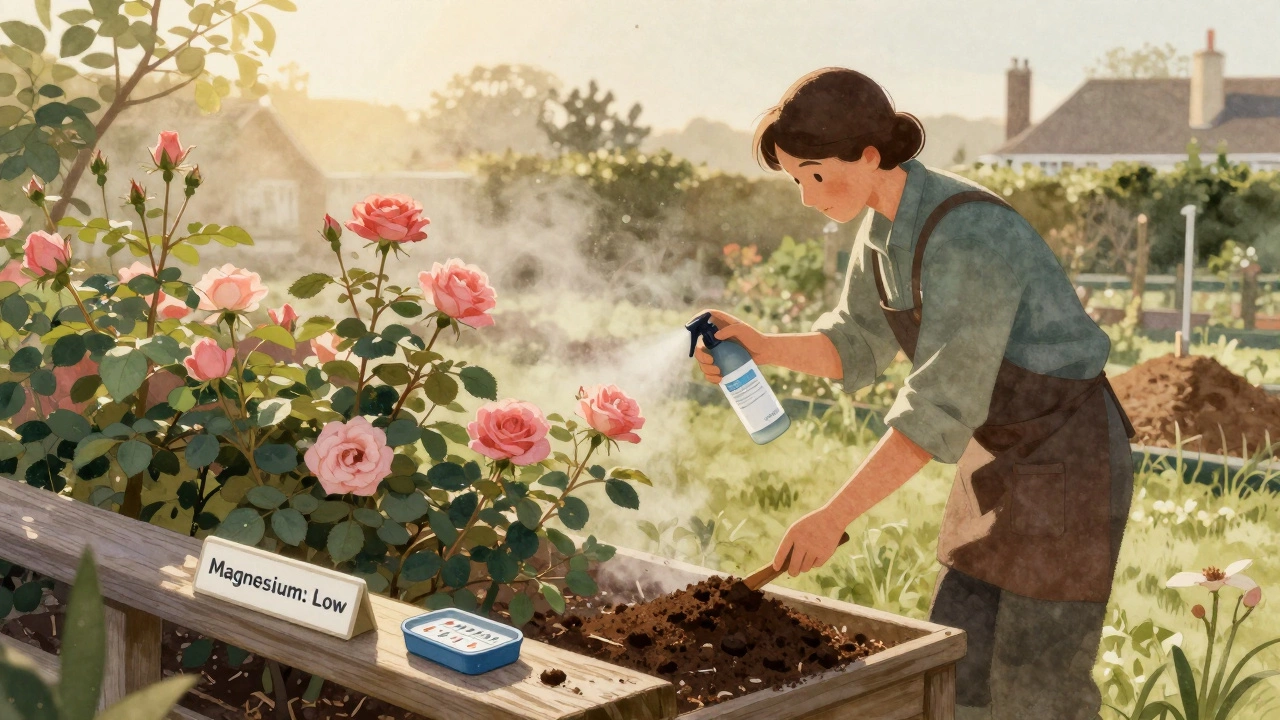
If you’ve tested your soil and found a magnesium deficiency-or you’re growing in containers with old potting mix-here’s how to use it right:
- Soil drench: Mix 1 tablespoon of Epsom salt into 1 gallon of water. Apply to the soil around the base of each plant. Do this once in early spring and again in midsummer. Don’t overdo it-too much magnesium blocks calcium uptake.
- Foliar spray: Same mix, sprayed lightly on leaves in the morning. Avoid hot, sunny days. This gives a fast boost but doesn’t last.
- Never apply dry: Sprinkling granules directly on soil can burn roots or create uneven absorption.
And always test your soil first. A simple home test kit from Garden Safe or a £15 send-away kit from SoilMend will tell you if you’re even missing magnesium. Most gardeners skip this step-and end up wasting money.
What Happens If You Use Too Much?
More isn’t better. Epsom salt can do harm if overused.
- Calcium lockout: Excess magnesium competes with calcium for root absorption. Plants need both. A shortage of calcium leads to blossom end rot in tomatoes and weak stems in flowers.
- Soil imbalance: Repeated use can raise sulfate levels, making soil too acidic for some flowers like lavender or dianthus.
- Runoff pollution: Magnesium and sulfur wash into waterways. It’s not toxic, but it contributes to nutrient overload in rivers and lakes.
In Brighton, where many gardens slope toward the sea, runoff is a real concern. You don’t need to add anything unless your plants show clear signs of deficiency.
Better Alternatives for Flower Health
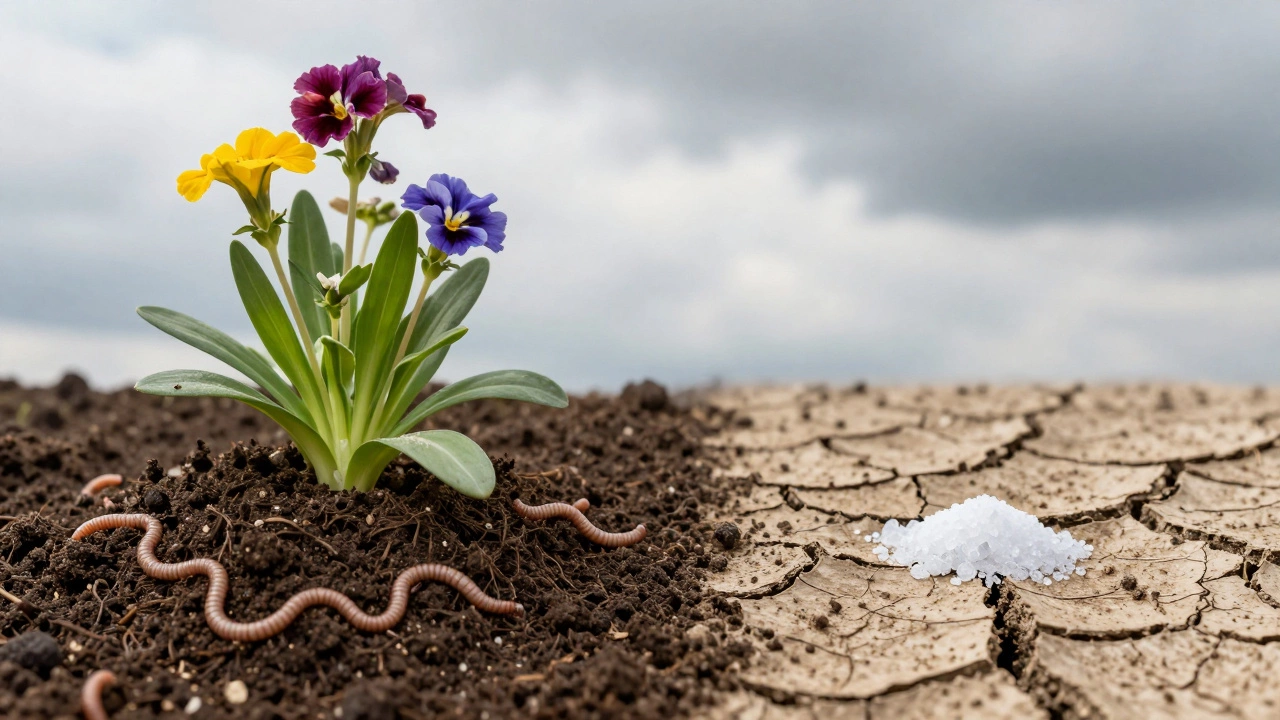
If your flowers aren’t thriving, Epsom salt isn’t the answer. Try these instead:
- Compost: Adds slow-release nutrients, improves soil structure, and boosts microbial life. A 2-inch layer every spring works wonders.
- Organic mulch: Wood chips or leaf mold keep moisture in and feed the soil as they break down.
- Balanced organic fertilizer: Look for one with a 5-5-5 or 3-4-3 NPK ratio. It gives your flowers everything they need, not just two elements.
- Soil aeration: Compact soil is the real enemy. Poke holes around your plants with a garden fork once a year. Roots breathe better.
One gardener in Hove switched from Epsom salt to compost tea and saw her peonies bloom 30% larger within a season. No magic. Just better soil.
Final Verdict
Epsom salt is not a fertilizer for flowers. It’s a targeted supplement for a very specific nutrient gap-and even then, it’s rarely needed in UK gardens. Most people use it because they’ve heard it works. But science says otherwise.
If your flowers are pale, stunted, or dropping buds? Look at your soil, your watering, your drainage, and your mulch. Fix those first. Test your soil before you reach for the Epsom salt shaker.
It’s not a miracle cure. It’s a band-aid. And most flower beds don’t need one.
Can I use Epsom salt on all types of flowers?
No. Most flowers don’t need it. Roses, tomatoes, and peppers are the only ones that might benefit, and only if they show signs of magnesium deficiency. Lavender, dianthus, and most native UK wildflowers prefer low-nutrient soils and can be harmed by extra magnesium. Always match the plant’s needs to the treatment.
How often should I apply Epsom salt if I decide to use it?
Only twice a year: once in early spring and once in midsummer. More than that risks nutrient imbalance. Apply as a liquid solution, not dry granules. Always water well after applying to prevent root burn.
Is Epsom salt organic?
Yes. Epsom salt is a naturally occurring mineral and is approved for use in certified organic gardening. But being organic doesn’t mean it’s necessary. Just because something is natural doesn’t mean your plants need it.
Can Epsom salt kill weeds or pests?
No. Epsom salt has no herbicidal or insecticidal properties. Some blogs claim it deters slugs or kills weeds, but that’s misinformation. Salt can burn plant tissue, but it’s not selective-it will hurt your flowers too. Use proper weed control or slug barriers instead.
What’s the best way to test my soil for magnesium?
Buy a home soil test kit from a garden center or send a sample to a lab like SoilMend or the University of Reading’s soil testing service. They’ll give you exact levels of magnesium, sulfur, and other nutrients. DIY kits cost under £15 and take 5-7 days. Don’t guess-test.