UK Rose Pruning Planner & Guide
Get the exact time and method for cutting back your specific roses in your part of the UK.
Pruning Plan
WinterLarge, showy blooms
You’ve probably stood in your garden with secateurs in hand, staring at a tangled bush of roses and wondering if it’s too early or too late to prune. The answer isn't one single date; it depends entirely on what kind of roses you have planted. Prune at the wrong time, and you might cut off next year's flowers before they even open, or leave dead wood that invites disease. Getting this right is the difference between a lush, healthy display and a leggy, sickly shrub.
In the UK, the timing for cutting back roses splits into two main camps: winter pruning for most modern varieties and light summer tidying for climbers and repeat-flowering types. Let's break down exactly when to do what, so you can keep your plants vigorous without guessing.
Quick Summary / Key Takeaways
- Winter Pruning (Feb-March): Best for Hybrid Teas, Floribundas, and Polyanthas. Do this just before new growth starts.
- Summer Tidying (July-August): Lightly trim spent blooms from repeat-flowering roses to encourage a second flush.
- Climbers & Ramblers: Prune after flowering (late spring/early summer), not in winter.
- Avoid Frost: Never prune when temperatures are below freezing, as it damages tender new buds.
- Tool Hygiene: Always sterilize shears between plants to prevent spreading black spot or mildew.
Why Timing Matters More Than Anything Else
Roses are woody perennials, meaning they store energy in their stems and roots through the winter. If you cut them back too early in autumn, you risk exposing the plant to cold winds and frost before it has hardened off enough. This can kill the tips of new shoots, leading to dieback. Conversely, if you wait too long into spring, you lose valuable growing days. The plant spends its first weeks pushing out leaves rather than flowers, delaying your bloom season by several weeks.
The sweet spot in the UK is usually late February to mid-March. By this time, the worst of the frost has passed in most regions, but the sap hasn't started flowing heavily yet. You want to make your cuts while the plant is still dormant but waking up. Check local forecasts: if a hard freeze is predicted within 48 hours, hold off. It’s better to be a week late than to prune into a snap freeze.
Pruning by Rose Type: A Specific Breakdown
Not all roses behave the same way. Grouping them by type helps you apply the correct technique without overthinking it each year.
| Rose Type | Best Time to Prune | Method | Goal |
|---|---|---|---|
| Hybrid Tea | Late Feb - Early March | Cut back to 3-5 strong eyes, leaving ~10cm height | Large, showy blooms |
| Floribunda | Late Feb - Early March | Remove dead wood; shorten remaining stems by half | Dense clusters of flowers |
| Polyantha | Late Feb - Early March | Light pruning; remove weak branches only | Continuous small blooms |
| Climbing Roses | After Flowering (May-June) | Remove side shoots; tie in new growth horizontally | More flower buds along cane |
| Ramblers | After Flowering (June-July) | Cut back old canes to base; retain new growth | Next year's flowering stems |
| Old English / Shrub | Early Spring (March) | Very light pruning; shape only | Natural form and heritage look |
Step-by-Step: How to Prune Winter Roses Correctly
If you have Hybrid Teas or Floribundas, follow these steps during your chosen window in late winter. The goal is to create an open vase shape that allows air to circulate, reducing the risk of fungal diseases like black spot.
- Clean Up First: Remove any dead, broken, or diseased wood. Look for canes that are brown inside when you scratch the bark lightly. Cut these out completely at the base.
- Remove Crossing Canes: Cut away any stems that grow inward toward the center of the plant. These block light and trap moisture.
- Select Strong Eyes: Identify the healthiest canes-usually three to five for standard roses. These should be straight, sturdy, and free of damage.
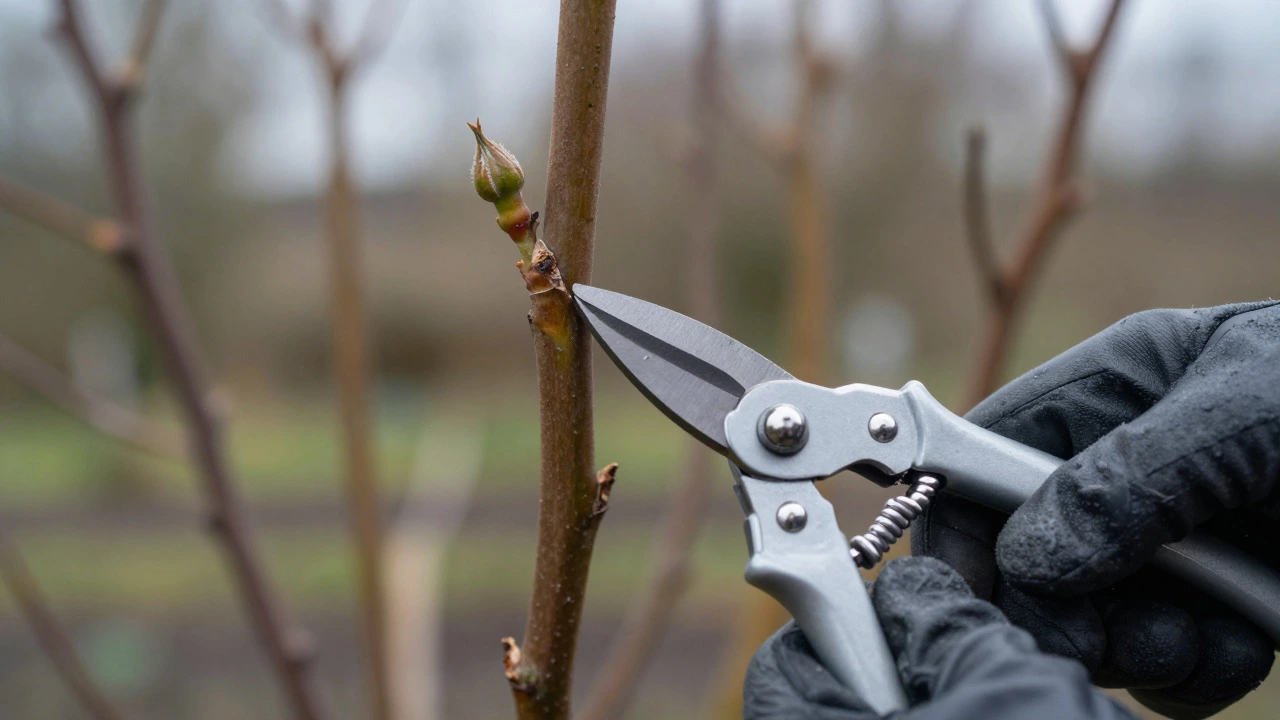
- Make the Cuts: Using sharp secateurs, cut each selected cane back to about 10-15 cm (4-6 inches) above ground level. Always cut at a 45-degree angle, sloping away from the bud. This prevents water from pooling on the cut surface and rotting the stem.
- Check the Angle: Ensure the cut is just above an outward-facing bud. If you cut above an inward-facing bud, the new shoot will grow into the center of the plant, causing congestion.
Don’t forget to clean your tools with a 70% alcohol wipe between plants. This simple habit stops you from accidentally spreading viruses or fungi from one rose to another.
Summer Care: When to Trim Repeat-Flowering Roses
Many modern roses in the UK are 'repeat-flowering' or 'remontant.' This means they produce multiple flushes of blooms throughout the summer. For these, heavy pruning in winter is still necessary, but you also need to do light maintenance during the growing season.
From July through August, once a flower fades, snip it off just above the first set of five leaflets. This process, called 'deadheading,' signals the plant to stop putting energy into seed production and instead focus on making new buds. If you skip this step, you’ll get fewer flowers later in the season. However, don’t prune deeply in summer. Deep cuts stimulate soft, green growth that won’t harden off before winter, leaving the plant vulnerable to frost damage.
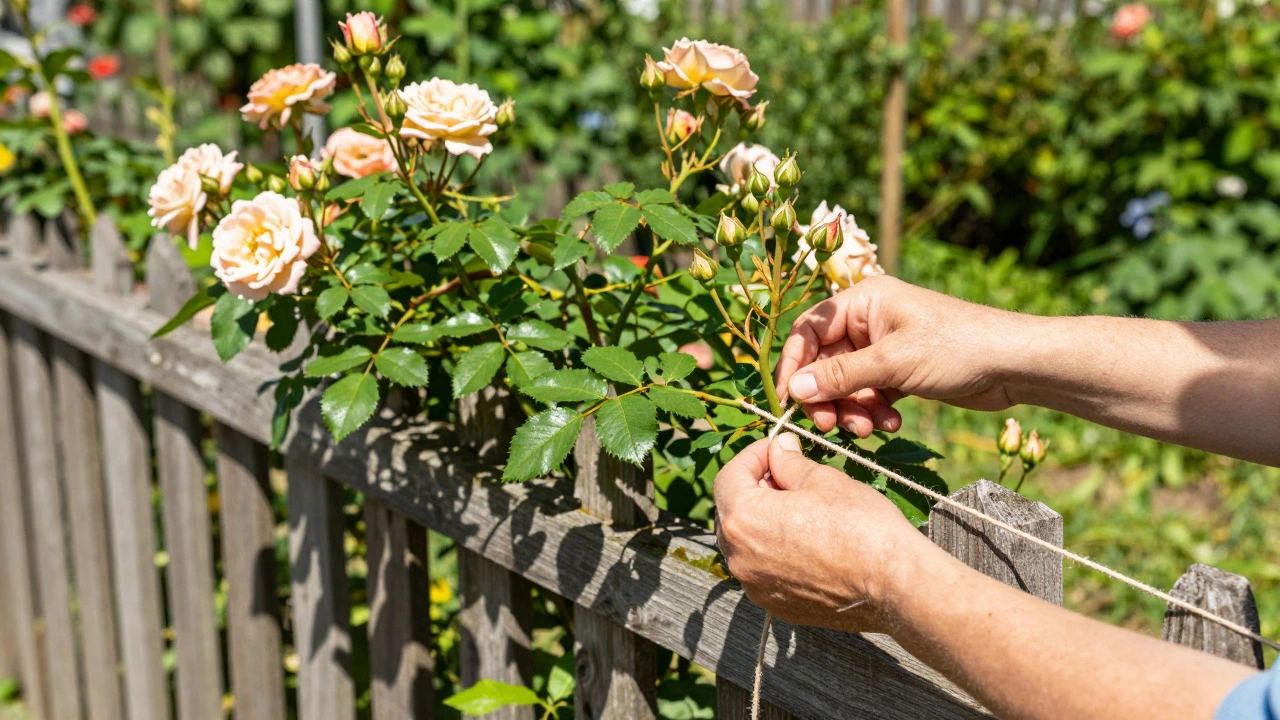
For climbing roses, the rule is different. They flower on old wood, so you must wait until after they finish blooming (usually late May or June) to prune. At that point, remove the canes that produced flowers this year, and tie in the new green canes horizontally along the wall or fence. Horizontal training forces the rose to produce more lateral buds, which become next year’s flowers. Vertical growth produces fewer blooms, so the direction of the tie-in matters significantly.
Common Mistakes to Avoid
Even experienced gardeners make errors that weaken roses over time. Here are the most frequent pitfalls we see in UK gardens:
- Pruning Too High: Leaving long stubs of dead wood above the cut. These stubs dry out and crack, creating entry points for pests and disease. Always cut cleanly.
- Ignoring Root Suckers: If your rose is grafted onto a rootstock, wild-looking shoots may appear at the base. These are suckers. Dig them out immediately, cutting them below the graft union, or they will steal nutrients from your prized variety.
- Over-Fertilizing After Pruning: Don’t feed roses heavily immediately after winter pruning. Wait until new green leaves emerge (around April). Early feeding encourages soft growth that rots easily in damp weather.
- Using Dull Tools: Dull blades crush the stem tissue rather than slicing it. Crushed tissue heals slowly and is prone to infection. Sharpen your secateurs every spring.
Regional Considerations Across the UK
The UK varies significantly in climate. Gardeners in Scotland and Northern England often face longer winters and colder springs. In these areas, it’s safer to prune in mid-to-late March rather than February. The soil needs to be workable, and the air temperature should consistently stay above 5°C. In milder southern regions like Cornwall or Kent, you might start pruning as early as late January if the forecast shows no frost risk. Always check your local microclimate history. If you’re near a large body of water, you might experience slightly warmer conditions, allowing for earlier intervention.
Also, consider wind exposure. If your roses are in a exposed coastal location, prune slightly shorter than usual. Shorter plants are less likely to whip around in high winds, which can tear stems and stress the root system.
Frequently Asked Questions
Can I prune roses in autumn?
Generally, no. Autumn pruning stimulates new growth that lacks time to harden off before winter, leading to frost damage. Only remove dead or diseased wood in autumn, and leave the rest for spring.
What should I do with the pruned stems?
Do not compost diseased wood. Burn it or bin it. Healthy stems can go into the general compost bin, but ensure they are chopped into smaller pieces to decompose faster. Keep them away from living plants to avoid accidental rooting.
How do I know if my rose is a climber or a rambler?
Climbers have stiff canes that need support and flower on old wood. Ramblers have long, flexible stems that twine naturally and flower on new growth. Check the tag or label where you bought the plant. If unsure, observe: if it blooms in late spring on last year's growth, it's likely a climber.
Should I mulch after pruning?
Yes, apply a 5cm layer of organic mulch (like well-rotted manure or compost) around the base of the plant in early spring. This retains moisture, suppresses weeds, and feeds the roots as it breaks down. Keep the mulch away from the main stems to prevent rot.
What if I miss the winter pruning window?
It’s okay to prune in April, though you may lose some early flowers. Just make sure the cuts are clean and angled correctly. The plant will recover quickly. Avoid pruning after May, as the new growth will be too tender for winter.